L28&32&33 Insulin hormon signaling Dr.Hitham (Girls)
Introduction to Insulin and Diabetes
Overview of Insulin's Role
- The speaker emphasizes the importance of insulin in managing diabetes, highlighting its role in achieving higher positions within medical fields.
- Insulin is a well-studied hormone due to its connection with diabetes, which is one of the most common chronic diseases.
- There is a significant gap in understanding insulin's detailed functions beyond glucose entry into cells.
Biological Functions and Clinical Applications
- The discussion aims to bridge biological functions of insulin with clinical applications, focusing on molecular interactions and their implications for diabetes.
- The presentation will not delve deeply into signaling pathways but will relate them to understanding insulin's function.
Structure and Production of Insulin
Understanding Insulin Structure
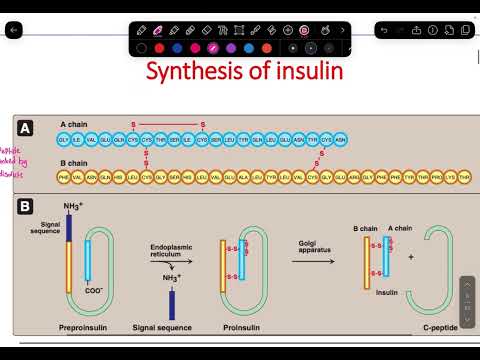
- The lecture begins by explaining the structure of insulin, including how it is synthesized and stored in the pancreas.
- It discusses how insulin functions at a cellular level, including receptor interactions and potential dysfunction leading to diseases like diabetes.
Types of Hormonal Actions
- Insulin is classified as an anabolic hormone, meaning it promotes building up processes rather than breaking down tissues.
- Elevated levels of insulin lead to storage processes such as glycogen synthesis rather than degradation.
Relationship Between Insulin and Other Biomolecules
Interaction with Triglycerides and Proteins
- The focus shifts to how insulin interacts primarily with triglycerides, proteins, and glycogen post-meal consumption.
- Understanding these relationships helps clarify the broader metabolic roles that insulin plays beyond just glucose regulation.
Normal Function vs. Diabetes Context
- While discussing normal physiological conditions, it's noted that insulin has critical roles even outside diabetic contexts.
Mechanisms Behind Insulin Release
Steps Leading to Insulin Secretion
- The process involves multiple steps from transcription through translation before reaching functional forms like proinsulin.
- Any disruption during these steps can lead to disease states or complications related to diabetes management.
Importance of C-Peptide Measurement
- C-peptide serves as an important marker for measuring endogenous insulin production levels in patients.
Half-Life and Regulation of Insulin Levels
Understanding Half-Life Implications
- The half-life of insulin is approximately six minutes; this short duration necessitates continuous monitoring for effective management.
Clinical Relevance
- Clinicians must consider both random and fasting levels when assessing patient conditions related to diabetes management.
Genetic Factors Affecting Insulin Processing
Genetic Mutations Impacting Diabetes Risk
- Recent studies highlight genetic mutations affecting proinsulin processing that can lead directly to increased blood sugar levels in children.
Broader Implications
- These findings suggest that issues may arise not only from insufficient production but also from defective processing mechanisms within pancreatic cells.
Stimuli for Insulin Release
Factors Influencing Secretion
- Various stimuli trigger the release of insulin; notably high glucose levels are primary drivers for secretion.
Interplay Between Glucose Levels
- As glucose rises post-meal, there’s a corresponding decrease in glucagon secretion while promoting further increases in insulin release.
Understanding Insulin and Glucose Metabolism
The Role of Insulin in Glucose Regulation
- Discussion begins on the concept of insulin as a stimulant for glucose metabolism, emphasizing its importance in regulating blood sugar levels.
- When glucose enters the cell, it undergoes a transformation process that is crucial for energy production.
- The enzyme glucokinase plays a significant role by converting glucose into glucose-6-phosphate, which is essential for metabolic pathways.
- The relationship between glucokinase and hexokinase is highlighted, indicating their roles in different tissues and their affinity for glucose.
Amino Acids and Insulin Secretion
- Amino acids can also trigger insulin secretion; arginine is specifically mentioned as an important amino acid in this process.
- Clarification on whether arginine has positive or negative effects on insulin release, with emphasis on its stimulatory role.
Gastrointestinal Hormones and Insulin Release
- Gastrointestinal hormones are discussed as key players in stimulating insulin secretion when food intake occurs.
- The body’s ability to sense nutrient intake before actual absorption leads to anticipatory insulin release.
Mechanisms of Insulin Action
- Introduction of GLP-1 (glucagon-like peptide 1), which enhances insulin secretion post-meal by mimicking certain hormonal actions.
- Explanation of how GLP-1 raises blood sugar levels while simultaneously promoting insulin release.
Feedback Mechanisms Affecting Insulin Levels
- Stress factors such as exercise can inhibit insulin release temporarily, showcasing the body's adaptive mechanisms during physical activity.
- Discussion about how infections can alter normal insulin secretion patterns due to physiological stress responses.
Cellular Actions of Insulin
- Focus shifts to how insulin facilitates glucose uptake into peripheral tissues through specific receptors known as the insulin receptor.
- Upon binding to its receptor, a cascade of intracellular signaling events occurs that ultimately promotes cellular functions related to metabolism.
Intracellular Signaling Pathways Activated by Insulin
- Detailed explanation of how the binding of insulin activates various downstream signaling molecules within cells leading to metabolic changes.
Importance of Receptor Phosphorylation
- Emphasis on autophosphorylation processes occurring at the receptor level that activate further signaling cascades necessary for cellular response.
Key Proteins Involved in Signal Transduction
- Introduction to IRS (Insulin Receptor Substrate), which acts as a critical mediator linking the activated receptor with downstream signaling pathways.
Metabolic Effects Induced by Insulin Signaling
- Discussion about how IRS proteins influence gene expression related to cell growth and metabolism, highlighting their anabolic effects.
This structured summary captures key concepts from the transcript regarding the role of insulin in glucose metabolism while providing clear timestamps for reference.
Understanding Insulin Signaling
Overview of Insulin's Role
- The discussion focuses on insulin signaling rather than its secretion or storage, emphasizing the effects and messages conveyed by insulin in the body.
- It is questioned whether cells continue to respond to insulin signals or if they reach a point where signaling must be diminished and terminated.
Feedback Mechanisms
- The feedback mechanism involves PI3K (phosphoinositide 3-kinase), which stores glycogen, indicating that once glycogen storage occurs, the effect of insulin signaling diminishes.
- A query arises about whether a specific number of insulin molecules are needed for glucose uptake, highlighting an efficient relationship between glucose and insulin receptors.
Glucose Levels and Insulin Interaction
- Blood glucose levels primarily dictate how much glucose enters cells, with feedback inhibition playing a crucial role in this process.
- The presence of glucose inside cells remains separate from blood glucose levels; thus, external factors influence cellular responses to insulin.
Glucose Uptake Dynamics
- The dynamics of GLUT4 transporters are discussed as they facilitate glucose entry into cells when stimulated by insulin.
- There can be instances where external glucose is available but does not lead to effective signaling due to receptor desensitization.
Insulin's Mechanism and Effects
Insulin Receptor Activation
- Upon binding with insulin, there is a translocation process that allows GLUT4 transporters to move to the cell membrane for glucose uptake.
- If blood sugar levels remain high without adequate uptake, it could lead to hypoglycemia due to excessive GLUT4 activity.
Distinguishing Between Uptake and Final Effects
- It's essential to differentiate between the initial uptake of glucose versus the final effects mediated by insulin signaling pathways.
Termination of Insulin Signaling
Feedback Inhibition Mechanisms
- Once sufficient glycogen is stored, feedback mechanisms inhibit further production or action related to insulin signaling.
Regulation Through Phosphorylation
- Phosphorylation plays a critical role in regulating protein activity within these pathways; dephosphorylation can halt processes initiated by insulin.
Factors Influencing Insulin Resistance
Impact of Excess Fatty Acids
- Increased fatty acids can interfere with normal insulin signaling despite not blocking receptor binding directly. This leads to resistance at various stages in the pathway.
Understanding Resistance Mechanisms
- Resistance isn't solely linked with obesity; it also involves complex interactions at molecular levels affecting how signals are processed within cells.
Genetic Factors in Insulin Resistance
Genetic Contributions
- Genetic predispositions play significant roles in developing conditions like type 2 diabetes through their impact on metabolic pathways involving insulin sensitivity.
Lifestyle Factors Affecting Insulin Sensitivity
Transient vs. Chronic Resistance
- Lifestyle choices contribute significantly to transient states of resistance that may evolve into chronic conditions if not managed properly.
Metabolic Syndrome Overview
Characteristics of Metabolic Syndrome
- Metabolic syndrome encompasses multiple risk factors including obesity, hypertension, dyslipidemia, and elevated blood sugar levels leading towards pre-diabetic states.
Turn any video into a summary like this
YouTube links, meetings, lectures. With transcripts, search, and chat.