Part 2 - Energy Modelling for CHP Projects in RETScreen Expert
Detailed Energy Analysis Overview
This section delves into the detailed energy analysis sheet using a combined power example, exploring key parameters' impact on project financial viability.
Energy System Selection
- The system selection process involves validating the type of system chosen in the facility sheet or VE analyzer.
- Components displayed in the left menu and top ribbon are dependent on this initial system selection.
- Schematic representation of the selected system type is provided for reference and consultation.
Grid Type Specification
- Users can specify if their facility is connected to a central grid, isolated grid, or off-grid scenario.
- Isolated grid indicates limited capacity for electricity exchange with additional verification required for potential export to the grid.
Rate Adjustments and Proposals
- VDA proposes a rate of 30 cents per cubic meter for natural gas, subject to user modification directly or via settings section adjustment.
- Electricity section includes proposed rates of 10 cents per kilowatt-hour by VDA for cogeneration applications.
Heating Load Estimation and Analysis
This segment focuses on estimating heating loads for an apartment building, considering various factors like building zones and load types.
Building Load Estimation
- Users can estimate heating loads based on single or multiple zones within a building structure.
- Fuel type selection is influenced by choices made in previous steps, impacting subsequent efficiency calculations.
Efficiency Calculation and Peak Load Assessment
- Seasonal efficiency values are crucial for accurate energy assessments rather than peak load efficiencies.
- Model estimates peak load in kilowatts and heating energy consumption in megawatt-hours based on input parameters.
Power System Design and Financial Viability Analysis
The section discusses the calculation of the power net average load considering energy efficiency measures before installing a cogeneration system, along with equipment selection and financial viability analysis.
Calculating Power Net Average Load
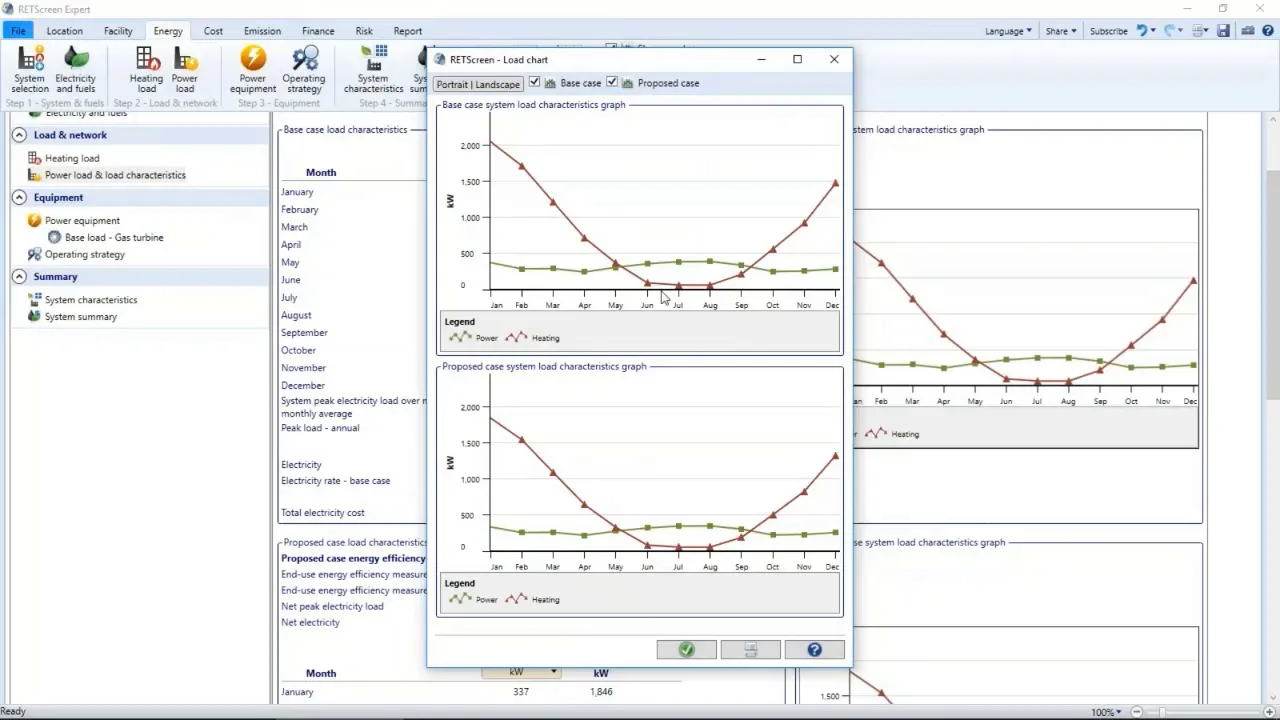
- Prior to installing the cogeneration system, an investment of $100,000 is proposed to reduce the load by 10%.
- The proposed case load and energy table summarize results for equipment sizing in subsequent sections.
Equipment Selection Process
- Gas turbine selected for base load with specific fuel (natural gas) and power capacity set at 200 kilowatts.
- Database search yields a turbine matching required capacity with specified heating value.
- Parameters like HP estimation, minimum capacity, availability, and efficiency are set based on design criteria.
Financial Viability Analysis
- Outputs from gas turbine section include heating capacity, fuel consumption, electricity delivered to load, and exported to grid.
- Operating strategies offer options like full power output or load following based on building's power needs.
- System characteristics section aids in selecting remaining components ensuring peak loads are met efficiently.
Improved Financial Viability through Energy Efficiency Measures
This part highlights how upfront consideration of energy efficiency measures enhanced the financial viability of the project compared to initial poor prospects.
Impact of Energy Efficiency Measures
- By incorporating energy efficiency measures before cogeneration system implementation, financial viability improved significantly.
- Net present value turned positive, simple payback reduced to 11 years, and IRR exceeded discount rate at over 9%.
Cost Adjustments for Improved Viability
- Adjustments made to natural gas costs and electricity rates positively impacted project's financial outlook.
Electricity Export Rate and Avoided Cost of Capacity
In this section, the discussion revolves around the concept of replacing the electricity export rate with an avoided cost of capacity. The utility offers a rate based on the guaranteed capacity of a cogeneration system running at full capacity.
Replacing Electricity Export Rate
- The utility is willing to offer a rate for the guaranteed capacity of the cogeneration system.
- The cogeneration system is operating at full capacity with 250 kilowatts.
- The avoided cost of capacity is considered in this scenario.
Incentives and Emission Results
This part delves into incentives related to electricity export and emission results, considering factors like escalation rates and emission factors from different power generation systems.
Incentives for Electricity Export
- Calculations by the utility may set an avoided cost per kilowatt, e.g., $225.
- Rates are applied over a period (e.g., 20 years) with an escalation rate (e.g., 2%).
- Exported electricity to the grid could potentially be valued at zero.
Emission Factor Consideration
Here, the focus shifts towards emission factors used in baseline electricity systems, emphasizing considerations for new power generation installations in Ontario.
Baseline Emission Factors
- Emission factor derived from Ontario's grid electricity generation data is utilized.
- Debate exists whether current grid values or those from new power plants should be considered.
System Analysis and Impact Assessment
This segment explores system analysis implications when considering natural gas as a baseline power source and accounting for losses in proposed systems.
System Analysis Implications
- New installations likely involve natural gas power plants if capacity increases are required.
- Level two analysis allows setting baseline power systems to natural gas for visualization purposes.