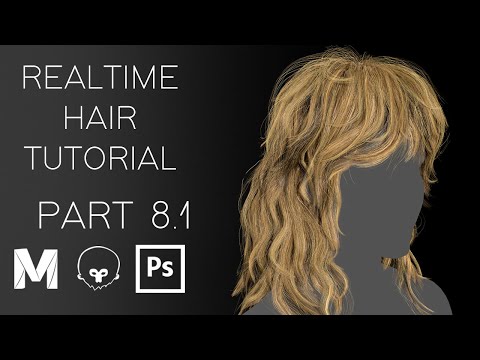
Realtime Hair Tutorial - Part 8.1 - Placement, support
Creating Realistic Hair with Cards
Introduction to Card Placement
- The speaker discusses the final step of adding a card designed for wispy bits, which will enhance the layers and shapes in the hair model.
- Emphasis is placed on keeping additions small to maintain subtlety while breaking up existing layers for added interest.
Breaking Up Layers
- The intention is to use cards not just to follow existing flow but to introduce depth and visual complexity.
- Natural curves are prioritized; individual strands should not all bend identically, reflecting realistic hair behavior.
Maintaining Natural Appearance
- The speaker stresses the importance of natural-looking shapes while tapering geometry for realism.
- Reference images serve as guides rather than strict templates; adjustments may be necessary for aesthetic coherence.
Supporting Existing Structures
- A key technique involves using additional cards to support existing ones, effectively disguising their nature as hair cards for a more realistic appearance.
- The process includes iterative checking and adjusting based on visual feedback from the model, ensuring gaps are filled appropriately.
Final Adjustments and Considerations
- Scale considerations are crucial; overly small details can lead to tedious work without significant payoff.
- Late-stage adjustments help avoid unnecessary complexity by focusing only on visible elements of the hairstyle.
Techniques for Realism
- Attention is given to avoiding large gaps between cards, ensuring they blend seamlessly into the overall style without serving as standalone features.
- Pre-clumping techniques are discussed as a method for achieving convincing clumps that contribute uniquely to the hairstyle's appearance.
Conclusion on Card Thickness Management
- Care must be taken when manipulating card thicknesses during placement; maintaining intended aesthetics is essential throughout this process.
Natural Integration of Elements
Assessing the Aesthetic Quality
- The speaker reflects on how the integration of elements appears more natural compared to other designs, suggesting a preference for a cohesive look rather than a segmented one.
- There is an intention to review and possibly enhance certain aspects later, indicating an iterative design process where feedback and personal satisfaction play crucial roles.