The magic ingredient that brings Pixar movies to life | Danielle Feinberg
What Inspired a Career in Animation?
Early Aspirations and Influences
- At age seven, the speaker expressed a desire to be an artist, but was discouraged by an adult who claimed it wasn't a viable career choice. This moment crushed her initial dreams of becoming an artist.
- After this experience, she shifted her focus towards science, aiming to become a scientist like Albert Einstein, which led her to study computer programming in college.
Discovering Computer Animation
- In her junior year of college, the speaker was introduced to computer animation through short films shown by her professor. This sparked a profound interest in pursuing animation as a career.
- The realization that math, science, and coding could converge to create animated worlds and stories felt magical and transformative for her. She later joined Pixar Animation Studios where she learned about film execution.
The Process of Creating Animated Worlds
- To produce animated movies at Pixar, they construct three-dimensional worlds within computers using points that form lines and shapes leading to characters and environments. This allows for camera movement within these digital spaces.
- Lighting plays a crucial role in bringing these worlds to life; the speaker describes how lighting is manipulated within the 3D environment to enhance realism and storytelling elements such as mood and time of day.
The Artistry of Lighting
- A pivotal moment for the speaker occurred when she witnessed how lighting transformed rough animations into vibrant scenes that felt alive; this process continually excites her even today.
- Through learning about lighting techniques, she discovered its importance in storytelling—guiding audience attention while enhancing character appeal amidst complex backgrounds (e.g., WALL-E).
Balancing Artistic Freedom with Scientific Accuracy
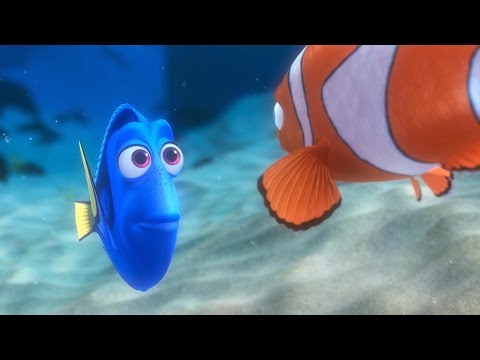
- While animation offers vast creative freedom, it can lead to chaotic visuals; thus, grounding artistic choices with scientific principles helps maintain relatability for audiences. For instance, "Finding Nemo" utilized real underwater footage as reference material during development.
- Key aspects like light behavior underwater were studied scientifically—how colors fade with depth—and incorporated into their animations while allowing some artistic liberties for emotional impact (e.g., altering color schemes).
Examples from "Finding Nemo"
- Specific visual elements such as surge currents and caustics were recreated digitally based on physics principles; these details added depth cues and enhanced visual storytelling without sacrificing artistic intent or narrative clarity.
- The team recognized opportunities where they could deviate from strict scientific accuracy—for example, adjusting water visibility beyond realistic limits—to better serve the story's needs rather than merely replicating reality accurately.
Challenges Faced During Production
How to Create a Robot with Personality?
The Challenge of Glassy-Eyed Robots
- The concept of "glassy-eyed" is detrimental when trying to portray a robot, like WALL-E, as having personality and the capacity for love.
- Efforts were made to develop optically perfect binoculars that would maintain WALL-E's robotic materials while addressing reflection issues.
- Specific reflections in WALL-E's eyes were necessary, particularly of Eve; attempts to use abstract images failed.
- A breakthrough occurred by adding light that leaked into WALL-E’s eyes, illuminating gray aperture blades and enhancing his expressiveness.
Creating Emotion Through Design
- By mimicking human eye characteristics (white sclera, colored iris, black pupil), WALL-E began to convey emotion and personality.
- The narrative arc included a moment where WALL-E loses his personality but later regains it through the reintroduction of light and aperture blades.
- This transformation emphasizes the importance of visual cues in storytelling—how design choices can evoke emotional responses from audiences.
Finding Beauty in Unexpected Moments
- The jellyfish scene in "Finding Nemo" exemplified challenges during production; initial discussions shifted from artistic vision to technical metrics.
- Despite frustrations with balancing science and art, there was a belief that beauty could emerge from the struggle within the creative process.
The Moment of Realization
- After refining lighting techniques for the jellyfish scene, excitement grew among team members leading up to a critical review session with the director.
- An initially tense silence turned into applause from the director and crew after showcasing the completed scene—a pivotal moment for all involved.
Interweaving Art and Science
Turn any video into a summary like this
YouTube links, meetings, lectures. With transcripts, search, and chat.