Real GDP Per Capita and the Standard of Living
New Section
In this video, the speaker discusses whether Real GDP per capita is a good measure of the standard of living. They explore the correlation between Real GDP per capita and other factors such as life expectancy, happiness, and human development.
Is Real GDP per capita a good measure of the standard of living?
- Real GDP per capita is not a perfect measure but it is considered the best single measure of the average standard of living in a country.
- It is correlated with many other factors that we care about, such as life expectancy, happiness, and education.
Correlation with Life Expectancy
- There is a positive correlation between Real GDP per capita and life expectancy.
- Countries with higher GDP per capita tend to have higher life expectancies.
Correlation with Happiness
- There is also a positive correlation between Real GDP per capita and happiness.
- Countries with higher GDP per capita tend to have happier people on average.
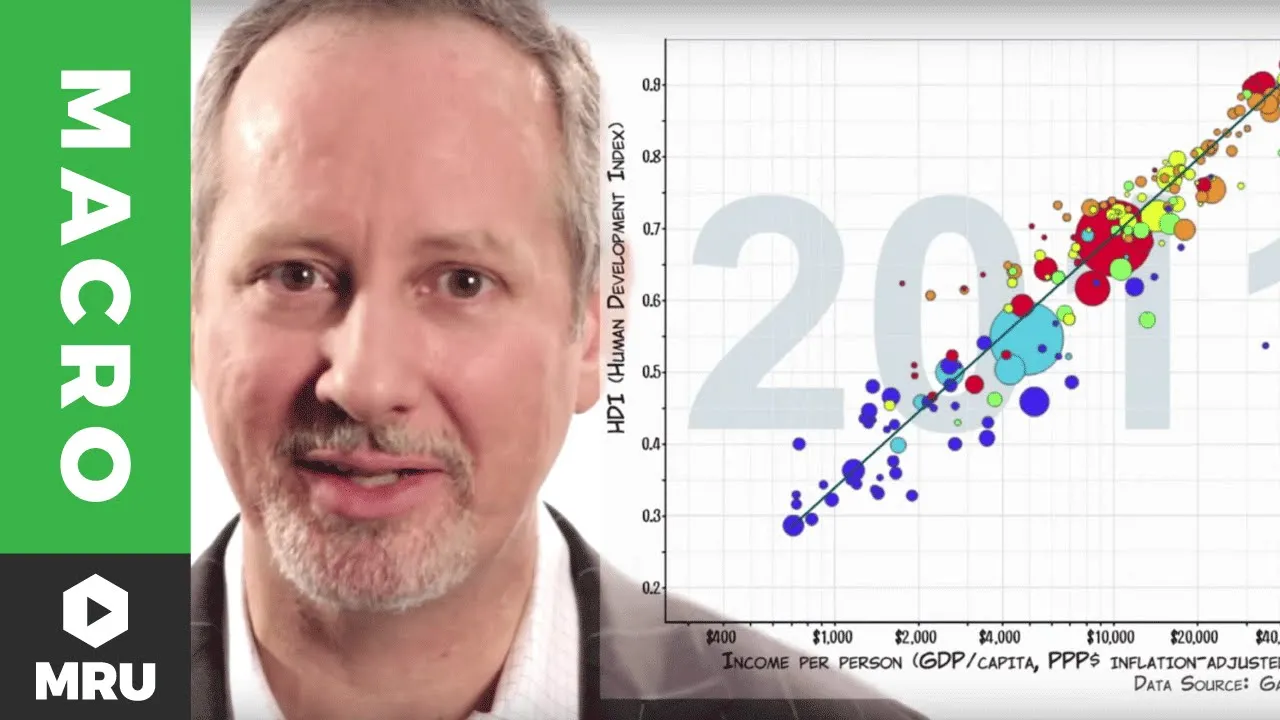
Human Development Index
- The Human Development Index combines measures of life expectancy, education, and standard of living.
- Overall, countries with higher GDP per capita tend to have higher human development according to this index.
Limitations of Real GDP per Capita
- One limitation is that it misses the distribution of income within a country.
- Countries with similar Real GDP per capita can have different levels of poverty due to income inequality.
Growth in Per Capita Incomes
- Over time, growth in Real GDP per capita usually indicates growth in everyone's incomes, including the very poor.
- There is a positive correlation between average per capita income and the incomes of the poorest 20%.
Conclusion
- Real GDP per capita has proven to be a useful measure for comparing the standard of living between countries or over time.
- Increasing the standard of living and growing an economy are important questions that will be addressed in future videos.
How do we increase the standard of living?
This section introduces the question of how to increase the standard of living and grow an economy. It encourages viewers to provide feedback on the videos and resources.
Feedback and Next Steps
- Viewers are encouraged to provide feedback on the videos and suggest improvements.
- The website MRUniversity.com offers a library of videos and resources for further learning.
The transcript is already in English, so there is no need to respond in a different language.
Turn any video into a summary like this
YouTube links, meetings, lectures — with transcripts, search, and chat.