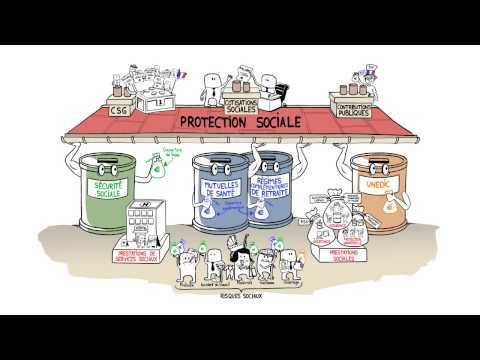
Dessine-moi l'éco : la protection sociale
Understanding Social Protection in France
Overview of Social Protection
- Social protection in France encompasses mechanisms that help individuals cope with situations such as illness, workplace accidents, old age, or unemployment, which may lead to reduced income or increased expenses. These are referred to as social risks.
Types of Mechanisms
- There are two main types of mechanisms within social protection:
- Social Service Benefits: Access to services at reduced prices or for free (e.g., public hospital care).
- Social Benefits: Direct payments from social protection organizations to individuals.
Logics Behind Social Benefits
- The provision of social benefits is based on three logics:
- Insurance Logic: Includes unemployment benefits and daily sickness allowances funded through monthly salary deductions.
- Assistance Logic: Aims to combat poverty (e.g., Active Solidarity Income), available without prior contributions but subject to resource conditions.
- Universal Protection Logic: Family allowances provided without contribution or resource conditions, ensuring equal access for all.
Key Organizations Involved
- Various organizations ensure the delivery of social protection:
- Social Security: Provides basic coverage for health risks, workplace accidents, family support, and old age.
- Complementary Regimes: Offer additional coverage (e.g., health mutuals and retirement plans).
- UNEDIC: Manages unemployment insurance.
Funding Sources for Social Protection
- The primary funding sources include:
- Social Contributions: Deductions from salaries shared between employers and employees.
- Generalized Social Contribution (CSG): Taxes applied not only to salaries but also other income types like pensions and financial investments.
- Public contributions from the state fund solidarity expenditures such as the RSA.
Turn any video into a summary like this
YouTube links, meetings, lectures — with transcripts, search, and chat.