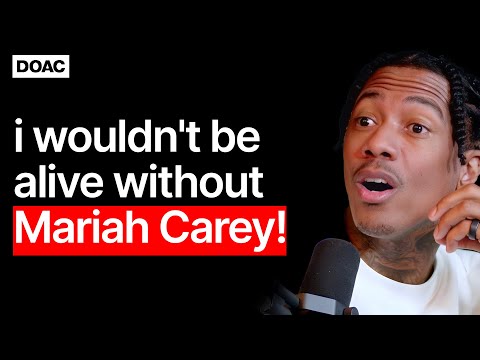
Nick Cannon: How I ACCIDENTALLY Built A $1.3 Billion Business!
New Section
In this section, Nick Cannon discusses his journey from creating the show "Wild 'N Out" to building a billion-dollar conglomerate. He talks about his work ethic, dealing with health scares, and the loss of his son.
Early Beginnings and Work Ethic
- Nick Cannon initially created "Wild 'N Out" as a way to help Kevin Hart pay his rent.
- He has since built a billion-dollar conglomerate with various ventures such as headphones sales, tours, cruise lines, and restaurants.
- Nick attributes his success to being the hardest worker in the room and having an unwavering work ethic.
- He shares that he always felt like he had a ticking clock due to health scares, including being diagnosed with lupus.
Dealing with Health Scare and Loss
- Nick opens up about how his health scare made him question what impact he would make in life.
- He credits Mariah Carey for helping him through difficult times and making him focus on living rather than fearing death.
- Nick also shares the heartbreaking experience of losing his son at just five months old due to brain cancer.
Optimism and Imagination
- Reflecting on his early years, Nick emphasizes the importance of youthful optimism and imagination.
- Despite growing up in an environment with limited resources, he always believed in manifesting anything he wanted through hard work.
- Nick's positive mindset helped him find silver linings even during challenging times.
Family Background
- While not traditional or abundant in material wealth, Nick's family home was filled with love and joy.
- His parents separated when he was young but maintained a friendly relationship.
- Nick's grandparents played a significant role in raising him and providing support to his parents.
Drive and Making Something Out of Nothing
- Growing up with limited resources motivated Nick to have a different type of drive.
- He learned the importance of making something out of nothing and creating opportunities for himself.
The transcript provided does not cover the entire video, so the summary is based on the available content.
The Downfall of the Community in the 80s
The speaker discusses how the community faced a downfall in the 80s, but he was able to escape and turn his life around through his ministry and helping others.
Escaping the Wrong Path
- The speaker shares that when he was young, he almost went down the wrong path.
- He mentions that human nature often gravitates towards the unknown and sometimes makes irresponsible choices.
- He describes himself as having a rebellious nature and being anti-authoritarian.
- Growing up in Southern California, he explains that gang violence was glorified, which influenced some of his decisions.
- However, his creativity and optimism saved him from getting caught up in negative influences.
Childhood Dreams of Becoming a Rapper
The speaker reflects on his childhood dreams of becoming a rapper and how his art and creativity shaped his identity at a young age.
Early Aspirations
- At a young age, between 10 and 14 years old, if asked what he wanted to be when he grew up, the speaker would have said a rapper.
- He loved hip-hop and already felt famous within his community due to his involvement with music.
- His artistry allowed people to appreciate him even at such a young age.
Influences on Artistic Expression
- The speaker's creativity manifested through rap music, which was loud, energetic, and showcased his ability to do it all.
- He looked up to artists like Eddie Murphy and Will Smith (The Fresh Prince) for their charisma and humor.
- Simultaneously, he admired artists like Ice Cube and Too Short for their different energy.
Starting Stand-Up Comedy at 11 Years Old
The speaker talks about starting stand-up comedy at an early age and how his upbringing influenced his maturity.
Early Maturity
- The speaker started doing stand-up comedy at the age of 11, which required confidence and guts.
- He attributes his early maturity to growing up around older people, including his grandparents and older community members.
- Being the oldest among his siblings and having a unique connection with his father also contributed to his mature demeanor.
Meeting Jamie at The Comedy Store
The speaker recalls meeting Jamie at The Comedy Store and how Jamie's support played a significant role in his journey.
Encountering Jamie
- The speaker met many comedians, but Jamie stood out as a giving and loving individual who welcomed him into the comedy scene.
- Hollywood was far from the speaker's neighborhood, so Jamie's invitation to hang out meant a lot to him.
This summary provides an overview of the main points discussed in the transcript. It is important to refer back to the original transcript for complete accuracy.
Early Experiences in Comedy
In this section, Nick Cannon talks about his early experiences in comedy and how he got the opportunity to perform at a young age.
Opening for Famous Comedians
- Nick Cannon recalls being given the opportunity to open for famous comedians like Chris Tucker, Damon Wayans, and Eddie Griffin at a young age. He would entertain the audience as they arrived.
- He mentions that celebrities like Shaquille O'Neal, Kobe Bryant, and Snoop Dogg would be in the audience while he performed as a 15-year-old.
Intentionality and Hustle
- Nick Cannon emphasizes that he doesn't believe in luck but rather in alignment and putting oneself in the right positions.
- He shares that he would speak himself into existence and actively put himself in environments where he could meet influential people.
- Nick Cannon recounts how he introduced himself to Jamie Foxx at a young age, confidently stating his full name. He believes in the power of names and instills this belief in his own children.
Seeking Attention and Taking Advantage of Opportunities
- Nick Cannon admits that he wasn't a shy kid but also not overly outgoing. However, due to always doing something or seeking attention, he received a lot of attention, both positive and negative.
- Growing up around hustlers, Nick Cannon developed a mindset of figuring things out and taking advantage of opportunities. He studied rooms and formulated plans to maneuver through them effectively.
Mentors: Will Smith and Jamie Foxx
In this section, Nick Cannon discusses the influence of mentors such as Will Smith and Jamie Foxx on his career.
Mentorship from Will Smith
- Nick Cannon acknowledges Will Smith as one of his greatest mentors who had a significant impact on him.
- He explains that he initially caught the attention of Will Smith's company, Overbrook, through Jamie Foxx's Comedy Festival called laughapalooza. This led to a holding deal and eventually meeting Will Smith in person.
Meeting Jamie Foxx and Will Smith
- Nick Cannon met Jamie Foxx at the age of 15 and then met Will Smith when he was 16.
- He describes both Jamie Foxx and Will Smith as incredibly kind individuals who played a crucial role in shaping his career and perspective.
Conclusion
Nick Cannon reflects on his early experiences in comedy, highlighting the importance of intentionality, hustle, and taking advantage of opportunities. He credits mentors like Will Smith and Jamie Foxx for their guidance and influence on his career.
Observing vs. Being Loud
In this section, the speaker discusses his personality traits and how he differs from others who are more outgoing and loud. He mentions that he is more reserved and observant.
Personality Traits
- The speaker describes himself as someone who is more reserved and observant.
- He acknowledges that he can be outgoing and funny when needed, but generally prefers to stay in the background.
- He mentions that he has learned how to captivate a room and tell stories by observing others, specifically mentioning Jamie as a great storyteller.
Learning from Jamie's Storytelling Skills
The speaker talks about learning storytelling skills from Jamie, whom he considers a great impromptu storyteller. He also mentions being able to captivate a room like Jamie does.
Learning from Jamie
- The speaker observes Jamie's storytelling skills and has learned tricks from him.
- He admires Jamie's ability to gather people around a table and engage them with his stories.
- The speaker mentions being able to captivate a room like Jamie does, using humor and joviality.
Admiring Jamie's Thespian Skills
In this section, the speaker expresses admiration for Jamie's acting abilities. He appreciates how well Jamie embodies his characters and understands their subtleties.
Admiration for Acting Skills
- The speaker praises Jamie's thespian muscle, highlighting his ability to fully embody his characters.
- He mentions that whether playing silly or serious roles, Jamie excels at understanding the subtleties of each character.
- The speaker acknowledges learning a lot about acting from watching Jamie perform.
Willis' Mentoring on Hard Work
Here, the speaker discusses the valuable lesson of hard work that he learned from Willis. He emphasizes the importance of dedication and perseverance.
Lesson on Hard Work
- The speaker describes Willis as someone who is not only talented but also a hard worker.
- He recalls Willis saying that he may not be the most talented person in the room, but he will always be the hardest worker.
- The speaker admires Willis' dedication and determination to achieve his goals, even working long hours after everyone else has gone to sleep.
Learning from Willis at a Young Age
In this section, the speaker reflects on being mentored by Willis since he was 16 years old. He mentions learning about music and songwriting techniques from him.
Early Mentorship
- The speaker acknowledges learning a lot from Willis at a young age.
- He mentions that before meeting Willis, he didn't know much about music or how to write rap verses.
- The speaker credits Willis for teaching him about song structure, specifically mentioning the importance of having a hot 16-bar verse.
Lessons in Life and Character
Here, the speaker discusses how he learned important life lessons such as integrity and perseverance from Willis. He also shares personal experiences related to financial decisions.
Life Lessons
- The speaker mentions learning about integrity and character from observing how Willis conducts himself.
- He recalls going through financial struggles after receiving a significant amount of money at a young age.
- The speaker shares an anecdote about buying an expensive car against Willis' advice and later regretting it when faced with financial difficulties.
Gratitude for Opportunities and Growth
In this section, the speaker expresses gratitude for opportunities given by others. He talks about working hard to improve himself and correct his mistakes as a young man.
Gratitude and Growth
- The speaker expresses gratitude for the opportunities he has been given.
- He mentions working tirelessly to be the best he can be, even sacrificing sleep to pursue his goals.
- The speaker reflects on his younger self and acknowledges making mistakes but learning from them.
Musical Education from Willis
Here, the speaker discusses how Willis taught him about music and songwriting techniques. He shares an anecdote about not knowing how to write rap verses before meeting Willis.
Musical Education
- The speaker recalls not knowing much about music or how to write rap verses before meeting Willis.
- He credits Willis for teaching him about song structure and the importance of having a well-structured verse.
- The speaker appreciates the guidance he received in developing his musical skills.
Understanding Songwriting Structure
In this section, the speaker talks about learning songwriting structure from Willis. He mentions that in the 90s, there was a shift towards standardized verse lengths.
Songwriting Structure
- The speaker mentions that in the 90s, there was a shift towards standardized verse lengths in songwriting.
- He explains that choruses and hooks were typically around eight bars, while verses were expected to be 16 bars.
- The speaker credits Willis for teaching him about songwriting structure and helping him improve his writing skills.
Adding Infrastructure to Writing
Here, the speaker discusses how Willis helped him improve his writing by adding infrastructure. He emphasizes the importance of structuring one's work properly.
Improving Writing Skills
- The speaker recalls initially writing without much structure until Willis advised him to add infrastructure to his work.
- He appreciates Willis' feedback on his writing and acknowledges that even small improvements can make a significant difference.
- The speaker highlights the importance of proper structure in writing and how it enhances the overall quality of the work.
Life Lessons from Willis
In this section, the speaker reflects on the life lessons he learned from Willis. He mentions integrity, character, and perseverance as key values instilled by his mentor.
Valuable Life Lessons
- The speaker acknowledges learning important life lessons such as integrity, character, and perseverance from Willis.
- He shares an anecdote about Willis going broke at 19 after achieving success in music.
- The speaker recalls receiving a significant amount of money from Willis but making poor financial decisions that led to difficulties later on.
Financial Mistakes and Lessons Learned
Here, the speaker discusses his own financial mistakes and the lessons he learned from them. He emphasizes the importance of making wise choices with money.
Financial Mistakes
- The speaker shares a personal experience of buying an expensive car with a large sum of money received from Willis.
- He admits that it was a poor decision and resulted in financial struggles later on.
- The speaker acknowledges that he should have listened to Willis' advice regarding financial management.
Gratitude for Opportunities Given
In this section, the speaker expresses gratitude for opportunities given by others. He talks about working hard to improve himself and correct his mistakes as a young man.
Gratitude and Growth
- The speaker expresses gratitude for the opportunities he has been given.
- He mentions working tirelessly to be the best he can be, even sacrificing sleep to pursue his goals.
- The speaker reflects on his younger self and acknowledges making mistakes but learning from them.
Learning From Setbacks
Here, the speaker discusses setbacks he faced in his career and how they taught him valuable lessons. He emphasizes the importance of perseverance and resilience.
Learning from Setbacks
- The speaker shares an anecdote about a television sitcom he created that didn't get picked up by the network.
- He reflects on the disappointment of the setback but acknowledges the lessons learned from it.
- The speaker highlights the importance of perseverance and resilience in overcoming setbacks and continuing to pursue one's goals.
Connections with Jamie Foxx
In this section, the speaker talks about his connections with Jamie Foxx. He mentions working with Bentley Kyle Evans, who was involved in both their projects.
Connections with Jamie Foxx
- The speaker mentions working on a television show called "Loose Cannon" that had connections to Jamie Foxx's show.
- He recalls being excited about the opportunity but ultimately facing disappointment when the show wasn't picked up.
- The speaker notes that Bentley Kyle Evans, who worked on both shows, was involved in their projects.
This summary is based solely on the provided transcript and may not capture all nuances or details from the video.
Biggest Heartbreaks and Life Lessons
In this section, the speaker reflects on a significant heartbreak in their life and the lessons they learned from it.
The Impact of a Heartbreak
- The speaker experienced one of the biggest heartbreaks in their life, leading to days of crying and feeling lost.
- They had believed that they had arrived at success, but suddenly everything fell apart without a plan.
- Even though people reassured them that things would be okay, the speaker didn't believe it at the time.
Lessons Learned
- The speaker's mentor, Will Smith, warned them about the challenges they might face but held them down throughout their journey.
- This heartbreak taught the speaker an important life lesson indirectly. It made them realize that they needed to figure things out on their own.
- The mentorship and support from Will Smith played a crucial role in the speaker's career, helping them secure opportunities like Drumline and their first record deal.
Synchronicity and Like-Minded Individuals
In this section, the speaker discusses synchronicity and how certain individuals seem to be consistently present throughout their career.
Attraction of Like-Minded Individuals
- The speaker believes in the concept of synchronicity where certain energies attract each other.
- Throughout their career, individuals like Will Smith and Jamie Foxx have always been there for the speaker.
- Even when they don't communicate every day, there is a strong connection between these individuals based on shared frequencies.
Operating on the Same Frequency
- The speaker mentions Kevin Hart as their best friend who operates on the same frequency as them.
- Despite not intentionally trying to stay connected, these like-minded individuals end up working together on projects or pursuing similar ventures (e.g., creating car shows, owning restaurants).
- This connection is not based on a formal rule book or secret society but rather an intuitive understanding and alignment of energies.
Frequencies and Self-Destruction
In this section, the speaker discusses frequencies and how operating in a low frequency can lead to self-destruction.
Frequencies and Their Characteristics
- The speaker describes low frequencies as slow, thick, heavy, filled with blame, victimization, anger, and jealousy.
- People who operate in these frequencies often struggle to catch a break in life without realizing that they are trapped in their own destructive patterns.
Stepping Out of Low Frequencies
- The speaker emphasizes the importance of stepping out of low frequencies to avoid self-inflicted damage.
- Instead of pointing fingers at others on different frequencies, individuals should focus on elevating themselves by shifting their mindset and energy.
- Operating in a higher frequency allows for growth and positive experiences.
Early Career Opportunities
In this section, the speaker reflects on their early career opportunities as a staff writer at a young age.
Youngest Staff Writer
- At 17 years old, the speaker became the youngest ever staff writer in TV history (unless someone had achieved it before).
- They started off doing warm-up for Keenan & Kelbridge show where they entertained the studio audience during camera movements.
- People noticed the speaker's talent and voice during warm-up sessions, leading to them being given writing opportunities.
Connection with Keenan Thompson
- Keenan Thompson became like a brother to the speaker as their mothers were best friends.
- Keenan introduced the speaker to comedy clubs where they would hang out together.
- Through Keenan's manager's introduction, the speaker got involved in writing episodes for shows like Keenan & Kel.
Collaborating with Keenan Thompson
In this section, the speaker discusses their collaboration with Keenan Thompson and how they started writing together.
Writing Collaboration
- The speaker approached Keenan Thompson with the idea of writing something together.
- They wrote a couple of episodes, including one where Keenan had a crush on Tamiya.
- The opportunity to collaborate and write for shows like Keenan & Kel came through their connection with Keenan and his manager.
The transcript provided does not include any additional information in another language.
Harry Potter and Writing for Nickelodeon Shows
In this section, Nick Cannon discusses his early experiences as a writer and how he got started in the industry.
Writing for Nickelodeon Shows
- Nick Cannon started writing at a young age and couldn't believe that his ideas could come to life.
- He became a staff writer for various Nickelodeon shows when he was 17 or 18 years old.
- After writing his own television show, he pitched it to Will Smith.
Overcoming Setbacks and Creating His Own Show
In this section, Nick Cannon talks about facing setbacks and how he created his own show after a failed project.
The Lesson from "Loose Cannon"
- After a show called "Loose Cannon" didn't get picked up, Nick had to find another way forward.
- He wrote his own show for Nickelodeon as a way to bounce back from the setback.
Finding Purpose in Children's Television
In this section, Nick Cannon shares how he found purpose in creating children's television shows.
Creating "The Nick Cannon Show"
- Feeling at a low point in his career, Nick decided to create and produce his own show for Nickelodeon.
- He didn't initially see the potential of children's entertainment but later realized its power in entertaining families.
- "The Nick Cannon Show" garnered a massive youth fan base.
Developing Writing Skills through Stand-Up Comedy
In this section, Nick Cannon explains how stand-up comedy helped him develop his writing skills.
Stand-Up Comedy as Training Ground
- Writing jokes from an early age and watching comedy shows like Def Comedy Jam helped him hone his skills.
- Stand-up comedy taught him to write, direct, perform, promote, and market his own material.
- By the time he was 15 or 16 years old, he had developed the necessary skills to write scripts and create great jokes.
Continuous Growth and Future Aspirations
In this section, Nick Cannon reflects on his journey so far and expresses his aspirations for the future.
Constant Learning and Growth
- Nick Cannon acknowledges that he has lived many lives and learned numerous lessons at a young age.
- Despite his achievements, he believes that he is still just getting started in his career.
- He plans to continue making movies, producing music, and writing television shows.
The Importance of Repetition in Skill Development
In this section, Nick Cannon emphasizes the importance of repetition in skill development.
Repetition from an Early Age
- Starting at 11 years old, Nick Cannon spent more than a decade honing his craft through continuous practice.
- Writing his own show at 22 was a result of years of repetitions in writing jokes and scripts.
- He believes that operating within one's gift leads to mastery after putting in around 10,000 hours of practice.
Being Mentored by Industry Leaders
In this section, Nick Cannon discusses being mentored by successful individuals in the industry.
Learning from Industry Leaders
- Nick Cannon has been around people who have reached the top of their respective industries.
- He credits these experiences with providing valuable insights into achieving success.
The transcript provided does not include specific timestamps for some sections.
New Section
In this section, the speaker emphasizes the importance of committing to a task and doing it efficiently. They discuss how embodying and fully committing to an activity leads to success.
Commitment and Efficiency
- The speaker advises not to give up easily and instead stick to a task with determination.
- It is important to approach tasks with full commitment, as if there is no other option.
- The speaker gives examples of people who fully embody their passions, such as basketball players or boxers.
- They mention nurturing natural talents in children and supporting their interests.
- The importance of finding joy in what you do is highlighted, rather than solely focusing on monetary gain.
New Section
In this section, the speaker discusses the relationship between happiness, money, and success. They emphasize the significance of finding fulfillment in one's work rather than pursuing money alone.
Happiness and Success
- The speaker states that happiness leads to financial success, rather than money leading to happiness.
- Mastering a skill or passion is more likely to bring financial success in the long run.
- There are different types of money: happy money (earned through fulfilling work) and sad/bad money (earned through dishonesty or unhappiness).
- Some individuals with immense wealth may still feel lonely and unfulfilled due to their focus on material possessions.
- The music industry is mentioned as an example where bad money can prevail due to manipulation and dishonesty.
New Section
In this section, the speaker reflects on their personal experience in the music industry and expresses their aversion to dishonesty and manipulation. They discuss the importance of operating with integrity.
Operating with Integrity
- The speaker shares their perspective on the manipulative nature of the music industry.
- They express a desire to avoid operating in dishonesty and manipulation as a music executive.
- While there may be few opportunities for honest operations in the industry, it is possible to work with "happy money" and "good money."
- The speaker believes that everyone involved in the music industry should have the opportunity to thrive and provide for their families.
- Some individuals who lack musical talent or understanding can still control artists through intellectual property rights, leading to an imbalance of power.
New Section
In this section, the speaker explores the balance between self-interest and generosity. They discuss narcissism as a tool for achieving success while maintaining a healthy balance.
Balancing Self-interest and Generosity
- The speaker acknowledges that they possess narcissistic traits but emphasizes the importance of finding a balance.
- Extreme narcissism can become dangerous or unhealthy, leading to negative outcomes.
- Finding a balance between self-interest (getting what one deserves) and generosity (being kind enough to others) is crucial for long-term success.
Timestamp references are approximate due to limitations in processing natural language.
New Section
In this section, the speaker discusses the importance of self-love and self-promotion in achieving success. They emphasize the need to have a strong sense of self without belittling others.
Importance of Self-Love and Self-Promotion
- The speaker mentions various successful individuals like Mike Tyson, Will Smith, Chris Rock, Jamie Foxx, Mariah Carey, Mary J Blige, and Beyonce who recognize their unique value.
- They highlight the significance of self-love, self-promotion, and self-dedication in achieving success.
- The speaker explains that while it is important to have confidence in oneself, it should not lead to disrespecting or thinking less of others.
- They emphasize that success lies in embracing one's individuality and taking ownership of their achievements.
New Section
In this section, the speaker reflects on their career journey and how they learned valuable lessons about contracts and protecting themselves from exploitation.
Lessons Learned in Career Journey
- The speaker shares that they had to learn lessons early on in their career regarding contracts and financial exploitation.
- Despite warnings from others, they maintained a consistent aura and stayed true to themselves without letting anyone extinguish their flame.
- They acknowledge that everyone faces trials and tribulations but stress the importance of perseverance while staying true to one's purpose.
New Section
In this section, the speaker discusses their desire for success and how being told "no" or facing challenges fuels their determination.
Desire for Success and Overcoming Challenges
- The speaker expresses their desire to be a winner and their drive to beat the odds.
- They mention that being told they can't do something or facing rejection only motivates them further.
- The speaker shares that they have always pushed through challenges, defying societal expectations and not letting others dictate their path.
New Section
In this section, the speaker talks about self-funding a pilot for a show called "Wild 'N Out" and how it led to negotiating from a position of strength.
Self-Funding and Negotiating Intellectual Property
- The speaker recalls self-funding the pilot for "Wild 'N Out" at a young age, using their own money.
- They explain how they promoted the pilot, gathered people, and invested around $100,000 into the project.
- When presenting the finished product to MTV, they had already created intellectual property by copyrighting and patenting the name and logo of "Wild 'N Out."
- This ownership of intellectual property gave them leverage during negotiations with MTV, ensuring they received the value they deserved for their work.
Timestamps are approximate.
The Evolution of Building a Fan Base
In this section, the speaker discusses the changing model of building a fan base and mentions Mr Beast as an example. They reflect on their own experiences in trying to build a following before YouTube existed.
- The traditional model of creating content and waiting for people to discover it has shifted.
- Now, creators need to actively build their own fan base before they can attract larger corporate entities.
- Mr Beast is cited as an example of someone who successfully built a strong following and then expanded his brand.
Admiration for Mr Beast's Success
The speaker expresses admiration for Mr Beast's achievements at a young age and reflects on their own attempts to do similar things in the past.
- The speaker admits feeling jealous of Mr Beast's success at such a young age.
- They recall attempting similar endeavors when they were younger but lacked platforms like YouTube.
- Despite not achieving the same level of success, they appreciate watching others thrive in the industry.
Longevity and Future Plans
The speaker reflects on the longevity of their brand and contemplates future plans for their show.
- The speaker's brand, which started in 2004, is still going strong and even more popular today.
- They mention filming series 21 and express a desire to reach 25 seasons.
- Contemplation arises about whether to gracefully bow out or hand off the show after reaching 25 seasons.
Knowing When to Stop
The speaker ponders when it will be time to stop working on their show and considers passing it on to someone else.
- As they approach 25 seasons, the speaker questions whether it's time to gracefully bow out.
- They acknowledge that they may be getting too old to continue indefinitely and need to consider stopping at some point.
The Evolution of Their Role
The speaker reflects on their journey from being a young creator to becoming the head of their own show.
- When they first started, the cast and crew were older than them, which felt strange.
- They mention influential figures like Katt Williams and Chris Spencer who were initially part of their show.
- Now, they find themselves overseeing a new generation of talent, such as DC Young Fly.
Growing Up with the Brand
The speaker discusses how their brand has grown over time and how they have witnessed younger talents rise within it.
- They recall trying to get established comedians to listen to them when they were younger.
- Now, they are in a position where they guide and mentor young talents who grow up within their brand.
- It is surreal for them to see the same brand that they grew up with now nurturing new generations of entertainers.
The Power of Their Platform
The speaker acknowledges the power of their platform and how it has helped cultivate young talent.
- They recognize that having a platform gives them influence and allows them to shine a light on talented individuals.
- By incubating and cultivating young talent, they have seen individuals like Pete Davidson and Mikey Day achieve success in SNL and movies.
- Wild 'N Out provides an opportunity for aspiring entertainers to showcase their skills on one of the toughest stages.
Gratitude for Unexpected Success
The speaker expresses gratitude for the unexpected success of their show and reflects on its humble beginnings.
- They view their journey as a blessing and are grateful for the opportunities it has provided.
- Initially, they created Wild 'N Out to give their friends jobs and support each other financially.
- The show's success exceeded their expectations, becoming a billion-dollar conglomerate.
Propelling Young Talent
The speaker discusses how Wild 'N Out has become a platform for propelling young talent into various entertainment fields.
- Their initial intention was to shine a light on talented individuals who were funnier and more talented than themselves.
- Over time, they built a business around incubating and cultivating young talent.
- Successful participants in Wild 'N Out have gone on to become movie stars, rappers, singers, and stand-up comedians.
Testing Ground for Success
The speaker highlights how Wild 'N Out serves as a testing ground for aspiring entertainers.
- Surviving and excelling in Wild 'N Out is seen as a stepping stone to stardom.
- The show tests individuals' insecurities and anxiety but rewards them with love from respected peers.
- Once the industry recognizes an individual's success on the show, doors open for them to pursue various career paths.
Overcoming Intimidation
The speaker addresses the intimidation factor of participating in Wild 'N Out and how it can lead to personal growth.
- Many entertainers are initially hesitant to join the show due to fears of being mocked or judged.
- However, those who excel in the challenging environment earn respect and gain confidence.
- Participating in Wild 'N Out becomes a badge of honor that opens doors to other opportunities.
The Business Behind the Brand
The speaker acknowledges the significant business behind their brand and its value.
- The speaker mentions that their brand has been valued in the billions due to factors like intellectual property and 500 episodes of television.
- They express gratitude for the unexpected success and growth of their business.
The Success of Wild 'N Out
In this section, Nick Cannon discusses the success and popularity of his show, Wild 'N Out, and its impact on various merchandise sales.
Wild 'N Out Franchise and Merchandise
- Wild 'N Out has expanded its franchise with restaurants across the country, including a new location in South Beach, Miami.
- The show's logo is widely recognized and appears on various merchandise such as t-shirts, bikinis, underwear, coffee mugs, and toys.
- The popularity of the merchandise has exceeded expectations, with people buying Wild 'N Out t-shirts for over 20 years.
- The brand has become a digital powerhouse with millions of subscribers on YouTube (12+ million), TikTok (12+ million), and Instagram (7 million).
Valuing the Brand
Nick Cannon discusses the value of the Wild 'N Out brand and his perspective on its worth.
Estimating the Brand's Value
- Initial research estimated the brand's value at around 1.3 billion dollars several years ago.
- Due to its increasing popularity over time, Nick believes that the brand's value has likely grown even more since then.
- However, he tries not to focus too much on monetary value as it can lead to feelings of entitlement or excessive pride.
Gratitude for Success
Nick Cannon expresses gratitude for the success of Wild 'N Out and his excitement for discovering new talent.
Appreciation for Success
- While acknowledging the show's success, Nick remains grateful that it continues to thrive.
- He looks forward to finding new comedic superstars and talented rappers who can grace The Wild stage.
Other Business Ventures
Nick Cannon discusses other business ventures beyond Wild 'N Out and highlights the diversity of his entertainment empire.
Diverse Business Ventures
- In addition to restaurants and talent signing, Nick has created an incredible entertainment conglomerate.
- The conglomerate includes a record label, film production, and consumer products such as headphones.
- In 2009 alone, the headphone sales generated over 100 million dollars in revenue.
- Despite being known for his entertainment brand, Nick emphasizes that he is also a cultivator, curator, and incubator of talent.
Discovering Talent
Nick Cannon reflects on his role in discovering talent and shares an example involving singer Kehlani.
Discovering Kehlani
- Nick discovered Kehlani on America's Got Talent but notes that Simon Cowell initially overlooked her.
- Despite Simon's lack of attention, Nick recognized Kehlani's talent and potential.
- Kehlani was part of a group called Pop Life but stood out as the star performer.
- During her audition, Piers Morgan suggested she leave the group to showcase her individual talent.
- However, Kehlani chose to stay loyal to her bandmates, which impressed the other judges who admired her determination.
The transcript provided does not include timestamps for every section.
The Story of Helping a Homeless Girl
In this section, the speaker shares a story about helping a girl who was homeless and had a difficult background.
Helping the Girl from America's Got Talent
- The speaker receives a call about a girl from America's Got Talent who is now homeless and struggling.
- The girl had experienced the murder of her father and her mother dealt with substance abuse.
- The speaker decides to help her by providing support and finding her guardian.
- He offers to move her to LA after she finishes high school.
Not Interested in Signing Artists
In this section, the speaker discusses his perspective on signing artists and his approach to supporting them without taking ownership.
Resisting Signing Artists
- The speaker expresses that he doesn't like signing people and prefers not to have ownership in someone else's brand.
- He funded scenarios for the girl he helped without asking for anything in return.
- His goal is to see artists succeed without expecting financial gain or ownership.
Paying It Forward Instead of Owning
In this section, the speaker explains his philosophy of paying it forward instead of owning artists' work.
Paying It Forward Philosophy
- The speaker believes in paying it forward by giving back to young artists with financial support.
- He gives local artists money during his shows and doesn't expect anything in return except for their success.
- He wants to correct the industry's practice of owning artists' work perpetually.
Changing Industry Practices
In this section, the speaker discusses how industry practices need to change and how technology is empowering artists.
Challenging Industry Practices
- The speaker believes that industry practices, such as owning artists' work forever, need to change.
- He mentions terms like perpetuity and questions why someone unrelated to the art should own it indefinitely.
- Technology is empowering artists and giving them more control over their work.
- The speaker believes that the next generation has more empathy and compassion, which will lead to positive changes in the industry.
Empowerment through Platforms
In this section, the speaker talks about how platforms empower artists and give them more opportunities for success.
Empowerment through Platforms
- Artists now have platforms where their talent can go viral and gain a large following.
- These platforms reduce the power of middlemen in the industry.
- The speaker suggests that artists are becoming more empathetic due to these opportunities.
This summary covers key points from the transcript.
Networking and Personal Preferences
In this section, the speaker discusses their perspective on networking and personal preferences when it comes to socializing and connecting with others.
Networking Styles
- Some people believe in networking through personal connections and introductions.
- The speaker prefers technology to do the networking for them, rather than engaging in small talk for hours.
- They express a dislike for small talk and prefer to focus on their own work.
Different Approaches
- The speaker acknowledges that different individuals have varying networking styles.
- While some prioritize building a network, the speaker values who knows them rather than who they know.
- They mention not enjoying extravagant parties or events and prefer activities like being in the studio or spending time with family.
Introversion vs. Extroversion
- The speaker admits to being more introverted and lacking the energy for extensive small talk.
- They mention envying those who can effortlessly network and connect with others.
- Their preference lies in conserving their energy and being more subdued in social settings.
Prioritizing Health, Fitness, and Rest
In this section, the speaker emphasizes the importance of prioritizing health, fitness, rest, and recovery amidst a busy lifestyle.
Balancing Workouts and Rest
- The speaker highlights how they prioritize working out as a non-negotiable aspect of their routine.
- They emphasize the need to optimize their body's performance through proper rest and recovery.
Introducing WHOOP
- The speaker mentions using WHOOP as a wearable health coach that provides feedback on sleep, recovery, training, stress levels, and overall health.
- Accessing data from WHOOP has helped them understand what their body needs to reach optimal performance levels.
Introduction to Huel and Product Range
In this section, the speaker introduces Huel, a brand with a wide range of products focused on nutrition and meal replacements.
Trying Huel Products
- The speaker mentions being familiar with all the Huel products through their involvement in product development.
- They highlight how certain Huel products have positively impacted their life by meeting their specific requirements.
Best Seller Bundle
- The speaker recommends trying the Huel Best Seller Bundle, which includes a variety of meals, bars, and the iconic Huel Shaker.
- This bundle allows individuals to explore different products and find what works best for them.
Summary
The transcript covers two main topics. Firstly, it discusses networking preferences and personal approaches to socializing. The speaker expresses a preference for technology-driven networking over traditional methods like small talk. They also mention being more introverted and valuing authenticity in social settings. Secondly, the transcript touches upon health and wellness practices. The speaker emphasizes prioritizing workouts while also recognizing the importance of rest and recovery. They introduce WHOOP as a wearable health coach that provides valuable insights into sleep, recovery, training, stress levels, and overall health. Additionally, they mention their involvement with Huel products and recommend trying the Best Seller Bundle to explore various options within the product range.
Nick Cannon's Health Journey
In this section, Nick Cannon discusses his health journey and how it has impacted his life.
Diagnosis and Symptoms
- Nick describes being in Aspen with his wife when he experienced a strange pain in his right side.
- He initially thought it was a muscle cramp or dehydration from jogging at high altitude.
- Mariah Carey found him passed out and rushed him to the ER in Aspen.
- The initial assumption was altitude sickness or dehydration.
Kidney Issues and Lupus Diagnosis
- Doctors suspected kidney stones but later discovered acute kidney failure caused by an autoimmune condition called lupus nephritis.
- Lupus is related to stress levels and can cause the immune system to attack organs.
- Nick's lupus primarily affected his kidneys, leading to other complications like pulmonary embolisms.
Impact on Life and Perspective
- The diagnosis changed Nick as a person, making him value relationships and time more while letting go of unproductive ones.
- He became aware of the importance of health as wealth and started taking better care of himself.
- His children became even more significant, emphasizing the need to make an impact during the limited time we have on Earth.
Support from Mariah Carey
- Mariah Carey played a crucial role in supporting Nick through his health journey, working closely with doctors and providing emotional support.
This summary focuses on Nick Cannon's health journey, including symptoms, diagnosis, impact on life, and support from Mariah Carey.
Reflection on Life and Mortality
In this section, the speaker reflects on the impact of his health struggles on his perspective on life and mortality. He discusses questions about the purpose of life, the legacy he will leave behind, and his mindset towards death.
Gaining Perspective through Health Struggles
- The speaker's health struggles have taken a toll on his relationship but have also brought him closer to his loved ones.
- He contemplates existential questions such as the meaning of life and whether he has made the most of his time.
- The speaker ponders what kind of person he wants to be for his children and what legacy he will leave behind.
- Facing mortality has slowed down the pace of life for the speaker, making him more aware of its transient nature.
- Despite facing near-death experiences, the speaker expresses contentment and fearlessness when confronted with his own mortality.
Embracing Life in the Face of Mortality
In this section, the speaker emphasizes how facing mortality has changed his perspective on living. He discusses how near-death experiences or contemplation about afterlife can lead to a different approach to life.
Living Differently After Near-Death Experiences
- The speaker acknowledges that everyone will eventually face death but believes some people handle it better than others.
- Having faced near-death experiences, the speaker appreciates life more and strives to make the most out of it.
- The speaker mentions studying and preparing himself for death but emphasizes that ultimately, death is inevitable for everyone.
- He desires to be remembered as someone who lived fully, smiled big, loved deeply, and got the most out of life.
Mariah's Role in Saving His Life
In this section, the speaker credits his wife, Mariah, for saving his life. He discusses the importance of having a supportive partner and their ongoing journey in dealing with health challenges.
Mariah's Impact on His Life
- The speaker firmly believes that Mariah saved his life and expresses his willingness to lay down his life for her.
- He emphasizes that their relationship goes beyond just dealing with health issues and is an ongoing conversation.
- The speaker mentions being in and out of the hospital but states that having the right doctors and taking care of himself has helped manage his condition better.
Coping with Lupus and Health Challenges
In this section, the speaker discusses his experiences with lupus, including flare-ups and various health complications. He highlights the strength required to endure such challenges.
Dealing with Lupus Flare-ups
- The speaker explains that lupus can cause flare-ups triggered by factors like seasons and stress.
- During 2012-2016, he frequently ended up in the hospital as he was trying to understand and manage his condition.
- Lupus flare-ups led to severe health issues such as blood clots, pulmonary embolisms, inflammation, kidney failure, etc.
- Despite facing life-threatening situations, the speaker received medical treatments like infusions similar to chemotherapy.
Gaining Perspective through Helping Others
In this section, the speaker shares how engaging with children at a hospital helped him gain perspective on life. He emphasizes the importance of empathy and gratitude.
Helping Children at Saint Mary's Children's Hospital
- Even before being diagnosed with lupus, the speaker regularly visited Saint Mary's Children's Hospital to read books and provide toys.
- These visits served as a reset button for the speaker, helping him put his own challenges into perspective.
- Witnessing children with chronic and life-altering diseases who still managed to smile and be happy inspired the speaker.
Hunger for Understanding without Personal Experience
In this section, the speaker expresses his desire to understand the perspective gained from facing health challenges without wishing it upon others.
Seeking Perspective without Personal Experience
- The speaker acknowledges that he is hungry to understand the perspective gained from facing health challenges but does not wish it upon anyone else.
- He mentions that even before being diagnosed with lupus, he engaged in activities like visiting hospitals to broaden his perspective on life.
- The speaker recognizes the value of gaining empathy and understanding without having to personally go through difficult experiences.
The Mindset of Dealing with Loss
In this section, the speaker reflects on their personal experience of losing a child and emphasizes the importance of approaching difficult situations with empathy and compassion. They discuss the need to make the most out of each day and appreciate life's uncertainties.
Coping with Loss
- Losing a child is an unimaginable tragedy that forever changes one's perspective.
- Entering spaces with empathy and compassion helps to remind us of our shared humanity.
- It is crucial to appreciate each day as it comes, as tomorrow may bring unexpected challenges or losses.
- Regret can arise from not fully embracing moments when they occur.
Dealing with Grief
- The speaker shares their own experience of losing their five-month-old child to brain cancer.
- The pain and guilt associated with such a loss are profound and difficult to comprehend.
- Grieving is an ongoing process that does not have a set time frame; it becomes a part of daily life.
- Turning grief into purpose can help in finding meaning and strength in one's journey.
Learning from Loss
- Rather than allowing grief to turn into anger or sadness, it can be channeled into personal growth.
- Experiencing loss can lead to increased compassion for others who are going through similar struggles.
- Painful experiences can shape one's character and drive them towards fulfilling their potential.
Finding Solace in Silence
In this section, the speaker discusses how they cope with grief within their household. They describe periods of silence, introspection, love, compassion, and appreciation for time spent together.
Silent Reflection
- During times of personal struggle, the speaker tends to become quiet and introspective.
- Their silence affects the entire household, creating an atmosphere of stillness and discomfort.
- Internalizing thoughts and emotions is a way to process grief and appreciate the value of time.
Love and Compassion
- Despite the silence, love and compassion are prevalent within the household.
- The speaker's grief does not diminish their ability to show affection towards others.
Letting Go of Resentment
In this section, the speaker responds to a question about letting go of resentment. They discuss how they internalize issues, differentiate between controllable and uncontrollable factors, and emphasize that letting go can lead to personal growth.
Internalizing Issues
- The speaker tends to internalize their issues and overanalyze them.
- They distinguish between issues related to personal relationships and those beyond their control.
Controllable vs. Uncontrollable Factors
- Personal relationships are categorized as controllable factors that require self-improvement.
- Uncontrollable factors, such as financial losses or external circumstances, are easier for the speaker to let go of.
Letting Go for Personal Growth
- Letting go of resentment or negative emotions would have little impact on the speaker's life.
- Similar to previous experiences, letting go allows for personal growth and a sense of freedom.
The transcript provided does not cover the entire video.
Understanding Life and Parenting
In this section, the speaker reflects on their approach to life and parenting, emphasizing the importance of not taking things too seriously and not letting others' opinions dictate their decisions.
Taking Life Less Seriously
- The speaker describes themselves as someone who doesn't hold onto ideas, resentments, or grudges.
- They acknowledge that not taking life seriously can sometimes be a disadvantage but also highlights the freedom it brings.
- While they used to care about what people thought of them, they have learned not to let others' opinions influence their choices.
Compartmentalizing and Learning from Challenges
- The speaker shares that they have reached a point where they can compartmentalize issues and move on from them quickly.
- As a parent, they anticipate learning many lessons from their children's unique ways of dealing with challenges.
- They express the hope that their children's hang-ups won't become their own, as parents often tend to take on their children's problems.
Parenthood and Shared Problems
- The speaker humorously explains how having children means adopting their problems as your own.
- They mention various scenarios where a child's issue becomes the parent's concern, highlighting the constant connection between parent and child.
- Despite the challenges, the speaker encourages embracing parenthood and finding joy in problem-solving together as a family.
Advice for Future Parents
- When asked for advice on becoming a parent, the speaker simply suggests doing it.
- They emphasize that experiencing parenthood is part of what life is all about and encourages finding enjoyment in every challenge along the way.
Legacy and Making People Smile
In this section, the speaker discusses legacy and how they view it in relation to their children. They also share their desire to make people smile through their various forms of art.
Redefining Legacy
- The speaker redefines their understanding of legacy, realizing that their children are not their legacy but rather individuals with their own paths.
- They acknowledge the privilege and responsibility of guiding their children for a limited time.
- Instead, they believe that what they can build together as a family becomes the true legacy.
Personal Legacy
- The speaker reflects on the qualities they hope to leave behind as part of their personal legacy.
- They mention compassion, gratitude, humility, humor, and comedy as elements intertwined with their art form.
- Their goal is to make the world a better place by bringing smiles to people's faces through various mediums.
Finding Joy in Challenges
- The speaker encourages finding enjoyment and lessons in every challenge faced.
- They compare life's journey to a story with its happily ever after moments, even amidst struggles and hardships.
- Despite going through difficult times or still facing them, they emphasize the importance of focusing on the positive aspects and learning from each experience.
Conclusion
The transcript covers two main topics: embracing life with a lighthearted approach and understanding parenthood as well as redefining legacy. The speaker emphasizes not taking things too seriously, not letting others' opinions dictate decisions, and finding joy in problem-solving as a family. They also reflect on how children have their own paths and highlight the importance of leaving behind qualities like compassion and humor as part of one's personal legacy.
The Value of Helping Others Reach Their Potential
In this section, the speaker discusses the importance of helping others reach their full potential and how it can make life worthwhile.
Helping Others as a Life Worth Living
- The speaker believes that if they are able to help people reach their full potential in various fields like comedy, entertainment, and music, it would make their own life worth living.
- They express gratitude for the opportunity to have made a positive impact on others' lives.
Life Worthwhile and a Book Idea
- The concept of "life worthwhile" is mentioned as a potential book idea.
- The speaker suggests exploring this idea further and keeping it open for future consideration.
Appreciation for Support and Sponsorship
In this section, the speaker expresses appreciation for support received and acknowledges sponsorship from Zoe.
Acknowledging Support
- The speaker thanks the person they are speaking with for their support.
- They express gratitude for the experience and pleasure of meeting them.
Sponsorship by Zoe
- The speaker mentions being a big investor in Zoe, a company that sponsors the podcast.
- They highlight how Zoe has played an important role in fueling their body sufficiently.
Personalized Nutrition with Zoe
In this section, the speaker discusses their experience with using Zoe's personalized nutrition service to make better food choices for long-term health.
Importance of Personalized Nutrition
- The speaker emphasizes that eating the right food is essential to maintain energy levels throughout busy days filled with business meetings and recordings.
- They mention that Zoe has helped them understand which foods work best for them individually.
Success with Zoe Membership
- The speaker reveals being a Zoe member for a few months.
- They credit Zoe's scientific co-founder, Professor Tim Spector, for introducing them to the service on the podcast.
- The personalized approach of Zoe has been instrumental in their mission to make better food choices.
Benefits of Eating the Zoe Way
In this section, the speaker explains how eating according to Zoe's recommendations has helped them avoid energy crashes and feel great throughout the day.
Avoiding Afternoon Crash
- By following the Zoe way of eating, the speaker no longer experiences the dreaded afternoon crash.
- They attribute this positive change to understanding which foods work best for their body.
Feeling Great with Zoe
- The speaker expresses satisfaction with feeling great as a result of following Zoe's personalized nutrition plan.
Discount Code and Feedback Request
In this section, the speaker provides a discount code for using Zoe and encourages listeners who already use it to share their feedback.
Discount Code Offer
- The speaker offers a discount code "ceo10" for 10% off when signing up with Zoe at zoe.com.
- They mention that many people have asked for a discount code, and now they can avail it using "ceo10".
Feedback Request
- Listeners who are already using Zoe are encouraged to send direct messages (DMs) to share their experience and progress with the speaker.
Turn any video into a summary like this
YouTube links, meetings, lectures — with transcripts, search, and chat.