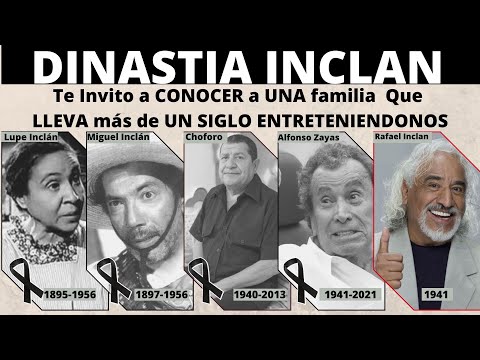
La Dinastía Inclán en la televisión y cine de México | Mas de un siglo de entretenimiento
Introduction to the Inclán Dynasty in Mexican Cinema
Overview of the Inclán Family Legacy
- The video introduces the Inclán dynasty, a prominent family of actors who have entertained audiences in Mexico and Latin America for many years.
- Lupe Inclán is highlighted as a key figure, born to María de Jesús Delgado and Miguel Inclán García, who directed a traveling theater company.
Contributions of Lupe Inclán
- Lupe's brother, Miguel Inclán, was known for his villainous roles in Mexican cinema and often starred alongside her in films like "Las mujeres de mi general" (1952).
- Lupe gained fame through her comedic supporting roles starting in the 1940s, working with major stars such as Jorge Negrete and Pedro Infante.
Notable Works and Recognition
Key Films Featuring Lupe Inclán
- She is best remembered for her performances in award-winning films like "María Candelaria" (1944), which showcased her talent alongside other legendary actors.
- Other significant films include "Capullito de Alelí" (1945), "Allá en el Rancho Grande" (1949), and "El niño perdido" (1947).
Impact on Future Generations
- Lupe had twin daughters who followed in her footsteps into acting; they debuted at the Teatro de las Tandas in Cuernavaca.
- Her grandson Rafael Inclán dedicated an Ariel award win to his grandmother, acknowledging her lack of recognition during her career.
Miguel Inclán's Career Journey
Early Life and Career Beginnings
- Miguel Inclán was born on December 12, 1897. He began his film career with small roles that did not fully showcase his acting abilities.
Rise to Prominence
- His breakthrough came with significant roles during the late 1930s and early 1940s, including portrayals of historical figures like Benito Juárez.
Major Roles and Collaborations
Significant Film Appearances
- In 1944, he worked with Emilio Fernández on "María Candelaria," where he played a pivotal role that established him as a notable actor.
Hollywood Ventures
- Miguel also participated in Hollywood productions such as "The Fugitive" (1947), impressing directors with his brief but impactful performances.
Final Years and Legacy
Later Career Developments
Raúl Padilla Chóforo: A Life in Comedy
Early Life and Background
- Raúl Padilla Chóforo passed away from a heart attack on July 25, 1956, just one month after his sister Lupe's death.
- He was born on May 2, 1940, in Monterrey, Nuevo León, Mexico. His full name is Raúl Padilla Inclán. He was also known as "Chóforo."
- His parents were actors Raúl "Chato" Padilla and Lille Inclán, which influenced his early exposure to the performing arts.
Career Beginnings
- Chóforo began his career shortly after birth; he was born during a tour of the itinerant theater company Carpa Tallita.
- The family tradition continued with other relatives like Rafael Inclán, who also pursued acting careers in comedy.
Rise to Fame
- At just 22 days old, Chóforo made his first appearance as "Niño Dios," showcasing the family's deep roots in performance art.
- He gained significant recognition in the 1970s for his roles in Mexican erotic comedies and became a staple figure on television shows such as "Sábado Gigante."
Notable Works and Collaborations
- Throughout his career spanning over 50 years, he appeared in more than 170 films and collaborated with notable figures like María Elena Velasco and Alejandro Suárez. His last film appearance was in "Buscando Nirvana" (2017).
- He worked alongside María Victoria Cervantes on the series "La criada bien criada," further solidifying his presence in Mexican entertainment.
Personal Life and Legacy
- Rafael Jiménez Inclán is another prominent actor related to him; he transitioned successfully from film to television during the '70s and '80s era of Mexican cinema.