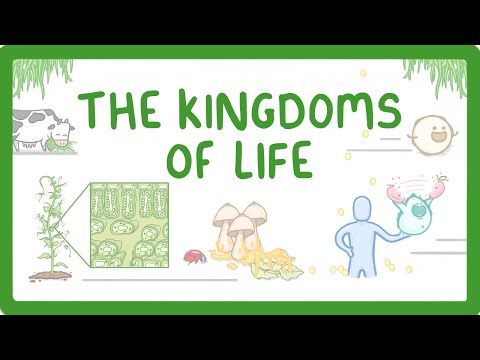
Kingdoms of Life - Animals, Plants, Fungi, Protoctists, Bacteria and Viruses
Key Features and Differences Between Living Organisms
In this section, the video introduces the key features and differences between animals, plants, fungi, protists, bacteria, and viruses.
Animals
- Animals belong to the kingdom Animalia.
- They are multicellular heterotrophs that reproduce sexually.
- Estimated to have between 5 to 10 million different species on Earth.
Plants
- Plants belong to the kingdom Plantae.
- They are multicellular autotrophs that use photosynthesis for energy.
- There are approximately 300,000 plant species on Earth.
Fungi
- Fungi can be multicellular or unicellular organisms.
- They are heterotrophs that obtain energy from other organisms through saprotrophic nutrition.
- Some fungi can be pathogens causing diseases in humans.
Protists
- Protists belong to the kingdom Protista.
- Most protists are unicellular but exhibit a wide variety of characteristics.
- Some protists like Plasmodium can cause diseases such as malaria in humans.
Bacteria
- Bacteria are single-celled organisms found almost everywhere.
- They do not have chloroplasts and feed off living or dead organisms.
- While some bacteria can cause diseases like food poisoning, many play beneficial roles in digestion.
Viruses
- Viruses are extremely small particles that require a host cell to replicate.
Understanding Viruses
In this section, the video explains the basic structure of viruses, their reproduction process, and their classification as pathogens.
Basic Structure of Viruses
- Viruses are tiny particles that do not count as cells and consist of a protein coat surrounding genetic material (DNA or RNA). -
Reproduction Process
- Viruses can only reproduce inside living cells by infecting organisms like animals, plants, fungi, or bacteria. -
Classification as Pathogens
- All viruses are considered pathogens as they cause harm to living organisms by using their cells to reproduce. -
Examples of Viruses
Turn any video into a summary like this
YouTube links, meetings, lectures. With transcripts, search, and chat.