O QUE É UM NEURÔNIO?
Understanding the Brain's Structure and Function
The Composition of the Brain
- Both the heart and brain are made up of cells, but the nervous system cells are unique, contributing to our perception, emotions, and consciousness.
- The brain consists of two main cell types: neurons and glial cells. Glial cells support, protect, nourish neurons, and facilitate their communication.
- Despite glial cells being nearly ten times more numerous than neurons, it raises questions about the myth that we only use 10% of our brains.
Neuron Structure
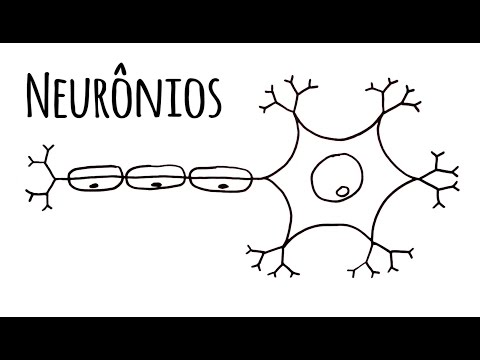
- A neuron comprises a soma (cell body), axon (information transmitter), and dendrites (signal receivers). Axons can vary significantly in length.
- Synapses are contact points between neurons where signals are transmitted; they consist of a pre-synaptic side (sending signal) and a post-synaptic side (receiving signal).
Signal Transmission Process
- When an electrical impulse reaches an axon's end, neurotransmitters are released to be detected by another neuron's dendrite or soma.
- This detection generates an electrical impulse in the receiving neuron through rapid ion movement across its membrane.
Importance of Myelin Sheath
- Most axons have a myelin sheath made of proteins and lipids that insulates parts of the axon, speeding up electrical impulse transmission.
- Damage to myelin sheaths can lead to conditions like multiple sclerosis, disrupting communication between neurons and affecting cognitive and motor functions.
Continuous Information Processing
- The electrochemical transmission process occurs simultaneously across various regions in the nervous system, enabling coordinated actions throughout the body without conscious effort.