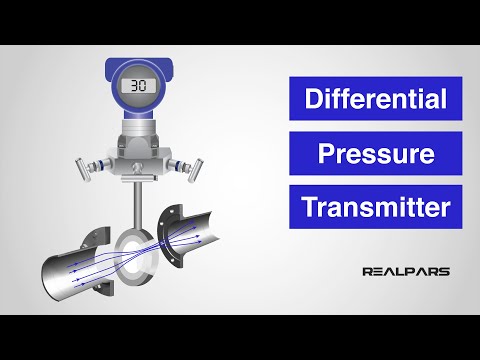
Differential Pressure Transmitter Explained

Differential Pressure Transmitter Explained

Understanding Differential Pressure Transmitters

Introduction to Differential Pressure Transmitters

  • A differential pressure transmitter measures two opposing pressures in a pipe or vessel, crucial for various industrial applications.
  • The video encourages viewers to engage with the content by liking, subscribing, and enabling notifications for future lessons.

Principles of Pressure Measurement

  • Pressure is defined as force applied over an area, typically within pipes or tanks containing fluids or gases.
  • Common units of pressure measurement include Pascal, bar, atm (standard atmosphere), torr, and psi (pounds per square inch).
  • In industrial settings, bar and psi are the most frequently used units due to their widespread calibration among manufacturers.

How Differential Pressure Transmitters Work

  • The term Delta-P (DP) refers to the measured differential pressure; "Delta" signifies change while "P" stands for pressure.
  • DP transmitters consist of a primary element that creates a pressure difference and a secondary element that accurately measures this difference.

Components of DP Transmitters

  • Primary elements can include orifice plates, venturi tubes, pitot tubes, flow nozzles, laminar flow elements, and wedge elements.
  • Sealed diaphragms convert applied pressure into electrical signals using sensors like differential capacitance or strain gauges.

Electrical Signal Processing

  • The output from DP transmitters is often a 4-20 mA signal representing the measured Delta-P; other outputs may be 0 to 5V or 0 to 10V.
  • A linear relationship exists between the electrical signal produced and the actual measured Delta-P; for example, a 12 mA signal corresponds to 50 psi Delta-P.

Applications of Differential Pressure Transmitters

  • DP transmitters are primarily used for measuring fluid levels and flow rates in various applications.

Measuring Flow with DP Transmitters

  • Flow measurement involves creating constrictions in pipes which generate high and low-pressure zones; increased flow results in greater pressure drops.

Utilizing Bernoulli’s Equation

  • Bernoulli's equation relates the pressure drop across constrictions to flow rate squared; this allows conversion of Delta-P into measurable flow units like gallons per minute.

Summary of Key Points

  • A differential pressure transmitter effectively measures flow rates by creating consistent pressure drops within pipes. They are versatile tools compatible with many industrial control systems.
Video description

▶ C'mon over to https://realpars.com where you can learn PLC programming faster and easier than you ever thought possible! ============================= ▶ Check out the full blog post over at https://realpars.com/differential-pressure-transmitter ============================= Simply put, a differential pressure transmitter is a device that measures two opposing pressures in a pipe or vessel. To understand how a differential pressure transmitter works, we need to know some principles of pressure. The pressure is the result of force applied onto a unit of area. In the case of fluid and gas, this area would be the inside of a pipe, tank, vessel or other sealed housing. Since pressure is a physical quantity, it can be measured. The pressure is measured in one of the following five units. – Pascal – Bar – Standard atmosphere or atm – Torr – Pounds per square inch or psi The most commonly used measurements of pressure in an industrial fluid and gas processing environment are bar and psi. One bar is the equivalent of the earth’s atmosphere at mean sea level. A pound per square inch is the force of one pound on an area of one square inch. You will most likely use these units of measurement in your work as they are commonly used and almost every manufacturer of pressure measurement devices calibrate them to these units of measurement. Delta-P or DP is the industry-standard term for the measured differential pressure. Delta, meaning change in, and P meaning pressure. In addition, most people will simply call a differential pressure sensor a DP sensor or transmitter. A DP transmitter is a pressure-measuring gauge or an electrical device that uses two elements to measure the differences of pressure in a sealed container such as a pipe. DP transmitters will have – A primary element – A secondary element – An electronics housing The primary element will produce a difference in pressure as the flow in the pipe increases. Different types of primary elements include – Orifice plates – Venturi tubes – Pitot tubes – Flow nozzles – Laminar flow elements – Wedge elements The secondary element will measure the difference of pressure produced by the primary element as accurately as possible. The primary element is sometimes called the high side, and the secondary element is called the low side. The elements in a DP transmitter will have sealed diaphragms and one of several ways to convert the pressure applied onto the diaphragms into an electrical signal. Sensors such as differential capacitance, vibrating wire or strain gauges are used to produce the electrical signal that will be sent to the electronics housing, where it is processed, converted and amplified into a current or voltage output that can be read by the control system. The current output is commonly a 4-20 milliamp signal, or in some cases a 0 to 5 or a 0 to 10 volt signal. The electrical output generated by the DP transmitter electronic module is linear and proportional to the actual measured Delta-P. Depending on the range of measured pressure, a 4 milliamp signal would equal a measured Delta-P of 0 psi and a 20 milliamp signal would equal the maximum measurable value. In this case, we’ll say that the maximum Delta-P is 100 psi. One very common way of measuring flow using a DP transmitter is for the primary element to introduce a constriction in the pipe. Using a restrictive element on the primary side will create high and low pressure. When the flow increases, more pressure drop is created. As we remember, the secondary element will measure the difference in pressure created by the primary element. These measurements are sent to the electronics housing where the signal processing is done. By using Bernoulli’s equation, which states that the pressure drop across the constriction is proportional to the square of the flow rate, the Delta-P is then converted into units of flow. These units of flow can be gallons per minute or cubic meters per hour. Using DP transmitters as a method to measure flow works best on fluids that are relatively clean and of low viscosity. ============================= Missed our most recent videos? Watch them here: https://realpars.com/sql/ https://realpars.com/as-interface/ https://realpars.com/mysql/ ============================= To stay up to date with our last videos and more lessons, make sure to subscribe to this YouTube channel: http://goo.gl/Y6DRiN ============================= TWEET THIS VIDEO https://ctt.ac/L381e ============================= Like us on Facebook: https://www.facebook.com/therealpars/ Follow us on Twitter: https://twitter.com/realpars Follow us on LinkedIn https://www.linkedin.com/company/realpars Follow us on Instagram https://www.instagram.com/realparsdotcom/ #RealPars #PressureTransmitter #DPTransmitter