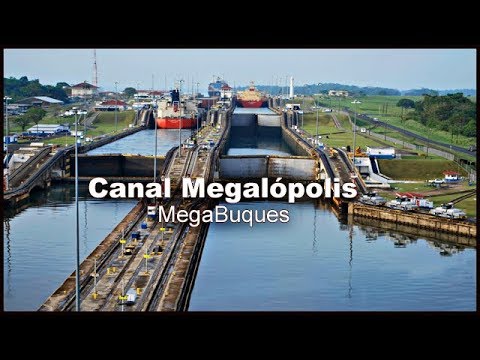
PANAMÁ (El Nuevo Canal Para Grandes Buques) - Documentales
The Panama Canal: A Nautical Marvel in Crisis
Introduction to the Panama Canal
- The Panama Canal is described as a nautical shortcut between the Atlantic and Pacific Oceans, completed in 1914, showcasing remarkable engineering.
- It significantly reduces travel time for ships, saving them from a two-week journey around South America. However, modern shipping demands pose challenges to its current design.
Current Challenges Facing the Canal
- Large cargo ships are putting pressure on engineers to consider redesigning the canal for 21st-century needs; otherwise, it risks becoming outdated.
- If not adapted, the canal could become obsolete due to increasing global trade demands.
Navigating the Canal
- At 6:30 AM at the Atlantic entrance of the canal, expert pilots prepare to take control of vessels like oil tankers with Russian crews. This process requires careful navigation to avoid accidents.
- Pilots undergo eight years of intense training; currently, there are fewer than 200 qualified pilots worldwide due to the specialized nature of this work.
Traffic and Operations
- On average, about 36 ships traverse the canal daily, transporting approximately 450,000 tons of cargo each day. A blockage would halt international trade completely.
- Ships must navigate through three locks that elevate them by 26 meters into Gatun Lake before descending back down to sea level on the Pacific side. The entire transit takes about ten hours under ideal conditions.
Lock Mechanism and Precision Navigation
- Each lock chamber has three interconnected chambers where specialized workers secure steel cables attached to locomotives that guide large vessels through narrow spaces safely. The precision required is likened to surgical accuracy due to potential catastrophic consequences from errors during maneuvering.
- Locomotives can pull significant weight (32 tons), but six are needed for larger vessels weighing up to 60 tons as they enter lock chambers measuring just over 33 meters wide—leaving minimal room for error.
Engineering and Historical Context
- The original controls used in lock operations have remained unchanged for over ninety years; gravity fills chambers with water from Gatun Lake through numerous openings at their base during elevation processes for ships entering locks.
The Panama Canal: A Critical Trade Route
Overview of the Panama Canal's Importance
- Each year, 13,000 ships transit through the Panama Canal, transporting 172 million tons of goods and generating nearly €600 million in toll revenue for the Panamanian government.
- These revenues are at risk if the canal is not redesigned to accommodate modern vessels.
Modern Shipping Trends
- Colossal ships are essential for bulk and container shipping companies; currently, 20% of vessels are this type, with numbers expected to double by 2020.
- Large freighters must navigate a costly detour of 13,000 kilometers around South America due to limitations in canal capacity.
Historical Context and Control Transition
- For 65 years, the U.S. managed the canal under a lease agreement with Panama.
- In 1979, control began transitioning back to Panama, which invested millions in personnel training during a 20-year transition period.
Current Management and Workforce
- The Panama Canal Authority was established as an autonomous entity to manage and maintain the canal post-transition.
- Over 90% of the workforce is now comprised of Panamanians, including many key technical and managerial positions.
Challenges Post-Control Transfer
- Upon regaining full control in late 1999, significant reforms were necessary to keep the canal operational.
- The authority must consider how changes will impact employees and local communities; benefits from projects should prioritize Panamanian citizens.
Infrastructure Improvements
- Under new management, improvements have been made such as more powerful locomotives costing €2 million each for towing ships through locks.
- Enhanced hydraulic mechanisms now operate massive metal gates weighing over 600 tons at lock chambers.
Technological Advancements
- Communication systems between ships and land have been modernized for safety; GPS technology allows precise tracking of vessels traversing the canal.
- Future regulations may require ships crossing the canal to be equipped with onboard tracking systems.
Expansion Plans and Engineering Challenges
- Expanding the Panama Canal involves clearing vast areas of jungle and navigating unstable rock formations while pouring millions of tons of concrete.
- A major challenge includes constructing new locks large enough for supertankers—these would be three times larger than existing ones.
Lake Gatún: The Heart of Operations
- Lake Gatún spans 431 square kilometers; it was once the largest artificial body of water globally and serves as a crucial component in operating the canal by pumping nearly 200 million liters into locks daily.
Water Level Management Issues
- Engineers built Gatún Dam on Chagres River to create Lake Gatún; it was an extraordinary engineering feat at its time.
Rainfall Impact on Operations
- While heavy rainfall replenishes lake levels after drought periods , excessive rain can lead to flooding issues that threaten operations within the canal.
The Challenges and Triumphs of the Panama Canal
Water Level Concerns
- Carlos Vargas notes that the ideal water level for the lake is 26 meters above sea level, but it has reached a dangerous 26.5 meters, necessitating immediate action.
- Vargas, manager of hydrology, activates enormous motors to lift a 57-ton steel gate to manage water levels.
Immediate Actions Taken
- Within five minutes, 75 million liters of water are drained into the sea, reducing the lake's level to a safe 26 meters.
- A tanker successfully navigates through Gatun Lake and approaches one of the most challenging sections known as Culebra Cut.
Navigational Challenges
- The Culebra Cut is described as the narrowest part of the canal with complex curves amidst mountainous terrain, presenting significant navigation challenges.
- These mountains nearly halted the completion of the canal due to their formidable presence.
Historical Context
- The initial concept was straightforward: an 80-kilometer trench connecting the Atlantic and Pacific Oceans.
- Ferdinand de Lesseps initiated this ambitious project in 1873 after his success with the Suez Canal.
Obstacles Faced by Early Efforts
- The Panama Canal presented more difficulties than anticipated due to both geographical features and tropical diseases like malaria and yellow fever.
- Workers faced alarming mortality rates from these diseases at a time when scientists were unaware that mosquitoes transmitted them.
Natural Disasters Impacting Construction
- Heavy rainfall during four months caused severe flooding that washed away months of excavation work; additionally, a major earthquake struck in 1882.
- By 1890, French efforts ceased after losing around 20,000 workers to various challenges; nature had won its first battle against construction efforts.
American Intervention
- Theodore Roosevelt became involved in reviving canal construction in order to enhance U.S. power globally; he appointed John Stevens as chief engineer in 1905.
Health Improvements Under New Leadership
- Stevens focused on improving worker health by eradicating yellow fever and malaria before resuming construction activities.
Engineering Innovations
- After addressing health issues successfully within a year, Stevens turned his attention back to engineering challenges posed by floods from the Chagres River.
Strategic Solutions Proposed
- Instead of fighting against flooding rivers like de Lesseps did, Stevens proposed damming Chagres River’s mouth to create Gatun Lake at an elevation of 26 meters above sea level.
Construction Techniques
- Historical footage illustrates how Stevens designed locks on either side of Gatun Lake for raising and lowering ships across mountain ranges.
Labor Conditions
- Workers faced extreme temperatures reaching up to 40 degrees Celsius while excavating through treacherous mountain terrain.
Final Completion
- The Panama Canal officially opened in 1914 after over three decades of effort costing $400 million and resulting in over 30 thousand lives lost.
Legacy and Recognition
- Celebrated as an engineering marvel connecting two oceans efficiently despite immense natural obstacles; it symbolizes human ingenuity triumphing over nature.
Human Cost Acknowledged
Navigating the Challenges of the Panama Canal
The Risks of Navigation
- A minor error in navigation can lead to catastrophic outcomes, such as colliding with rocks and damaging vessels.
- For those lacking extensive experience like Dave's 25 years, safer alternatives exist for crossing the canal, including advanced simulation technology.
- High-end navigation simulators allow trainee pilots to navigate a virtual canal while facing various challenges like fog and propulsion failures.
Engineering Challenges
- Modern cargo ships have increased in size, prompting engineers to consider redesigning the canal on a larger scale.
- Landslides remain a significant threat to the canal's integrity due to unstable soil composed of rock, clay, and slate layers.
Historical Context
- The completion of the Panama Canal in 1914 was hailed as an engineering marvel and a testament to human ingenuity.
- Just one year post-completion, landslides occurred along the cut banks, highlighting ongoing geological risks.
Maintenance Efforts
- Dredging operations are conducted daily throughout the year to remove debris from the canal.
- Modern dredgers can extract up to 113 tons of sediment at once; this is crucial for maintaining navigability.
Future Developments
- To accommodate larger vessels, dredging efforts will need precision and increased production demands.
- Redesigning the canal involves risks that require careful consideration regarding methods and approaches.
Engineering Innovations for New Locks
Current Operations
- Dave’s tanker successfully navigates through critical sections but must still pass through Pedro Miguel locks that lower it significantly into Miraflores Lake.
Proposed Solutions
- New lock designs could be constructed adjacent to existing ones, allowing smaller vessels access while accommodating larger modern ships in new locks.
Global Collaboration
- Panama has invited global engineers to contribute ideas for new projects aimed at enhancing canal infrastructure.
Team Selection Process
- Two engineering teams were selected: one American team focusing on Atlantic locks and one European team for Pacific locks.
Geological Considerations in Design
Geological Challenges
- The geology of Panama presents significant obstacles; soft rock conditions differ between Atlantic (soft rock) and Pacific (hard rock), influencing design choices for new locks.
Innovative Techniques
- Engineers are exploring new technologies used successfully elsewhere (e.g., Ohio River projects), which may inform construction strategies for Panama’s new structures.
Construction Strategies
Alternative Construction Methods
- Engineers proposed innovative solutions like constructing components on land before floating them into place rather than building large dry docks directly in water bodies.
Designing New Lock Gates for the Panama Canal
Challenges in Lock Gate Design
- The new lock gates need to be significantly larger, almost as tall as a ten-story building, presenting engineering challenges.
- José de Reggae and his team believe they can improve the current design of the lock gates, which operate like hinged windows.
- They propose using sliding gates similar to those found in Antwerp, known for their robustness.
Advantages of Sliding Gates
- Sliding gates are thicker and more resistant, better able to withstand water pressure compared to traditional designs.
- Water enters the chamber through pipes rather than from below, making it a more efficient method than that used in the Panama Canal.
- This design simplifies construction and maintenance since filling and emptying systems are located on side walls instead of the floor.
Maintenance and Size Considerations
- Workers can maintain sliding gates without shutting them down by closing a reinforcement gate while draining water from the main gate.
- The Belgian gates' dimensions are massive—equivalent to two-thirds of a football field in length, seven stories high, and 18 meters wide.
- Each gate weighs about 1,400 tons (equivalent to five Boeing 747 aircraft), but Panama's new sliding gates would need to weigh double that.
Engineering Solutions for Heavy Gates
- Engineers face challenges moving a 2,700-ton gate through a 60-meter-wide lock; buoyancy reduces its effective weight to just 90 tons.
Testing Designs Before Implementation
- Before finalizing any design, it must undergo testing with scale models at an Army Corps of Engineers lab in Mississippi.
- Working at this lab is enjoyable for engineers who often feel like "big kids with big toys," especially when seeing improvements from their designs.
Safety Concerns During Operations
- Engineers test how well the gates perform under high water pressure; uniform water rise is crucial for preventing accidents during vessel transit.
Economic Implications of Canal Expansion
- Crossing the canal costs ship owners €295,000 in toll fees—a bargain compared to longer routes around South America.
Addressing Water Supply Issues
- The expansion faces another challenge: ensuring sufficient water supply from Gatun Lake for raising large vessels through new locks.
Potential Solutions Explored
- Reducing Lock Chambers:
- One option considered was reducing chambers from three to two; however, this risks potable water supplies due to increased saltwater intrusion.
- Creating a New Lake:
- Another solution involves constructing a new lake via damming nearby rivers but poses social issues due to house expropriations.
- Boat Elevators:
-(2300)s A German-designed boat elevator adjusts chamber height instead of raising water levels—efficient but challenging given vessel weights.
- Water Recycling Tanks:
Water Management and Earthquake Risks in Panama Canal Expansion
Water Management Strategies
- The upper lock chamber collects water into a nearby tank instead of discharging it into the river.
- Engineers can reuse stored water from temporary tanks to elevate other barges, aiming for a similar system in new locks to manage large modern cargo ships efficiently.
- Despite potential solutions for water management, engineers face significant natural threats that could undermine their efforts.
Seismic Activity Concerns
- Panama has seen an increase in minor earthquakes due to geological plate movements; however, no major quakes have occurred since 1882.
- The recent seismic activity may indicate pressure release without immediate danger but could also signal the onset of a more severe earthquake.
- A catastrophic scenario would involve damage to the Gatun Dam, which could drain the lake within six days and halt canal operations for three years.
Structural Integrity and Design Challenges
- The Gatun Dam's walls are approximately 120 meters high; even pessimistic studies do not predict a quake strong enough to cause significant cracking.
- Engineering teams are focused on minimizing earthquake impacts on new locks, recognizing that any structure will sustain some damage during a major quake.
Historical Significance and Future Prospects
- For nearly a century, the Panama Canal has been crucial for international trade and symbolizes industrial achievement.
- Engineers must now consider building larger canals to prevent current structures from becoming obsolete while acknowledging nature's unpredictable challenges.
Hypothetical Catastrophic Scenario
- Speculation about how locks might withstand a devastating earthquake raises concerns about future infrastructure resilience.
- In this hypothetical scenario set in 2030, an enormous earthquake disrupts operations as a supercargo ship navigates through newly constructed locks.
Conclusion: Future of Panama Canal Expansion
- After ten hours of transit through the canal, ships may soon be able to navigate larger vessels through an expanded canal system.
- However, expanding the canal presents design challenges beyond those faced by original construction teams.
Turn any video into a summary like this
YouTube links, meetings, lectures — with transcripts, search, and chat.