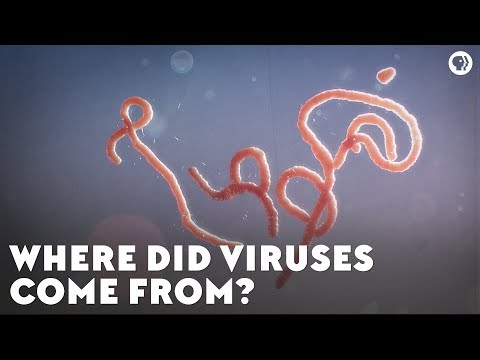
Where Did Viruses Come From?
The Impact of Viruses on Life
Introduction to Viruses
- The discussion begins with the acknowledgment of viruses as tiny entities that, despite their simplicity, have a significant impact on the history of life.
- Viruses lack a fossil record due to their small size and fragility but can be traced through the DNA of infected hosts.
Understanding Viral Evolution
- Viruses consist of genetic material (DNA or RNA) encased in protein and rely on host cells for reproduction.
- Paleovirology is introduced as a field that studies ancient viruses by examining the genomes of their hosts, revealing insights into viral evolution.
Mechanism of Viral Infection
- Viruses hijack host cell machinery to replicate, often integrating their genome into the host's DNA without causing immediate harm.
- If integrated into germ cells, viral genomes can be inherited by future generations, acting as molecular fossils.
Dating Ancient Viruses
- The mutation rate of integrated viral DNA is slower than free-floating viruses, allowing scientists to estimate the age of these viral remnants.
- By comparing sequences from different organisms, researchers can trace back common ancestors and determine how long certain viruses have existed.
Examples and Findings in Paleovirology
- Circoviruses were initially thought to be less than 500 years old but are now believed to date back 68 million years based on genomic evidence across species like dogs and cats.
- Research has suggested that bracoviruses could date back 310 million years ago during the Carboniferous Period.
Human Connection to Viral History
- A gene in mammals called CGIN1 is linked to retroviruses and dates back between 125 and 180 million years ago, indicating our evolutionary connection with viruses.
- Approximately 8% of the human genome consists of sequences derived from ancient viral infections.
Theories on Virus Origin
- Two main models regarding virus origins are discussed:
- Virus-first model suggests that viruses predate cellular life due to their simplicity.
- Escape hypothesis posits that viruses evolved from within cellular genes after cells had already formed.
This structured overview captures key concepts about viruses' roles in evolution while providing timestamps for easy reference.
Are Viruses Alive? Exploring the Nature of Viruses
The Origin and Complexity of Viruses
- Some experts propose that pieces of DNA could evolve to create a protein coat, allowing them to escape cells and become viruses.
- The discovery of giant viruses like Mimivirus (750 nanometers across) challenges traditional views on virus size and complexity; they infect amoebas but possess more genes than typical viruses.
- A theory suggests that viruses were once free-living organisms that developed a symbiotic relationship with hosts, which eventually became parasitic over time.
- Recent research questions the regressive model for Mimivirus, suggesting its extra genes may simply be random remnants acquired from hosts rather than evidence of complex ancestry.
Defining Life: Are Viruses Included?
- The debate on whether viruses are alive hinges on definitions of life; while they can reproduce and evolve, they cannot produce energy or maintain internal stability.
- This ambiguity places viruses in a "gray area" regarding their classification as living entities; some suggest viewing them as vines intertwined with the tree of life rather than distinct branches.
The Impact of Viruses on Life
- Despite their controversial status, viruses play significant roles in ecosystems and human health, contributing to both disease and biological diversity.
- Thanks to Curiosity Stream for supporting PBS Digital Studios by providing access to documentaries about science, nature, and history.