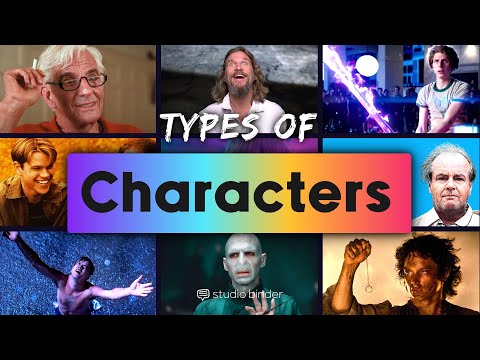
4 Types of Characters in a Film — Flat vs. Round & Static vs. Dynamic
Character Types in Storytelling
Understanding Character Complexity
- The discussion begins with a humorous take on character traits, emphasizing the importance of character complexity and originality.
- Knowing different character types helps writers avoid stereotypes and better understand how characters function within narratives.
Flat vs. Round Characters
- Characters are categorized as flat (one-dimensional) or round (multi-dimensional), a concept introduced by E. M. Forster in his book Aspects of the Novel.
- Flat characters embody a single idea, while round characters display human contradictions and undergo change throughout the story.
Static vs. Dynamic Characters
- Static characters remain unchanged from beginning to end, whereas dynamic characters evolve over time.
- The categorization of characters is not binary; they exist on a spectrum, making their classification subjective.
Usage of Flat Characters
- Flat characters can serve peripheral roles without bogging down the narrative with unnecessary complexity.
- Example: Samwise Gamgee from The Lord of the Rings is portrayed as a flat character contrasting with Frodo's deeper inner conflicts.
Role in Comedy and Satire
- Flat characters often provide comic relief, such as Brick in Anchorman, who delivers punchlines without depth.
- In satires like Dr. Strangelove, flat protagonists represent stereotypes that enhance the film's comedic impact.
Protagonists: Flat vs. Round
- While flat protagonists can be effective for spectacle-driven films (e.g., early James Bond movies), round protagonists offer more depth and unpredictability.
- Jay Gatsby from The Great Gatsby exemplifies a round protagonist whose complex motives add layers to his relationships.
Subverting Expectations with Round Characters
- Round protagonists can subvert audience expectations, as seen with Elle Woods in Legally Blonde, who reveals unexpected depth beyond her initial appearance.
- Character-driven films require round protagonists to explore inner complexities that drive core conflicts within the narrative.
Complex Relationships in Character Development
Character Development in Narratives
The Irony of Attention and Character Types
- The speaker reflects on the irony of feeling pity for others, including their own children, due to their longing for attention, contrasting this with a sense of independence.
- It is emphasized that characters can be either flat or round, but it's crucial to identify if they are static or dynamic as well.
- Static characters provide a consistent point of comparison; for instance, Chucky Sullivan in "Good Will Hunting" inspires Will's evolution while remaining unchanged himself.
Static Characters and Their Role
- Static characters often serve as sources of conflict; antagonists typically remain static to maintain narrative tension.
- Principal Rooney in "Ferris Bueller's Day Off" exemplifies a static character who consistently threatens the protagonists' enjoyment throughout the film.
- In "The Big Lebowski," the Dude remains largely unchanged, which enhances the absurdity surrounding him amidst chaotic events.
Dynamic Characters and Their Arcs
- Dynamic characters can offer satisfying arcs by overcoming personal flaws; Scott from "Little Miss Sunshine" learns about self-respect through his experiences.
- A dynamic character’s journey often mirrors real-life growth; Mason in "Boyhood" undergoes changes that reflect common life transitions.
Emotional Journeys Over Traditional Plots
- In character-driven narratives like "About Schmidt," Warren Schmidt embarks on an existential journey post-retirement, assessing his life's meaning during a road trip.
- The emotional journeys of characters can create narrative peaks without relying heavily on traditional plot structures, as seen in "The Breakfast Club."
Character Change Dynamics
- Characters may change at different rates within a story; Rick Blaine from "Casablanca" starts resolute but ultimately acts selflessly at the end.
- The sudden shift in Rick’s character heightens drama and impact during pivotal moments in narratives.
Character Analysis in "The Shawshank Redemption"
Overview of Key Characters
- "Get busy living, or get busy dying." This quote encapsulates the film's central theme and highlights the memorable characters that populate its narrative.
- Frank Darabont adapts Stephen King's novella, utilizing a variety of character types to enhance the plot and enrich the storytelling experience.
Captain Hadley: The Flat Character
- Captain Hadley exemplifies a flat and static character; he is portrayed as cruel and vindictive throughout the film.
- His infamous line, "I ain't gonna count to three. I'm not even gonna count to one," showcases his aggressive nature, which remains unchanged.
Andy Dufresne: The Complex Protagonist
- Andy Dufresne is characterized as a round and static character; he possesses depth but does not undergo significant change during the story.
- Despite being wrongfully convicted for murder, Andy's unwavering desire for freedom drives the plot forward.
Red: The Dynamic Character
- Red serves as a round and dynamic character who evolves throughout the film; his friendship with Andy transforms him from cynicism to hope.
- He reflects on hope being "a dangerous thing," indicating his initial skepticism before embracing optimism through their bond.
Brooks: A Cautionary Tale
- Brooks represents a dynamic yet relatively flat character; initially depicted as kindly, he becomes moody after gaining freedom.
- His tragic arc serves as a warning for Andy about losing oneself in prison life—"the world went and got itself in a big damn hurry."
Conclusion on Character Types
- Different character types contribute richness to storytelling; no single type is superior when used purposefully within narratives.