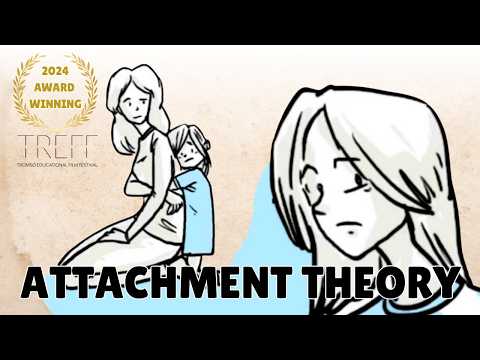
The Attachment Theory: How Childhood Affects Life
Attachment Theory and Its Impact on Development
Understanding Attachment Theory
- The attachment theory posits that a strong emotional and physical bond with a primary caregiver during early childhood is crucial for development. A secure attachment allows children to explore the world confidently, knowing they have a safe base to return to.
- Conversely, weak bonds lead to insecure attachments, causing fear of exploration due to uncertainty about returning to safety. This insecurity can hinder personal growth and social interactions later in life.
Types of Attachments
- Securely attached individuals tend to exhibit greater trust, better social skills, and higher success rates in life compared to those with insecure attachments. Insecure attachments are categorized into three types: Anxious/Ambivalent, Anxious/Avoidant, and Anxious/Disorganized.
- Each type reacts differently under distress; the first three show organized responses while the last exhibits disorganized behavior. Understanding these distinctions is essential for recognizing attachment styles in various contexts.
Case Study: The Smith Family
- Mr. and Mrs. Smith are depicted as loving parents who provide warmth and attention until Mr. Smith's untimely death disrupts their family dynamic. This change significantly impacts each child's attachment style based on their age and coping mechanisms at the time of loss.
Luka (6 years old)
- Luka feels securely attached despite his father's death because he perceives his mother as a reliable source of support, leading him to develop into a trusting young man with a positive self-image.
Ann (3 years old)
- Ann struggles with her mother's unpredictability following the loss, becoming clingy and anxious in seeking attention through heightened emotional displays like screaming, which leads her to develop an Anxious/Ambivalent attachment style characterized by moodiness later in life.
Joe (2 years old)
- Joe experiences strictness from his uncle that discourages emotional expression; this results in an Anxious/Avoidant attachment style where he learns to suppress feelings out of fear of punishment, negatively impacting his adult relationships and self-image.
Amy (1 year old)
- Amy's experience at an abusive nursery creates confusion around love and safety; she develops an Anxious/Disorganized attachment style that leads her to avoid social situations altogether as she grows up feeling unworthy of love due to unresolved fears from her early experiences.
Effects of Toxic Stress
- Early childhood stress can lead to toxic stress when experienced frequently without resolution; this condition impairs brain development and weakens immune function over time, potentially affecting health decades later through gene expression changes during critical developmental periods such as pregnancy or infancy.
Assessing Attachment Styles
- The "Strange Situation" experiment simulates conditions for assessing children's attachment styles by observing their reactions when separated from their mothers; securely attached children typically seek comfort upon reunion before resuming play while insecurely attached children may display ambivalence or avoidance behaviors instead.
Long-Term Implications of Attachment Styles