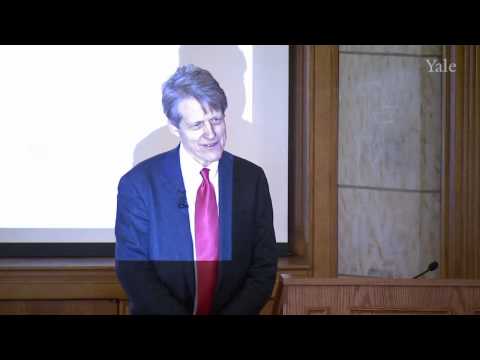
1. Introduction and What this Course Will Do for You and Your Purposes
Financial Markets Course Introduction
In this section, Professor Robert Shiller introduces the Financial Markets course, emphasizing its relevance to real-world applications and societal impact.
Course Focus and Importance
- The course title "Financial Markets" signifies a practical approach to understanding finance in everyday life.
- Finance plays a crucial role in society by allocating resources, incentivizing productivity, managing risks, and fostering fair treatment.
- Emphasis on the philosophical underpinning of finance while delving into intricate details of financial mechanisms.
Course Scope and Topics
- Broad interpretation of finance covering banking, insurance, securities, futures markets, derivatives markets, financial crises, and future trends.
- Acknowledgment of a U.S. bias but commitment to incorporating a global perspective due to the diverse audience reach through Open Yale.
Course Update and Global Financial Landscape
Professor Shiller discusses the significance of updating the course content given the dynamic nature of global financial markets.
Course Evolution and International Focus
- Recognition of the need for course updates due to ongoing financial turmoil worldwide post the Great Recession.
- Emphasis on international cooperation in reshaping financial institutions highlighted by organizations like G-20.
Comparative Analysis with Another Finance Course
- Contrasting Economics 251 taught by Professor John Geanakoplos as more theoretical and mathematical compared to Financial Markets course's practical orientation.
Instructor's Course Introduction and Purpose
In this section, the instructor introduces the course structure, emphasizing a balance between mathematical principles and intuitive understanding. The purpose of the course is clarified, focusing on practical applications in the real world.
Course Structure and Review Sessions
- The course will prioritize institutions and history over mathematics to cater to a broader audience.
- Review sessions with teaching assistants will cover theory similar to Geanakoplos' course, accompanied by problem sets for practical application.
- The instructor boasts about the course's utility in preparing students for real-world endeavors.
Importance of Finance and Purpose
- Emphasizes that finance knowledge is essential for all individuals, not just those pursuing finance careers.
- Suggests that finance should be a required course due to its fundamental role in shaping significant life decisions.
Vocational Aspect of Finance
- Challenges the notion that finance is solely about making money, highlighting its role as a technology for enabling actions.
- Discusses how finance aligns with Yale College's liberal arts tradition while emphasizing its vocational relevance without being purely utilitarian.
Finance as Engineering and Textbook Choice
- Views finance as a form of engineering involving people rather than technical apparatus.
- Introduces the textbook by Fabozzi, Modigliani, and Jones as a detailed resource reflecting the instructor's personal connections and research collaborations.
Importance of Details in Finance
This section delves into the significance of understanding intricate details within finance through personal anecdotes and reflections on textbook choices.
Personal Connection to Textbook Authors
- Shares personal connections with textbook authors Fabozzi and Modigliani through joint research papers.
Value of Detailed Understanding
- Reflecting on reading the textbook during vacation highlights the importance of delving into financial intricacies for comprehensive knowledge.
Emphasis on Exam Content
Finance and Education
In this section, the speaker discusses the importance of learning finance in detail, akin to learning a language. They mention working on a book titled "Finance and the Good Society" and emphasize the significance of understanding finance in today's world.
Importance of Learning Finance
- Learning finance is compared to learning a language where mastering details is crucial.
- The speaker is working on a book titled "Finance and the Good Society," highlighting the relevance of finance education.
- The book aims to provide insights into finance amidst societal perceptions post-financial crisis.
Perspective on Finance
This segment delves into the speaker's perspective on finance, addressing societal views post-financial crisis and emphasizing the noble aspect of finance as a profession.
Finance Perception Post-Financial Crisis
- The title "Finance and the Good Society" may seem contradictory due to negative public sentiments towards finance post-crisis.
- Despite immoral practices in finance, it is viewed as a noble profession by the speaker.
- Emphasizes guiding young individuals towards moral and purposeful careers in finance for societal betterment.
Role of Finance in Society
This part focuses on how modern society heavily relies on financial systems for growth and development, highlighting the importance of understanding finance for societal progress.
Significance of Finance in Modern Society
- Modern society operates within a capitalist framework heavily reliant on financial structures for functioning.
- Multinational institutions owned by numerous shareholders globally drive economic activities through financial mechanisms.
Finance and Wealth Perception
In this section, the speaker delves into the perception of finance as a means to accumulate wealth and challenges common stereotypes associated with financial success.
Finance Beyond Wealth Accumulation
- Forbes 400 List: Contrary to popular belief, the Forbes 400 list of the richest people in America does not primarily consist of athletes or movie stars. Instead, individuals like Oprah Winfrey, who have a strong understanding of finance and run significant businesses, feature prominently.
- Finance for Building Organizations: Finance plays a crucial role in building organizations by facilitating capital raising on a large scale. The power dynamics between athletes and individuals on the Forbes 400 list highlight the impact of finance in creating substantial wealth.
- Common Traits of Wealthy Individuals: Most individuals on the Forbes 400 list have self-made fortunes through engaging in large-scale business activities rather than inheriting wealth. They operate in industries that involve making deals, acquiring companies, and orchestrating significant transactions.
The Essence of Finance
- Business Operations at Scale: Successful individuals on the Forbes 400 list engage in mundane yet impactful business ventures conducted on a vast scale. Their ability to make deals, merge companies, and mobilize resources underscores the essence of finance beyond mere mathematical calculations.
- Forbes Celebrity 100 Distinction: While celebrities like Oprah Winfrey and Steven Spielberg straddle both lists due to their entertainment industry involvement, finance transcends mere numerical calculations. It involves orchestrating deals, motivating stakeholders, and mobilizing resources for impactful outcomes.
Wealth Utilization and Social Perception
This segment explores societal perceptions surrounding extreme wealth accumulation and highlights historical disdain towards ostentatious displays of affluence.
Utilizing Extreme Wealth
- Maximizing Appearance vs. Meaningful Actions: Individuals amassing immense wealth face dilemmas regarding its utilization. While some opt for extravagant displays to showcase affluence through grandiose possessions like mansions or cars, questions arise about the meaningfulness behind such actions when excessive wealth is involved.
- Historical Disapproval of Conspicuous Consumption: Throughout history, societies have enacted sumptuary laws to curb conspicuous consumption patterns that flaunt excessive riches. Such regulations reflect widespread disapproval towards individuals solely focused on showcasing their wealth without contributing meaningfully to society.
Rethinking Wealth Objectives
- Shift Towards Purposeful Wealth Distribution: A contemporary global movement emphasizes reevaluating traditional notions of wealth acquisition by emphasizing philanthropic endeavors as an essential aspect of extreme affluence. Building businesses successfully must align with giving back significantly for enduring impact.
The Gospel of Wealth by Andrew Carnegie
The discussion revolves around Andrew Carnegie's concept of "The Gospel of Wealth," emphasizing the moral obligation of wealthy individuals to engage in philanthropy for the benefit of humankind.
The Moral Imperative of Philanthropy
- Carnegie believed that individuals who have amassed wealth, particularly by middle age, have a moral duty to engage in philanthropy.
- According to Carnegie, those adept at business and wealth creation are obligated to use their talents for the betterment of society.
- The theory posits that individuals with practical and business acumen should actively contribute to benefiting mankind through their fortunes.
Critique and Real-world Examples
- While acknowledging some truth in Carnegie's philosophy, there is a recognition that it may not be entirely accurate.
- Carnegie's philanthropic endeavors include establishing educational institutions like Carnegie Mellon University and contributing to various causes.
- Thomas Edison's admiration for Carnegie led him to create a sound movie featuring Carnegie reading from "The Gospel of Wealth."
Philanthropy and Finance in Modern Society
Explores contemporary perspectives on wealth distribution, philanthropic initiatives among billionaires, and the evolving role of finance-related fields in societal impact.
Contemporary Views on Philanthropy
- Bill Gates, Warren Buffett, and other billionaires advocate for giving away most wealth during one's lifetime.
- Historical critiques highlight skepticism towards the noble cause of making wealth and distributing it altruistically.
Financial Careers and Social Responsibility
- Concern over increasing wealth concentration prompts reflection on future trends and challenges within society.
- Discussion on the potential bubble in financial careers leading to decreased profitability over time but recognizing finance-related individuals' enduring influence.
Exemplary Figures in Finance: David Swensen
Focuses on David Swensen as an exemplar in finance due to his impactful management of Yale University's endowment fund.
David Swensen: A Financial Steward
- Swensen transformed Yale's endowment from less than $1 billion into significant sums through astute investment strategies.
Financial Leaders and Their Impact
In this section, the speaker introduces two prominent figures in finance, highlighting their contributions and impact on the industry.
Maurice "Hank" Greenberg
- Maurice "Hank" Greenberg founded AIG in 1962 and transformed it into the world's largest insurance company during his tenure as CEO until 2005.
- Despite criticism following AIG's financial crisis bailout, Greenberg is viewed as having a moral purpose and being involved in philanthropy and think tanks.
- Greenberg's involvement extends to serving as Vice Chairman for the Council on Foreign Relations, showcasing his multifaceted engagement beyond business.
Laura Cha
- Laura Cha, a key figure in finance based in Hong Kong, holds significant roles within the government of China and has affiliations with Yale University.
- As a non-official member of the Executive Council of Hong Kong and vice ministerial rank official in China, Cha brings diverse expertise to the field of finance.
Insights into Behavioral Finance
This segment delves into Behavioral Finance, an interdisciplinary approach merging psychology and sociology with financial theory to understand market behaviors.
- Behavioral Finance explores how psychological factors influence financial decisions, challenging traditional views that solely emphasize mathematical aspects.
- The study of mutual funds under Behavioral Finance reveals complexities in fee structures that may not align with clients' best interests.
- Analysis suggests mutual fund managers may engage in practices that could be perceived as manipulative due to competitive pressures within the industry. Regulators play a crucial role in addressing such issues.
Role of Regulators in Finance
The discussion shifts towards regulatory oversight within finance and emphasizes its importance in maintaining ethical standards and protecting consumer interests.
- Regulators like Laura Cha are essential for ensuring accountability and ethical conduct within financial institutions.
Probability and Risk Concepts
In this section, the speaker discusses probability concepts and the impact of independent risks on portfolio diversification.
Probability and Independent Risks
- Risks can be diversified if they are independent, leading to a minimized portfolio risk.
- The financial crisis was partly due to the assumption of independence among risks in portfolios.
- The 1929 financial crisis resulted in widespread unemployment globally, leading to significant economic challenges.
- Similarities between past crises and modern-day financial instabilities highlight the importance of proactive measures like bailouts.
Financial Crisis and Recovery
This part delves into the causes of financial crises, government interventions, and recovery strategies.
Financial Crisis Causes and Interventions
- Financial market crashes are likened to airplane crashes - occasional but not a reason to abandon the system.
- Finance is considered a technology that evolves with time, driven by principles and inventions.
- Financial institutions' complexity is compared to intricate systems like airplanes or nuclear reactors.
Future of Finance
Exploring predictions about the future of finance amidst technological advancements and globalization.
Predicting Future Trends
- Forecasting finance's future is challenging; it involves envisioning possibilities based on evolving technologies and global integration.
Portfolio Diversification and Real-world Applications
Discussing portfolio diversification theories alongside real-world applications in financial institutions.
Portfolio Diversification Insights
Independence of Risks
The speaker discusses the significance of probability theory in understanding risks, highlighting the role of insurance in mitigating losses and saving lives.
Importance of Insurance
- Probability theory was crucial in revealing uncertainties regarding risks.
- Disparity in earthquake outcomes between Haiti and San Francisco due to insurance coverage.
- Lack of insurance in Haiti led to higher losses and loss of life.
Efficient Markets Theory
The speaker introduces Efficient Markets Theory, emphasizing its implications for financial markets and investment strategies.
Understanding Efficient Markets
- Efficient Markets Theory suggests market prices reflect all available information.
- Debate on whether professional money managers can outperform the market.
Debt Markets
Discussion on debt markets, their significance, opportunities, and challenges they present.
Insights into Debt Markets
- Debt markets play a fundamental role in enabling various life goals like homeownership.
- Federal Reserve's role in managing debt markets through operations like Quantitative Easing.
Stock Market
Exploring the concept and purpose of stock markets as mechanisms for capital allocation and incentivization.
Stock Market Functionality
- Stock market serves as a platform for raising capital and incentivizing contributors.
- Importance of stock investments in fostering collaboration and enterprise development.
Real Estate Dynamics
Delving into real estate dynamics, particularly focusing on home price indices and their impact on economic outlook.
Real Estate Analysis
- Real estate market's speculative nature influenced by psychological factors.
Banking and Regulation
This section delves into banking, credit expansion, the money multiplier, and bank regulation. It highlights the significance of international accords like Basel III in preventing crises.
Banking System Stability
- Lecture focuses on banking, credit expansion, money multiplier, and bank regulation.
- Emphasizes the importance of new regulations like Basel III to prevent future crises.
Forwards and Futures Markets
Discussion on forward and futures markets, distinguishing between over-the-counter contracts and futures contracts traded on exchanges.
Forward and Futures Contracts
- Explains forward markets for future delivery contracts done over-the-counter.
- Discusses futures markets traded on exchanges like the Chicago Mercantile Exchange.
Options Markets
Focuses on stock options trading on options exchanges and their impact on financial theory complexity.
Stock Options Trading
- Describes stock options allowing share purchase/sale at pre-specified prices.
Monetary Policy
Explores monetary policy involving central banks like the Federal Reserve in crisis prevention efforts.
Central Banks Role
- Discusses how central banks help prevent financial crises.
Investment Banking Regulations
Examines investment banking functions such as capital raising, securities issuance/retirement, alongside regulatory changes like Dodd-Frank.
Investment Banking Functions
- Details roles of investment bankers in capital raising activities.
Professional Money Managers
Focuses on professional money managers' role in managing portfolios effectively with a broader societal impact beyond profit-making.
Portfolio Management Impact
- Highlights institutional investors' power as stewards of public interest through portfolio management.
Exchanges Evolution
Explores the evolution of exchanges worldwide towards electronic platforms with advanced features like microsecond trading.
Exchange Dynamics
- Discusses proliferation of electronic exchanges globally with innovative trading mechanisms.
Public and Nonprofit Finance
Examines financing mechanisms for governments (public finance) and organizations (nonprofit finance), emphasizing their critical role in infrastructure development.
Government Financing
- Details government financing processes for essential projects like infrastructure development.
Moral Purpose in Finance
Concludes by emphasizing a moral purpose in finance beyond wealth accumulation towards societal contributions through philanthropy.
Ethical Finance Perspective
Purpose in Finance
In this segment, the speaker discusses the purpose of finance, particularly among wealthy individuals, referencing Robert Frank's book "Richistan" and the idea of using wealth for good.
Wealthy Individuals' Purpose in Finance
- The speaker mentions that wealthy individuals often spend money on extravagant items but also have a notion of doing good for the world.
- Robert Frank's book "Richistan" is highlighted as a reference point to understand the behavior of wealthy people in contemporary society.
- Despite some individuals being excessively rich and indulging in frivolous spending, there is an underlying belief among many that they can contribute positively to society.
Turn any video into a summary like this
YouTube links, meetings, lectures — with transcripts, search, and chat.