William Ackman: Everything You Need to Know About Finance and Investing in Under an Hour | Big Think
Introduction to Finance and Investing
In this section, Bill Ackman introduces himself as the CEO of Pershing Square Capital Management and explains that he will be discussing everything you need to know about finance and investing in an hour.
Starting a Business
- To start a lemonade stand business, Bill Ackman needs to raise money from investors by forming a corporation.
- The business is called "Bill's Lemonade Stand" and they sell 1,000 shares of stock for $1 each. An investor buys 500 shares for $500, making him own one-third of the business.
- Bill Ackman borrows $250 from a friend at 10% interest instead of selling more stock to keep more stock for themselves.
- A balance sheet shows that the company has assets worth $1,750 ($500 cash + $300 fixed asset + $200 inventory + $1,000 goodwill), owes $250 in loans, and has shareholder equity worth $1,500.
Running the Business
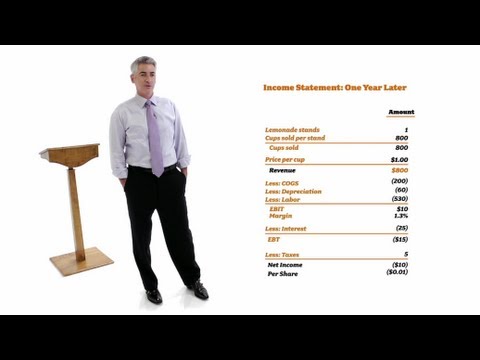
- The cost of staffing the lemonade stand is estimated at around $530 per year.
- Assuming they sell 800 cups of lemonade at their stand for $1 each year-round with seasonal fluctuations, they generate about $800 in revenue per year.
- After deducting expenses such as inventory costs and labor expenses from revenue on an income statement, they have earnings before interest and taxes (EBIT) of $10.
Evaluating a Business
In this section, the speaker evaluates whether a business is worth investing in by analyzing its cash flow statement and balance sheet.
Is it a Good Business?
- The business is losing money and cash is decreasing over time.
- The cash flow statement shows that some money goes to pay for the lemonade stand, while some money is lost selling the product.
- The balance sheet shows that fixed assets are starting to wear out.
- Shareholder's equity has decreased due to losses incurred in the first year.
- Projections show that if all cash generated by the business is reinvested, prices are raised each year, and more stands are opened, revenue will grow fairly quickly.
- By year five, earnings before taxes after interest are $2,300 with a profit of $1,500 or about a dollar per share.
Cash Flow Statement and Balance Sheet
In this section, the speaker analyzes how profitability affects the company's cash flow statement and balance sheet.
Cash Flow Statement
- As the business becomes more profitable, it generates more cash which builds up in the company.
- Cash increases from $500 to over $2,000 over time.
Balance Sheet
- Profits add to the assets of the company while liabilities remain constant.
- Shareholder's equity increases from $1,490 at start-up to $4,000 by year five.
Good vs. Bad Businesses
In this section, the speaker discusses how to evaluate whether a business is good or bad based on return on investment and profitability.
Return on Investment
- The initial valuation was $1,500 with an investment of $500 for one-third of the company.
- By year five, earnings are over $1,500 or a 100% return on investment.
Profitability
- Return on capital is over 100%.
- Earnings have grown at a rate of 155% per annum.
- Profitability has increased from 1.3% to 28.6% by year five.
Debt vs Equity
This section explains the difference between debt and equity investments, and why equity investors earn more than lenders.
Debt vs Equity
- Lenders have a senior claim on assets and are entitled to a safer investment with limited profit opportunities.
- Equity investors take more risk and have the potential for higher returns. They get everything left over after debt is paid off.
- Lenders are willing to take lower returns because they have a safer investment. Stockholders take on more risk but can earn higher returns if the business is successful.
Types of Debt
This section explains different types of debt investments.
Types of Debt
- Mortgage debt, senior debt, junior debt, mezzanine debt, convertible debt are all forms of debt.
- The rate charged for loans is inversely related to security. The better the security, the less risk and lower interest rate you receive.
Residual Claim
This section explains what residual claim means in equity investments.
Residual Claim
- Equity gets everything left over after paying off debts. It's called a residual claim.
- Lenders take on less risk but also have limited profit opportunities. Stockholders take on more risk but can earn higher returns if the business is successful.
Risk Assessment
This section explains how to assess risks when investing in businesses.
Risk Assessment
- Focus on the chances of losing your money permanently when investing in a business.
- Compare your risk to other alternatives, such as government bonds, which are considered the lowest risk form of investment.
Raising Capital
This section explains how businesses raise capital.
Raising Capital
- Businesses can raise capital through debt or equity investments.
- Lenders charge higher interest rates for higher-risk businesses. Equity investors expect higher returns for higher-risk businesses.
Raising Money for a Business
In this section, the speaker discusses different ways to raise money for a business.
Investing in the Business
- The speaker has reinvested all the cash generated by the business into buying more lemonade stands.
- Instead of investing in more lemonade stands, the speaker could have paid dividends to themselves. However, this would slow down the growth of the business.
Selling or Going Public
- The speaker could sell their lemonade stand business to someone else but would no longer be able to participate in its future success.
- Paying out dividends would not provide enough money to buy a car.
- The speaker considers taking their business public as an option to raise money.
Taking a Business Public
In this section, the speaker explains what it means to take a business public and how it can help raise money.
Initial Public Offering (IPO)
- An IPO is when a company sells stock to the general public for the first time.
- To take a business public, one needs a good lawyer and investment bank that will underwrite and put together a prospectus document that talks about all risks and opportunities associated with investing in your company.
- When deciding to take your business public, you need to reveal lots of information about your company's history and financial statements.
Going Public and Valuation
In this section, the speaker discusses the process of going public and how to value a business.
Going Public
- When going public, a company files with the FCC and eventually sells shares to the public.
- Selling shares to the public is typically the way to get an optimally high price for the company.
- Typically, only a small percentage of the business is sold to the public while control of the company is retained by its owners.
- The money raised from selling shares can be used for various purposes such as buying assets.
Valuation
- One way to value a business is by comparing it to other similar businesses in terms of stock prices.
- The stock market provides a list of companies that have sold shares publicly, which can be used as a reference point for valuation.
- To determine the value of a company, one needs to look at where its stock price is and multiply it by how many outstanding shares there are.
- Comparing other lemonade stand companies' earnings multiples in private or public markets can also give you an idea of your business's worth.
Investing Basics
In this section, the speaker gives some basic points on investing.
Key Points
- Successful investing requires careful consideration and research before making any decisions.
- Investors need to understand what companies do, how they earn profits, and what reports they provide so investors can figure out their worth.
- It's important not just to invest in any company but rather those that align with your values or interests.
- Diversification across different types of investments helps reduce risk.
The Power of Compounding
In this section, the speaker explains how compounding works and its impact on investments over time.
Investing Early
- Starting to invest early is crucial for maximizing returns.
- Earning higher than 10% return can lead to even higher returns in the long run.
- Investing more than $10,000 per year can result in enormous wealth.
Avoiding Losses
- Losing money can significantly impact investment returns.
- Avoid significant losses by not taking too much risk.
- Invest in public companies that are well-established and easy to understand.
Successful Investing
- Invest in businesses that you understand and at a reasonable price.
- Be patient and avoid making impulsive decisions.
Investing in Businesses that Last Forever
In this section, the speaker discusses the importance of investing in businesses that can be owned forever and highlights some examples of such businesses.
Characteristics of a Business That Can Be Owned Forever
- Coca Cola is an example of a business that can be owned forever because it is easy to understand, has been around for a long time, and people have grown used to its taste.
- McDonald's is another example of a business that can be owned forever because it is easy to understand, sells low-cost food, and continues to grow every year.
- A good business should sell a product or service that people need and are willing to pay a premium for. The product should also be unique and not easily commoditized.
- A safe place to put your money over the long term is in companies that earn attractive profits but have very little debt or generate vastly more profits than they need to pay their debts.
- Look for businesses with barriers to entry, where it's hard for someone else to set up a new company and compete with you.
Factors That Make a Business Last Forever
- People tend to have real loyalty towards certain brands or products. For instance, when it comes to candy, people want the branded product like Hershey chocolate bar or Cadbury chocolate bar instead of generic versions sold at Walmart or Kmart.
- A good business should also be fairly immune to extrinsic factors such as changes in commodity prices, interest rates or currency prices. For instance, Coca Cola has been around for 120 years despite multiple world wars.
Overall, investors should look for businesses that are easy to understand, have a successful long-term track record, make an attractive profit, and can grow over time.
Investing in Long-Term Businesses
In this section, the speaker discusses the criteria for investing in long-term businesses that are immune to global events.
Criteria for Investing in Long-Term Businesses
- Invest in businesses that are immune to global events such as interest rates, currency fluctuations, and changes in commodity prices.
- Look for businesses with low capital intensity that do not require a lot of investment to grow.
- The best businesses generate lots of cash that can be used to pay dividends or invest in new high-return projects.
- Low capital intensity is key. High capital intensity businesses like the auto industry require significant investment before producing their first product.
Examples of Low Capital Intensity Businesses
- Coca Cola sells a formula and gets a royalty on every dollar spent on their product.
- American Express earns a few percent of every dollar spent using their card.
Risks of Controlled Companies
- It's safest to invest in public companies that are not controlled by one individual or group.
- Controlled companies can be risky because shareholders are at the whim of the controlling shareholder who may not have their interests at heart.
Psychology of Investing and Mutual Funds
In this section, the speaker discusses when it's appropriate to start investing money and what to do with your money while waiting to invest.
When to Start Investing Money
- Don't start investing until you've paid off high-interest debt like credit cards.
- If student loans have an interest rate of 6-7%, it's best to pay them off before investing in the stock market.
What to Do with Your Money While Waiting to Invest
- Keep your money in a savings account or other low-risk investment until you're ready to invest in the stock market.
Investing Psychology
In this section, the speaker discusses the importance of being financially secure and comfortable before investing. They also talk about the psychology of investing and how to avoid common mistakes.
Being Financially Secure
- It's important to have as little debt as possible and some money in the bank.
- You want to be financially comfortable so that fluctuations in the stock market won't affect your lifestyle.
- You should have enough money in the bank that you don't need what you have invested unless for many years.
The Psychology of Investing
- When there is a panic in the world, people tend to do the opposite of what makes sense.
- People tend to sell into a crash when they should be buying.
- In bubbles, you should probably be a seller. In busts, you should probably be a buyer.
- To avoid natural human tendencies to follow the herd, do your own research and get a good understanding of the business.
Understanding Stock Market Volatility
- Stocks tend to reflect the value of businesses they own over long periods of time.
- Stock prices are affected by events going on in the world that have nothing to do with certain companies' values.
- What you own can go down meaningfully in value after you buy it, but that doesn't necessarily mean you've made an investment mistake.
- The value of anything is actually the amount of cash you can take out of it over a very long period.
Understanding Stocks and Bonds
In this section, the speaker explains how to compare stocks and bonds based on earnings yield. He also discusses the risks associated with investing in high-growth businesses.
Comparing Stocks and Bonds
- To compare stocks and bonds, calculate the earnings yield by dividing earnings per share by the stock price.
- The earnings yield can be compared to the interest rate of a 10-year Treasury bond.
- Invest in companies where your earnings yield is higher than what you could get owning a Treasury bond.
Investing in High-Growth Businesses
- High-growth businesses may have a higher multiple of profits, but they are riskier investments.
- To earn an attractive rate of return, invest in businesses where your earnings yield is high enough that you don't need to be right about a very high rate of growth into the future.
Alternatives to Investing in Individual Stocks
In this section, the speaker discusses alternatives for those who do not want to invest in individual stocks.
Outsourcing Your Investments
- You can outsource your investments to money managers or mutual fund companies.
- Mutual funds pool together capital from investors and invest in a diversified collection of securities managed by professional managers.
- With mutual funds, even small amounts of money can buy into a diversified portfolio managed by professionals.
Selecting Mutual Funds or Money Managers
- Look for someone with an investment strategy that makes sense to you and has a reputation for integrity when selecting a mutual fund or money manager.
- Do research to find a good mutual fund manager, as there are many different options available.
Investing Strategies
In this section, the speaker discusses different types of investing strategies and recommends investing with someone who has a long-term track record and invests in companies based on their belief in the prospects of the business.
Types of Investing Strategies
- Technical investing involves betting on stocks based on price movements.
- The speaker highly recommends against technical investing approaches.
- It is recommended to invest with someone who has a long-term track record (at least 5 years, ideally 10-20 years).
- Invest with someone who buys companies based on their belief that the prospects of the business will be good and that the price paid relative to what the business is worth represents a significant discount.
Characteristics of Good Investors
- Invest with someone whose interests are aligned with yours.
- Look for an investor who has a consistent approach and hasn't changed what they do materially year by year.
- Find an investor who has a stated strategy that they've kept to thick and thin that has enabled them to earn an attractive return over their lifetime as an investor.
- Invest with someone who is investing the substantial majority of their own money alongside yours.
Avoiding Leverage
- Avoid investment strategies that require the use of leverage.
- If you can avoid leverage and invest in high-quality businesses or invest with high-quality managers, it's hard to lose a lot of money versus using leverage.
Building Your Portfolio
In this section, the speaker discusses how to build your portfolio by diversifying your holdings.
Diversification
- Don't put all your eggs in one basket when building a portfolio of stocks.
- For an individual investor, it is recommended to own at least 10 and probably 15-20 different securities.
- Invest in low leverage, high-quality companies for a comfortable degree of diversification.
- If you invest with money managers, don't put all your eggs in one basket there either. Have two or three different alternative mutual funds or money managers for some degree of diversification in your holdings.
Conclusion
In this section, the speaker concludes the lecture by summarizing the key points covered and emphasizing the importance of investing.
Key Points Covered
- The lecture covered the basics of how to think about a business, where profits come from, what revenues are, what expenses are, what a balance sheet is, what an income statement is, how to think about what a business is worth.
- The difference between good businesses versus bad businesses was discussed.
- Equity investors have the potential to earn more or lose more than debt investors.
- Ways to select investments and deal with psychological issues of investing were discussed.
Importance of Investing
- Investing will be important whether you choose it as a full-time career or not.
- Learning more about investing will have a big impact on your quality of life if money is something that you need in order to meet some of your goals.