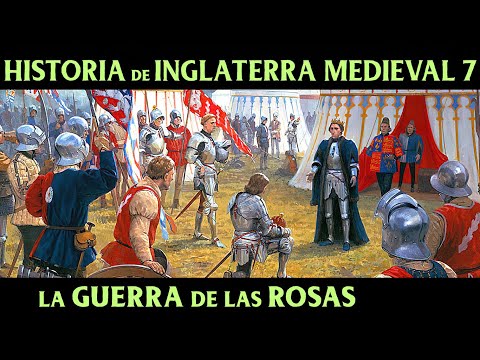
INGLATERRA MEDIEVAL 7: La Guerra de las Rosas - Lancaster vs York (Documental Historia resumen)
The Wars of the Roses: Lancaster vs. York
Introduction to the Conflict
- The narrative unfolds between 1399 and 1485, focusing on the struggles between two dynasties: the Lancasters and the Yorks during the Wars of the Roses.
- This conflict inspired George R.R. Martin's "Game of Thrones," with parallels drawn between Lancaster and Lannister, and York and Stark.
Rise of Henry IV
- Henry Bolingbroke, an exiled figure, invades England, forcing his cousin King Richard II to abdicate; he is crowned Henry IV of Lancaster.
- His reign faces significant opposition from notable figures like Henry Percy (Hotspur), leading to a series of rebellions against him.
Rebellions Against Henry IV
- The Percys initially support Henry IV but turn against him after financial disputes following their defense against Scotland.
- A Welsh rebel leader named Owain Glyndŵr rises, claiming success before ultimately failing and disappearing into hiding.
Downfall of Percy Family
- After multiple uprisings, including one supported by Archbishop Richard Scrope, Henry IV manages to quell these rebellions but at great personal cost.
- By 1413, health issues plague Henry IV leading to his death; he is succeeded by his son, Henry V.
Reign of Henry V
- Despite a short reign lasting only ten years, he earns respect for managing finances well and maintaining good relations with nobles.
- His first major conflict arises from conspiracies led by former friend John Oldcastle which ends in execution.
The Hundred Years' War Context
- Tensions rise as England seeks claims over France under Charles VI’s unstable rule; this leads to renewed hostilities in 1415.
Battle of Agincourt
- In October 1415, despite being outnumbered at Agincourt, English longbowmen exploit muddy terrain to defeat French cavalry decisively.
- A legend emerges about English soldiers mocking captured foes by raising fingers cut off to prevent archery use.
Aftermath of Victory
- Following victory at Agincourt, many French prisoners are executed except for nobles for ransom purposes; this reflects strategic ruthlessness.
Treaty Negotiations
- By 1420, negotiations lead to the Treaty of Troyes where Catherine de Valois marries Henry V; he is recognized as heir to the French throne while preserving both kingdoms' autonomy.
Death and Succession
The Rise and Fall of Kings: The Hundred Years' War and Its Aftermath
Transition of Power in France
- Enrique Cuarto, son of the grandfather of King Juan de Gante, was Chancellor of the Kingdom and Bishop of Winchester. During this power transition, the French Armagnac faction supported Carlos el Delfín as King Carlos VII.
The Siege of Orléans
- In subsequent years, England occupied Paris and much of northern France. By 1429, Duke Bedford's troops besieged Orléans violently.
Joan of Arc's Intervention
- Joan of Arc, a peasant claiming to hear divine voices, urged Carlos el Delfín to act against the English siege at Orléans. He provided her with armor and placed her at the forefront of his army.
- Joan successfully halted the English siege and later accompanied Carlos to Reims for his official coronation as King.
Aftermath of Joan's Death
- Following Joan's capture by Burgundians allied with England and her execution for heresy in 1431, French morale surged. They began reclaiming territories lost to England.
Decline of Henry VI
- As Henry VI came into adulthood, he struggled against resurgent French forces. His lackluster leadership led to significant territorial losses during regency conflicts among his uncles.
Political Turmoil in England
- William de la Pole became a key advisor but faced backlash for concealing treaty details that included renouncing territories like Maine. His eventual exile ended in execution.
The Role of Margaret and Internal Strife
- Queen Margaret took charge amid rebellion led by Jack Cade against Henry VI’s rule. She promised royal pardon to rebels who fled but ultimately faced challenges maintaining control.
Scandal at Court
- A scandal arose when Catherine de Valois was removed from court due to her romance with Owen Tudor; they had five children, one destined for kingship through marriage alliances.
Final Phase: The End of the Hundred Years' War
- Starting in 1449, Charles VII launched attacks on Normandy and Guyenne. The French victory at the Battle of Formigny (1450) marked a turning point leading to their recovery after decades under English control.
Cultural Developments Post-War
- Following the war’s conclusion in 1453 with English forces retreating from France, Gothic art flourished in England during this period.
The Wars Within: The Wars of the Roses
Introduction to Internal Conflict
- Two factions emerged from Henry III’s lineage: House Lancaster (red rose), descending from John de Gante; House York (white rose), tracing back to Lionel de Antwerp.
Mental Health Crisis Among Royals
- In 1453, Henry VI suffered a mental breakdown lasting nearly two years due to stress over France’s loss; Margaret effectively ruled during this time with support from Duke Somerset.
Rise of Richard Duke of York
- Richard Duke York sought control as Lord Protector amidst growing tensions between him and Somerset. He accused Somerset publicly leading to political upheaval within Parliament.
The War of the Roses: Key Events and Figures
Conflict Between the Neville and Percy Families
- The Neville family had a contentious relationship with the Percy family, who were allied with the Lancastrian faction during the War of the Roses. This rivalry led to a small war between their private armies in Northern England around 1453-1454.
Rise of Richard of York
- After King Henry VI recovered from his illness, he, along with Margaret, sought to remove Richard of York from regency power. This political maneuvering set off tensions that would escalate into full-blown conflict.
The First Battle: St. Albans
- The first significant battle occurred at St. Albans in 1455, where Yorkists ambushed Lancastrian troops. Key figures like Edmund Beaufort (Duke of Somerset) were killed, and King Henry VI was captured by Yorkist forces.
Division of Power
- Following these events, England became divided between the Lancastrians based in Coventry and the Yorkists controlling London. Despite initial setbacks for Yorkists, they continued to challenge royal authority.
Return and Defeat of Richard Neville
- After being exiled following a defeat at Ludford Bridge in 1459, Richard Neville returned to England with substantial support and defeated King Henry VI at Northampton in 1460, capturing him once again.
Political Compromise
- A compromise was reached where Henry VI would remain king but his son Edward would be disinherited; upon Henry's death, a member from House York would ascend to the throne.
Margaret's Resistance
- Queen Margaret opposed this arrangement fiercely and took her son Edward to Scotland to prepare an army against the Yorkists. This led to further conflicts including the Battle of Wakefield in 1460.
Ascendancy of Edward IV
- Following Richard's execution at Wakefield, his ambitious son Edward marched on London and was crowned as Edward IV in 1461 after defeating Margaret’s forces at various battles.
Continued Struggles for Power
- Despite achieving kingship, Edward IV faced ongoing challenges from Lancaster supporters like Margaret who sought revenge through military means leading to significant battles such as Towton.
Internal Conflicts Amongst Allies
- During his reign, internal strife emerged as Richard Neville aimed for greater power by attempting to influence royal marriages which ultimately led to tensions between him and Edward IV over control.
The Rise and Fall of Kings: The Wars of the Roses
The Capture and Release of King Edward IV
- Richard Neville captures King Edward IV, who is imprisoned in Warwick Castle. However, due to pressure from Parliament and barons, he is forced to release Edward and flee to France.
Alliances and Betrayals
- In France, Neville aligns with the Lancasters, historically enemies, planning to oust King York with French support. This leads to Lancaster troops landing in England, forcing Edward IV into exile in Burgundy.
The Return of Henry VI
- Henry VI is released from prison and reinstated as king through Neville's influence. However, his reign is short-lived as Duke Charles the Bold supports Edward IV's return.
Battles and Downfall of Richard Neville
- Edward IV returns in 1471, winning battles against Neville’s forces. At the Battle of Barnet, Neville dies along with Margaret Beaufort's husband, disrupting Lancaster's resurgence.
The End of Lancaster’s Power
- Prince Edward of Westminster leads a final resistance but is killed at the Battle of Tewkesbury. Following this victory for Yorkists, Henry VI likely faces assassination; thus ending Lancaster's claim.
Consolidation of Power by Edward IV
- With no rivals left, Edward IV reclaims his throne peacefully. His rule sees stability and economic growth while the Nevilles fall from grace over twelve years.
Family Conflicts within York
- Despite improvements under his reign, tensions arise between Edward IV and his brother George Clarence over betrayal allegations leading to George’s execution in 1477.
Transitioning Power After Death
- Upon Edward IV’s death in 1483 at age 40 due to health issues linked to indulgence, power dynamics shift towards his young son Eduardo V and uncle Richard III.
Richard III’s Usurpation
- Richard III manipulates Parliament into declaring Eduardo V illegitimate due to an unrecognized marriage by their father. He seizes the throne amidst controversy regarding legitimacy.
Disappearance of Eduardo V
- Both Eduardo V and his brother are imprisoned in the Tower of London under mysterious circumstances; accusations against Richard III include tyranny and potential murder remain speculative yet persistent.
Emergence of Henry Tudor
- Henry Tudor claims descent from John of Gaunt through maternal lineage; he seeks the crown amid political chaos following Richard III's brief reign marked by instability.
Strategic Marriages
- Margaret Beaufort marries influential noble Thomas Stanley which aids her son Henry Tudor in gaining support while he remains exiled with limited resources before returning with military backing.
The Battle for England: Bosworth Field
- In 1485 at Bosworth Field, despite numerical superiority favoring Richard III’s army, betrayal among his generals leads to defeat; he becomes the last English king killed on a battlefield.
Unification Through Marriage
- Following victory at Bosworth Field, Henry Tudor ascends as Henry VII marrying Elizabeth of York uniting rival houses effectively concluding the Wars of Roses symbolized by their combined rose emblem.
Transition from Medieval to Modern Era
The End of Aspirants and the Rise of Tudor Dynasty
- After the Battle of Bosworth, Henry VII eliminated all contenders for the throne, marking a significant shift in power dynamics.
- This event signified the transition from medieval times to modernity, characterized by the decline of feudalism.
- Kings began to refrain from personally leading their armies into battle, indicating a change in royal responsibilities.
Changes in Power Structures
- The aristocracy experienced a reduction in power during this period, paving the way for new social classes.
- The rise of the bourgeoisie became prominent as they gained influence and wealth, altering traditional hierarchies.
- Concurrently, there was an evolution within the English Parliament as it adapted to these changing power dynamics.
Monarchical Authority
- Despite these shifts towards more democratic structures, monarchy grew increasingly authoritarian during this era.