RE_Lecture 8
Introduction to Station Techniques
Overview of Station Techniques
- The session continues with a focus on station techniques, which are essential in the initial phase of project development. This phase precedes subsequent sections and discussions about requirements gathering.
Brainstorming as a Technique
- The first technique discussed is brainstorming, which serves as a foundational method for generating ideas and requirements. It sets the stage for further exploration into other techniques like interviews.
Importance of Interviews in Requirement Gathering
Role of Interviews
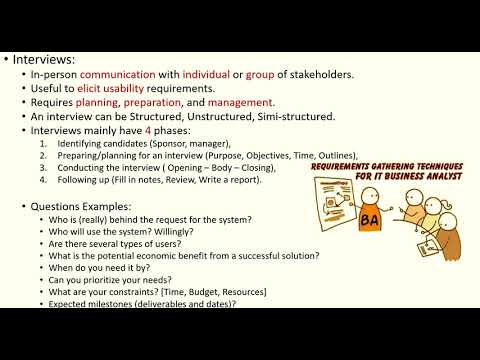
- Interviews are highlighted as a crucial method for requirement engineers to extract information from stakeholders effectively. They play a significant role in gathering necessary requirements for projects.
Planning and Preparation
- Conducting an interview requires thorough planning, including determining the participants, setting objectives, and preparing necessary materials such as recording devices or note-taking tools. Proper preparation ensures effective communication during the interview process.
Conducting Effective Interviews
Structuring the Interview
- Successful interviews involve clear structuring: starting with general questions to ease into more specific topics related to project needs, followed by closing remarks that summarize findings and next steps. This structure helps maintain flow and clarity throughout the discussion.
Documentation Post-Interview
- After completing interviews, it is vital to document insights gained either through notes or formal reports summarizing key findings and requirements identified during discussions with stakeholders. This documentation aids in tracking progress and ensuring all voices are heard in the requirement-gathering process.
Utilizing Brainstorming Techniques for Questions
Crafting Interview Questions
- The importance of using brainstorming techniques to formulate relevant interview questions is emphasized; this approach can help ensure comprehensive coverage of topics during stakeholder discussions while allowing flexibility based on responses received during interviews.
Functional Requirements Discussion
Identifying Functional Needs
- Functional requirements must be clearly defined within systems to facilitate task completion; these include user interface elements like buttons or forms that enable users to interact effectively with software applications being developed. Understanding these needs is critical for successful implementation.
Application Design Workshop (JAD Sessions)
JAD Sessions Overview
- Joint Application Development (JAD) sessions are introduced as structured workshops involving key users and management aimed at collaboratively defining system requirements over several days, enhancing engagement among stakeholders while streamlining requirement collection processes compared to traditional methods like interviews alone.
Benefits of JAD Sessions
- These sessions allow real-time feedback from various stakeholders, helping reconcile differing priorities between management budgets and user needs efficiently while fostering consensus on project goals moving forward—ultimately saving time in requirement definition efforts across teams involved in development projects.
Conclusion
Summary of Key Techniques Discussed
- The session concludes by summarizing various station techniques covered: brainstorming, interviewing, functional analysis, and JAD sessions—all integral components contributing towards effective requirement gathering strategies within engineering practices moving forward into future projects.