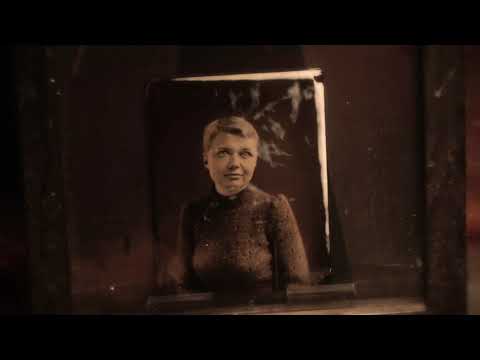
History of Photography Overview
The Evolution of Photography
This section introduces the evolution of photography and how it has changed our perception of the world.
Invention of Photography
- Camera obscura, a dark room with a small hole that projects an upside-down image on the wall, was an early phenomenon known for thousands of years. It served as a simple way to understand the concept of a camera.
- Early improvements to camera obscura included adding lenses to focus the light and create brighter images.
- The invention of photography was not a single discovery but built upon experiments and contributions from various individuals.
Johann Heinrich Schultz's Experiment
- Johann Heinrich Schultz conducted an experiment using a glass jar filled with chalk, nitric acid, and silver. When light passed through a stencil, it darkened the chalk facing the glass inside the jar.
- Schultz's experiment proved that this darkening effect was caused by light rather than heat.
Impact of Photography
- The invention of photography had a profound impact on people's perception of time and memory. For the first time, individuals could see images of their ancestors who had passed away before they were born.
- The first photographs were considered "mirrors with a memory" and revolutionized people's understanding of recording visual information.
Niepce and Daguerre
- Joseph Nicéphore Niepce created the earliest known photograph in the 1820s using asphalt as a photosensitive material on pewter plates.
- Louis Daguerre partnered with Niepce to further develop photography techniques. Daguerre perfected his system by coating copper plates with silver and treating them with chemicals like iodine and mercury to capture images.
- Daguerreotype, named after Louis Daguerre, became one of the earliest commercially manufactured cameras for photography.
Talbot's Contributions
- William Henry Fox Talbot, working simultaneously in England, used silver chloride on paper to create images. He was unaware of Daguerre's work until it became public through articles in the press.
- Talbot, a wealthy individual with diverse interests, lived in an old abbey and made significant contributions to the development of photography.
The Rise of Daguerreotype
This section explores the rise of daguerreotype as a popular photographic technique and its impact on society.
Daguerreotype vs. Calotype
- Daguerreotypes gained popularity in America due to their ability to capture detailed images. They were embraced by Americans who were exploring new territories and wanted something to remember their experiences by.
- In contrast, Henry Fox Talbot developed the calotype process in England, which involved using silver chloride on paper. Both techniques contributed to the advancement of photography.
Rivalry between Talbot and Daguerre
- Articles in the press made Talbot aware of Daguerre's work, leading to a rivalry between them.
- William Henry Fox Talbot was a gentleman scholar from England with various interests and lived in an old abbey.
- While on his honeymoon in Italy, Talbot realized his lack of drawing skills and sought ways to make pictures without relying on manual drawing techniques.
Conclusion
This section concludes the transcript by summarizing key points about the evolution of photography and the contributions made by different individuals.
Key Takeaways
- The invention of photography built upon experiments conducted over time.
- Camera obscura served as an early concept for understanding how light can create images.
- Johann Heinrich Schultz's experiment proved that light caused darkening effects rather than heat.
- Photography revolutionized people's perception of time and memory by capturing visual information.
- Niepce and Daguerre made significant contributions to the development of photography, with daguerreotype becoming a popular technique.
- Talbot's calotype process and rivalry with Daguerre further advanced the field of photography.
The transcript provided does not cover the entire video.
Photogenic Drawings and the Invention of Photography
This section discusses the early experiments in photography, including photogenic drawings and the invention of photography by William Henry Fox Talbot.
Photogenic Drawings
- Photogenic drawings involved coating paper with salt and silver nitrate.
- Objects were placed on top of the paper, covered with glass, and exposed to sunlight.
- The areas exposed to light turned into metallic silver, while unexposed areas remained sensitive.
- These drawings could be viewed by candlelight.
William Henry Fox Talbot
- Talbot improved the photogenic drawing process by using silver iodide instead of silver chloride.
- He invented the calotype process in 1840, which allowed for exposure and development of invisible images.
- With gallic acid, he created photographic negatives and positive proofs.
- Talbot introduced the negative-positive potential for photography.
Rivalry between Daguerre and Talbot
- There is ongoing debate about who invented photography: Daguerre or Talbot.
- Photography was primarily used for portraits before its invention.
- It provided an opportunity to record features of loved ones.
The Wet Collodion Process
This section explores Frederick Scott Archer's invention of the wet collodion process in 1851 and its impact on photography.
The Wet Collodion Process
- Invented by Frederick Scott Archer in 1851 as an alternative to daguerreotypes and calotypes.
- It involved creating a glass negative that could be reproduced easily.
- The wet plate process allowed for making paper prints, ambrotypes, and tintypes from glass negatives.
Advantages and Challenges
- The wet plate process offered more reproducibility than other methods at that time.
- It required a portable darkroom for on-the-go photography.
- Landscape photographers had to carry a wagon with all the necessary chemicals.
Photography as a Cultural Change
This section discusses how photography shaped memory, mass marketing of photographs, and the rise of album and print production.
Photography's Impact on Memory
- Photography replaced ballads, poems, and stories as a way to remember events and people.
- The photograph became a popular means of remembering experiences.
Mass Marketing of Photographs
- The rise of industrial photographic houses led to the mass production of photographs for general consumption.
- Popular tourist sites were captured in photographs for widespread distribution.
Album and Print Production
- Albums and prints allowed for precise, detailed, cheap, and easily distributed photographic objects.
- By the late 19th century, photography became an important conveyor and shaper of knowledge and information.
The Desire for Permanent Images
This section explores the desire for more permanent images in photography through processes like woodburytypes, platinum prints, gum bichromate process, carbon print process, and pictorialism.
Permanent Image Processes
- Woodburytypes and platinum prints offered stable and long-lasting images.
- Pictorialists used processes like gum bichromate or platinum prints that involved handwork and craftsmanship.
Alfred Stieglitz's Influence
- Alfred Stieglitz is associated with establishing photography as a fine art form.
- He emphasized the craftsmanship involved in creating photographic objects.
The Pictorialist Photography Movement
This section discusses the Pictorialist photography movement and its aim to establish photography as an art form with creative input from the artist.
The Lens and Pictorialist Photography
- The opening of the lens determines the sharpness of the picture.
- A lens designed for pictorialist photography creates a soft image on the edges.
- Stieglitz, Steichen, and Kaiser Beer were interested in promoting pictorialist photography.
Photography as an Art Form
- The argument was about recognizing the creative input of artists in photography.
- Early debates centered around where the artist's creativity lies in this medium.
Evolution of Photography with Gelatin Silver Materials
This section explores how gelatin silver materials revolutionized photography and changed our relationship with it.
Ubiquity of Gelatin Silver Materials
- Gelatin silver materials led to manufactured photographic paper and film.
- It became cheap and widely available, fundamentally changing our relationship with photography.
- Almost everyone became both subjects of photographs and photographers themselves.
Two-step Process vs One-step Process
- Most processes involving silver nitrate were two-step processes.
- Emulsion photography combined bromide and silver into one solution, simplifying the process.
- Gelatin emulsions were made by swelling gelatin in water, then adding bromide and silver nitrate.
Introduction of Dry Plates
This section discusses the introduction of dry plates, which eliminated the need for a darkroom in the field.
Dry Plate Process
- Dry plates allowed photographers to take packages of plates on trips without needing a darkroom.
- Exposed plates could be developed weeks later in the comfort of a darkroom.
- Gelatin silver emulsion was applied to glass plates by pouring hot gelatin onto hot glass.
Gelatin Silver Prints and Enlargement
This section explains the process of gelatin silver prints and how they allowed for enlargement.
Gelatin Silver Prints
- Gelatin silver prints were introduced in the late 1800s.
- They involved a developing out process rather than a printing out process.
- The image material is held in the gelatin on top of the paper, creating a smooth surface.
Enlarging Negatives
- With gelatin silver prints, negatives could be enlarged using an enlarger.
- Contact printing was no longer necessary, allowing for smaller negatives compared to print size.
Introduction of Kodak Camera
This section discusses the introduction of the Kodak camera, which made photography accessible to the general public.
George Eastman's Kodak Camera
- In 1888, George Eastman introduced the Kodak camera.
- It simplified photography and made it accessible to non-professionals.
- The camera was small and easy to carry, encouraging people to take their cameras everywhere.
Dominance of Gelatin Silver Process
This section highlights how gelatin silver became the dominant photographic process of the 20th century.
Aesthetic and Clarity of Gelatin Silver Prints
- Gelatin silver prints have a smooth surface due to gelatin sitting on top of paper.
- The clarity and sharpness became standard for photojournalism and documentary-style photography.
Link with Documentary Photography
- Gelatin silver prints were associated with photographers like Lewis Hine and FSA photographers.
- It became the standard for producing information for newspapers and magazines.
Silver Gelatin and Color Photography
This section explains the role of silver gelatin in color photography and its obsolescence with digital processes.
Role of Silver Gelatin
- Silver gelatin allowed for black and white images, including motion pictures.
- Color photography in the 20th century relied on silver gelatin emulsion with dyes.
Shift to Digital Photography
- The shift from analog to digital photography started around 2004.
- Digital cameras began outselling film cameras, marking a significant change in the industry.
New Section
This section discusses the transformation of photography from black and white to color, the sensitizing of emulsions, and the invention of chromogenic color photography.
Evolution of Color Photography
- In the post-World War II era, color film became available, transforming people's associations with photography.
- Silver-based photographic processes initially started as blue-sensitive, resulting in landscape photographs without clouds due to the sky appearing as the same value as white.
- Dye sensitizing was introduced by Frederic Ives to enable black and white film to capture all colors for making color images.
- Chromogenic color photography was invented in the 1930s, with Kodachrome being a significant process developed by Manz and Godowski at Kodak Research Labs.
- Chromogenic color prints are made using a gelatin emulsion based on silver. During development, each layer releases dye corresponding to cyan, yellow, or magenta.
- The silver is then removed, leaving behind only the colors captured by light. This process became widely used throughout the 20th century.
New Section
This section explores the timeline of digital photography and its impact on image storage and accessibility.
Timeline of Digital Photography
- In 1975, Steve Sasson built the first truly digital camera.
- In 1986, Eastman Kodak Company introduced a megapixel sensor.
- In 1987-88, Jim McGarvey developed a tactical camera that later evolved into the Kodak DCS in 1991.
- The Apple QuickTake 100 in 1994 marked the first consumer megapixel camera.
- Over approximately two decades since then, digital cameras have become ubiquitous with smartphones and tablets now having built-in cameras.
- The transition from film to digital has eliminated physical negatives and introduced the challenge of preserving digital images.
New Section
This section discusses the shift from physical photographs to digital images, the changing relationship with memory, and the role of artists in embracing or resisting digital technology.
Shift to Digital Images
- The invention of digital photography rendered negatives obsolete and shifted image storage from physical to digital formats.
- Digital images can be easily deleted or lost, unlike physical photographs that could be discovered years later.
- The prevalence of viewing images on screens has changed our relationship with memory and how we perceive photographic images.
- Some artists feel that the machine controls too much in digital photography and prefer a more hands-on approach reminiscent of traditional craft.
- The finished product being something other than a computer screen brings back elements of craftsmanship associated with earlier forms of photography.
Music New Section
This section features music.
Music
- The video plays background music.