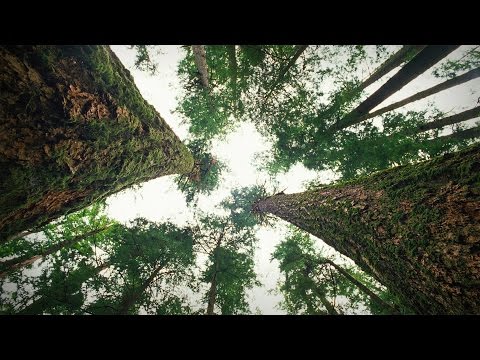
How trees talk to each other | Suzanne Simard
Exploring the Hidden World of Forests
The Foundation of Forests
- Trees are often seen as the primary component of forests, but there exists a complex underground ecosystem that plays a crucial role in forest health and communication.
- This underground network allows trees to connect and communicate, functioning almost like a single organism, hinting at an intelligence within the forest.
Personal Connection to Forestry
- The speaker shares their childhood experiences in British Columbia's forests, influenced by their grandfather, who was a horse logger. These early interactions fostered a deep curiosity about forests.
- A pivotal moment occurred when the speaker observed roots and mycelium while helping rescue their dog from an outhouse pit, leading to an interest in soil biology and its significance for forest ecosystems.
Conflict with Industrial Practices
- After studying forestry, the speaker became conflicted upon witnessing extensive clear-cutting practices and harmful industrial methods that prioritized commercial gain over ecological balance.
- The realization of how these practices affected natural habitats prompted further academic exploration into tree communication below ground.
Groundbreaking Research on Tree Communication
- Initial laboratory findings suggested that pine seedlings could share carbon through their roots; this raised questions about whether similar interactions occurred naturally in forests. Despite skepticism from peers, the speaker pursued research funding to explore this hypothesis further.
- Conducting experiments 25 years ago involved growing multiple tree species (paper birch, Douglas fir, western red cedar) to investigate potential connections among them using innovative yet low-budget methods.
Experimental Challenges and Discoveries
- The research faced challenges such as wildlife encounters (e.g., grizzly bears) which added unpredictability to fieldwork but also highlighted the realities of conducting ecological studies in natural settings.
The Interdependence of Trees in Forest Ecosystems
Discovering Tree Communication
- The speaker discusses the surprising interdependence between fir and birch trees, revealing that fir sends more carbon to birch than vice versa, particularly when birch is leafless.
- This discovery challenges traditional views of tree interactions, suggesting they are not just competitors but also cooperators within their ecosystem.
- The speaker expresses hope that this finding will influence forestry practices towards more sustainable methods rather than clear-cutting.
Challenges in Forest Research
- Conducting research in forests presents unique challenges, including environmental factors and wildlife encounters (e.g., bears).
- Perseverance and intuition are emphasized as crucial for forest scientists who must gather data and verify findings through extensive experimentation.
Mechanisms of Tree Communication
- Trees communicate using various substances such as carbon, nitrogen, phosphorus, water, defense signals, allelochemicals, and hormones.
- Mycorrhizal networks play a significant role in these communications; they consist of fungal threads connecting tree roots for nutrient exchange.
Mycorrhizal Networks Explained
- The mycelium forms dense networks underground that connect different tree species and facilitate communication akin to an internet system.
- A visual representation shows Douglas fir trees as nodes connected by fungal highways (links), with hub trees identified as key players nurturing younger trees.
Kin Recognition Among Trees
- Experiments reveal that mother trees can recognize their kin and preferentially support them with larger mycorrhizal networks and increased carbon supply.
- Injured mother trees send messages to seedlings about stress resistance through the mycorrhizal network, enhancing community resilience.
Implications for Forest Ecosystems
- The interconnectedness among trees fosters resilience within the forest community through cooperative behaviors similar to human social structures.
- Forest ecosystems are complex systems with hubs that allow communication; however, they remain vulnerable to disturbances like logging or pest attacks.
Conclusion on Forestry Practices
Forests and Climate Change: How Can We Reinforce Our Ecosystems?
The Current State of Canadian Forests
- Canada has the highest forest disturbance rate globally, at 3.6% per year, which is approximately four times the sustainable level.
- Large-scale disturbances negatively impact hydrological cycles, wildlife habitats, and contribute to greenhouse gas emissions, leading to further ecological degradation.
- Simplified forests with limited species diversity are more susceptible to pests and diseases due to a lack of complexity.
Climate Change Impacts on Forest Health
- Climate change exacerbates extreme events such as mountain pine beetle outbreaks and megafires, threatening forest resilience.
- The speaker poses a critical question about how to strengthen forests against climate change rather than weaken them.
Solutions for Forest Reinforcement
- Forest ecosystems possess a remarkable ability to self-heal; recent experiments show that patch-cutting and preserving hub trees can enhance recovery through mycorrhizal networks.
Four Key Strategies
- Local Involvement
- Encourage community engagement in forest management instead of relying on a one-size-fits-all approach; local knowledge is crucial for effective stewardship.
- Conservation of Old-Growth Forests
- Protecting old-growth forests is essential as they harbor genetic diversity and vital mycorrhizal networks; this requires reducing logging activities.
- Preservation During Logging
- When logging occurs, it’s important to retain mother trees and their associated networks to ensure future generations can thrive under stress.
- Diversity in Regeneration
- Promote regeneration through diverse species and structures by planting various genotypes and allowing natural processes to occur; this empowers nature's self-healing capabilities.
Conclusion: A New Perspective on Forest Ecosystems
Turn any video into a summary like this
YouTube links, meetings, lectures. With transcripts, search, and chat.