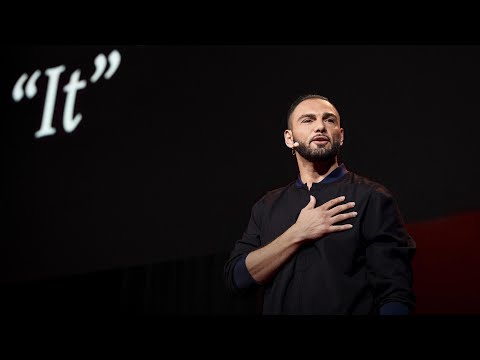
The language of being human | Poet Ali
Exploring the Concept of Language
The Question of Language Proficiency
- Poet Ali engages the audience by asking how many languages they speak, prompting self-reflection on language proficiency.
- He humorously shares that he initially counted four languages but ultimately identified 83, challenging conventional definitions of language.
Defining Language
- Ali references a dictionary definition: "the method of human communication," emphasizing structured use of words and specialized jargon in fields like medicine and science.
- He expresses interest in applying this definition broadly, suggesting we communicate in more languages than we realize.
The Nature of Conversation
- Ali shifts from presentation to conversation, highlighting the importance of interaction and mutual willingness for effective communication.
- He initiates an interactive moment with the audience by encouraging them to clap if they're happy, illustrating engagement through shared experiences.
The Impact of Language on Connection and Isolation
- Ali discusses how speaking someone's language fosters connection while not being able to do so can lead to feelings of isolation.
- He introduces the Persian concept "taarof," which embodies extreme humility and grace, showcasing how new languages introduce unique cultural concepts.
Understanding Modern Communication
- Through humorous examples, he illustrates how different cultures express politeness and humility using exaggerated phrases.
- Ali contrasts traditional language with modern text-speak or SMS language, noting its efficiency in conveying meaning despite potential misunderstandings.
Laughter as a Universal Language
- He presents a playful interpretation of a modern love letter written in text-speak, demonstrating creativity within contemporary communication forms.
The Language of Experience
The Importance of Language
- Language provides access to new worlds and perspectives, allowing individuals to filter new concepts through their existing understanding.
- Communication transcends mere words; it involves feeling, experiencing, and sharing emotions and stories.
Shared Experiences
- When discussing shared experiences, the phrase "Guess you had to be there" highlights the difficulty in conveying certain feelings or moments.
- The speaker invites participation by asking those who resonate with specific experiences to stand up, emphasizing the communal aspect of understanding.
Growing Up and Body Image
- Personal anecdotes about childhood experiences at school parties reveal insecurities related to body image and societal expectations.
- The humor in family gatherings illustrates the pressure surrounding food choices and body perception, connecting with others who have similar experiences.
Financial Struggles
- A metaphor involving bills reflects the reality of financial struggles, where individuals must make tough decisions about limited resources.
- The speaker suggests that adversity can foster resilience and greatness, as challenges often lead to personal growth.
Coping with Illness
- Discussing a loved one's battle with cancer evokes deep emotional responses; questions arise regarding diagnosis and prognosis.
- Family meals symbolize unity during difficult times but also highlight feelings of helplessness when facing illness.
Disconnection in Modern Life
- The concept of disconnection is explored through relatable scenarios like using phones while neglecting real-life interactions.
- Feelings of exclusion are acknowledged; being part of a minority experience shapes one’s perspective on power dynamics.
Recognizing Universal Themes
- The speaker emphasizes that understanding various languages—especially those tied to personal struggles—can enhance empathy towards others' experiences.
Love: The Essential Language
The Importance of Love
- Love is portrayed as a fundamental necessity for life, with the speaker emphasizing that without it, individuals would be lost and struggling.
- The emotional weight of love is highlighted through imagery of tears and real experiences, suggesting its profound impact on human existence.
- The speaker expresses joy when experiencing love, indicating that it is something to be celebrated and shared universally.
Healing Through Love
- The speaker reflects on personal pain and acknowledges that healing from wounds or scars may not be possible without love.
- There’s an exploration of individual perceptions of love, noting that everyone has their own ideals and dreams related to it.
- A rhetorical question challenges listeners to consider the significance of love in their lives and whether they recognize its unrealized potential.
Communication Challenges
- The speaker identifies a paradox where love is the most discussed yet hardest emotion to articulate effectively.
- Despite numerous resources available (books, seminars), there remains a struggle in expressing feelings related to love.
- A call-to-action prompts listeners to reflect on their initial thoughts about love and whether those have evolved over time.
Building Connections
- Listeners are encouraged to engage with others by exploring shared languages or connections regarding love.
- If no common ground is found, individuals should consider what new languages they could learn to foster better understanding.
Turn any video into a summary like this
YouTube links, meetings, lectures. With transcripts, search, and chat.