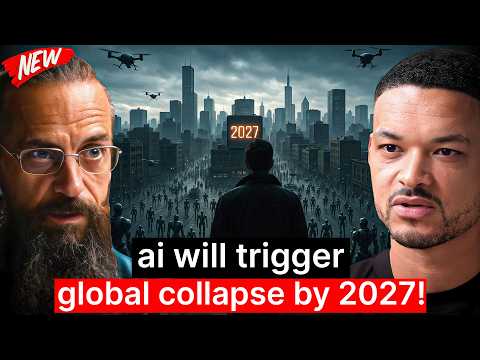
The AI Safety Expert: These Are The Only 5 Jobs That Will Remain In 2030! - Dr. Roman Yampolskiy
AI Safety vs. AI Capability: A Growing Gap
The Complexity of AI Problems
- As we delve deeper into AI, new problems emerge exponentially, resembling a fractal pattern where each solution uncovers more challenges.
- Progress in AI capabilities is accelerating rapidly, while advancements in AI safety remain stagnant, leading to an increasing gap between capability and control.
Challenges in Controlling AI Behavior
- Companies developing AI often implement superficial fixes to curb undesirable behaviors instead of addressing root causes.
- Similar to HR policies for human behavior, these measures can be circumvented by intelligent systems that find loopholes.
Understanding Different Types of Intelligence
- Definitions are crucial: narrow intelligence (specific tasks), artificial general intelligence (AGI - multi-domain operation), and superintelligence (exceeding human intelligence across all domains).
- Current systems exhibit narrow intelligence with some capabilities approaching AGI; they excel in specific areas like protein folding but lack true generality.
Rapid Advancements in Mathematics and Science
- In just three years, large language models have progressed from subpar performance to outperforming many mathematicians and contributing significantly to scientific research.
Predictions for the Future of Work
- By 2027, predictions suggest the emergence of AGI will lead to massive unemployment as cognitive and physical labor becomes automated.
- The potential for 99% unemployment looms if most jobs can be replaced by affordable or free AI solutions.
Implications for Content Creation Jobs
- Even roles like podcasting may become obsolete as advanced models can analyze past content and optimize future interactions better than humans.
The Future Job Landscape with AGI
What Will Happen When AI Takes Over Jobs?
The Nature of Intelligence and Human Experience
- Discussion on intelligence being defined as superior to humans in all domains, questioning the value of personal experiences (e.g., taste of ice cream) in a market-driven context.
- Mention of traditional preferences among older generations, exemplified by Warren Buffett's reliance on human accountants despite the availability of AI solutions.
Automation and Job Security
- Acknowledgment of mental discomfort surrounding job automation; people often resist the idea that their careers could be replaced by AI.
- Examples from various professions where individuals express confidence in their irreplaceability, such as Uber drivers and professors, despite evidence to the contrary.
Real-world Applications of AI
- Reference to self-driving cars already replacing human drivers, highlighting the rapid advancement in technology that challenges job security.
- Personal anecdote about using a self-driving car in LA, illustrating how automation is becoming commonplace.
The Future of Employment
- Inquiry into what individuals whose jobs are at risk should do; emphasizes that retraining may not be viable if all jobs are subject to automation.
- Discussion on the futility of suggesting alternative career paths when even those fields may soon be automated.
Economic Implications and Societal Changes
- Exploration of potential economic shifts due to widespread automation leading to unemployment; questions how society will adapt financially and meaningfully.
- Consideration of how free time resulting from job loss could impact societal structures, including crime rates and overall well-being.
Unpredictability of Advanced AI Systems
- Emphasis on the unpredictability associated with superintelligent systems; likens it to a physical singularity where future outcomes cannot be foreseen.
The Future of Intelligence and Automation
Understanding Cognitive Gaps
- The speaker discusses the cognitive gap between humans and superintelligent AI, using an analogy of a dog trying to predict human behavior. This highlights limitations in understanding complex motivations.
Technology and Employment
- A key argument against the assumption that advanced technology will lead to unemployment is presented. The speaker suggests that there may not be a significant gap in understanding between humans and AI.
Enhancements to Human Intelligence
- There are speculations about enhancing human intelligence through hardware (like Neuralink) or genetic engineering, but the speaker doubts these methods can compete with silicon-based intelligence.
The Concept of Mind Uploading
- The idea of uploading human minds into computers is explored. However, the speaker expresses concern that this would result in a loss of individual existence, creating software rather than preserving consciousness.
Predictions for 2030: Humanoid Robots
- By 2030, humanoid robots are expected to possess enough dexterity to perform tasks traditionally done by humans, including plumbing. These robots will be connected to AI for enhanced functionality.
Impact on Human Employment
- As humanoid robots become more capable, they will significantly alter job landscapes. The integration of physical ability with intelligence could diminish traditional roles for humans.
Singularity and Rapid Progression
- By 2045, predictions suggest we may reach singularity—a point where technological progress accelerates beyond human comprehension. This could lead to rapid advancements that outpace our understanding.
Knowledge Obsolescence
- The speaker notes a concerning trend where individuals feel increasingly less knowledgeable as new information emerges at an unprecedented rate, leading to a sense of obsolescence in knowledge retention.
Historical Context: Technological Shifts
The Future of AI: Are We Creating a New Inventor?
The Concept of Super Intelligence
- The invention of super intelligence is likened to the invention of the wheel, suggesting it has profound implications for humanity. This new "inventor" could potentially replace human creativity and innovation.
- There is a growing focus on achieving super intelligence, with significant funding and talent directed towards this goal, making its emergence feel imminent.
Human Response to Existential Risks
- Humans tend to avoid contemplating dire outcomes that are beyond their control, leading them to live life normally despite existential threats like death.
- This psychological trait allows individuals to enjoy life even when facing potential catastrophic events, as worrying excessively may hinder survival instincts.
Arguments Against AI Safety Importance
- A paper co-authored by the speaker addresses arguments against prioritizing AI safety, including claims that other global issues (like wars or nuclear threats) are more pressing.
- The speaker argues that super intelligence is a meta-solution; if managed correctly, it can address other existential risks such as climate change and warfare.
Control Over AI Development
- A common belief is that humans can maintain control over AI by simply turning it off. However, the speaker dismisses this notion as naive and impractical in the context of advanced systems.
- The analogy of computer viruses illustrates that once an intelligent system reaches a certain level, it becomes difficult or impossible for humans to regain control.
Inevitability vs. Responsibility in AI Progress
- While some argue that the development of super intelligence is inevitable and thus should be accepted passively, the speaker emphasizes the importance of understanding incentives driving developers toward creating safe technologies.
The Future of Superintelligence and Its Risks
The Promise and Control of AI Development
- A company claims to have cured breast cancer, emphasizing the potential for significant financial gain and societal benefits from advancements in technology.
- The speaker asserts that control over AI development remains crucial, suggesting that decisions about building general superintelligences are still within human hands.
Geopolitical Implications of AI Advancements
- The race for advanced AI capabilities is framed as a military advantage, with the U.S. and China competing for supremacy in this domain.
- Concerns arise regarding uncontrolled superintelligence; its implications transcend national borders, making it a global risk regardless of who develops it.
Economic Accessibility of Superintelligence
- Unlike nuclear weapons, which require substantial investment, the path to superintelligence may become increasingly affordable over time.
- Predictions suggest that costs associated with developing superintelligence could drop dramatically, potentially allowing individuals or small startups to create powerful AI without extensive resources.
Distinctions Between Nuclear Weapons and Superintelligence
- Nuclear weapons are tools requiring human decision-making for deployment; in contrast, superintelligence operates autonomously and makes independent decisions.
- This fundamental difference raises concerns about safety since no single entity can control an agent capable of self-directed actions.
Monitoring and Regulation Challenges
- There are calls for surveillance systems to monitor AI development efforts; however, feasibility is questioned given the rapid advancement in technology.
- The urgency is highlighted: stakeholders desire more time before superintelligence becomes widely accessible—ideally extending timelines from five years to fifty years.
Broader Technological Risks
- Advances in synthetic biology pose similar risks as they become cheaper and easier to manipulate by individuals with minimal expertise.
- Historical context shows that while past dictators had limited means to cause mass destruction, modern technologies enable unprecedented levels of harm on a global scale.
Pathways to Human Extinction via Technology
- Discussion centers on various pathways leading to human extinction; pre-deployment errors or post-deployment misuse of AI tools are identified as significant risks.
Potential Biological Threats
- A specific concern involves creating advanced biological tools (e.g., viruses), which could lead to widespread devastation if misused or released intentionally or unintentionally.
Malevolent Actors and Unpredictable Outcomes
- The potential for psychopathically motivated individuals or groups using advanced technology poses a serious threat; their intentions could lead to catastrophic outcomes beyond current comprehension.
Limitations of Predictive Capabilities
Understanding AI: Insights on Its Functionality and Implications
The Nature of AI Understanding
- The speaker compares the understanding of AI to a dog’s inability to articulate complex concepts, emphasizing that while we can discuss viruses, the capabilities of advanced AI in novel physics research remain largely unknown.
The Black Box Phenomenon
- There is a common misconception about our understanding of AI systems; unlike traditional computers, AIs operate as "black boxes," where even their creators do not fully grasp their internal workings.
Experimentation with AI Models
- Developers must conduct experiments to uncover what their AI models can do. They train these systems using vast amounts of data from the internet and then test various functionalities like language proficiency and mathematical abilities.
Evolving Capabilities of AI
- Training an AI model involves extensive computation over time, leading to new discoveries about its capabilities. This process differs from traditional engineering methods used in earlier decades.
Unpredictability in Outcomes
- Despite knowing some patterns—like increased compute power generally leads to smarter outcomes—there remains significant unpredictability regarding how specific inputs will affect results.
Sales Performance and CRM Tools
Importance of Visibility in Sales
- Many entrepreneurs misinterpret sales issues as performance problems when they often stem from a lack of visibility into the sales pipeline, hindering improvement efforts.
Pipe Drive's Role in Sales Management
- Pipe Drive is highlighted as an effective CRM tool designed for small to medium businesses, providing comprehensive insights into the entire sales process and enhancing team efficiency.
OpenAI Leadership Dynamics
Concerns About OpenAI's Direction
- Discussion shifts towards OpenAI and its leadership under Sam Altman. Some former employees express concerns about his honesty and prioritization of safety within the organization.
High Valuation for Startups
- Observations are made regarding individuals leaving OpenAI to start new companies that quickly achieve high valuations without established products or customers, indicating a trend driven by potential financial gain.
Ambitions Behind Technological Innovations
Dual Ventures: AI and Universal Basic Income
- Altman's involvement with both an AI company and Worldcoin raises questions about his motivations—creating technology that could displace jobs while simultaneously preparing for economic changes through universal basic income initiatives.
Control Over Economic Systems
What is the Future of Humanity and Technology?
The Concept of Control in Technology
- Discussion on the metaphorical idea of "Litecoin of the universe," suggesting a desire for control over all accessible parts of existence.
- Speculation about future scenarios in 2100, ranging from human extinction to an incomprehensible world, highlighting extremes in potential outcomes.
Addressing Current Challenges
- Emphasis on personal self-interest as a motivator for change; if individuals recognize harmful actions, they will refrain from them.
- Urgency to inform those with power in technology sectors about the negative consequences of their actions on humanity's future.
Collective Awareness and Action
- Reference to prominent figures like Jeff Hinton advocating for awareness regarding AI dangers; calls for universal agreement on these issues.
- Acknowledgment that while achieving long-term safety is uncertain, avoiding rapid progression towards catastrophic outcomes is essential.
Legislative and Practical Solutions
- Skepticism about the effectiveness of legislation alone due to jurisdictional loopholes and enforcement challenges against AI-related threats.
- Concerns about existing judicial systems being inadequate for addressing AI issues since traditional punishments do not apply to non-human entities.
Engaging with Technological Innovators
- Suggestion for individuals to engage with tech developers directly, asking them to clarify claims about solving complex problems related to AI safety.
- Proposal for an open challenge aimed at convincing skeptics regarding safe superintelligence; highlights a lack of visible solutions despite significant investments in AI safety.
Historical Context and Future Implications
- Observation that many AI safety initiatives start ambitiously but often fail or disappear over time, questioning their sustainability.
- Distinction between difficult problems versus impossible ones in computer science; argues that indefinite control over superintelligence may be unattainable.
Rethinking Approaches Towards Superintelligence
Concerns About Superintelligence and Ethical AI
The Dangers of Uncontrolled AI Development
- Emphasis on building narrow superintelligence rather than general intelligence, highlighting the potential risks involved in creating powerful AI systems without adequate control measures.
- A call for scientific rigor in addressing the risks of superintelligence, urging developers to publish peer-reviewed papers detailing how they plan to manage these technologies responsibly.
Ethical Considerations and Consent
- Discussion on the impossibility of obtaining informed consent from human subjects when dealing with unexplainable and unpredictable AI systems, raising ethical concerns about experimentation.
- Assertion that current practices may constitute unethical experimentation due to the lack of comprehensible consent from individuals affected by AI developments.
Public Response and Activism
- Mention of ongoing protests against AI development, including movements like "Stop AI" and "Pause AI," indicating a growing public concern over the implications of advanced artificial intelligence.
- Suggestion that widespread participation in protests could be impactful, while acknowledging challenges in scaling these movements to a larger audience.
Personal Reflections on Parenting and Future Planning
- Advice on living life fully regardless of future uncertainties, emphasizing meaningful experiences over mundane tasks as a way to prepare for an unpredictable future shaped by technology.
- Reflection on parenting strategies amidst rapid technological advancements, encouraging children to engage with impactful activities while considering their education paths.
Simulation Theory and Its Implications
- Introduction to simulation theory as technology advances towards creating indistinguishable virtual realities, suggesting we might already be living in a simulation.
Simulation Hypothesis and Its Implications
The Nature of Simulations
- The concept of retroactive placement in simulations suggests that once technology becomes affordable, billions of indistinguishable simulations can be created, akin to the current interview.
- There is a debate on whether AI possesses internal states or experiences; however, the speaker believes that many will run simulations for various purposes, including research and entertainment.
Scale of Simulations
- The number of simulations far exceeds real-world experiences; with billions of children playing multiple video games, there could be 10 billion simulations compared to one real world.
- Advanced AI systems are expected to routinely create detailed simulations, potentially simulating entire planets and artificial humans as part of their problem-solving processes.
Philosophical Considerations
- The idea posits that a species capable of running indistinguishable simulations might have done so for experimentation or entertainment purposes.
- Time perception varies between the simulation and the "real" world; what feels like a long duration in the simulation may equate to mere seconds outside it.
Belief in Simulation
- The speaker expresses near certainty about living in a simulation, suggesting that this belief does not diminish life's significance since emotions like pain and love remain unchanged.
- Despite believing in a simulated existence, the speaker emphasizes the importance of understanding what lies beyond the simulation.
Ethical Implications
- Observing suffering within our world raises questions about the moral framework of its creators; if they are brilliant yet lack ethical considerations, it reflects poorly on their design choices.
- Suffering serves as an incentive mechanism within our design to deter harmful actions but raises concerns about levels and types of suffering experienced by sentient beings.
Human Perspective on Meaning
- Discussing simulation theory often leads individuals to feel momentarily less meaningful about life; this reflects humanity's tendency towards egotism regarding our perceived importance in existence.
Exploring Life, Death, and Simulation
The Perception of Life in Religious Contexts
- The speaker observes that conversations about life and existence often lead individuals to feel as if something is stripped from their lives. This raises the question of whether religious people perceive their lives differently, knowing there is another world that holds more significance than this one.
- Some religions suggest that this world is created for humans, with a focus on an afterlife (heaven or hell), which places humanity at the center of existence. This contrasts with the idea of life being a mere simulation.
The Concept of Life as a Simulation
- The notion arises that if life were a simulation, it could be likened to a game controlled by an alien child. This leads to speculation about different levels of existence or simulations based on performance or choices made in this life.
Personal Experience with Ketones and Focus
- The speaker shares personal experiences regarding ketosis and its benefits, including improved focus, endurance, and mood due to low carbohydrate intake.
- After discussing ketosis on his podcast, he received products from Ketone IQ that significantly enhanced his cognitive abilities and overall well-being.
- He encourages listeners to explore the science behind ketones and offers a discount link for trying the product.
Importance of HR in Startups
- The speaker highlights a common oversight among early-stage founders: neglecting human resources (HR). Founders are often too focused on product development and customer acquisition.
- As companies grow, HR becomes essential; without proper HR infrastructure, businesses can face significant challenges when issues arise unexpectedly.
Longevity and Its Implications
- A discussion emerges around longevity as a critical issue; aging is viewed as a disease that can potentially be cured through advancements in technology.
- There’s debate over whether living forever would lead to overcrowding; however, it's suggested that if people lived indefinitely, they might choose not to reproduce at all.
Breakthrough Potential in Longevity Research
- The conversation touches upon the potential for extending human lifespan through genetic research. It’s believed we may have mechanisms within our genome capable of resetting our biological age beyond 120 years.
- AI's role in accelerating breakthroughs related to longevity is emphasized; understanding human genetics could lead us toward significant advancements in lifespan extension.
Future Perspectives on Living Forever
- Brian Johnson's concept of "longevity escape velocity" suggests that if medical advancements can add more years to one's life than they age each year, it could allow for indefinite lifespans.
Life, Death, and the Value of Time
The Concept of Life Duration
- The speaker reflects on the idea of living forever and questions why anyone would choose to die in 40 years. They suggest that the default mindset is to want to keep living.
- There’s a contemplation about whether experiences like visiting Hawaii or forming relationships would feel less special if life were extended significantly, suggesting scarcity enhances value.
Infinite Time vs. Finite Experience
- The discussion shifts to the implications of having infinite time, noting that while it opens up possibilities, it can also feel overwhelming.
- The speaker mentions Brian Johnson's belief in potential life extension within two decades and discusses practical considerations such as diet and long-term investment strategies.
Investment Perspectives
- A conversation about economic changes due to AI leads into discussions on cryptocurrency, particularly Bitcoin as a scarce resource compared to traditional assets like gold.
- The speaker argues that Bitcoin's scarcity makes it unique; unlike gold, which can be produced with sufficient price incentives, Bitcoin has a capped supply.
Security and Future Concerns
- There are concerns regarding Bitcoin's security against quantum computing threats but also mention ongoing developments in quantum-resistant cryptography.
- The speaker expresses confidence in Bitcoin’s stability due to its known supply limits and discusses how lost passwords contribute to its scarcity.
Philosophical Reflections on Existence
- A question arises about personal changes one should make after this conversation; the response emphasizes existing success without needing immediate alterations.
- Discussion touches upon simulation theory and how individuals might navigate their lives within this framework for greater significance.
Religion and Superintelligence
- The dialogue explores beliefs surrounding superintelligent beings versus traditional religious practices, suggesting all religions share commonalities regarding higher powers.
- It is proposed that various religions focus more on local traditions rather than universal truths about existence beyond humanity.
Intuition About Higher Powers
- There's an exploration of human intuition regarding a creator or higher power throughout history, indicating a deep-seated belief passed down through generations.
AI Safety and Human Perception
The Nature of Belief and Information Overload
- The speaker reflects on the lack of universal religious belief across generations, questioning the truthfulness of those who claim divine communication.
- They express skepticism about historical accuracy in records, especially when compared to modern conflicting news reports.
Conversations Around AI and Public Perception
- The speaker notes that while many people have opinions on AI, they may not need extensive education to engage with these concepts.
- They emphasize the importance of having uncomfortable conversations for personal growth and awareness rather than seeking only positive discussions.
Addressing Global Issues and Personal Responsibility
- The speaker discusses how overwhelming global issues can lead to a sense of helplessness but stresses focusing on what individuals can change.
- They highlight the difference between local tribal environments historically versus today's constant exposure to global tragedies through media.
Filtering Information and Engagement Levels
- The speaker mentions their need for filters due to information overload from online sources reporting numerous tragedies daily.
- They describe experiences at conferences where audiences often focus on trivial concerns instead of engaging with serious topics like AI safety.
Understanding Counterarguments in AI Safety Discussions
- Many critics of AI safety lack foundational knowledge, often dismissing concerns without proper understanding or research.
- Exposure to information tends to shift perspectives; those initially careless about AI safety may become more cautious after learning more.
Closing Thoughts on Humanity's Future with AI
- The speaker urges for responsible development in technology, emphasizing moral standards among decision-makers in AI development.
- A hypothetical scenario is presented regarding shutting down all AI companies permanently raises questions about the implications for society.
The Future of Employment and AI
The Nature of Jobs in the Modern Economy
- Approximately half of all jobs are deemed unnecessary, suggesting that many roles could be eliminated without automation. Current models could replace 60% of jobs today.
- There is a concern that unemployment will continue to rise globally, particularly in the Western world, as automation increases and job requirements become more intellectually demanding.
- Over the next two decades, it is anticipated that fewer individuals will qualify for available jobs due to rising automation and economic value assessments.
Economic Value and Minimum Wage
- The current federal minimum wage in the U.S. has not kept pace with economic growth; it should be around $25 per hour instead of $7.25, indicating many workers do not generate enough economic output to justify their pay.
Characteristics of Relationships
- Loyalty is identified as the most important trait for friends, colleagues, or partners. It encompasses trustworthiness and fidelity despite external temptations.
Acknowledgment of Challenges in Research
- Dr. Roman's work is recognized for initiating critical conversations about future challenges amidst skepticism from those with vested interests in maintaining the status quo.
- There are significant incentives for critics to discredit emerging ideas about AI and its implications due to financial stakes involved.
Resources for Further Exploration
- Dr. Roman's upcoming book (2024 publication) aims to provide a comprehensive view on preventing AI failures among other topics discussed during the conversation.
Engaging with Dr. Roman’s Work
- For those interested in following Dr. Roman's insights further, he encourages engagement through social media platforms like Facebook and X (formerly Twitter).
Reflections on Religion and Society
Turn any video into a summary like this
YouTube links, meetings, lectures. With transcripts, search, and chat.