The Best Language Learning Apps (and Why Most Don’t Work)
Introduction and Language Learning Journey
In this section, the speaker introduces themselves and discusses their language learning journey.
Graduating from College without Knowing a Foreign Language
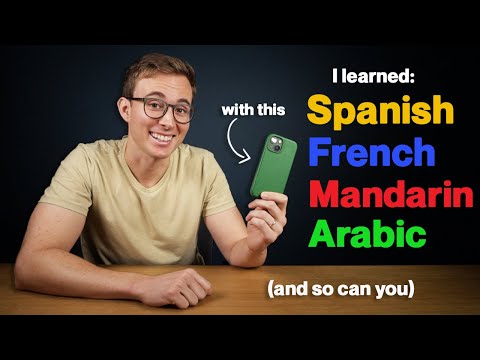
- The speaker mentions that when they graduated from college, they couldn't speak any foreign language.
- They now claim to be fluent in French, Spanish, Arabic, and Mandarin.
Best App for Absolute Beginners
The speaker talks about an app that is suitable for absolute beginners in language learning.
Duolingo - Answering Important Questions
- Duolingo is recommended as the best app for absolute beginners.
- It helps answer important questions about language learning commitment, daily study time availability, and enjoyment of the process.
- If the answers to these questions are positive, then Duolingo can be a good starting point for language learning.
Best App for All-Around Language Learning
The speaker discusses an app that provides comprehensive language learning features.
Visual Apps vs. Audio-Based Apps
- Most big-name language apps offer vocab, grammar, pronunciation lessons in a visual format.
- However, constantly engaging with the screen can lead to distractions and loss of focus over time.
- An audio-based app allows learners to enjoy other activities like walking while listening and learning simultaneously.
Language Transfer vs. Pimsleur
The speaker compares two audio-based apps for language learning.
Language Transfer
- Language Transfer offers free lessons in nine different languages from beginner level.
- Each lesson features a teacher-student conversation format resembling a private class.
- Limited number of lessons available (less than 12 hours of content).
Pimsleur
- Pimsleur offers more languages, extensive content, and supplemental tools like vocab quizzes and flashcards.
- Requires a monthly subscription but provides a 7-day free trial.
Best App for Building Vocabulary
The speaker introduces an app specifically designed for building vocabulary.
Anki - Flashcard App
- Anki is a flashcard app that has been around for almost 20 years.
- Users can create their own flashcards or download pre-made decks from AnkiWeb.
- Anki decks are highly customizable and offer various features like native audio and visual aids.
Glossa - Audio Flashcard System
The speaker presents an audio-based flashcard system for vocabulary learning.
Glossa - Audio Flashcards
- Glossa operates on the concept of hearing phrases in English followed by native speakers reciting them in the target language.
- Phrases start simple and gradually become more complex over time.
- Simple and effective approach without excessive features.
- Not suitable for absolute beginners as it lacks explanations.
Timestamps may not be available for every bullet point.
New Section
In this section, the speaker discusses the limitations of pronunciation correction apps and emphasizes the importance of practicing speaking with another human through language exchange platforms.
Improving Speaking Skills
- Pronunciation correction apps are not yet reliable in correcting pronunciation.
- To improve speaking skills or have natural conversations, it is necessary to practice speaking with another human.
- Language exchange platforms connect individuals from different parts of the world for language tutoring.
- Two methods: free method (conversation exchange) and paid method (hiring a tutor).
- Hello Talk is recommended for free conversation exchanges due to its large user base and active community.
- Preply is recommended for paid lessons as it offers experienced teachers and options for group classes.
New Section
This section focuses on improving reading skills in a new language using language learning apps.
Developing Reading Skills
- Bilingua is a highly recommended app for developing reading skills in a new language.
- Bilingua provides parallel versions of texts in English and the target language.
- The app offers a wide range of reading materials, including kids' stories, newspaper articles, and classical literature.
- Features include listening to native speakers read stories aloud and high-quality parallel translations.
New Section
This section highlights the importance of immersion and input in becoming fluent in a new language. It also suggests using podcasts as an effective way to immerse oneself in the target language.
Becoming Fluent
- Immersion and constant exposure to the target language are key to becoming fluent.
- Listening to podcasts is an effective way to immerse oneself in the target language.
- Passive listening is not enough; actively look up unfamiliar words and phrases while listening.
- Google Translate can be used to quickly translate unknown words or phrases during podcast listening.
- Google Translate has improved significantly with the integration of linguistic AI, but it is still recommended to double-check definitions with native speakers through language exchange platforms.
New Section
In this section, the speaker concludes by emphasizing the importance of consistent exposure and practice in language learning. They also encourage viewers to subscribe for more language learning tips and ask questions or provide comments about language learning apps.
Final Thoughts
- Consistent exposure and practice are crucial for language learning.
- Subscribing for more language learning tips is encouraged.
- Language exchange platforms can be used to connect with native speakers for further assistance and practice.