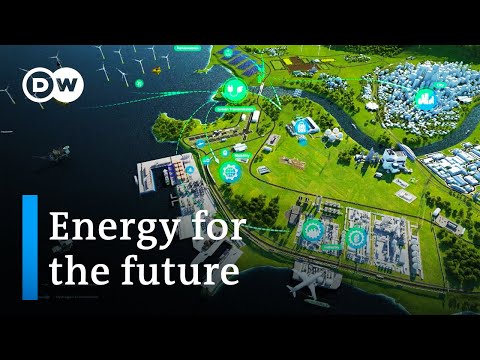
Global renewables: Pioneering the energy transition | DW Documentary
Urban Energy Challenges and Innovations
The Growing Urban Population and Resource Demands
- More than 50% of the world’s population currently lives in urban areas, projected to rise to nearly 70% by 2050.
- Big cities face significant challenges regarding water, food, and energy due to high resource demands amidst climate change.
- A global transition to green energy requires revolutionizing complex energy supply systems.
The Role of Cities in Sustainable Development
- Cities must take a leading role in transitioning to renewable, circular, and nature-positive economies.
- Urgency is emphasized; there is little time left to save the planet, necessitating rapid action.
Lancaster's Journey Towards Carbon Neutrality
Transforming Lancaster's Economy
- Lancaster aims to be the first carbon-neutral community in the U.S., starting its green journey in 2009 with about 175,000 residents.
- The transformation involved not just technology but also a cultural shift within city governance towards facilitating rather than hindering progress.
Streamlining Solar Panel Permits
- Previously, obtaining permits for solar panel installation took at least six months; this was reduced to just 45 minutes under Mayor Rex Parris's leadership.
- Emphasis on a culture that seeks reasons to say "yes" rather than "no" was crucial for fostering innovation.
Economic Benefits of Alternative Energy
Financial Gains from Green Initiatives
- Initial investments in photovoltaic panels for municipal buildings led to significant cost savings for Lancaster, which were reinvested into further renewable projects.
- The city developed an alternative energy network that generated excess electricity used for hydrogen production for public transport.
Job Creation and Economic Growth
- Unemployment dropped from 17% in 2009 to around 6% by 2023 as Lancaster became a self-sufficient green energy powerhouse.
- Innovation spurred by common goals has led to broader economic benefits beyond immediate objectives.
Wunsiedel: A Model of Circular Energy Systems
Renewable Energy Integration
- Under Marco Krasser’s leadership, Wunsiedel shifted towards using only renewable energies linked with local timber industries for sustainable raw materials.
- The region focuses on reusing as much energy as possible through innovative practices like converting wood waste into pellets for heat or electricity generation.
Creating Local Circular Economies
- Wunsiedel employs a cascaded system integrating solar/wind power with battery storage and combined heat/power solutions across various sectors including construction and agriculture.
Efficient Use of Local Resources
Energy Innovation and Circular Economy in Urban Development
Integrating Energy Solutions in Construction Projects
- The "EnergyLab" project in Copenhagen's Nordhavn district serves as a living laboratory for testing innovative energy cycles, emphasizing the importance of integrating such systems from the start of construction projects.
- The Nordhavn project demonstrates effective utilization of available energy sources, highlighting the need for smarter development of energy systems.
Efficient Use of Energy Resources
- Well-insulated buildings retain heat, which is crucial during peak hours; commercial businesses can compress waste heat to supply district heating systems.
- Surplus electricity from renewable sources like wind turbines can optimize compressor operations, converting excess energy into usable heat for buildings.
Circular Economy and Community Benefits
- The neighborhood benefits from an ingenious cycle where energy is reused multiple times rather than being single-purpose, aligning with modern circular economy goals to save energy and increase efficiency.
- Oslo aims to achieve zero CO2 emissions by 2030 through concrete measures led by Mayor Marianne Borgen, focusing on opportunities rather than restrictions.
Sustainable Urban Development Initiatives
- New constructions in Oslo include solar panels that produce more energy than they consume, allowing surplus energy to be shared with nearby buildings.
- Oslo strives to become the first zero-emission city globally by 2030, emphasizing reduction in consumption and waste while promoting recycling.
Corporate Commitment to Climate Goals
- Hege Schøyen Dillner advocates for her construction company’s commitment to the Paris Agreement on climate change, stressing the importance of setting clear directions despite uncertainties.
- Dillner highlights that establishing a direction towards sustainability is crucial even when specific methods are not yet defined.
Future Urbanization Challenges
- With global population expected to reach 10 billion by 2050, urban planning must focus on sustainable building practices using fewer resources over longer periods.
Innovative Building Practices
- Sonja Horn’s real estate company emphasizes reusing elements from old buildings during new constructions; this approach attracted startups and tenants due to its unique concept.
Pioneering Sustainable Projects
Sustainable Construction and Energy Transition
Focus on Resource Efficiency
- Young people are attracted to work in environments that prioritize sustainability. New constructions focus on using fewer resources and materials.
- Emphasis is placed on reusing materials, utilizing recycled options before sourcing new ones. Oslo's construction sites are increasingly adopting zero-emission practices.
Economic Benefits of Emission Reduction
- Cutting emissions is not only beneficial for the climate but also economically smart. Norway aims for carbon neutrality by 2030, leveraging its hydropower resources despite a significant oil and gas sector.
- Minister Espen Barth Eide believes transitioning to a carbon-neutral economy presents more opportunities than risks, with industries eager to adapt their skills from fossil fuels to renewable energy technologies.
Technological Innovations in Energy
- The circular energy economy relies heavily on technological advancements and a stable green power grid, primarily supported by offshore wind and hydropower.
- Collaboration among North Sea countries could lead to an international grid model that balances green power demand across borders.
Infrastructure Development for Energy Transfer
- A subsea link connecting Norway with England was completed in 2021, facilitating the transfer of gigawatts of electricity generated from hydropower and offshore wind.
- The Port of Blyth is becoming a major offshore energy hub, attracting investments that promise economic revitalization for the local community post-coal mining decline.
Future Prospects of Energy Networks
- The North Sea grid aims to enhance collaboration among European nations for energy security through advanced technology capable of exchanging generated energy efficiently.
Integration of Offshore Wind Energy and Hydrogen Production
Planning for Offshore Wind Integration
- The integration of 40 to 60 gigawatts of offshore wind energy requires careful planning and investment in grid technology to ensure timely deployment.
Viking Link: A New Power Connection
- The Viking Link, a newly completed interconnector between Britain and Denmark, spans 765 kilometers, making it the longest subsea power cable globally. It facilitates electricity supply from both countries' offshore wind parks.
Hydrogen as an Energy Storage Solution
- Large storage facilities will be essential alongside transmission infrastructure to meet future energy demands. Hydrogen is highlighted as a promising storage medium for green electricity due to its potential scalability.
Electrolysis: Producing Sustainable Hydrogen
- Electrolysis, which splits water into hydrogen and oxygen using renewable electricity, is crucial for sustainable hydrogen production. This technology can be integrated into existing economic cycles with relative ease.
Modular Systems for Hydrogen Production
- A modular system approach allows for scalable hydrogen production tailored to varying customer demands, from small industrial sites to large utility-scale operations.
Estimating Hydrogen Needs for Energy Transition
- Understanding daily peak hour needs and estimating how much hydrogen could replace conventional power plants are vital steps in determining optimal energy alternatives.
Three Levers of the Energy Transition
- The speaker identifies three key strategies for the energy transition:
- Energy Efficiency: Reducing overall consumption through recycling.
- Electrification: Utilizing electrification as a cost-effective decarbonization method.
- Hydrogen & Green Molecules: Capturing excess energy through hydrogen where electrification alone isn't sufficient.
Future Fuels Derived from Hydrogen
- There is optimism that hydrogen can serve as a foundation for various fuels. It can be transformed into e-fuels by combining it with captured CO2, enabling synthetic fuel production previously reliant on fossil fuels.
Research Innovations at Helmholtz Centre
- BESSY, a particle accelerator at the Helmholtz Centre in Berlin, is utilized for research focused on enhancing solar cell efficiency and refining hydrogen into new fuels.
Renewable Energy's Potential Impact
- The speaker emphasizes the vast potential of renewable energy sources to sustainably supply global energy needs while advocating modern materials and technologies that convert sunlight into electrical energy efficiently.
Clean Cooking Fuels Initiative
- Sonya Calnan leads a project aimed at producing cleaner cooking fuels using solar energy and hydrogen. This initiative targets regions lacking reliable electricity access, collaborating with teams in Berlin and Cape Town.
Solar Cells Beyond Electricity Generation
- Photovoltaic cells are presented not only as tools for generating electricity but also as means to produce hydrogen and clean water when connected to appropriate chemical reactors—offering sustainable alternatives in resource-limited areas.
Benefits of Sustainable Fuel Alternatives
Circular Energy Economy and Battery Recycling
The Experimental Stage of Green Technologies
- Projects in the circular energy economy are still experimental, with hopes they will serve as foundational elements for future developments.
- Global research into green technologies is increasing, with Singapore recognized as a leading hub for innovation.
Challenges in Energy Storage
- Professor Madhavi Srinivasan addresses critical issues in the new energy economy, focusing on battery storage made from scarce materials.
- Her research emphasizes recycling lithium-ion batteries and e-waste to reintegrate materials into production cycles.
Importance of Circular Economy Mindset
- A shift towards a circular economy is essential to avoid resource depletion globally.
- Nanyang Technological University (NTU), along with other prestigious institutions, is at the forefront of developing deployable technology for future industries.
Innovative Approaches to Battery Material Recovery
Research Methodology
- Madhavi's career has focused on energy storage and circular economies since her PhD, aiming to create impactful changes.
- The process involves shredding batteries to extract valuable elements like lithium and nickel from a black mass.
Extraction Techniques
- Current recovery methods utilize orange peels or bacterial cultures mixed with black powder to extract up to 99% of elements.
- Madhavi holds thirty patents related to her innovations aimed at minimizing the use of new materials.
Global Collaboration in Materials Research
Database for Practical Experiments
- In Copenhagen, practical experiments are cataloged in a database to identify promising results directed by Tejs Vegge at the Technical University of Denmark.
Innovative Models Development
- The institute focuses on creating physics-aware models that acknowledge uncertainties during material development processes.
Rethinking Material Discovery for Sustainability
Need for Reinvention
- Addressing climate challenges requires reinventing how new materials are discovered and developed within integrated systems.
Urgency Amid Climate Crisis
- Accelerated solutions are necessary due to the complexity of challenges posed by climate change; applied research must adapt accordingly.
Artificial Photosynthesis: Mimicking Nature’s Process
Inspiration from Nature
- Professor Harry Atwater leads research on solar energy conversion inspired by nature's photosynthesis process that transforms CO2 and water into sugars using sunlight.
Advancements in Artificial Photosynthesis
- Researchers aim to replicate this natural process through engineered materials that facilitate fuel formation directly from sunlight.
Future Potential of Hydrogen Production
Efficiency Achievements
- Current efficiency rates for artificial photosynthesis stand at 19.3%, achieved through collaboration among various laboratories.
Industrial Scaling Possibilities
The Future of Energy: Harnessing Nature's Power
The Role of Photovoltaics in Sustainable Energy
- The potential of photovoltaics is highlighted as a means to provide free energy, mimicking nature's long-standing methods using sunlight and water. This capability represents a significant advancement that has not been possible before.
Importance of Semiconductors in Technology
- Semiconductors are described as crucial components for advanced technologies, despite their small size. They can be made from various materials, with III-V semiconductor compounds being particularly noteworthy for their design flexibility.
- Researchers at the Technical University of Ilmenau focus on optimizing these semiconductors, aiming to combine high performance with cost-effective silicon materials, which could lead to profitable innovations.
Challenges in Implementing New Energy Systems
- While there are promising developments in energy systems, many components are still not fully operational. The rollout of innovations to communities and industries is essential for progress.
- There remains a gap between scientific breakthroughs and their public implementation, indicating a need for accelerated adoption of new technologies.
The Need for Timely Action on Climate Change
- Emphasizing the urgency of addressing climate change, the speaker warns against learning in isolation. Delays could have severe consequences for the planet.
- A vision for a circular economy is presented as vital for sustainable prosperity. The notion that we borrow the Earth from future generations underscores the responsibility to act sustainably.