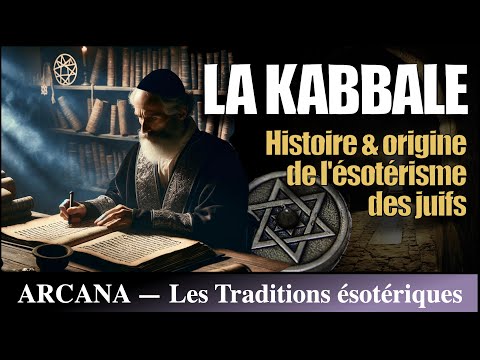
Les Mystères de la Kabbale - Histoire de l'ésotérisme
Introduction to Kabbalah
Overview of the Live Session
- The host welcomes viewers to the first live session of the season, expressing excitement about audience engagement with nearly 50 participants.
- A previous episode on Kabbalah was aired about a year ago, focusing on its history and key concepts in a brief format.
- Tonight's discussion aims to delve deeper into Kabbalah's mythological and empirical history, as well as its philosophical and metaphysical aspects.
Host's Perspective
- The host clarifies that they are not a practitioner of Kabbalah but rather an interested cultural observer who reads relevant literature.
- Emphasizes that one can study various esoteric subjects without practicing them personally; personal conviction is subjective.
Channel Updates and Engagement
Changes in Video Schedule
- The host announces a change in video release schedule from Saturday to Friday at 6 PM for better viewer accessibility.
Encouragement for Viewer Interaction
- Viewers are encouraged to subscribe and activate notifications for updates on new videos, enhancing community engagement.
- Sharing videos on social media is suggested to help grow the channel’s audience and foster discussions within their Discord community.
Discussion Format and Expectations
Q&A Structure
- Questions during the live session should be directed through Discord instead of YouTube chat for clarity and organization.
Focus of Tonight’s Discussion
- The session will not cover practical rituals or practices related to Kabbalah but will focus on historical perspectives and symbolic interpretations.
- The host intends to present facts about Kabbalah without imposing personal beliefs, allowing viewers to form their own opinions based on presented concepts.
Introduction to the Discussion on Kabbalah
Focus of the Presentation
- The speaker clarifies that the discussion will not cover politics or ideology, emphasizing a focus on history, symbolism, theology, and religion.
- Viewers are encouraged to seek out other YouTubers for political topics as this channel's content is strictly non-political.
Engagement with the Audience
- The speaker requests feedback from viewers in a Discord chat to confirm audio clarity.
- A reminder is given for viewers to share the video to support channel activity and engagement.
Understanding Kabbalah: Definitions and Origins
Definition of Kabbalah
- Kabbalah derives from the Hebrew word "Kabala," meaning tradition or reception of divine knowledge and secret laws from God.
- It is intrinsically linked to Jewish religion and culture, originating from Hebrew people.
Esoteric Nature of Kabbalah
- The teachings of Kabbalah are considered esoteric and hidden compared to the public nature of the Torah.
- While Torah represents an exoteric message accessible to all, Kabbalah offers a metaphysical interpretation that requires deeper understanding.
The Variations in Spelling and Misconceptions
Different Spellings of Kabbalah
- The term can be spelled as "Kabal" (English), "cabale" (French), or "cabal" (common misspelling), but they fundamentally refer to the same concept.
Misinterpretation of 'Cabal'
- The term 'cabal' often carries negative connotations associated with secret societies or conspiracies; however, it should not be conflated with Kabbalistic teachings.
Historical Context and Mythology
Historical Roots
- Discussions about historical aspects suggest that medieval cabalists trace their beliefs back to Adam, intertwining mythology with esotericism.
The Mythology and Tradition of Kabbalah
The Origins of Kabbalistic Wisdom
- Adam is considered the first Kabbalist in mythology, having received divine knowledge and wisdom. This belief is unverifiable and depends on personal faith.
- After the fall, it is believed that humanity lost this hidden knowledge, which became obscured within cosmic mysteries.
- Key figures in Hebrew mythology include Noah and other prophets like Enoch and Melchizedek, who are seen as bearers of secret teachings from divine sources.
Moses: A Central Figure in Kabbalistic Tradition
- Moses is portrayed as a fundamental character in Jewish history, marking the transition from mythological to historical narratives.
- Unlike earlier allegorical figures such as Abraham or Isaac, Moses represents a pivotal moment where legend meets the documented history of Israel.
- He received both the written law (the Torah) and an esoteric teaching meant for select sages among the Hebrews.
Transmission of Kabbalistic Knowledge
- The spread of Kabbalah mythologically coincides with the dissemination of written laws throughout Canaan.
- Many medieval texts attributed to ancient prophets were actually composed later; authors often claimed older origins for their works to enhance credibility.
The Role of Mythology in Understanding Kabbalah
- While these myths lack historical proof, they serve to illustrate the tradition's essence—Kabbalah as an esoteric science passed down orally through generations.
- The speaker emphasizes their external perspective on Jewish traditions, acknowledging potential biases due to not being part of the faith.
Historical Context and Textual Foundations
- This oral tradition purportedly reached biblical authors before evolving into writings by significant figures like Elijah or Rabbi Shimon during medieval times.
- Transitioning from mythology to reality involves examining foundational texts that illuminate Kabbalistic traditions, including pseudepigraphical works found at Qumran (Dead Sea Scrolls).
Exploring Gnostic Texts and Kabbalistic Origins
Gnostic Texts and Hebrew Manuscripts
- The discussion begins with the mention of Gnostic gospels, particularly the Nag Hammadi writings, which parallel Hebrew texts that are not recognized by the canonical Hebrew Bible.
- Among these non-canonical texts are the Dead Sea Scrolls from Qumran, which contain elements that diverge from traditional Jewish mysticism.
Kabbalah's Historical Context
- The speaker notes that certain texts convey metaphysical concepts differing from standard Jewish teachings, suggesting early Kabbalistic ideas may have existed in Judaism's formative years.
- A significant text mentioned is the Sefer Yetzirah (Book of Creation), a brief yet poetic Kabbalistic work dating back to the 3rd or 4th century, reinterpreting biblical texts.
Development of Kabbalistic Literature
- While Sefer Yetzirah contains foundational elements of Kabbalah, it does not codify modern Kabbalistic concepts; its existence marks an early stage rather than a definitive birth of Kabbalah.
- The speaker emphasizes that many ancient texts were often attributed to earlier figures without empirical evidence supporting their historical claims. This includes discussions on exegesis within sacred texts.
Key Works in Kabbalah
- The Sefer ha-Bahir (Book of Brightness) emerges as a more influential text written in the 12th century, claiming an oral tradition passed down through generations despite lacking historical proof for its origins.
- Another pivotal work is the Zohar, known as the "Bible of Kabbalah," authored by Moses de Leon in the 13th century; it also faces scrutiny regarding its true authorship and historical authenticity.
Influence of Maimonides on Jewish Thought
- Maimonides (Moché Ben Maimon), a prominent rabbi from Cordoba, is introduced as a crucial figure who was not directly involved with Kabbalah but significantly influenced Jewish thought during his time. His works reflect on challenges faced by Jews in medieval society.
- The distinction between Sephardic Jews (from Spain) and Ashkenazi Jews (from Germany/Eastern Europe) is highlighted as essential to understanding divergent paths within Jewish mystical traditions during this period.
Understanding Maimonides and the Intersection of Jewish Philosophy
The Context of Jewish Life in Spain
- Maimonides observes that Jews in Spain face challenges living under Muslim and Christian dominance during the Reconquista, leading to a rich cultural exchange among these three groups.
- The influence of Aristotelian philosophy is significant; however, it is essential to note that the interpretations come from Aristotle's successors rather than Aristotle himself.
Maimonides' Philosophical Contributions
- Maimonides identifies that the written law (the Torah) may not be suitable for contemporary society, suggesting a disconnect between ancient laws and modern realities.
- He writes "The Guide for the Perplexed" to reconcile Aristotelian philosophy with Jewish thought, aiming to bridge gaps between religion and philosophy.
Rationalism vs. Esotericism
- Maimonides advocates for rationalist thought over esoteric traditions, positioning himself against Kabbalistic views which are rooted in mysticism.
- His work prompts Kabbalists to codify their teachings in response to his rationalist approach, leading to a distinct movement within Jewish thought.
Key Figures in Kabbalistic Thought
- The discussion shifts towards notable figures who shaped Kabbalah, focusing on influential thinkers rather than an exhaustive list of all practitioners.
Rabi Isaac the Blind
- Living in 13th century France, Rabi Isaac is influenced by Neoplatonic thought and significantly comments on foundational texts like "Sefer Yetzirah," contributing to early Kabbalistic ideas.
Rabi Moïse Ben Naiman
- A staunch opponent of Maimonides, he introduces metaphysical concepts into Judaism and develops gematria—the interpretation of numerical values assigned to letters—enhancing scriptural analysis.
- He also discusses concepts such as emanation and soul transmigration, further enriching Kabbalistic discourse while opposing Maimonidean philosophy.
The Evolution of Kabbalah
Early Figures in Kabbalah
- Abraham Abulafia, a 13th-century figure from Spain, attempted to convert the Pope to Kabbalistic beliefs, showcasing his boldness during that era.
- His efforts were met with resistance; local ecclesiastics dismissed him before he could reach the Pope, likely saving him from persecution.
- Moses de Leon, another prominent 13th-century figure in Spain, authored the Zohar, regarded as the Bible of Kabbalah. He criticized Maimonides for his literal interpretation of biblical texts.
Spread and Challenges of Kabbalah
- The teachings of Kabbalah began to spread across Italy, Germany, and further into Spain and Portugal.
- The expulsion of Jews from Spain and Portugal in 1492 marked a significant challenge for Kabbalistic thought but also led to its dissemination throughout the Mediterranean.
Resurgence in Safed
- Following their expulsion, many Jewish thinkers regrouped in Safed (Israel/Palestine), which became a center for Kabbalistic study.
- The printing of the Zohar in 1558 facilitated wider access to its teachings due to advancements like the printing press.
Isaac Luria's Contributions
- Isaac Luria Hashkenazi emerged in the 16th century as a pivotal figure who redefined Kabbalistic thought by introducing new concepts that would be explored later.
Influence on Modern Thought
- A simplistic diagram illustrates how medieval Kabbalah influenced various notable figures and philosophical movements over time.
- Key figures such as Blavatsky and Eliphas Lévi drew heavily from Kabbalistic ideas for their own esoteric practices and philosophies.
Legacy of Kabbalah
- Influences extend into modern New Age philosophies through figures like Rudolf Steiner and Alister Crowley. Their works reflect an underlying current of Kabbalistic thought.
- Contemporary scholars like Gershom Scholem have significantly contributed to understanding modern interpretations of Kabbalah without asserting it as absolute truth or falsehood.
Conclusion
- This overview provides a simplified history of Kabbalah within thirty minutes. Further questions can deepen understanding or clarify specific aspects discussed.
Introduction to the Discussion on Kabbalah
Overview of the Session
- The session will cover historical aspects and delve into the concepts of Kabbalah, lasting approximately 2 hours.
- Previous sessions were longer (around 3 hours), but this change aims to enhance audience concentration and engagement.
Audience Interaction
- Acknowledgment of a question regarding the relationship between Kabbalah and Gnosticism, indicating an interactive format where questions are welcomed.
- Encouragement for viewers to share the video to help grow the channel's audience.
Exploring Connections Between Kabbalah, Gnosticism, and Sufism
Defining Esoteric Traditions
- Kabbalah is linked with Jewish esoteric tradition; Gnosticism pertains to Christian esotericism; Sufism relates to Islamic esotericism.
- Clarification that current discussions focus on Christian Gnosticism rather than pre-Christian philosophical interpretations.
Common Themes in Esoteric Traditions
- All three traditions view their respective religions (Islam, Christianity, Judaism) as exoteric—visible expressions of divine law—but seek deeper understanding beyond surface readings.
- Emphasis on analyzing symbolism and mystique within sacred texts for a more profound connection with God through mystical evolution.
Comparative Analysis of Interpretative Approaches
Methodologies in Esoteric Practices
- Sufis interpret the Quran for hidden meanings; Gnostics do similarly with biblical texts like the Gospel of John; Kabbalists apply these methods within Judaism.
- The shared goal among these traditions is uncovering concealed messages within sacred writings across Abrahamic faiths.
Interconnectedness Among Believers
- Individuals from different esoteric backgrounds can engage in theological discussions without conflict due to shared metaphysical perspectives.
- Each tradition enriches its understanding by exploring other esoteric teachings while maintaining unique religious identities.
Addressing Misconceptions About "Cabal"
Distinction from Popular Culture References
- Clarification that contemporary media portrayals of "cabal" or related conspiracy theories have no genuine connection to traditional Kabbalistic teachings.
- Critique of sensationalist narratives surrounding terms like Illuminati or satanic cabals as commercialized myths lacking substantive ties to authentic spiritual practices.
Understanding the Kabbalah and Its Misinterpretations
The Dangers of Misinterpretation
- Individuals who lack knowledge about Kabbalistic texts, such as the Zohar, often attempt to interpret them without having read or studied them. This poses a significant danger as it leads to misinformation.
Marketing and Symbolism in Pop Culture
- Celebrities like Lady Gaga utilize Illuminati or satanic symbols for marketing purposes, creating an allure of hidden knowledge that captivates audiences. They understand the commercial value of these symbols.
Distinctions Between Traditions
- The speaker distinguishes between various traditions:
- Rosicrucianism: A Christian Gnostic tradition focused on divine mysteries.
- Freemasonry: An initiatory society with symbolic and theological teachings.
- Kabbalah: Not an initiatory society but a tradition accessible through study.
Accessibility of Kabbalah
- Kabbalah is not secretive; individuals can join schools in Israel to study its concepts by simply applying for admission without any initiation rites.
Misconceptions About Secrecy
- While some modern groups may operate in secrecy, this does not reflect the broader tradition of Kabbalah. It is essential to differentiate between individual practices and the overall tradition.
Historical Context of Religious Conflicts
- Historically, established religions have opposed Gnostic currents within Christianity, viewing them as heretical. This opposition has been violent at times, reflecting broader conflicts over doctrinal purity.
Persecution Dynamics Across Religions
- In Islam, extremist factions like Salafists view Sufism (an esoteric Islamic tradition) as heretical and actively persecute its practitioners.
Jewish Perspectives on Kabbalah
- Orthodox Judaism generally disapproves of Kabbalah; however, due to historical power dynamics, Jews have not persecuted Kabbalists despite their disagreements.
Influence of Historical Figures
- Thinkers like Maimonides would likely have opposed Kabbalistic texts had they encountered them later in their lives, indicating ongoing tensions within Jewish thought regarding mysticism.
Religious Tolerance and Esoteric Traditions
The Relationship Between Exoteric and Esoteric Religions
- Exoteric religions, such as the Abrahamic faiths, generally do not violently oppose gnostic or Hebrew currents; instead, they engage in dialogue and express disagreement.
- Modern Christian churches acknowledge the presence of various gnostic movements without resorting to violence, contrasting with historical practices during the Middle Ages.
Historical Context of Esoteric Traditions
- There exists an esoteric tradition predating Kabbalah, rooted in humanity's quest for metaphysical understanding since ancient times.
- Kabbalah can be traced back to the 12th century, while Sufism emerged around the 8th or 9th century. Early Christian Gnosticism dates back to approximately the 2nd century CE.
Ancient Greek Mysteries and Their Influence
- Prior to codified religions like Christianity and Judaism, various esoteric traditions existed among ancient Greeks, including Orphism and Isiac mysteries.
- Numerous mystery cults from antiquity influenced religious thought; examples include the mysteries of Dionysus and Serapis.
Distinction Between Cultures
- While many ancient traditions were mystery cults, Kabbalah is characterized as a non-mystery tradition that focuses on spiritual teachings rather than secretive rituals.
Influences on Hebrew Religion
- The origins of Kabbalah are intertwined with multiple mystical elements; Hebrew religion developed through influences from Canaanite beliefs as well as Mesopotamian cultures.
- Historical context reveals that Canaan was significantly shaped by Babylonian influences between 2000–1500 BCE.
Cultural Interactions in Ancient Canaan
- Egyptian control over Canaan from approximately 1500–1100 BCE introduced further cultural influences into Hebrew religious development.
- Key figures like Abraham are linked to Mesopotamian roots while Moses' narrative reflects Egyptian influence—highlighting a blend of cultural inspirations within early Hebrew identity.
Conclusion on Kabbalistic Origins
- The formation of Kabbalah mirrors this complex interplay of cultural influences from Mesopotamia, Egypt, and local Canaanite traditions.
What Are the Key Differences Between Kabbalists and Jews?
Disagreements on Concepts of God
- Kabbalists and Jews share a belief in one God, but their definitions and visions of God differ significantly. The Hebrew understanding is vastly different from the Kabbalistic perspective.
Reincarnation Beliefs
- Kabbalists believe in reincarnation or the transmigration of souls, which contrasts with Orthodox Jewish beliefs that do not support this concept.
Interpretation of Divine Law
- While Hebrews hold that Moses provided only the written law, Kabbalists assert there exists a secret law passed down through initiates, indicating a divergence in religious interpretation.
Image of God
- The phrase "God created man in His image" is interpreted differently by both groups, highlighting contrasting views on humanity's relationship to divinity.
Gender Roles in Religion
- Kabbalah exhibits greater tolerance towards women compared to traditional Jewish practices. This complexity regarding women's roles is also seen in Islam and Christianity.
Understanding the Study of Kabbalah
Emanation and Creation
- The study focuses on understanding how the universe was created—essentially an exploration of genesis—and aims to comprehend God's mechanisms within creation.
Divine-Human Connection
- A significant aspect involves exploring the relationship between divine beings and humans, questioning what connects or separates them. For Kabbalists, divinity resides within humanity as well as externally.
Laws of Salvation
- Central to Kabbalah are studies concerning laws governing salvation and understanding the world's architecture. This includes grasping how to achieve liberation for one's soul.
Esoteric Nature of Kabbalah
- Fundamentally esoteric, Kabbalah involves studying hidden truths but can also be practiced as occult science aimed at accessing deeper knowledge beyond mere intellectual pursuits.
Key Textual Foundations in Kabbalah
Introduction to Key Texts
- The discussion will reference foundational texts like "Sefer Yetzirah" (Book of Creation), which analyzes Hebrew religion through an esoteric lens rather than being strictly a medieval text.
This structured approach provides clarity on key themes discussed while allowing easy navigation through timestamps for further exploration.
The Foundations of Kabbalah
The Sefer Yestria and Its Significance
- The Sefer Yestria is identified as a foundational text in Kabbalah, marking the historical inception of this mystical tradition.
- It introduces the concept of a universal wisdom emanating from God, which was lost during the fall of Adam and Eve, emphasizing the need to reconnect with this primordial knowledge.
- The text outlines 32 paths to wisdom: 10 are known as "numbers abîmes" (abyssal numbers), later referred to as the 10 Sephiroth, representing fundamental cosmic principles.
Understanding the Abyssal Numbers
- These 10 numbers symbolize extremes within existence: high/low, left/right, front/back, beginning/end, good/evil—representing a comprehensive framework for understanding reality.
- They illustrate both infinite and finite aspects of existence; one can never fully grasp God or ultimate truth.
- The Sefer Yestria posits that these abyssal numbers embody both good and evil in their most extreme forms while acknowledging nuances between them.
The Sacred Letters and Their Divine Nature
- In addition to the abyssal numbers, there are 22 sacred letters in Hebrew considered divine due to their ability to convey profound concepts and ideas.
- Each letter serves as a creative force; when used by a Kabbalist, it transcends mere writing—it becomes an act of creation reflecting divine manifestation.
Alchemy and Creation in Kabbalah
- A significant theme in Sefer Yestria is viewing God as an alchemist who transforms elements into structured forms that possess life.
- This perspective contrasts with orthodox Judaism by introducing intermediary demurges—forces that organize creation rather than attributing all creative power solely to God.
Demurges: Forces Between God and Creation
- Between God (the infinite source) and humanity lies various demurges or organizing forces responsible for managing different aspects of reality.
- These demurges oversee specific domains such as time or nature; they play crucial roles in maintaining order within creation while being distinct from God's direct influence.
Exploring Gnostic Concepts and Kabbalistic Insights
The Innovative Idea of Seher Gestrira
- The concept of Seher Gestrira is presented as innovative, though it has roots in early Christian Gnosticism, particularly from regions like Syria and Egypt.
- There is a possibility that the Cabala and early Christian Gnostics shared ideas due to their geographical proximity during the 3rd to 4th centuries.
The Nature of the Demiurge
- The discussion highlights a heretical view from an Orthodox Jewish perspective regarding multiple demiurges organizing creation in God's name.
- In Kabbalistic thought, various names for God (e.g., El Shaddai, Sabaoth) are seen as emanations rather than separate entities, affirming their strict monotheism while acknowledging divine manifestations.
Key Text: Safer Abahir
- The Safer Abahir, written in the 12th century, introduces fundamental concepts of Kabbalah that are still relevant today.
- A major theme is reincarnation and soul transmigration, notably discussed by Naimonide (not to be confused with Maimonide), suggesting life on Earth is part of a cycle aimed at purification.
Purpose of Reincarnation
- Kabbalists believe human existence involves successive reincarnations for spiritual purification; this notion parallels Hindu beliefs but raises questions about influence between traditions.
- Ultimately, the goal is to transcend this cycle through soul transmigration into higher realms beyond human existence.
Structure of Divine Emanation
- The Safer Abahir introduces the Tree of Sephiroth as a complex representation of divine architecture and emanation from God.
- It discusses channels between worlds inspired by prophetic visions (e.g., Ezekiel's chariot), emphasizing that prophets can traverse these realms.
Individual vs. Collective Destiny
- The text explores individual destinies versus collective destiny within Kabbalistic belief systems; each person has a unique path contributing to a greater divine plan.
- This duality suggests that personal fulfillment through individual study leads to broader communal harmony aligned with divine law (Torah).
Cosmology and Gender in Divinity
- The Safer Abahir addresses cosmological structures using terms like astral world or causal world, which emerge from its teachings.
- Notably, it challenges traditional views by asserting that God transcends gender categories—contrary to common perceptions across Hebrew and other religious contexts.
Understanding the Duality of Masculine and Feminine in Kabbalah
The Nature of God in Kabbalistic Thought
- In Kabbalah, God is perceived as neither masculine nor feminine but encompasses both aspects. The materialization of these genders emanates from Him, indicating a complex understanding of divine nature.
Masculine and Feminine Forces
- The masculine is viewed as an active, creative force, while the feminine represents a transformative, passive energy. This duality is essential for balance, akin to positive and negative electrical currents.
Importance of Shekhinah
- The Shekhinah symbolizes the divine presence and is inherently feminine. A male Kabbalist must embody this presence to study effectively; without it, spiritual endeavors are incomplete.
Gender Dynamics in Kabbalistic Study
- Historically, male Kabbalists were predominant; however, their studies required acknowledgment of the feminine aspect represented by Shekhinah. This reflects a partnership where both genders contribute equally to spiritual completeness.
Concept of Good and Evil
- Kabbalah explores the existence of evil as part of God's creation. It posits that good and evil are polarities within which humanity exists, allowing individuals freedom to choose their paths.
72 Names and Universal Equality
- The concept of 72 names relates to archangels and nations under divine tutelage. Each nation has its protectorate entity in Kabbalistic thought, promoting equality among all peoples rather than elevating one above another.
Antiracist Implications in Kabbalah
- This perspective suggests that all nations are chosen by God equally, presenting a fundamentally antiracist view during the Middle Ages when such ideas were revolutionary.
Introduction to Sefer HaZohar
- Sefer HaZohar is attributed mythologically to Rabbi Shimon Bar Yochai from the 2nd century CE. It serves as a significant text within Jewish mysticism that encapsulates many discussed concepts.
The Mystique of Kabbalah and the Zohar
The Role of Moses de Leon in Kabbalistic Texts
- Moses de Leon is recognized for his metaphysical interpretations, serving as a model for the authorship of significant texts.
- He chose to write the Zohar in Aramaic rather than Hebrew, giving it an ancient character and aligning it with earlier Midrashic forms.
- The Zohar is structured as dialogues between Rabbi Shimon Bar Yochai and his disciples, emphasizing its pedagogical nature.
Structure and Content of the Zohar
- The Zohar comprises around twenty volumes, presenting itself as an encyclopedic manifesto rather than a brief text.
- It critiques Maimonides and Aristotelian philosophy, arguing that absolute rationalism disconnects humanity from God.
Divine Names and Power in Kabbalah
- The text emphasizes the significance of divine names, each carrying unique powers; Kabbalists seek these secret words for invocation purposes.
- Through practices termed "theurgy," Kabbalists perform rituals involving symbols to connect with angelic entities.
Ritual Practices and Their Implications
- Kabbalists use sacred letters from the Hebrew alphabet in incantations to control angels and demons, reflecting their belief in hidden powers within language.
- While some may view these practices skeptically as manipulative or dark, there exists a spectrum among practitioners ranging from benevolent to malevolent intentions.
Pursuit of Primordial Wisdom
- A central goal within the Zohar is rediscovering primordial wisdom lost during humanity's fall; this wisdom is believed to be concealed within sacred texts and nature itself.
- The divine message is thought to be embedded in all aspects of existence—nature, astrology, human beings—indicating that understanding can lead to spiritual awakening.
Salvation and Risks Within Kabbalistic Beliefs
- The ultimate aim involves transcending reincarnation cycles towards divine proximity; however, failure could result in soul dissolution into nothingness.
- Unlike mainstream beliefs about reincarnation leading to eventual liberation, Kabbalistic teachings stress urgency in pursuing divine knowledge due to potential risks associated with neglecting this path.
Understanding Kabbalistic Concepts
The Path to Divine Contemplation
- A Kabbalist emphasizes that one can achieve divine contemplation without strictly adhering to Kabbalistic rituals or sacred words. The core message is about fulfilling one's responsibilities, such as supporting family and community.
- According to the Zohar, a person who does not take responsibility for themselves is not considered a true man. Observing divine law and fulfilling one's duties leads to gradual salvation.
Consequences of Actions
- The Kabbalist perspective suggests that those who stray from divine messages lose their divine essence and face literal disappearance rather than eternal suffering, contrasting with orthodox Judaism's view of eternal punishment.
- In Kabbalah, the concept of extinction replaces the idea of hell; losing one's divine essence results in non-existence rather than enduring suffering.
Repairing the World
- A fundamental principle in contemporary Kabbalah is "repairing the world." This notion stems from the belief that God encompasses all aspects of existence, including good and evil.
- Human actions are seen as responsible for the world's degradation due to original sin. Therefore, it is humanity's role to rectify this fault through individual acts.
Individual Responsibility
- Each person must contribute individually to repair the world; collective restoration occurs through personal efforts. It is not God's duty but humanity's free will that drives this process.
- Both men and women play crucial roles in this repair process, particularly through their union.
The Influence of Isaac Luria on Kabbalah
Introduction to Isaac Luria’s Reforms
- Isaac Luria was a 16th-century Kabbalist known for introducing new concepts into Kabbalistic thought while teaching in Safed. His ideas were documented by his disciples in "Sefir Haï," or "The Book of Life."
Conceptual Innovations
- Luria referred to God as "the cause of causes" instead of using traditional names like Yahweh or El, emphasizing a broader understanding beyond conventional labels.
Distinction Between Created and Uncreated
- He introduced a significant distinction between created (God) and uncreated (the void), which contrasts with earlier views where everything was seen as part of God.
Adam Kadmon: The Primordial Man
- Luria developed the concept of Adam Kadmon (Primordial Man), suggesting that the universe's structure reflects this archetype. This differs from traditional interpretations found in Genesis regarding God's image.
Anthropomorphic Misinterpretations
- Unlike some interpretations suggesting God has an anthropomorphic form because humans are made in His image, Kabbalists assert it refers solely to spiritual essence rather than physical appearance.
Understanding the Soul and Its Divine Connection in Kabbalah
The Nature of the Soul
- The soul, referred to as "néfèche" in Hebrew, is considered to be created in the image of God, distinguishing it from the physical body which is merely a vehicle.
Interpretation of Texts in Kabbalah
- Kabbalists interpret various parts of the Torah, emphasizing that it serves as a divine law rather than just a written text. This interpretation extends beyond Genesis to all aspects of Jewish scripture.
Human Representation of God
- For Kabbalists, since humans are made in God's image, they believe that worship should be directed towards humanity itself as an embodiment of divine likeness.
Adam Kadmon and Creation Concepts
- Lauria introduces the concept of "Adam Kadmon," or primordial man, suggesting that the entire world reflects an anthropomorphic image of God.
- Unlike medieval Kabbalists who viewed creation as emanation from God, Lauria posits that God actively creates and then withdraws from His creation.
The Infinite Nature of Torah
- The Torah is seen not just as a book but as a manifestation of God's essence; it embodies infinite interpretations and meanings akin to God's nature itself.
- Each letter in the Hebrew alphabet carries its own significance and numerical value, contributing to complex interpretations when combined with others.
Introduction to the Tree of Sephiroth
- The Tree of Sephiroth consists of ten spheres representing different attributes through which divine energy flows. It serves as a foundational concept within Kabbalistic thought.
Understanding the Architecture of God in Kabbalistic Thought
The Concept of Sephirot
- The architecture of God is represented through ten spheres, known as Sephirot, which symbolize divine emanations or archetypes that have emerged from God. This concept reflects the structure of the world itself.
- These ten Sephirot embody the maximum extension of divinity and encompass all aspects of creation, representing a complex anthropomorphic architecture within Kabbalah.
Duality in Sephirotic Nature
- The tree of Sephirot exhibits both masculine and feminine qualities; while the spheres themselves are passive (feminine), the connections between them are active (masculine).
- This interplay illustrates a creative and transformative action where energy flows through these spheres, allowing for personal evolution when one connects with them.
Purpose and Functionality of Sephirot
- The ten archetypes serve to represent the entirety of creation and its possibilities, manifesting significant concepts within existence.
- A detailed analysis of each Sephira will be reserved for future discussions due to their complexity; however, they collectively form an essential framework in understanding Kabbalistic teachings.
Specific Attributes of Each Sephira
- The first Sephira is Keter (the Crown), associated with Archangel Metatron. There are differing views on whether it is an emanation or creation.
- Two main interpretations exist regarding the relationship among the Sephirot: one suggests a hierarchical flow from Keter to others, while another posits that all ten emerged simultaneously without superiority.
Overview of Additional Sephirotic Concepts
- Following Keter is Chochmah (Wisdom), linked with Archangel Gabriel. It represents primal wisdom that guides contemplation.
- Bina (Understanding), associated with Archangel Zatkiel, follows Wisdom. Then comes Chesed (Grace), whose archangel remains unnamed but plays a crucial role in this sphere's influence.
- Gvurah (Strength), linked to Archangel Michael, Tiferet (Beauty), often associated with Raphael or Lucifer depending on interpretations, and Netzach (Victory), connected to Sariel follow sequentially.
Final Thoughts on Human Connection to Sephirotic Energy
- As humans engage in reflection and spiritual quests, they resonate progressively with these different spheres—transforming through experiences tied to wisdom, intelligence, strength, grace, beauty, and more.
Understanding the Sephirot and Transformation in Kabbalah
The Relationship with the Sephirot
- The concept of strength and transformation is introduced, emphasizing that lacking willpower indicates a disconnection from transformative energy associated with the Sephirot.
- Avarice and lack of compassion signify a disconnect from the Sephira, particularly Hod, highlighting the importance of mercy in Kabbalistic practice.
- The journey towards connecting with all Sephirot is gradual; one must start from lower levels to ascend spiritually.
Symbolism of Flames in Kabbalah
- An allegory using flames illustrates human spiritual elevation: black flame (destruction), red flame (life), and white flame (divine ascent).
- Each flame represents different aspects of existence; black consumes matter, red signifies life force, while white embodies purity and divine connection.
- Accessing the white flame requires starting from the base level (black), symbolizing a necessary progression through earthly passions to reach higher wisdom.
The Tree of Life: Complexity and Interpretation
- The Tree of Sephiroth is complex, featuring various interpretations; it serves as a foundational structure for understanding Kabbalistic teachings.
- Emphasis on interconnectedness within the Tree highlights how each path leads to greater understanding and enlightenment.
Concepts of Body, Spirit, and Soul
- In Kabbalah, the body (Gevia) is viewed as a temporary vessel for experiencing material existence; its death does not end one's spiritual journey.
- The individual soul (Nefesh) continues beyond physical death, suggesting reincarnation into new forms or bodies for further growth.
Role of Spirit in Spiritual Navigation
- The spirit acts as a guiding force navigating through concepts represented by the Sephiroth; it connects with wisdom and intelligence rather than being confined to individual experiences.
Understanding the Concept of Neshama in Kabbalah
The Nature of Neshama
- The individual spirit, representing free will, travels through the sephirot and spheres of knowledge, influencing various worlds.
- The goal is to gradually fill ourselves with neshama, which is a divine essence within us; lacking it leads to spiritual death.
- Historical figures who lacked neshama are said to have disappeared after death, contrasting with those who embodied goodness and divine glory.
Individual vs. Universal Soul
- Neshama represents God's soul present in all beings; each person has an individual soul called nefesh that transitions between bodies.
- Divine presence (Shekhinah) guides individuals throughout life, akin to a guardian angel providing messages and direction.
Comparative Analysis of Souls
- In Egyptian and Greek traditions, concepts like "degete" (Egyptian), "psyche" (Greek), and "nefesh" (Hebrew) illustrate different interpretations of the soul.
- The concept of neshama as a universal soul is unique to Kabbalistic thought and parallels Hinduism's idea of Brahman as universal energy.
The Structure of Worlds in Kabbalah
Four Worlds Overview
- Kabbalah describes four worlds: Assiah (material world), Yetzirah (astral world), Beriah (causal world), and Atzilut (divine emanation).
- Each world serves a distinct purpose: Assiah for action, Yetzirah for formation, Beriah for creation, and Atzilut solely embodies God.
Interconnectedness of Worlds
- A key question arises regarding whether other worlds emanated from Atzilut or were created separately; this remains a significant philosophical inquiry.
Hierarchical Relationships Among Worlds
- A diagram illustrates how these worlds connect: Assiah emerges from Beriah, which comes from Yetzirah leading back to Atzilut.
Conceptual Differences in Wisdom
Intelligence in Kabbalistic Thought
- In modern Kabbalistic thought influenced by Lurianic reform, intelligence and wisdom are seen as purely divine sources rather than attainable by humans.
Historical Perspectives on Knowledge
- Medieval Kabbalah posited that intelligence could be reached by humans since it relates to the realm of Beriah. This reflects differing views on human potential within spiritual frameworks.
Understanding the Kabbalistic Worlds
The Structure of Kabbalistic Realms
- Ascia is described as the material world where humans reside, forming a separation from higher realms.
- Above Ascia lies Bria, the world of creation associated with archangels and demurges, while Radzilouf represents the divine emanation.
- Below Ascia is Gehenna, a place for souls awaiting reincarnation; it serves as a realm of punishment rather than pure evil.
- Cheol is depicted as an abyss representing final disappearance, akin to Tartarus in Greek mythology, marking the absence of divine presence at death.
- A diagram illustrates these worlds: Assia (material), Yetsira (formation), Bria (creation), and Radzilouf (emanation), showing their interconnectedness.
The Journey of the Soul
- The soul's journey involves traveling through different realms based on individual consciousness; Nefesh can move between Gehenna and Yetsira.
- The spirit has greater potential to ascend to Bria but can also descend into Cheol if disconnected from divine influence.
- An individual without spirit becomes a "shell," lacking free will and personal thought—essentially void of life force.
- Neshama descends from God to fill our souls; it cannot inhabit Gehenna or Cheol but only animates our individual essence (Nefesh).
- Understanding this flow between Nefesh, spirit, and Neshama reveals pathways toward spiritual fulfillment and salvation.
Conclusion and Q&A Session
- The discussion wraps up after two hours covering Kabbalistic concepts; questions are invited for further clarification on topics discussed.
- Emphasis on shorter sessions allows for more frequent live discussions while maintaining depth in content delivery.
- A question about Shekhinah highlights its presence across various religions, emphasizing divine love manifesting in human relationships.
Understanding the Shekinah and Its Relation to Love
The Concept of Shekinah
- The Shekinah represents a divine presence, akin to the love one feels for family. It embodies God's love for humanity.
- A question arises about the relationship between the Tree of Sephiroth and sacred geometry, with skepticism expressed regarding the historical and symbolic value of sacred geometry.
Tree of Sephiroth vs. Sacred Geometry
- The speaker argues that while there are forms in the Tree of Sephiroth, it is not based on sacred geometry; rather, it's about connecting these forms meaningfully.
- Although one can manipulate diagrams to create a "Flower of Life" from the Tree of Sephiroth, this does not align with traditional texts like the Zohar.
- The speaker concludes that there is no significant connection between sacred geometry and the Tree of Sephiroth within medieval Kabbalah.
Uniqueness of Being in Kabbalistic Thought
- Addressing whether uniqueness exists in Kabbalism, the speaker emphasizes that interpretations vary widely among different Kabbalists.
- Some may affirm uniqueness while others deny it; thus, there isn't a singular answer but many perspectives within Kabbalistic traditions.
Individuality vs. Unity
- The speaker personally believes that true unity cannot exist outside God since everything is inherently part of God’s essence.
- While humans are individual beings with consciousness, they are also immersed in divine presence (nechama), contrasting with New Age beliefs about merging into a cosmic whole.
Goals Within Kabbalah
- Unlike New Age philosophies aiming for fusion with a universal entity, Kabbalah seeks to achieve creation (briya), aspiring individuals to become creators themselves.
- This aspiration is framed positively as becoming a noble creator rather than merely an archetypical figure.
Comparative Analysis: Shekinah and Sophia
Parallels Between Shekinah and Sophia
- A question about parallels between Shekinah and Sophia reveals they represent similar concepts—divine wisdom or presence across cultures.
- In Greek thought, Sophia symbolizes wisdom personified (e.g., Athena), aligning closely with Hebrew notions of divine presence found in Shekinah.
Kabbalists as High Magicians?
Perspectives on Kabbalists' Practices
- A final inquiry addresses whether some view Kabbalists as high magicians linked to ancient Egyptian sources; further discussion on this topic would require more extensive exploration.
Cabalists: Mages or Not?
Perspectives on Cabalism
- Some cabalists view themselves as mages, while others do not. The diversity in practices stems from the existence of thousands of cabals.
- Certain practitioners focus on esoteric meditation and intellectual pursuits rather than traditional magical practices, thus not fitting the definition of a mage.
- Conversely, some cabalists engage in incantations and attempts to connect with demurgic entities, angels, or demons, aligning them more closely with the concept of mages.
Evolution and Syncretism in Cabalism
- Cabala is a tradition that has evolved over time; it was codified during the Middle Ages but draws from various earlier traditions.
- It incorporates elements from Christian Gnosticism, Islamic Sufism, Neoplatonism, and even Hindu concepts like chakras.
- The ongoing syncretism within cabala allows it to absorb external traditions while maintaining its core focus on understanding the architecture of the world.
Modern Interpretations and Misconceptions
- There are modern movements that misinterpret cabala through new-age lenses, often lacking depth and substance.
- The speaker emphasizes that true study of cabala requires serious engagement beyond superficial internet readings; it's complex and multifaceted.
Personal Reflections on Cabalistic Study
Individual Beliefs and Disagreements
- The speaker clarifies their position as an outsider to cabalistic practice; they acknowledge personal disagreements with certain concepts while appreciating its complexity.
Upcoming Discussions
- A future live session will explore comparative mythology focusing on monotheism's rise over pagan cults. This discussion aims to analyze historical transitions without promoting any religious agenda.
Transition from Polytheism to Monotheism
- The upcoming session will detail how monotheistic religions have appropriated elements from previous pagan beliefs, illustrating a blend between old myths and new interpretations.
Exploring the Intersection of Monotheism and Polytheism
Observations on Historical and Theological Concepts
- The speaker discusses the relationship between monotheism and polytheism, emphasizing that the goal is not to judge these beliefs as good or bad but to observe their historical and mythological contexts.
- There is a focus on understanding symbolic and theological concepts without moral implications, suggesting an academic approach to religious studies.
- The speaker expresses gratitude towards contributors who financially support their work, referring to them as patrons essential for continuing their activities.
- Contributors will gain access to exclusive content (referred to as "l'académia"), highlighting a community aspect in sharing knowledge.
- A warm farewell is extended, inviting listeners to join discussions on various topics through platforms like Discord, Facebook, and YouTube.