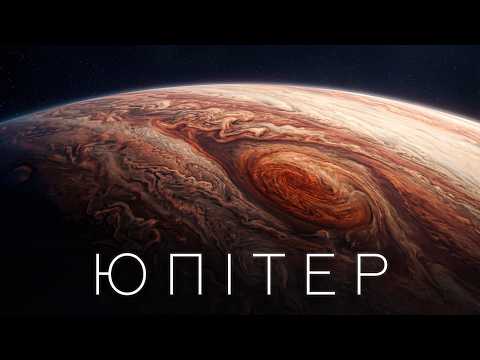
Юпітер: планета з найбільшим океаном, але без води. Як ми вивчаємо світ вічних штормів.
Understanding Jupiter: A Planetary Mystery
The Enigma of Jupiter
- The author reveals a significant realization: despite centuries of observation and decades of close study, we have yet to see the "true" Jupiter.
- While colorful clouds and massive storms are well-known, they only represent a small part of what Jupiter is; the real planet lies hidden beneath its atmosphere.
- Questions arise about the origins and stability of storms and winds on Jupiter, indicating ongoing research into these atmospheric phenomena.
Atmospheric Composition
- Even basic telescopes can reveal key features of Jupiter's atmosphere, notably dark brown bands that encircle its lighter disk, known as belts.
- Detailed images show more than two belts alternating with lighter zones; color differences indicate chemical variations in cloud composition.
- The colors also reflect cloud heights, as warmer air rises and cools to form clouds through convection processes.
Dynamics of Cloud Formation
- Unlike Earth, where clouds are limited by surface features, Jupiter's rapid rotation allows for a complete cloud cover across the planet.
- Time-lapse observations reveal that belts (where cold air descends) and zones (where warm air ascends) rotate in opposite directions due to powerful jet streams.
Jet Streams and Their Implications
- Jet streams on Jupiter reach speeds of 400–600 km/h and alternate directions between zones and belts, preventing their mixing.
- Recent findings from NASA's Juno mission suggest that zonal winds extend deep into the planet’s interior where hydrogen behaves like a liquid.
Comparison with Earth's Atmosphere
- While Earth has jet streams too, they are less stable due to slower rotation and surface irregularities disrupting airflow.
- In contrast, Jupiter’s lack of surface obstacles allows for long-lasting stability in its atmospheric patterns over years or even decades.
Cyclones vs. Anticyclones on Jupiter
- Close-up images from spacecraft show diverse cloud formations resembling cyclones (low-pressure areas where air spirals inward).
- Anticyclones (high-pressure areas where air spirals outward), dominate on Jupiter compared to Earth; notable examples include large brown ovals captured by Voyager 1.
This structured overview captures essential insights about Jupiter's complex atmosphere while providing timestamps for easy reference back to specific parts of the video.
Jupiter's Atmospheric Phenomena
Characteristics of Jupiter's Storms
- Jupiter's storms can last for years and are significantly larger than cyclones in mid-latitudes, reaching thousands of kilometers in diameter.
- Most visible vortices on Jupiter are anticyclones, which typically have a stable, oval shape and appear as bright white ovals; these are the most notable after the Great Red Spot.
- The lifespan of storm systems on Jupiter varies from days to hundreds of years, influenced by their size and location within the planet’s atmosphere.
Movement and Interaction of Storm Systems
- Powerful jet streams create barriers that restrict storms to specific latitudes; thus, the Great Red Spot remains consistently located.
- Various vortices often encounter each other due to their consistent latitude movement, leading to mergers; for instance, two white ovals merged in 1998 to form a new vortex named BE.
Evolution of Vortices
- The newly formed vortex BE changed color over time, eventually resembling the Great Red Spot by 2006.
- In 2008, another red storm appeared when a white oval changed color but was short-lived as it was destroyed upon encountering the Great Red Spot.
Understanding Jupiter's Rotation
- One hypothesis suggests that the Great Red Spot may have originated from merging several smaller white anticyclones that turned red over time.
- Astronomers identified two rotation periods: one at the equator (approximately 9 hours and 55 minutes) and another at the poles (about 9 hours and 55 minutes), known as System I and System II respectively.
Measuring Jupiter's True Rotation Period
- The true rotation period is determined through radio emissions generated above its atmosphere rather than directly on its surface.
- These emissions result from charged particles interacting with Jupiter’s magnetic field; variations in this signal provide precise measurements of its core rotation period (System III).
Insights into Jupiter's Composition
- Observations indicate that Jupiter emits more energy than it receives from the Sun, suggesting internal heat sources remain active within.
- Current models estimate that Jupiter consists primarily of hydrogen (around 70%) and helium (approximately 28%), based on both terrestrial spectroscopic data and space observations.
Exploring Jupiter's Atmosphere and Interior
The Nature of Jupiter's Composition
- In the 1990s, the Galileo spacecraft sent an atmospheric probe into Jupiter, revealing that despite its massive hydrogen and helium composition, the planet appears too compressed for these gases to remain in a gaseous state.
- As one descends through hundreds of kilometers of clouds, pressure and temperature increase gradually, causing hydrogen molecules to behave more like a liquid than a gas.
- At depths not even halfway to the center, pressures reach 2 million bars with temperatures around 10,000 K. Under these conditions, liquid hydrogen undergoes transformation into a metallic state due to extreme compression.
- This metallic hydrogen is believed to fill most of Jupiter's interior up to its core. It remains a liquid but conducts electricity like metal, leading to electric currents generated by its rotation.
Understanding Jupiter's Core
- Despite advanced models of Jupiter’s interior structure, astronomers are still uncertain about the exact nature of its core due to lack of laboratory data on how hydrogen and helium behave under such extreme conditions.
- Traditional models suggested a solid core made up of heavy elements comparable in size to Earth; however, data from NASA's Juno spacecraft indicates a much larger and diffuse core extending 30-50% of the planet’s radius.
- Researchers describe this core as "fuzzy," indicating it may be partially dissolved without clear boundaries with surrounding metallic hydrogen.
Misconceptions About Gas Giants
- The term "gas giant" does not imply that these planets are primarily composed of gas; rather, their gaseous components represent only a small fraction in terms of mass and volume compared to their overall structure.
- For instance, at depths just several percent into Jupiter’s radius, it transitions from gas to liquid. Thus, calling Jupiter merely a "gas ball" is misleading; it is predominantly liquid under immense pressure and heat.
Atmospheric Dynamics
- With insights into Jupiter’s internal composition and temperature regime established, scientists can better understand why its atmosphere appears as it does. Local cloud formations do not necessarily indicate similar chemical compositions as those found on Earth.
- The upper layers of Jupiter’s atmosphere are significantly cooler than Earth's; thus bright white clouds likely do not consist solely of water ice but may involve other compounds like ammonia crystals condensing at -150°C.
Anomalies in Atmospheric Observations
- A third layer within the atmosphere is theorized where water ice clouds dominate under pressures five times greater than Earth's surface pressure. Water plays a crucial role in influencing atmospheric dynamics overall.
- However, surprising findings emerged when Galileo's probe descended through three cloud layers yet failed to detect any signs of water droplets or ice crystals at pressures around 22 bars and temperatures exceeding 150°C.
- The probe entered an area known as hot spots—regions where deeper atmospheric layers can be observed—leading researchers to question previous assumptions about cloud compositions based on earlier observations.
This structured overview provides key insights into our understanding of Jupiter's complex atmosphere and interior while highlighting significant discoveries made by space missions like Galileo and Juno.
Exploring Jupiter's Atmosphere and the Great Red Spot
Atmospheric Insights from the Probe
- The atmospheric probe unexpectedly hit a less cloudy area of Jupiter, akin to sending a probe into the Sahara Desert while exploring Earth. Despite this, it provided invaluable data on winds and temperature at depths over 100 km below cloud tops.
- Clouds composed of water ice, ammonia, and ammonium hydrosulfide should theoretically appear white; however, Jupiter's clouds exhibit various colors that scientists are still trying to explain.
- Researchers hypothesize that molecules like ammonia and methane absorb UV radiation, breaking down into complex compounds that may contribute to the planet's coloration.
The Mystery of Coloration
- Laboratory studies indicate that many compounds formed in Jupiter’s atmosphere can appear yellowish or brownish. Computer models suggest color variations depending on cloud altitude but fail to fully explain the Great Red Spot.
- The Great Red Spot is an anticyclone larger than any storm in our solar system, persisting for at least 200 years. Its formation and longevity remain significant mysteries.
Structure and Behavior of the Great Red Spot
- This massive storm features a high-speed ring with winds reaching up to 430 km/h while its inner region rotates slowly. It behaves differently from other atmospheric phenomena on Jupiter.
- Observations show changes in the shape of the Great Red Spot; it has shrunk from an oval measuring approximately 10,500 km wide by 16,350 km long in 2017 to less than 14,000 km currently.
Changes Over Time
- Historical records suggest that the spot was once much larger (40–45,000 km long), raising questions about why it is shrinking now—an ongoing mystery alongside its initial appearance.
- Astronomers speculated about potential disintegration during observations between 2018–2019 but some researchers argue these changes do not necessarily indicate an end for the storm structure itself.
Understanding Depth and Composition
- The Great Red Spot is cooler than surrounding areas as seen in infrared images; its depth extends between 200 to 500 km beneath Jupiter’s clouds based on data from NASA's Juno mission.
- This anticyclone likely originates deeper within Jupiter’s atmosphere where internal heat may sustain it. Its stability raises questions about what causes its distinctive red color.
Chemical Complexity Behind Coloration
- Various compounds can cause red hues under different conditions; understanding which specific chemicals influence the spot's color requires comprehensive knowledge of Jupiter’s atmospheric chemistry.
- The color of the Great Red Spot varies significantly over time—from pale pinkish-white to intense reddish-orange—linked closely with changes in nearby equatorial bands observed periodically since late 2009.
The Atmospheric Dynamics of Jupiter
The Great Red Spot and Polar Activity
- The Great Red Spot on Jupiter is a manifestation of the planet's turbulent atmosphere, influenced by periodic changes in material circulation.
- Unlike Earth's temporary auroras, Jupiter's polar regions exhibit permanent structures that vary in intensity with solar wind activity.
- Auroral spots are linked to the largest moons of Jupiter, such as Europa and Ganymede, which leave traces in the form of spots due to their gravitational and magnetic interactions.
Ionized Particles and Their Effects
- Each major moon generates free ions that can be captured by Jupiter's magnetic field, leading to mini auroras around these satellites.
- Io, being the most volcanically active body in the solar system, contributes significantly to Jupiter’s magnetosphere by releasing about one ton of material per second.
Plasma Dynamics Around Io
- The ionized material from Io forms a large plasma torus around Jupiter, controlled by the planet's magnetic field rather than orbital mechanics.
- This results in a scenario where particles from Io continuously bombard its surface due to their faster rotation compared to Io’s orbit.
Discovery and Nature of Jupiter's Rings
Initial Discoveries
- Pioneer 10 discovered a deficit of charged particles near Jupiter, suggesting an undiscovered moon or ring system.
- Voyager 1 confirmed the existence of rings around Jupiter; Voyager 2 provided images showing their structure illuminated by sunlight.
Composition and Structure
- Unlike Saturn’s ice rings, Jupiter’s rings consist mainly of tiny dust particles that reflect less light.
- The ring system comprises three main components: a central ring, an outer "gossamer" ring, and an inner halo-like ring influenced by nearby moons.
Sources of Ring Material
- Dust particles are likely replenished through impacts on small moons like Amalthea and Adrastea from micrometeoroids.
Understanding Jovian Moons
Characteristics of Galilean Moons
- The four Galilean moons create gravitational resonances that prevent larger rings from forming around Jupiter.
Overview of Smaller Moons
- There are currently 97 known moons orbiting Jupiter; most are relatively small compared to the Galilean satellites.
- Many smaller moons have irregular orbits with higher inclinations and eccentricities, indicating they may be captured asteroids rather than original Jovian formations.
Jupiter's Role in the Solar System
The Kuiper Belt and Trojan Asteroids
- Jupiter is associated with the Kuiper Belt, located beyond Neptune, and has two groups of asteroids known as Trojan asteroids that share its orbit at stable Lagrange points L4 and L5.
- There are approximately 7,000 known Trojan asteroids orbiting with Jupiter, with many more expected to be discovered by sensitive observational telescopes on Earth.
Jupiter as a Cosmic Vacuum Cleaner
- Jupiter is characterized by its ability to attract small bodies within the solar system, acting like a vacuum cleaner that collects rocky and icy debris.
- It experiences more impacts than any other planet in the solar system due to this gravitational influence.
The Shoemaker-Levy 9 Event
- A notable event occurred in 1994 when Comet Shoemaker-Levy 9 collided with Jupiter after being captured by its gravity in the 1970s.
- The collision resulted in fragments entering Jupiter's atmosphere from July 16 to July 22, creating spectacular fireballs and dark spots visible from Earth.
Impact Observations
- Astronomers recorded a total of 21 separate impacts during this event, with one fragment (G) creating a spot comparable in size to Earth (12,000 km).
- Some chemical signatures from the comet were detected high in Jupiter's atmosphere even years later; for instance, water was observed until 2013.
Misconceptions About Jupiter’s Protective Role
- Contrary to popular belief that Jupiter acts as Earth's shield against dangerous comets and asteroids, recent studies suggest it can also increase risks of collisions with certain objects.
- While it may reduce some threats from Oort Cloud comets, it simultaneously raises the likelihood of encounters with asteroids or short-period comets.
Importance of Jupiter
- Jupiter plays a crucial role in shaping the architecture of our solar system by influencing orbits and dynamics of smaller celestial bodies.
- It serves as a natural laboratory for studying giant atmospheres and holds significant scientific value for astronomers interested in space exploration.