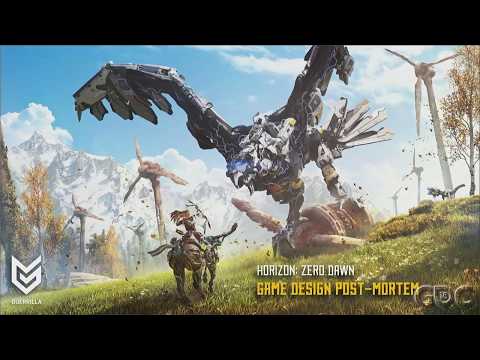
Horizon Zero Dawn: A Game Design Postmortem
Introduction and Setting the Stage
In this section, the speaker expresses gratitude for the audience's presence and introduces the topic of game development. They share a personal experience of receiving negative feedback during playtesting.
The Importance of Feedback
- Playtesters' feedback during a crucial phase of game development revealed significant issues with balance, difficulty, bugs, and core mechanics.
- Negative feedback can be disheartening after years of development and close to the release date.
- Game designers have a challenging job as they need to convince others of their ideas and constantly face doubts throughout the development process.
Staying Upright - Analyzing Feedback
The speaker discusses how game designers should handle feedback and shares their approach in tackling problems faced during the development of Horizon Zero Dawn.
Journey through Game Design Phases
- The speaker takes the audience through each phase of game design at Guerrilla Games while creating Horizon Zero Dawn.
- They highlight intentions, goals, challenges faced, and interesting problems encountered during different phases.
- Due to time constraints, only selected problems are discussed in detail.
Reflecting on Problem Solving
- The speaker reflects on how they approached problem-solving during development.
- They also discuss what they would have done differently if given another chance.
- The aim is to inspire fellow game developers to persevere through challenges and learn from past mistakes.
Background and Early Concepts
The speaker provides background information about themselves and Guerilla Games. They mention an early concept pitch for Horizon Zero Dawn that set four major game design goals.
Speaker's Background at Guerilla Games
- The speaker has been with Guerilla Games for almost 15 years as a lead game designer.
- They have worked on various games, starting as a single-player level designer and progressing to multiplayer and online gameplay.
Early Concept Pitch
- In 2001, Guerilla Games received an early concept pitch for Horizon Zero Dawn.
- The pitch consisted of approximately 70 PowerPoint slides, outlining the game's vision and goals.
- Four major game design goals were established based on this concept pitch.
Summary
The speaker begins by expressing gratitude for the audience's presence and shares their experience of receiving negative feedback during playtesting. They emphasize the importance of feedback in game development and the challenges faced by game designers. The speaker then discusses their approach to analyzing feedback and problem-solving during the development of Horizon Zero Dawn. They reflect on their journey through different phases of game design, highlighting intentions, goals, challenges faced, and selected problems encountered. Finally, they provide background information about themselves and Guerilla Games, along with an overview of an early concept pitch for Horizon Zero Dawn that set four major game design goals.
Creating a World Worth Staying In
The developers wanted to create a game that would make players want to stay in the world rather than just rushing through it. They aimed to build an immersive world filled with awe-inspiring machines, unique cultures, and an open-world experience.
Goals of the Game
- The team wanted to create something unique and never done before - fighting against gigantic robot dinosaurs.
- They aimed to populate the world with exotic tribes and interesting cultures, imagining how these cultures would evolve after humanity's extinction.
- One of their biggest challenges was creating an open-world game for the first time, offering potentially endless amounts of content compared to their previous linear games like Killzone.
- Despite having a small multidisciplinary team initially, they spent two and a half years in the concept phase, experimenting and prototyping ideas.
Prototyping and Concept Development
- With a team of designers, artists, coders, and animators, they focused on making playable prototypes rather than just designing concepts on paper.
- Since they only had experience with linear first-person shooters like Killzone, they had to start from scratch in building an open-world third-person action game.
- Prototypes were created to answer high-level questions about combat mechanics against machines and defining what makes Horizon an open-world game.
- Various prototypes were developed to test combat interactions with robots and explore possibilities within the open world.
Early Prototypes
Combat Against Machines
- A prototype showcased early designs of robots with vulnerabilities such as shooting off armor plates or targeting weak spots like the eyes.
Open World Settlement
- Another prototype focused on building a large and complex settlement to test density, atmosphere, interactions, and traversal mechanics.
Exploring Misfit City
The team used a prototype called Misfit City to experiment with different architectural styles, NPC interactions, and player traversal within the settlement.
Misfit City Prototype
- The Misfit City prototype allowed the team to explore architecture, settler behavior, NPC roles, and player movement within the settlement.
Conclusion
The developers aimed to create an immersive open-world game where players would want to stay. They spent years in the concept phase and developed prototypes to tackle challenges related to combat against machines and defining an open world. Through their experimentation with various prototypes like Misfit City, they explored different aspects of gameplay mechanics and settlement design.
Understanding the Concept Phase
In this section, the speaker discusses the concept phase of game development and highlights three key questions that were explored during this phase.
Exploring Game Concepts
- The team focused on understanding the settlements and their role in the game world.
- They experimented with different player abilities and types of weaponry.
- The challenge of mounted traversal was a key prototype they worked on.
Interacting with Mounts
- The team wanted riding mounts to be a seamless experience for players.
- They developed an AI system for horses to navigate through dense objects successfully.
- This prototype was successful and made it into the final game.
Prototyping and Iteration
- Various prototypes were created during this phase, contributing to the development of Horizon.
- The process was time-consuming and required significant effort from the team.
- Despite challenges, prototyping helped shape Horizon into what it is today.
Shifting Focus in Concepting Phase
In this section, the speaker discusses how they shifted focus during the concepting phase to create a complete combat loop and address concerns about cohesion in gameplay.
Cohesion Challenges
- Initially, there were interesting islands and prototypes, but they lacked a cohesive experience as a whole game.
- This lack of cohesion raised concerns among team members.
Creating a Combat Loop
- To address these concerns, the team decided to shift focus towards creating a complete combat loop.
- They aimed to integrate exploration, interaction with NPCs, hunting robots, gathering resources, and progression into a seamless gameplay experience.
Finding What Works
- By focusing on building the full loop instead of individual islands first, they discovered what their game was truly about.
- This approach allowed them to identify elements that didn't fit their vision along the way.
Transition to Pre-production Phase
In this section, the speaker discusses the transition from the concept phase to the pre-production phase and how it allowed for more focused development.
Team Expansion
- With the completion of the concept phase, more team members joined from other disciplines.
- This expansion enabled a greater focus on world systems, art assets, characters, story, and narrative.
Design Teams
- Three separate design teams were established: core design team, world design team, and narrative design team.
- The core design team focused on player systems such as traversal, combat, user interface, and economy.
- The world design team handled encounters with robots and placement of activities in the game world.
- The narrative design team worked on developing the story and narrative elements.
Progression in Development
- Despite some unanswered questions and new challenges arising during this phase, progress was made towards building a cohesive game experience.
- The shift from concept to pre-production marked an important milestone in development.
Conclusion of Concept Phase
In this section, the speaker reflects on the conclusion of the concept phase and its impact on boosting confidence within the team.
Boosting Confidence
- Creating a proof of concept (POC) during this phase boosted the team's confidence by providing a clearer vision of what their game would be like.
- Reflecting back, they questioned if they should have started focusing on building the full loop earlier but acknowledged that going wide initially helped them find their game's identity.
Answered Questions and New Challenges
- Many questions raised at the start of the concept phase were answered by its conclusion.
- However, new questions emerged while some remained unanswered.
Timestamps are approximate.
The Importance of Context in Narrative Development
This section discusses the importance of having context during the concepting phase and how it helped shape the narrative development process.
Forming a Dedicated Writing Team
- During the concepting phase, there were many story ideas but no full outline.
- The solution was to form a dedicated writing team to provide context and create a cohesive narrative.
- The team started over and set context for everything that was being done.
Making Changes for Better Alignment
- The narrative team made significant changes to align with the goals of having a special player character and constant interaction with robots.
- They removed big animals that were hindering these goals and focused on making the player interact with robots instead.
- These changes turned out to be less work in the end.
Defining Characters and World Context
- The narrative team focused on defining the main character, Aloy, by adding details such as her personality, style, and arc.
- They also defined the reason why robots exist in the world, which allowed for better design and generated new ideas for other robots.
- Defining the context of the world helped put a unique spin on gameplay elements like challenges and underground dungeons.
The Power of Context
- Having context allows for better focus on mechanics that work and helps define a unique world.
- However, trying out ideas without context initially is equally important to allow for creative exploration.
Timing Context Correctly
This section emphasizes the importance of timing when introducing context into game development.
Answering Questions in Pre-production
- At this stage, more questions were answered regarding story, narrative, core mechanics, and world-building.
- Most of the groundwork for Horizon was laid out during pre-production.
Inexperience with Open World Development
- Inexperience with making open worlds became evident during the transition from pre-production to building the entire game.
- Problems arose due to the intention of starting at the beginning of the game and making it amazing for all players.
Balancing Narrative Effort and Core Mechanics
- Quality narrative requires significant effort in terms of writing dialogue, building characters, and creating cutscenes.
- Unlike linear set pieces in previous games, Horizon's open world required knowing which mechanics to tutorialize early on.
The Challenge of Guessing Mechanics
- Due to the need for early tutorialization, mechanics had to be guessed during pre-production.
- This led to difficulties during later production stages when gameplay weight needed adjustments.
Exposing Core Mechanics through Narrative
This section discusses the challenge of exposing core mechanics effectively through narrative in an open-world game.
Importance of Starting Strong
- Starting at the beginning of the game is crucial as it is what all players will experience.
- The initial part needs to be amazing to engage and retain players.
Tutorializing Core Mechanics
- Game design aims to expose and tutorialize core mechanics like health systems, combat, and stealth through narrative integration.
- However, quality narrative requires significant effort compared to linear set pieces in previous games.
Challenges in Open World Design
- Open world design requires knowing exactly which mechanics will be needed for tutorialization.
- Guessing these mechanics during pre-production can lead to difficulties later on.
Learning from Inexperience
This section highlights lessons learned from inexperience with open world development.
Difficulty Transitioning from Linear Set Pieces
- Inexperience with open world development became apparent when transitioning from linear set pieces used in previous games.
Need for Early Mechanic Planning
- Open world games require early planning of mechanics to ensure effective tutorialization.
- Guessing mechanics during pre-production can lead to challenges during later production stages.
Balancing Narrative Effort and Gameplay Weight
- Quality narrative requires significant effort, but it is important to balance it with the weight of gameplay mechanics.
- Adjustments may be needed to ensure a cohesive experience.
Conclusion: Learning from Mistakes
- Inexperience with open world development led to challenges, but valuable lessons were learned along the way.
- The team gained a better understanding of the importance of context, timing, and balancing narrative and gameplay mechanics.
Iterating on Narrative and Encounter Space
In this section, the speaker discusses the challenges faced during the development of the game's narrative and encounter space.
Designing the World and Stealth Grass
- The encounter space turned out to be larger than initially anticipated, making it easier for players to avoid robot encounters using stealth grass.
Importance of Iterating on Narrative
- Throwing rocks became less important in gameplay, despite spending time teaching players how to use them.
- Reflecting on the process, starting at the beginning may not have been the best approach. Starting later with a better understanding of the entire game could have been more effective.
Balancing Multiple Solutions in Robot Combat
- Horizon aims to provide players with multiple solutions for tackling problems like robot encounters.
- However, balancing accessibility and allowing player choice became challenging during playtesting.
- Players with lesser skill or engagement struggled when basic solutions were available, discouraging exploration of more complex options.
- Exploring ways to entice players without compromising core design principles led to introducing a focus tool that showed various options and details about interactive objects.
Challenges with HUD Overlays and Information Presentation
- The focus tool helped address difficulty spikes but introduced new problems such as blocking parts of the beautiful world with HUD overlays.
- Finding a balance between providing information without overwhelming players with text and icons was crucial. The focus tool aimed to show possibilities rather than solutions.
Humanoid Combat as a Side Activity
This section focuses on the inclusion of humanoid combat in the game and the challenges it posed.
Balancing Robot and Humanoid Combat
- Initially, humanoid combat was intended as a side activity, with robots being the core focus.
- However, the narrative team's desire to tell a compelling story led to an increase in humanoid characters, shifting the focus towards humanoid combat.
- The difference in tactical depth between robot and humanoid combat became apparent during polishing stages.
Addressing Tactical Depth in Humanoid Combat
- To enhance tactical depth in humanoid combat, encounter design played a crucial role by adding cover, different approaches, and environmental advantages for players.
The transcript has been summarized based on the given sections and timestamps.
Describing the Challenges of Open World Game Development
In this section, the speaker discusses the challenges faced during the development of an open-world game and reflects on some key aspects that were underestimated.
Underestimating Player Freedom and Tactical Depth
- The impact of player freedom from different directions was underestimated in creating an open world.
- The speaker believes they should have focused more on making a single human character as tactical and deep as the robots.
- By adding weak spots, changing behavior, and considering weapons and armor, similar levels of tactical gameplay could be achieved with humans.
Importance of Systemic Gameplay
- Systemic gameplay allows for interesting combat encounters without relying heavily on encounter designers.
- Questions regarding humanoid combat, storytelling pacing, and game accessibility versus complex robot combat were not asked early enough.
- Despite these challenges, the entire game was playable from start to finish by the end of production.
Uncovering Issues through Playtesting
- Playtesting revealed "neta issues" that were difficult to spot during production due to not being able to play the entire game before.
- Economy stress testing became possible through extended playtesting sessions, revealing difficulties in resource understanding and acquisition.
- The abstraction between world language and play language added to confusion about resource values.
Mitigating Problems Instead of Overhauling Economy
- Realizing economy complexity late in production made it too late for a complete overhaul.
- Tools like trader jobs were added to mitigate economy problems but were not easily discoverable by players.
- The speaker admits that the economy issue was not fully resolved and should have been addressed earlier.
Lessons Learned and Conclusion
- Accessibility is crucial, especially in an open-world game where there should be something for everyone.
- Regularly reviewing goals, intentions, and development progress helps identify issues early on.
- Being honest with oneself and adapting to problems is essential for success.
- Despite the challenges faced, the game launched successfully and became the most successful project to date.
The transcript provided does not include any questions from the audience or answers related to implementing lessons in the Frozen Wilds DLC.
Implementing Lessons Learned in DLC Expansion
The speaker discusses the challenges of applying lessons learned from robot complexity in a DLC expansion. They mention that if they create another Horizon game, it would be easier to implement those lessons.
Importance of Switching Armor Based on Elements
- In the game, players need to switch their armor based on the elements they are fighting against.
- This decision was made based on the types of robots and their attacks.
- Different outfits were created for different types of encounters and robots.
Challenges with Outfit Switching
- Switching outfits for each encounter can be complex and requires player engagement.
- This aspect was focused on more in the DLC, where specific robots had elemental damage.
- The Shield Weaver outfit was particularly powerful but difficult to obtain, affecting game economy.
Playtesting and Iterative Process
The speaker discusses the playtesting process and how it contributed to improving the game over time.
Challenges Identified through Playtesting
- Balance issues with hardcore robots dealing excessive damage.
- Mechanics like focus information and tutorialization needed improvement.
- Players struggled to understand core mechanics, leading to a lack of engagement.
Iterative Process and Feedback Relevance
- Over 15 major playtests were conducted with significant changes made every few weeks.
- Playtesting involved asking 20 people to play through the entire game in five days.
- Feedback from this specific mindset may not always be relevant once the game is released to a wider audience.
Concept Phase: Generating Ideas
The speaker explains how ideas were generated during the concept phase of development.
Company-wide Involvement in Idea Generation
- Gorilla asked everyone in the company to come up with new concepts within certain guidelines.
- A brief was provided outlining desired pitches and rules to follow.
- Around 80 different pitches were created internally, ranging from short descriptions to detailed presentations.
Selection Process for Horizon
- Pitches were shared with the entire company for feedback and evaluation.
- The best pitches were narrowed down until the final concept of Horizon was chosen.
Technical Difficulties with Memory Streaming
The speaker discusses the technical difficulties related to memory streaming in the game. Due to limited memory capacity, streaming large amounts of data can lead to memory constraints and potential issues when players move between different areas or tiles.
- Memory streaming poses challenges due to the heavy memory usage of the robots in the game.
- Moving from one tile to another with robots can cause memory limitations.
- To address this issue, the game ties encounters and robot locations to specific areas, ensuring that they stay within a designated space.
Balancing Graphical Fidelity and Freedom
The speaker talks about finding a balance between graphical fidelity and player freedom in the game. They explain how prioritizing graphical quality may limit player freedom, while allowing more freedom might compromise visual appeal.
- Balancing graphical fidelity and player freedom is a challenge in game development.
- The team had to make choices regarding how much graphical detail they could include while still maintaining gameplay options.
- The decision was made to prioritize gameplay mechanics over visual aesthetics.
Choice of Protagonist Design
The speaker addresses why the protagonist design remained consistent throughout development. They discuss how it was a conscious choice that resonated with the team and players, despite not having extensive discussions or iterations on it.
- The red-headed woman as the protagonist was an initial idea that stuck throughout development.
- There were positive responses from players regarding having a female protagonist.
- While there isn't an interesting story behind her design, it was a choice that felt right from the beginning.
Marketing Messaging and Player Communication
The speaker reflects on marketing messaging related to crafting job systems and its impact on player understanding. They discuss learning experiences in communicating complex features to players and the challenges faced in conveying these concepts effectively.
- The marketing messaging around the crafting job system may have led to some misunderstandings.
- The team acknowledges that there were unfortunate interpretations of the system's complexity.
- While they didn't explicitly mention specific learnings, they are open to discussing it further after the talk.
Choice of Bows and Arrows over Guns
The speaker explains why bows and arrows were chosen as the primary weapon instead of guns. They discuss how this choice added depth to gameplay mechanics and created a unique visual contrast between the protagonist and the robotic enemies.
- Using bows and arrows instead of guns created a contrast between high-tech machines and basic weaponry.
- It allowed for more technical depth in combat by requiring players to exploit weaknesses rather than relying on explosive firepower.
- The visual juxtaposition of a bow-wielding protagonist taking down massive robots added an interesting dynamic to gameplay.
Tutorial Design Considerations
The speaker discusses their approach to tutorial design, specifically focusing on understanding core mechanics before creating tutorials. They reflect on how not fully grasping future gameplay changes affected tutorial effectiveness.
- Understanding core mechanics is crucial for designing effective tutorials.
- Due to incomplete development at the time, certain abilities introduced in later stages were not utilized by players during the tutorial phase.
- While they wouldn't recommend making the entire game before designing tutorials, they emphasize understanding core mechanics thoroughly before creating tutorials.
Due to limited content available from the transcript, only six sections were created based on significant topics discussed.