What Bruce Lee can teach us about living fully | Shannon Lee
The Philosophy of Bruce Lee
Shannon Lee, daughter of Bruce Lee, shares her father's philosophy on self-actualization and how it can help us bridge the gap between our internal and external selves.
Bruce Lee's Essential Nature
- Shannon remembers her father's energy, presence, love, safety, power and radiance.
- She recalls the memory of the quality of his essential nature.
- Bruce Lee was not only a martial artist and an action film star but also a philosopher who lived his philosophy.
Self-Actualization
- Bruce Lee had a deep philosophical life practice called self-actualization which is about being yourself in the best way possible.
- He believed that one should start from the very root of their being to express themselves and have faith in themselves instead of duplicating someone else's successful personality.
The Importance of "How"
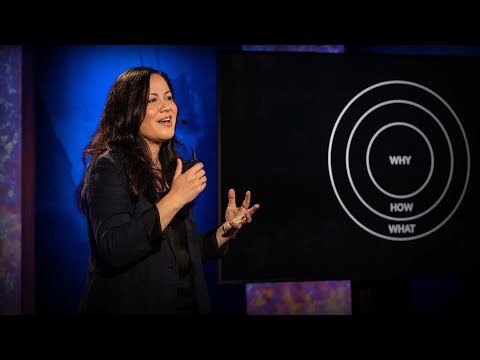
- Our "how" is the action that bridges the gap from our internal to external selves. It is how we get from point A to point B under vital circumstances.
- Bridging this gap is important for personal growth, sense of wholeness and long-term impact we make.
- Our "how" is the expression of our why in every what whether we are aware or not.
Conclusion
Shannon encourages us to consider our "how" in life as it determines whether we get there as amateurs or warriors. She believes that by focusing on our "how", we can become confident, focused, skilled, intuitive, expressive, creative and aware individuals.
Living a Life of Kindness
In this section, the speaker talks about the importance of being kind in all aspects of life and not just when it's easy.
Being Kind in All Aspects of Life
- The speaker asks if we can do things we don't want to do kindly, like firing someone or leaving a relationship.
- If kindness is our value, then we should express it in all aspects of our lives and not just when it's easy.
- Fragmentation occurs when we are kind at home but dismissive and rude at work.
- How we are in our lives is how we are as a person.
Uniting Our Fragments
In this section, the speaker discusses how to unite different parts of ourselves to become whole.
Actualizing Our Whole Self
- We need to understand how to embody ourselves as our one and only self.
- Life is a process, not a goal. To obtain enlightenment or wholeness, emphasis should fall on the total human being that unites all particular departments.
- We need to step into that warrior space around our how -- how we express in every aspect of our life -- then claim it and exercise it.
- By bringing beingness through doingness into havingness, we find profound growth and leave a lasting impact on our environment.
Living Fully
In this section, the speaker talks about her father's example of living fully by applying his inner self to every aspect of his life.
Applying Inner Self to Every Aspect of Life
- The speaker's father was someone who worked hard at actualizing his inner self and expressing it out into the world.
- He was the embodied example of living fully.
- "I am means." And there are only means.
- We should consider how we are across the spectrum of our doing.
Turn any video into a summary like this
YouTube links, meetings, lectures. With transcripts, search, and chat.