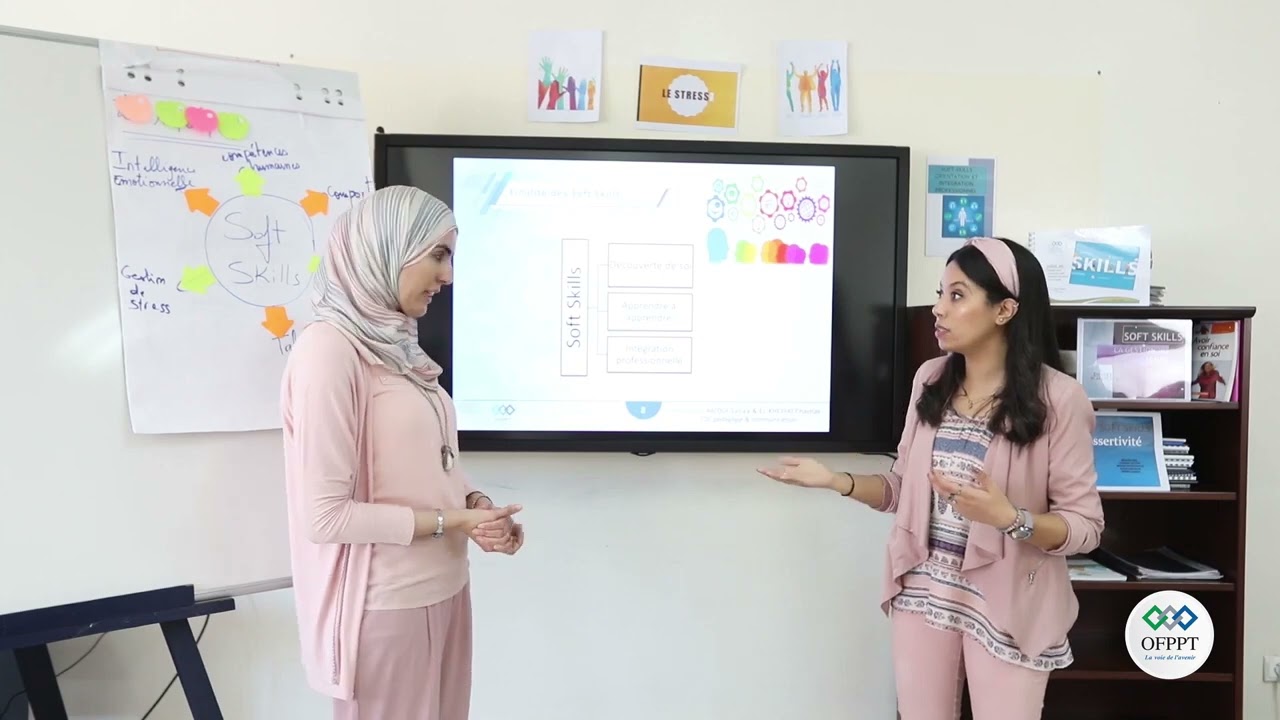
OFPPT Academy Introduction de soft skills
Introduction
The introduction sets the stage for presenting a new module on soft skills in professional training, emphasizing their importance in today's job market.
Emergence and Importance of Soft Skills
- The concept of soft skills emerged due to the significance of distinguishing between soft and hard skills.
- Soft skills are characterized by their unique qualities that make them essential in various professions.
Significance of Soft Skills in Recruitment
- Recruiters prioritize soft skills, often favoring candidates with these abilities over those without during recruitment processes.
- Mastery of soft skills can give candidates a competitive edge in job interviews and selection criteria.
Etymology and Definition
This section delves into the etymology and definition of soft skills, clarifying their nature and relevance in professional contexts.
Understanding Soft Skills
- Soft skills encompass adaptable behaviors that are crucial for success, focusing on behavioral competencies.
- These skills are transversal, applicable across various fields, aiming to develop appropriate behaviors and interactions.
Importance of Human Skills
- Developing human-centric competencies like communication and empathy is vital for effective professional relationships.
- Soft skills contribute to social interaction success, goal achievement, and overall professional success.
Differentiating Skill Types
This part distinguishes between hard and soft skills, highlighting their contrasting characteristics and applications in different fields.
Hard vs. Soft Skills
- Hard skills are technical abilities specific to academic training content, while soft skills focus on adaptable behaviors.
- Hard skills are measurable through assessments like grades, whereas soft skills involve human relations and emotions.
Transversality of Soft Skills
- Soft skills transcend specific disciplines or specialties, emphasizing their universal applicability across professions.
New Section
In this section, the speaker discusses the concept of emotional intelligence and its importance in regulating emotions and managing interactions.
Emotional Intelligence and Its Significance
- The speaker introduces the idea of emotional intelligence, contrasting it with intellectual caution.
- Emotional intelligence is described as crucial for regulating emotions, understanding others, and maintaining relationships.
- Soft skills are highlighted as essential components of emotional intelligence, such as active listening and effective communication.
- Soft skills can be developed through experiences like travel, personal projects, and social interactions.
New Section
This part focuses on the role of soft skills in professional development and their significance in meeting market demands.
Development of Soft Skills
- Soft skills can be honed outside formal education through personal experiences to enhance professional capabilities.
- The objective is to cultivate a profile that aligns with industry requirements by mastering soft skills crucial for success in the job market.
New Section
The discussion shifts towards how a dedicated module on soft skills benefits trainees by preparing them comprehensively for future endeavors.
Benefits of Soft Skills Module
- Trainees benefit from a dedicated module on soft skills that enhances their overall skill set and prepares them for various career paths.
- The module aims at self-discovery, learning methodologies, and professional integration to equip trainees with essential tools for success.
New Section
This segment delves into the objectives of the soft skills module focusing on self-discovery and effective learning strategies.
Objectives of Soft Skills Module
- The primary goals include aiding trainees in recognizing their potential, assessing strengths and areas for improvement through tailored tools and assessments.
Understanding Soft Skills and Emotional Intelligence
In this section, the speaker discusses the importance of emotional intelligence and soft skills in adapting to change, fostering social competencies, and enhancing communication abilities.
Importance of Emotional Intelligence
- Emphasizes the significance of open-mindedness, acceptance of others without judgment, and emotional intelligence as crucial for navigating change effectively.
Development of Social Competencies
- Highlights the evolution of social competencies such as active listening and effective communication over time.
Skill Development and Innate Abilities
- Challenges the notion that certain skills are innate by suggesting that competencies can be developed through practice similar to sports or artistic abilities.
Significance of Soft Skills in Various Fields
This part delves into the broad applicability of soft skills across different domains, emphasizing their universal relevance and non-dependence on technical knowledge.
Transversal Skills Overview
- Defines soft skills as transversal competencies applicable across all fields, irrespective of technical expertise requirements like accounting mastery.
Focus on Emotional Intelligence
- Stresses self-awareness, understanding others' perspectives, adaptability in communication for successful interactions, and development of emotional quotient within human-centric skill sets.
Utilizing Soft Skills for Personal Growth and Employability
This segment explores how individuals can leverage soft skills for self-discovery, confidence-building, optimizing learning experiences, managing time efficiently, reducing stress levels during presentations, enhancing employability prospects.
Self-Discovery and Confidence Building
- Discusses how soft skills aid individuals in identifying their potential areas for growth while boosting self-confidence through personal exploration.
Employability Enhancement