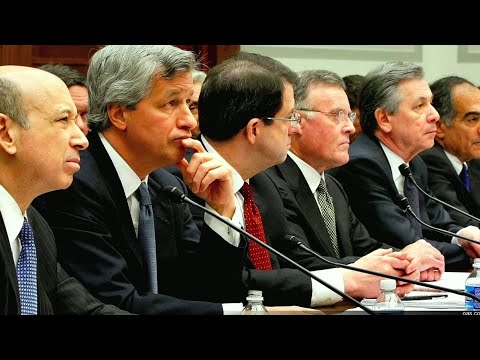
Inside Job (2010 Full Documentary Movie)
Iceland's Economic Collapse
This section provides an overview of Iceland as a stable democracy with a high standard of living. It discusses the country's infrastructure, clean energy, healthcare, education, and low crime rate. However, it also introduces the policy of deregulation initiated by Iceland's government in 2000, which had disastrous consequences for the environment and economy.
Iceland's Stable Democracy and High Standard of Living
- Iceland is a stable democracy with a high standard of living.
- The country has complete infrastructure and modern society amenities such as clean energy, food production, fisheries management system, good healthcare, education, and clean air.
- Iceland has low crime rates and is considered a good place for families to live.
Deregulation Policy and its Consequences
- In 2000, Iceland's government implemented a broad policy of deregulation that initially allowed multinational corporations like Alcoa to build large aluminum-smelting plants using geothermal and hydroelectric energy sources.
- The deregulation policy led to environmental damage in some of the most beautiful geothermal areas in the highlands.
- The government also privatized Iceland's three largest banks as part of financial deregulation experiments.
- These banks borrowed excessively from international markets, creating a massive bubble in stock prices and house prices.
- Bankers showered themselves with money while borrowing billions to buy up businesses abroad.
Financial Deregulation and Collapse
This section focuses on the financial deregulation and collapse of Iceland's banks. It highlights the excessive borrowing, Ponzi schemes, auditing failures, and credit-rating agency endorsements that contributed to the collapse.
Excessive Borrowing and Ponzi Schemes
- The three tiny Icelandic banks borrowed 120 billion dollars, which was ten times the size of Iceland's economy.
- Bankers used this borrowed money to enrich themselves and their friends while creating a massive bubble in stock prices and house prices.
- One example is a millionaire who took a billion-dollar loan to buy companies abroad, but newspapers only reported it as a regular business transaction without mentioning the loan source.
- Banks set up money market funds and advised deposit-holders to withdraw money from banks and put them into these funds, creating a Ponzi scheme-like situation.
Auditing Failures and Credit-Rating Agency Endorsements
- American accounting firms like KPMG audited Icelandic banks and investment firms but found nothing wrong.
- American credit-rating agencies rated Iceland as wonderful, even giving the highest possible rating (triple-A) to Icelandic banks in February 2007.
- The government traveled with bankers as part of a PR show to promote Iceland's financial sector.
Consequences of Collapse
This section discusses the consequences of Iceland's economic collapse, including skyrocketing unemployment rates and widespread impact on citizens' savings.
Skyrocketing Unemployment Rates
- When Iceland's banks collapsed at the end of 2008, unemployment tripled within six months.
- The collapse affected everyone in Iceland, and many people lost their savings.
Regulatory Failures
- Government regulators failed to protect citizens as they did not take appropriate actions against the banks.
- Instances were observed where only two lawyers from the regulator visited a bank, but upon arrival, they saw 19 SUVs parked outside, indicating a lack of oversight and control.
The transcript has been summarized into three main sections - "Iceland's Economic Collapse," "Financial Deregulation and Collapse," and "Consequences of Collapse." Each section includes relevant bullet points with associated timestamps to help study the transcript effectively.
New Section
In this section, the speaker discusses the preparedness and job prospects of individuals who excel in arguments.
Being Well Prepared
- The speaker emphasizes the importance of being well-prepared and ready to counter any argument effectively.
- Success in this regard may lead to job offers.
Financial Regulators and Banks
- The speaker mentions that one-third of Iceland's financial regulators ended up working for banks.
- This issue is not limited to Iceland but is a universal problem, including New York.
Wall Street Incomes
- When asked about Wall Street incomes, the response is that they are excessive.
Criticizing the United States
- It is mentioned that it is not extremely difficult for the IMF to criticize the United States.
- The speaker disagrees with the notion that criticizing the United States is challenging for the IMF.
Cocaine Use on Wall Street
- There are discussions about how amazed people are at how much cocaine Wall Streeters can use and still function at work.
Lack of Knowledge on Credit Default Swaps
- The speaker admits not knowing what credit default swaps are, indicating a more old-fashioned approach.
Remorse from Larry Summers
- When asked if Larry Summers has expressed remorse, the response is that confessions are not heard.
Government Checks as Plans A, B, and C
- It is stated that writing checks by the government serves as plan A, plan B, and plan C in dealing with financial issues.
New Section
This section delves into executive pay controls and compensation in financial services.
Legal Controls on Executive Pay
- The speaker is asked if they would support legal controls on executive pay.
- The response is that they would not support such controls.
Comfort with Compensation in Financial Services
- The speaker is questioned about their comfort level with the compensation in financial services.
- If individuals have earned their compensation, the speaker expresses being comfortable with it.
Involvement in Blowing Up the World
- There is a question regarding whether the speaker has helped people blow up the world.
- The response suggests that one could say so.
Private Gains at Public Loss
- It is mentioned that there were massive private gains at public loss during the financial crisis.
New Section
This section focuses on the role of regulators and investigations into financial misconduct.
Regulators' Failure to Do Their Job
- The failure of regulators to perform their duties is highlighted.
- Despite having the power to address cases, they chose not to take action.
Bankruptcies and Market Collapse
- Lehman Brothers' bankruptcy and Merrill Lynch's forced sale are discussed as significant events during the crisis.
- These events led to a global market collapse and triggered a recession.
Global Recession and Consequences
- The result of these events was a global recession, causing widespread unemployment and doubling the national debt of the United States.
- The destruction of equity, housing wealth, income, and jobs had severe consequences for millions of people worldwide.
The Financial Industry Before Deregulation
This section discusses the state of the financial industry before deregulation, highlighting the tight regulations and limited speculation allowed.
The Financial Industry in the Past
- The financial industry made significant profits.
- After the Great Depression, the United States experienced 40 years of economic growth without any financial crises.
- The industry was tightly regulated, with most regular banks being local businesses and prohibited from speculating with depositors' savings.
- Investment banks were small private partnerships that handled stock and bond trading.
Traditional Investment Banking Model
- In the traditional investment banking model, partners put their own money at risk and closely monitored it.
- Partners wanted to live well but avoided taking excessive risks.
Paul Volcker's Experience
- Paul Volcker served in the Treasury Department and was chairman of the Federal Reserve from 1979 to 1987.
- Before his government service, he worked as a financial economist at Chase Manhattan Bank.
Income Disparity
- In 1969, when Volcker left Chase to join the Treasury Department, his income was around $45,000 per year.
- By contrast, in 1972, Morgan Stanley had only one office and capital of $12 million.
Financial Deregulation in the 1980s
This section explores how financial deregulation led to explosive growth in the industry and increased wealth on Wall Street.
Financial Industry Expansion
- In the 1980s, there was a significant expansion of the financial industry.
- Investment banks went public, receiving substantial amounts of stockholder money.
- People on Wall Street started accumulating wealth rapidly.
Personal Anecdote
- A friend who worked as a bond trader at Merrill Lynch saw a dramatic increase in his income during the 1980s.
- Initially, he had to work as a train conductor at night to support his family, but by 1986, he was making millions of dollars.
Reagan Administration and Financial Deregulation
- In 1981, President Ronald Reagan appointed Donald Regan, CEO of Merrill Lynch, as Treasury secretary.
- The Reagan administration supported financial deregulation with the backing of economists and financial lobbyists.
- This marked the beginning of a 30-year period of financial deregulation.
Savings-and-Loan Crisis
- In 1982, savings-and-loan companies were deregulated, allowing them to make risky investments with depositors' money.
- By the end of the decade, hundreds of savings-and-loan companies had failed, costing taxpayers $124 billion and many people their life savings.
Alan Greenspan's Involvement
- Charles Keating hired economist Alan Greenspan in an attempt to influence federal regulators investigating him.
- Greenspan wrote a letter praising Keating's business plans and expertise without seeing any risk in allowing him to invest customers' money.
- Keating later went to prison.
Wall Street Influence on Politics
This section discusses the close relationship between Wall Street and politics during the Reagan administration.
Restoring Economic Prosperity
- Restoring economic prosperity was a top priority for the nation.
- President Reagan chose Donald Regan, CEO of Merrill Lynch, as Treasury secretary in 1981.
Alignment Between Wall Street and President Reagan
- Wall Street leaders expressed full support for President Reagan.
- The Reagan administration received strong backing from economists and financial lobbyists.
Conclusion
This section concludes by highlighting some extreme cases of misconduct during this period of financial deregulation.
Consequences of Financial Deregulation
- The financial deregulation period resulted in significant consequences, including the savings-and-loan crisis.
- Thousands of executives went to jail for looting their companies.
Charles Keating's Case
- Charles Keating was one of the most extreme cases of misconduct during this period.
- He hired Alan Greenspan to influence regulators but ended up going to prison.
The transcript provided does not cover the entire video.
The Federal Reserve and Greenspan's Reappointment
This section discusses the role of the Federal Reserve and Alan Greenspan's reappointment as its chairman.
The Federal Reserve
- The Federal Reserve is mentioned as an important entity in the financial sector.
Greenspan's Reappointment
- Alan Greenspan was reappointed as the chairman of the Federal Reserve by Presidents Clinton and George W. Bush.
Deregulation under Greenspan
- During the Clinton administration, deregulation continued under Greenspan's leadership.
- Treasury secretaries Robert Rubin and Larry Summers played a role in this deregulation process.
- The financial sector, particularly Wall Street, became powerful and influential through lobbying efforts and financial resources.
- Both Democratic and Republican sides were influenced by the financial sector.
Consolidation of Financial Sector
This section highlights the consolidation of the financial sector during the late 1990s.
Consolidation of Financial Sector
- By the late 1990s, the financial sector had consolidated into a few large firms that posed a systemic risk to the whole system if they were to fail.
- The Clinton administration contributed to their growth by allowing mergers such as Citicorp and Travelers forming Citigroup, which violated Glass-Steagall Act.
- The Glass-Steagall Act was a law passed after the Great Depression to prevent banks with consumer deposits from engaging in risky investment-banking activities.
Big Banks and Market Instability
This section discusses the reasons behind the existence of big banks and the inherent instability of markets.
Reasons for Big Banks
- Big banks exist due to their monopoly power and lobbying influence.
- They know that they will be bailed out when they become too big, as markets are inherently unstable.
Market Instability
- Markets are potentially unstable, similar to large oil tankers that require compartments to prevent capsizing.
- Deregulation has led to the end of compartmentalization in the financial sector, contributing to market instability.
Investment Banks and Internet Bubble
This section focuses on the role of investment banks in fueling the internet bubble and subsequent crash.
Internet Bubble
- Investment banks fueled a massive bubble in internet stocks during the late 1990s.
- The bubble eventually burst in 2001, causing significant investment losses amounting to $5 trillion.
Lack of Regulation
- The Securities and Exchange Commission (SEC), created during the Depression to regulate investment banking, failed to take meaningful action during this period.
- Self-regulation proved ineffective, leading others like Eliot Spitzer to step in with investigations into investment bank practices.
Investment Bank Misconduct
This section highlights misconduct by investment banks during the internet bubble era.
Investigation by Eliot Spitzer
- Eliot Spitzer's investigation revealed that investment banks promoted internet companies they knew would fail.
- Analysts were being paid based on the business they brought in, leading to discrepancies between public statements and private knowledge.
- Examples include Infospace being given the highest rating despite being dismissed as a "piece of junk" internally, and Excite being called "such a piece of crap."
The summary has been organized chronologically according to the timestamps provided in the transcript.
The Reliability of Analysts
This section discusses the lack of reliability in financial analysts and the consequences faced by investment banks.
Investment Banks' Settlement (0:19:43 - 0:19:50)
- 10 investment banks settled a case for $1.4 billion in December 2002.
- They also promised to change their ways.
Lobbyist's Response (0:19:53 - 0:20:04)
- Scott Talbott, chief lobbyist for the Financial Services Roundtable, represents major financial companies.
- When asked about member companies engaging in criminal activity, he requests specific examples.
- He states that criminal activity should not be accepted.
Instances of Criminal Activity (0:20:25 - 0:21:07)
- Major financial firms have been caught laundering money, defrauding customers, and manipulating financial records repeatedly.
- Examples include Credit Suisse funneling money for Iran's nuclear program and Citibank helping launder drug money from Mexico.
- Questions are raised about comments made regarding losing documents connected to an account and overstating earnings at Fannie Mae.
Lack of Admissions of Wrongdoing (0:22:11 - 0:22:18)
- Despite facing fines, investment firms do not have to admit any wrongdoing.
- Mistakes are attributed to dealing with numerous products and customers.
Comparison with High-Tech Industry (0:22:29 - 0.23.31)
- A comparison is made between the financial services industry and high-tech companies like Cisco, Intel, Google, Apple, and IBM.
- It is noted that high-tech industries focus on creating new value through innovation while the financial sector has a higher level of criminality.
Impact of Deregulation and Derivatives (0.22.51 - 0.23.35)
- Deregulation and advances in technology led to the rise of complex financial products called derivatives.
- These products were claimed to make markets safer but instead made them unstable.
- Former physicists and mathematicians applied their skills to financial markets, creating new financial instruments.
- The impact of innovation on the stability of the financial system was not taken seriously by regulators, politicians, and business people.
The summary has been provided in English as per the given instructions.
The Unregulated Market of Derivatives
This section discusses the unregulated nature of derivatives and the potential risks associated with them.
Bankers' Gambling on Derivatives
- Bankers had the ability to gamble on various aspects, including oil prices, company bankruptcies, and even the weather.
- By the late 1990s, derivatives became a 50-trillion-dollar unregulated market.
Brooksley Born's Attempt to Regulate
- Brooksley Born, chair of the Commodity Futures Trading Commission (CFTC), proposed regulations for derivatives in 1998.
- However, her efforts faced opposition from Larry Summers and other influential figures who wanted to prevent regulation.
The Battle Against Regulation
- Clinton's Treasury Department, along with Greenspan, Rubin, and SEC chairman Arthur Levitt, condemned Born's proposal and recommended keeping derivatives unregulated.
- In 2000, Senator Phil Gramm played a major role in passing a bill that exempted derivatives from regulation.
The Commodity Futures Modernization Act
This section highlights the passage of the Commodity Futures Modernization Act in 2000 and its impact on derivatives regulation.
Exemption of Derivatives from Regulation
- The Commodity Futures Modernization Act, written with the help of financial-industry lobbyists, banned the regulation of derivatives.
- This led to a significant increase in the use of derivatives and financial innovation after 2000.
The Dominance of the Financial Sector
This section discusses the concentration of power in the U.S. financial sector and its impact on the economy.
Powerful Players in the Financial Sector
- The U.S. financial sector became more profitable and concentrated under George W. Bush's administration, with five investment banks, two financial conglomerates, three securities insurance companies, and three rating agencies dominating the industry.
The Securitization Food Chain
- The securitization food chain emerged as a system that connected trillions of dollars in mortgages and loans with investors worldwide.
Lack of Accountability
- In the past, lenders expected borrowers to repay their loans; however, this changed with securitization and derivatives.
The summary has been organized into three sections based on key topics discussed in the transcript. Each section provides a concise overview of the content covered within that topic area. Bullet points are used to highlight important details and insights from each section, while timestamps are included to facilitate easy reference to specific parts of the video for further study or review.
Securitization and the Financial Crisis
This section discusses the development of securitization and its role in the financial crisis. It explains how lenders were no longer at risk if borrowers failed to repay, leading to riskier loans being made. The creation of complex derivatives called collateralized debt obligations (CDOs) and their triple-A ratings by rating agencies contributed to the housing bubble.
Securitization and Risky Loans
- Securitization was developed, where lenders who made loans were no longer at risk if borrowers failed to repay.
- Lenders sold mortgages to investment banks, who combined them with other loans to create CDOs.
- CDOs were sold to investors worldwide, shifting the repayment responsibility from homeowners to investors.
Rating Agencies and Triple-A Ratings
- Investment banks paid rating agencies to evaluate CDOs.
- Many CDOs received a triple-A rating, making them popular with retirement funds that could only purchase highly rated securities.
Risky Loans and Incentives
- Lenders and investment banks became less concerned about borrower repayment ability, leading to riskier loans being made.
- Financial institutions offered incentives based on selling profitable products, such as predatory loans.
Housing Bubble and Financial Bubble
- The number of mortgage loans quadrupled between 2000 and 2003 due to securitization.
- Home purchases and housing prices skyrocketed as anyone could get a mortgage.
- The financing appetites of the financial sector drove the housing bubble, resulting in the biggest financial bubble in history.
Conclusion
- The increase in home prices during the housing bubble of the late '80s was relatively minor compared to the 2000s.
Derivative Products and Risk Management
This section discusses the failure to create derivative products with limited risks and effective risk management. It highlights missed opportunities to prevent the financial crisis by implementing measures such as deductibles and risk limits.
Missed Opportunities for Risk Management
- Many subprime loans were combined to create CDOs that still received triple-A ratings.
- Derivative products with limited risks could have been created but were not implemented.
- In retrospect, it is clear that more risk management measures should have been taken.
Incentives and Predatory Loans
This section focuses on the incentives offered by financial institutions to mortgage brokers, which led to an increase in predatory loans. The flow of hundreds of billions of dollars through the securitization chain resulted in a housing bubble driven by profit-seeking behavior.
Incentives for Predatory Loans
- Financial institutions offered incentives based on selling profitable products, including predatory loans.
- Mortgage brokers were motivated to sell these loans due to higher earnings potential.
Housing Bubble Driven by Profit
- The flow of hundreds of billions of dollars through the securitization chain contributed to a housing bubble.
- The profit-driven behavior of the financial sector influenced everyone's actions, leading to unsustainable growth in housing prices.
Conclusion
This section concludes the discussion on the causes of the financial crisis, emphasizing the significant increase in home prices during the housing bubble and missed opportunities for risk management.
Housing Bubble Comparison
- The increase in home prices during the housing bubble of the late '80s was relatively minor compared to the 2000s.
Missed Opportunities for Risk Management
- Derivative products with limited risks could have been created but were not implemented.
- In retrospect, it is clear that more risk management measures should have been taken.
The Rise in Real Home Prices
From 1996 to 2006, real home prices effectively doubled. This led to an increase in subprime lending from $30 billion a year to over $600 billion a year in just 10 years. Financial institutions such as Goldman Sachs, Bear Stearns, Lehman Brothers, and Merrill Lynch were heavily involved in this market.
- From 1996 until 2006, real home prices effectively doubled.
- Subprime lending increased from $30 billion a year to over $600 billion a year in just 10 years.
- Countrywide Financial issued $97 billion worth of loans and made over $11 billion in profits as a result.
- Wall Street traders and CEOs became enormously wealthy during the housing and credit bubble.
The Bubble Burst
The housing and credit bubble was unsustainable, leading to massive defaults and wiping out billions of dollars. It was later recognized as a national and global Ponzi scheme. Despite having the authority to regulate the mortgage industry through the Home Ownership and Equity Protection Act, Federal Reserve Chairman Alan Greenspan refused to take action.
- Defaults on loans resulted in massive losses.
- The housing and credit bubble was recognized as a national and global Ponzi scheme.
- Federal Reserve Chairman Alan Greenspan refused to use his regulatory authority.
- Greenspan's refusal was due to his ideological beliefs.
Lack of Regulation and Gutting of Agencies
The lack of regulation and the gutting of regulatory agencies, such as the SEC, contributed to the financial crisis. The SEC Enforcement Division saw significant cuts in staff, reducing its effectiveness. Investment banks took advantage of relaxed limits on leverage, increasing their borrowing and creating more complex financial products.
- Regulatory agencies, including the SEC, were gutted and had reduced capabilities.
- The SEC Enforcement Division experienced significant cuts in staff.
- Investment banks borrowed heavily to create more complex financial products.
- Relaxation of limits on leverage allowed banks to borrow more money.
Efficient Movement of Capital
The efficient movement of capital was believed to contribute to global prosperity. However, this belief ignored the risks associated with excessive borrowing and complex financial instruments.
- The efficient movement of capital was seen as a driver of prosperity.
- Risks associated with excessive borrowing and complex financial instruments were overlooked.
Note that these summaries are based solely on the provided transcript and may not capture all details or nuances from the video.
New Section
The SEC's decision to allow investment banks to take on more risk, the potential consequences of this decision, and the role of AIG in selling credit default swaps.
SEC's Decision and Potential Consequences
- The SEC allowed investment banks to gamble with higher levels of risk.
- This decision was seen as risky and questionable.
- If anything went wrong, it would have a significant impact due to the involvement of highly sophisticated financial institutions.
- Investment banks were leveraging up to 33-to-1, making them vulnerable to even small decreases in asset value.
AIG and Credit Default Swaps
- AIG, the world's largest insurance company, sold large quantities of credit default swaps (CDS).
- CDS worked like insurance policies for investors who owned collateralized debt obligations (CDOs).
- AIG promised to pay investors for their losses if the CDOs went bad.
- Speculators could also buy CDS from AIG to bet against CDOs they didn't own.
Risks and Distorted Compensation
- The unregulated nature of credit default swaps meant that AIG didn't have to set aside money for potential losses. Instead, huge cash bonuses were paid out when contracts were signed.
- This system rewarded individuals for taking massive risks without considering long-term consequences.
Warning Signs and Lack of Investigation
- AIG's auditors raised warnings in 2007, but the head of AIGFP blocked investigations into the accounting practices.
- Joseph St. Denis, one of the auditors, resigned in protest due to the lack of cooperation from AIGFP.
The transcript ends abruptly without providing further information or context.
The Problems with Financial Development
In this section, the speaker discusses the problems that arise from financial development and incentive structures in the banking industry.
Financial Development and Risk
- Raghuram Rajan delivered a paper at the Jackson Hole symposium in 2005, addressing the question of whether financial development is making the world riskier.
- The paper focused on incentive structures that rewarded short-term profits without imposing penalties for later losses.
- Rajan argued that these incentives encouraged bankers to take risks that could potentially harm their own firms or even the entire financial system.
Compensation and Risk
- Rajan highlighted the need to compensate for risk-adjusted performance in order to prevent excessive risk-taking.
- He criticized claims of making more profits with less risk, stating that it actually leads to more profits with more risk.
Reaction from Larry Summers
- Larry Summers disagreed with Rajan's views and accused him of being critical of changes in the financial world and advocating for excessive regulation.
- Summers wanted to avoid introducing new regulations that would constrain the financial sector.
High Compensation Levels in Finance
This section explores the issue of high compensation levels in finance and its implications.
Excessive Aspirations
- Many individuals in finance aspire to own multiple homes, expensive penthouses, and private jets.
- The desire for high compensation levels in the industry is driven by a relative perspective and the pursuit of a luxurious lifestyle.
Richard Fuld's Lifestyle
- Richard Fuld, the former CEO of Lehman Brothers, had a lavish lifestyle with multiple properties and an art collection filled with million-dollar paintings.
- Fuld rarely appeared on the trading floor and had a private elevator programmed to minimize interactions with others.
Compensation vs. Risk
- Despite the risks involved, many individuals on Wall Street were willing to make bets that could put their financial institutions at risk because they would not bear the consequences themselves.
- The issue of high compensation levels in finance raises questions about its justification and whether it aligns with the level of risk taken.
Conclusion
The transcript highlights the problems associated with financial development, incentive structures, and high compensation levels in finance. It emphasizes how these factors can contribute to increased risk-taking and potential harm to both individual firms and the overall financial system. The differing perspectives on regulation further underscore the complexity of addressing these issues effectively.
The Culture of Excess
This section discusses the excessive and extravagant behavior prevalent in the financial industry, driven by type-A personalities and a desire for dominance.
Excessive Behavior and Risk-Taking
- The financial industry is dominated by type-A personalities who believe they know everything.
- Banking became a competition, with deals constantly trying to outdo each other.
- Men predominantly ran the industry, engaging in lavish spending and risky behaviors.
- Risk-taking and impulsive behavior were common traits among these individuals.
Extracurricular Activities
- Outside of work, it was typical for individuals to visit strip clubs and use drugs.
- Cocaine use and involvement with prostitution were prevalent among finance professionals.
- Neuroscientists have found similarities between the brain's response to earning money and cocaine stimulation.
- Many feel compelled to participate in such activities for career advancement.
Business Entertainment
- Business entertainment, including strip clubs, prostitution, and drugs, accounts for a significant portion of revenue for derivatives brokers.
- Lawsuits have been filed against firms alleging the requirement to hire prostitutes for trader entertainment.
- There is a blatant disregard for the impact on society and family resulting from these actions.
Clientele from Wall Street
This section focuses on the clientele from Wall Street who engaged in excessive spending and used corporate funds for personal indulgence.
Wall Street Clients
- Approximately 40 to 50 percent of high-end clients were from Wall Street.
- Major firms like Goldman Sachs, Lehman Brothers, and Morgan Stanley were represented among these clients.
Lavish Spending
- Clients would request extravagant items like Lamborghinis using corporate funds.
- Financial professionals had access to black cards from various firms allowing them to spend lavishly.
Misuse of Services
- Services unrelated to business, such as computer repair and market compliance consulting, were charged to corporate accounts.
- Senior management was involved in this behavior, allowing false invoices to be created.
Subprime Mortgages and Financial Disaster
This section discusses the subprime mortgage crisis and its impact on the financial industry.
Introduction to Subprime Mortgages
- A friend introduced the concept of subprime mortgages, which led to a disastrous situation.
- Goldman Sachs issued securities related to these mortgages.
Risky Borrowing Practices
- Borrowers had borrowed an average of 99.3 percent of the house price with no money invested.
- If anything went wrong, borrowers would walk away from their mortgages.
Questionable Loans
- The loans associated with subprime mortgages were considered highly risky and irrational.
- The scale of these loans reached thousands.
These notes provide a comprehensive summary of the transcript, highlighting key points about excessive behavior in the financial industry, Wall Street clientele, and the subprime mortgage crisis.
New Section
This section discusses the actions of Goldman Sachs and the rating agencies, as well as the role of Henry Paulson and his nomination as Secretary of the Treasury.
Actions of Goldman Sachs and Rating Agencies
- Two-thirds of the loans were rated triple-A, giving them a safe rating similar to government securities.
- Goldman Sachs sold at least $3.1 billion worth of toxic CDOs in the first half of 2006.
- A third of the mortgages had already defaulted by October 2007.
- Goldman Sachs started betting against toxic CDOs while telling customers they were high-quality investments.
- Goldman Sachs sold Timberwolf securities, which their sales team referred to as a "shitty deal."
Role of Henry Paulson
- Henry Paulson was the CEO of Goldman Sachs at that time and later became Secretary of the Treasury.
- Taking the job as Treasury secretary was financially beneficial for Paulson, despite a meager government salary.
- Paulson saved $50 million in taxes when he sold his $485 million worth of Goldman stock due to a law passed by President Bush.
- The questioning focuses on whether there was a duty for disclosure regarding adverse interests to clients.
New Section
This section highlights how Goldman Sachs purchased credit default swaps from AIG and designed CDOs to profit from customer losses.
Goldman Sachs and AIG
- Goldman Sachs purchased credit default swaps from AIG, allowing them to bet against CDOs they didn't own.
- Goldman Sachs bought $22 billion of credit default swaps from AIG, leading to concerns about AIG's potential bankruptcy.
- Goldman spent $150 million insuring themselves against AIG's potential collapse.
Designing CDOs for Profit
- Goldman Sachs started selling CDOs specifically designed to make more money as customers lost money.
- Timberwolf securities were sold by Goldman Sachs, despite being referred to as a "shitty deal" internally.
The transcript continues with further questioning regarding disclosure of adverse interests.
New Section
In this section, the speaker discusses the duty to serve clients and the importance of showing prices on transactions. They also address concerns about selling securities that are considered low quality and whether it bothers them.
Selling Securities and Client Concerns
- The speaker emphasizes the duty to serve clients by showing prices on transactions as requested.
- They ask for opinions on selling securities that their own people consider to be of low quality.
- The speaker questions if it bothers the listener to sell such securities.
- They express their belief that clients would indeed be bothered by it.
Employee Opinions and Disclosure
- The conversation shifts to discussing specific employee opinions about a deal being "shitty" or "crap."
- The listener expresses uncertainty about the situation, having heard about it today.
- The speaker clarifies that they did hear negative opinions from employees today regarding a specific deal.
- The listener states they have not heard anything today that indicates something went wrong.
Conflict of Interest and Disclosure
- A conflict is raised regarding selling a security while simultaneously betting against it without disclosing this information to the buyer.
- The listener questions if there is a problem with this scenario.
- The speaker argues that in the context of market making, it is not considered a conflict of interest.
Unfortunate Emails and Competitors
- The listener asks if the speaker felt anything upon reading negative comments about a deal in emails.
- The speaker acknowledges it is unfortunate to have such comments in writing.
- They express their discomfort with the situation but emphasize that feeling that way is also unfortunate.
- The conversation shifts to competitors engaging in similar activities, with the speaker confirming that they do.
Examples of Similar Activities
- The speaker mentions hedge fund manager John Paulson making billions by betting against the mortgage market.
- They highlight how Morgan Stanley was also selling mortgage securities it was betting against and facing lawsuits for fraud.
- The lawsuit alleges that Morgan Stanley knew the securities were junk despite being rated triple-A.
Role of Rating Agencies
- The conversation turns to rating agencies and their role in giving high ratings to risky securities.
- Moody's, S&P, and Fitch are mentioned as rating agencies that made billions from these ratings.
- Moody's profits quadrupled between 2000 and 2007 due to structured securities receiving triple-A ratings.
Influence of Rating Agencies
- The listener compares rating agencies' influence to paying for positive news coverage, highlighting how they could have stopped risky borrowing by tightening standards.
- Triple-A-rated instruments increased significantly, resulting in hundreds of billions of dollars being rated each year.
Congressional Testimony on Rating Agencies
- The speaker mentions testifying before both houses of Congress on the credit rating agency issue.
- Prominent First Amendment lawyers were brought in during these testimonies.
Opinions and Ratings
This section discusses the nature of ratings as opinions and emphasizes that they do not reflect the market value, volatility, or suitability of a security.
Ratings as Opinions
- S&P's ratings express their opinion.
- The ratings are considered opinions and do not speak to the market value, volatility, or suitability of a security.
- It is emphasized that the ratings are just opinions.
Potential Impact on Economy
- Economists have expressed concerns about a potential bubble burst and its impact on the economy.
- Some economists even suggest that it could lead to a recession.
Worst-case Scenario
- The worst-case scenario is discussed in terms of substantial price declines across the country.
- However, it is argued that such a decline on a nationwide basis has never occurred before.
Federal Reserve's Response
This section focuses on the response of the Federal Reserve, particularly under Chairman Ben Bernanke, to warnings about subprime lending and potential crisis.
Lack of Action by Federal Reserve
- Despite numerous warnings about subprime lending, Bernanke and the Federal Reserve Board did nothing initially.
- Meetings were held with Robert Gnaizda from Greenlining who raised concerns but no action was taken until later meetings in 2009.
Governor Frederic Mishkin
- Frederic Mishkin was one of the six Federal Reserve Board governors serving under Bernanke during this time period.
Involvement with Consumer Community Affairs Committee
- The speaker confirms their involvement in the meetings with the Federal Reserve Board through the Consumer Community Affairs Committee.
Lack of Recall on Details
- The speaker does not recall specific details of discussions and information provided during those meetings.
- They acknowledge that there were issues being raised but cannot remember the specifics.
Warnings and Incentives
This section highlights various warnings from different sources about mortgage fraud, dangerous incentives, and an impending crisis.
Early Warnings
- As early as 2004, the FBI warned about an epidemic of mortgage fraud, including inflated appraisals and fraudulent activity.
- In 2005, Raghuram Rajan, chief economist at IMF, warned about dangerous incentives that could lead to a crisis.
Repeated Warnings
- Nouriel Roubini and Allan Sloan's warnings in 2006 were followed by articles in Fortune magazine and The Washington Post in 2007.
- The IMF also issued repeated warnings about the impending crisis.
Government Response
This section discusses interactions with government entities such as Treasury and Fed regarding the crisis.
Communication with Government Entities
- The speaker confirms having conversations with government officials from Treasury and Fed regarding the crisis.
Who is Holding the Bag?
This section discusses the unraveling of the financial bubble and the impending crisis in 2008. It highlights the question of whether action should be taken when underwriting standards are weakened.
The Unraveling of the Bubble
- "Who is Holding the Bag?" describes how the bubble would unravel.
- Charles Morris published a book about the impending crisis in early 2008.
Questioning Underwriting Standards
- When underwriting standards are weakened, there may be suspicions, but it raises the question of whether any action should be taken.
- Home foreclosures were skyrocketing by 2008, indicating a worsening situation.
- The market for Collateralized Debt Obligations (CDOs) collapsed, leaving investment banks with unsellable loans and real estate.
Lack of Understanding and Response
- Lenders failed as bad loans increased.
- Chuck Prince of Citibank famously said they have to dance until the music stops, even though it had already stopped.
- Investment banks were left holding billions of dollars in loans, CDOs, and real estate they couldn't sell.
- Both the Bush administration and Federal Reserve were behind the curve in understanding and responding to the crisis.
Recognizing Danger
- In February 2008, during a G7 meeting, there was a realization that a tsunami-like crisis was approaching.
- Hank Paulson was informed about this imminent danger but responded that things were under control.
Denial and Optimism
- Despite the warning, there was a belief that growth would continue and recession could be avoided.
- The pillars of Wall Street remained confident, even after Bear Stearns faced financial difficulties.
Further Crisis Unfolds
- Fannie Mae and Freddie Mac were taken over by the federal government in September 2008.
- Lehman Brothers announced record losses and collapsed shortly after.
- The effects of Lehman and AIG in September came as a surprise, indicating unknown major issues.
The Federal Takeover
This section discusses the actions taken by the government during the financial crisis, including the takeover of Fannie Mae and Freddie Mac.
Government Intervention
- Henry Paulson announced the federal takeover of Fannie Mae and Freddie Mac on September 7th, 2008.
- The administration's actions did not reflect a changed view of the housing correction or other U.S. financial institutions' strength.
Surprising Developments
- Two days later, Lehman Brothers announced significant losses and its stock collapsed.
- The effects of July's events involving Fannie Mae and Freddie Mac were still surprising in September.
- Major undisclosed issues contributed to these unexpected developments.
The Accuracy of Credit Ratings
This section discusses the accuracy of credit ratings for major financial institutions during the financial crisis.
Credit Ratings of Troubled Institutions
- A2 is still not bankrupt.
- Lehman Brothers was A2 within days of failing.
- AIG was double-A within days of being bailed out.
- Fannie Mae and Freddie Mac were triple-A when they were rescued.
- Citigroup, Merrill, and other major institutions had investment-grade ratings.
Lack of Administration Intervention
- The administration did not approach major institutions to assess their positions during the crisis.
- Regulators are responsible for understanding exposure across institutions.
- The refined understanding by regulators was questioned as inaccurate by the interviewer.
Uncertainty about Credit Ratings
- Mishkin resigning from the Federal Reserve in August 2008 is mentioned briefly.
- Mishkin's departure leaves three vacant seats on the board during a critical time for the economy.
The Collapse of Lehman Brothers and Merrill Lynch
This section highlights the events leading up to the collapse of Lehman Brothers and Merrill Lynch.
Financial Crisis Escalation
- By September 12th, 2008, Lehman Brothers had run out of cash, and the investment-banking industry was sinking fast.
- Henry Paulson and Timothy Geithner called an emergency meeting with CEOs to rescue Lehman.
- Merrill Lynch was also on the brink of failure and was acquired by Bank of America.
Failed Attempts to Save Lehman Brothers
- Barclays was the only bank interested in buying Lehman, but British regulators demanded a financial guarantee from the U.S., which Paulson refused.
- The Federal Reserve Bank pressed for Lehman's bankruptcy case to commence before midnight on September 14th.
- The consequences of Lehman's bankruptcy were considered significant, with potential extraordinary effects on the market.
Study Notes
- Credit ratings for major financial institutions during the financial crisis were inaccurate.
- The administration did not intervene or assess major institutions' positions during the crisis.
- Regulators' understanding of exposure across institutions was questioned as inaccurate.
- Mishkin's resignation from the Federal Reserve left vacant seats during a critical time for the economy.
- Lehman Brothers and Merrill Lynch collapsed due to financial instability.
- Efforts to rescue Lehman failed, leading to its bankruptcy and significant market consequences.
Timestamps are approximate and may vary slightly depending on the source video.
[t=1:08:23s] When were you first told that Lehman, in fact, was going to go bankrupt?
The speaker discusses when they first learned about Lehman's bankruptcy and their reaction to the news.
First Told of Lehman's Bankruptcy
- After the fact. [t=1:08:29s]
- Reaction: "Holy cow." Paulson and Bernanke had not consulted with other governments and didn't know the consequences of foreign bankruptcy laws. [t=1:08:42s]
[t=1:08:50s] What were the consequences of Lehman Brothers' London office closing immediately?
This section explores the consequences of Lehman Brothers' London office closing abruptly.
Consequences of Office Closure
- Under British law, Lehman's London office had to be closed immediately. [t=1:08:55s]
- All transactions came to a halt, causing significant disruptions in the system. [t=1:09:03s]
- Hedge funds with assets at Lehman in London couldn't retrieve their assets overnight. [t=1:09:06s]
- The failure of one hub had knock-on effects throughout the system. [t=1:09:12s]
[t=1:09:18s] How did Lehman's failure impact the commercial paper market?
This section discusses how Lehman's failure affected the commercial paper market and its broader implications.
Impact on Commercial Paper Market
- The oldest money market fund in the nation wrote off three-quarters of a billion dollars in bad debt issued by now-bankrupt Lehman Brothers. [t=1:09:20s]
- Lehman's failure caused a collapse in the commercial paper market, which many companies depend on for expenses such as payroll. [t=1:09:26s]
- The halt in business operations had a significant impact on the overall financial system. [t=1:09:38s]
[t=1:09:45s] What were the consequences of AIG's financial troubles?
This section explores the consequences of AIG's financial troubles and its potential impact on various sectors.
Consequences of AIG's Troubles
- AIG owed $13 billion to holders of credit default swaps, and it didn't have the money. [t=1:09:45s]
- If AIG had stopped, it could have had severe repercussions, potentially affecting air travel. [t=1:09:55s]
- AIG was eventually taken over by the government on September 17th. [t=1:10:00s]
[t=1:10:11s] Why did Paulson and Bernanke ask Congress for $700 billion?
This section discusses why Paulson and Bernanke requested a massive bailout from Congress.
Request for Bailout
- Paulson and Bernanke warned that without a bailout, there would be a catastrophic collapse. [t=1:10:11s]
- The entire financial system froze up, causing disruptions in borrowing and lending across all sectors. [t=1:10:16s]
[t=1:10:30s] What were some of the root causes mentioned by Secretary Paulson?
This section explores some of the root causes mentioned by Secretary Paulson regarding the financial crisis.
Root Causes Mentioned by Secretary Paulson
- Secretary Paulson spoke about potential root causes but did not specify them in detail. [t=1:10:37s]
[t=1:11:s] How did Goldman Sachs benefit from the AIG bailout?
This section discusses how Goldman Sachs benefited from the AIG bailout.
Goldman Sachs and AIG Bailout
- The owners of AIG's credit default swaps, including Goldman Sachs, were paid $61 billion the day after the bailout. [t=1:11:15s]
- Paulson, Bernanke, and Geithner forced AIG to pay 100 cents on the dollar to these owners instead of negotiating lower prices. [t=1:11:26s]
- The eventual cost of the AIG bailout to taxpayers exceeded $150 billion. [t=1:11:34s]
The transcript ends abruptly at this point, and no further information is available.
The Role of the Former CEO of Goldman Sachs
In this section, the speaker discusses the former CEO of Goldman Sachs and their role in causing the financial crisis.
The Impact of Financial Markets Complexity
- The financial markets today are incredibly complicated.
- Urgently needed money was supplied to stabilize the markets.
Global Recession and Bailout Efforts
- On October 4th, 2008, President Bush signs a 700-billion-dollar bailout bill.
- Despite the bailout efforts, world stock markets continue to fall amid fears of a global recession.
- The bailout legislation does not prevent layoffs and foreclosures.
- Unemployment rates rise in the United States and Europe, reaching 10 percent.
Spread of Recession and Bankruptcies
- The recession accelerates and spreads globally.
- General Motors and Chrysler face bankruptcy by December 2008.
- Chinese manufacturers experience plummeting sales as U.S. consumers cut back on spending.
- Over 10 million migrant workers in China lose their jobs due to the crisis.
Impact on Workers' Income
This section focuses on how the global financial crisis affects workers' income, particularly in China.
Income Disparity for Factory Workers
- Factory workers can earn significantly more money compared to farmers in rural areas.
- Many workers wire their salaries back home to support their families.
Global Crisis Reaches China
- The crisis, which originated in America, begins to impact China.
- Some factories start cutting off workers, leading to job losses and increased poverty.
Economic Impact on Businesses
This section discusses the economic impact of the financial crisis on businesses.
Drastic Decline in Business Performance
- Businesses experience a significant decline in growth rates.
- Exports collapse, resulting in a sharp decrease of around 30 percent.
- Many businesses face severe setbacks and struggle to recover from the crisis.
Ripple Effects on Housing Market
This section explores the ripple effects of the financial crisis on the housing market.
Foreclosures and Lower Property Prices
- Foreclosures have a widespread impact on neighboring houses and property prices.
- The housing market experiences a decrease in prices due to distressed sales.
- Millions more homeowners are estimated to lose their homes as a result of the crisis.
Impact on Individuals' Lives
This section highlights how individuals are affected by the financial crisis.
Financial Hardships for Individuals
- Many individuals are financially impacted by the economy's downturn.
- People who were living paycheck to paycheck struggle as their income runs out.
- Job losses in industries like logging and construction contribute to tough times for many individuals.
The transcript has been summarized in a clear and concise manner, using timestamps to link to the corresponding parts of the video.
The Impact of Job Losses
The speaker discusses the current lack of job opportunities and how it affects individuals and communities.
Effects of Company Performance on Employees
- When a company performs well, employees benefit.
- Conversely, when a company performs poorly, employees suffer as well.
Disparity in Outcomes for Executives
- Executives who caused their companies to fail walked away with their fortunes intact.
- The top five executives at Lehman Brothers made over a billion dollars between 2000 and 2007.
- Even after the firm went bankrupt, they were allowed to keep all the money.
Consequences of Failing Loans
- Making failing loans is illogical because everyone loses.
- Borrowers lose, communities lose, and lenders lose.
Accountability of CEOs and Boards
The speaker emphasizes the importance of holding CEOs and boards accountable for their actions.
Responsibility of Boards in Business Failures
- Boards are responsible for hiring and firing CEOs and making significant strategic decisions.
- However, boards in America are often selected by the CEO themselves.
Role of Compensation Committees
- Compensation committees play a crucial role in determining executive pay.
- They should be best positioned to make fair decisions regarding compensation.
Evaluation of Board Performance
- When asked about board performance over the past decade, the speaker rates them with a B grade.
- While not an F grade, there is room for improvement in their decision-making processes.
Excessive Compensation and Severance Packages
The speaker highlights cases where excessive compensation was given to executives despite poor performance or company failures.
Angelo Mozilo's Compensation at Countrywide
- Angelo Mozilo, the CEO of Countrywide, made $470 million between 2003 and 2008.
- He earned $140 million by selling his Countrywide stock before the company collapsed.
Stan O'Neal's Compensation at Merrill Lynch
- Stan O'Neal, the CEO of Merrill Lynch, received $90 million in 2006 and 2007 alone.
- After driving the firm into the ground, he resigned and collected $161 million in severance.
Evaluation of Board Decisions
- The speaker questions the board's decision to allow O'Neal to resign instead of firing him.
- The grade for this decision is not provided but implies a negative evaluation.
Bonuses During Financial Crisis
The speaker discusses instances where large bonuses were given out during the financial crisis.
John Thain's Compensation at Merrill Lynch
- John Thain, who succeeded Stan O'Neal as CEO of Merrill Lynch, was paid $87 million in 2007.
- Two months after receiving a bailout from U.S. taxpayers, Thain and Merrill's board distributed billions in bonuses.
Joseph Cassano's Retention at AIGFP
- Joseph Cassano, head of AIG's Financial Products division, remained as a consultant for a million dollars per month after losing $11 billion.
- The justification was to retain his intellectual knowledge within AIGFP.
Calls for Regulation
The speaker explores differing opinions on regulation among bankers during and after the financial crisis.
Bankers' Views on Regulation
- At a dinner organized by Hank Paulson with officials and CEOs from major banks, some admitted greed played a role in the crisis.
- They suggested that more regulation was necessary to prevent such situations from occurring again.
Uncommon Desire for Compensation Regulation
- The speaker notes that it was unusual to hear bankers express a willingness to have their compensation regulated.
- This change in attitude may be attributed to fear during the crisis.
Bankers' Conversations on Regulation
- The speaker has spoken with many bankers, including senior ones, and this is the first time they mentioned wanting regulation on their compensation.
Conclusion
The transcript highlights the impact of job losses, accountability issues with CEOs and boards, excessive compensation and severance packages, bonuses during the financial crisis, and differing views on regulation among bankers. These insights shed light on some of the factors contributing to the 2008 financial crisis.
New Section
In this section, the speaker discusses the concentration of power in the U.S. banking industry and the impact it has had on competition and smaller banks.
Concentration of Power in U.S. Banks
- The banks in the U.S. have become bigger, more powerful, and more concentrated than ever before.
- There are fewer competitors as many smaller banks have been taken over by larger ones.
- Examples include J.P. Morgan acquiring Bear Stearns and WaMu, Bank of America acquiring Countrywide and Merrill Lynch, and Wells Fargo acquiring Wachovia.
New Section
In this section, the speaker discusses the influence of the financial industry on political reform efforts.
Influence of Financial Industry on Political Reform
- After the financial crisis, the financial industry worked hard to fight reform efforts.
- The financial sector employs a significant number of lobbyists, with more than five lobbyists for each member of Congress.
- The speaker is asked if they believe that the financial services industry has excessive political influence in the United States, to which they respond that every person in the country is represented in Washington.
- However, there may not be equal and fair access to the system when it comes to lobbying checks and political contributions made by the industry.
- Between 1998 and 2008 alone, over $5 billion was spent on lobbying and campaign contributions by the financial industry.
New Section
In this section, the speaker discusses how the financial industry exerts influence in a more subtle way by corrupting the study of economics.
Influence on Economics and Deregulation
- The financial industry has corrupted the study of economics itself.
- Deregulation had significant support from people who argued for their own benefit, and the economics profession played a major role in promoting it.
- Academic economists have been advocates of deregulation since the 1980s and have shaped U.S. government policy.
- Very few economic experts warned about the crisis, and even after it occurred, many opposed reform efforts.
New Section
In this section, the speaker discusses the financial benefits received by business school professors and the significant political contributions made by the financial services industry.
Financial Benefits and Political Contributions
- Business school professors, such as those teaching economics, often receive substantial compensation through consulting work rather than relying solely on faculty salaries.
- Over the last decade, the financial services industry made approximately $5 billion worth of political contributions in the United States.
New Section
In this section, Martin Feldstein's involvement with AIG is discussed along with Glenn Hubbard's perspective on political power in the financial services industry.
Martin Feldstein and AIG
- Martin Feldstein, a prominent economist and former chief economic advisor to President Reagan, served on AIG's board of directors from 1988 until 2009.
- When asked about any regrets or comments regarding his involvement with AIG, Feldstein declines to provide any further information.
Glenn Hubbard's Perspective
- Glenn Hubbard, the Dean of Columbia Business School and former chairman of the Council of Economic Advisers under George W. Bush, is asked about the political power of the financial services industry in the United States.
New Section
This section discusses the influence of prominent academics in shaping public debate and government policy in the financial industry.
Financial Industry Influence
- Many prominent academics quietly make fortunes by helping the financial industry shape public debate and government policy.
- The Analysis Group, Charles River Associates, Compass Lexecon, and the Law and Economics Consulting Group manage a multibillion-dollar industry that provides academic experts for hire.
- Two bankers, Ralph Cioffi and Matthew Tannin, Bear Stearns hedge fund managers prosecuted for securities fraud, were acquitted after hiring the Analysis Group.
- Glenn Hubbard was paid $100,000 to testify in their defense.
- The question is raised whether the economics discipline has a conflict-of-interest problem.
New Section
This section explores whether economists in the economics discipline have financial conflicts of interest that may call into question their objectivity.
Conflict of Interest in Economics Discipline
- The interviewee is unsure if there is a conflict-of-interest problem within the economics discipline.
- Most academic economists are not wealthy business people.
- Glenn Hubbard makes $250,000 a year as a board member of MetLife and has advised various financial firms.
- Laura Tyson receives $350,000 a year from Morgan Stanley as a board member.
- Ruth Simmons earns over $300,000 a year on the board of Goldman Sachs.
- Larry Summers made millions consulting to hedge funds while president of Harvard and has a net worth between $16.5 million and $39.5 million.
- Frederic Mishkin reported a net worth between $6 million and $17 million after leaving the Federal Reserve.
- The interviewee is skeptical about economists in the economics discipline having significant financial conflicts of interest.
New Section
This section discusses the mistake made in assessing Iceland's financial system and the role of prudential regulation and supervision.
Assessment of Iceland's Financial System
- The interviewee coauthored a study on Iceland's financial system, believing it had excellent institutions, low corruption, and strong prudential regulation.
- It turns out that prudential regulation and supervision were not strong in Iceland during that period.
- The assessment was based on the information available at the time, which indicated that Iceland had good institutions.
- The central bank fell short in its job of regulation and supervision.
- The interviewee had faith in the central bank based on the information they had.
New Section
This section addresses questions about payment for writing the study on Iceland's financial system.
Payment for Study
- The interviewee does not disclose how much they were paid to write the study on Iceland's financial system.
Financial Stability in Iceland to Financial Instability in Iceland.
The discussion revolves around the need for publicly available research and the disclosure of financial conflicts. It also highlights the lack of policy regarding financial conflict disclosures.
Publicly Available Research and Financial Conflict Disclosure
- It is important for research on a topic to be publicly available.
- Researchers should disclose any financial conflicts they have with the research.
- There seems to be no policy requiring researchers to disclose financial conflicts.
- Failure to disclose financial conflicts can result in significant professional sanctions.
Lack of Disclosure in Reports
- The interviewee did not see any indication of payment from the Icelandic Chamber of Commerce in the study.
- Another economist, Richard Portes, was commissioned by the Icelandic Chamber of Commerce but did not disclose his payment either.
- Harvard does not require disclosures of financial conflicts of interest.
Irrelevance of Financial Conflicts
- The interviewer questions whether it is a problem that economists have consulting arrangements with financial services firms.
- Examples are given where prominent economists have affiliations with such firms, but it is considered irrelevant.
Lack of Investigation into Risks
- The interviewer asks if risks such as unregulated credit default swaps and executive compensation were investigated by the interviewee.
- The interviewee admits that he did not investigate these risks or have anything additional to add to those discussions.
Consulting and Directorship Arrangements
- The majority of the interviewee's outside activities involve consulting and directorship arrangements with the financial services industry.
- However, he does not believe his consulting clients are listed on his CV and declines to discuss them further.
Glenn Hubbard's Paper Praising Credit Derivatives
This section focuses on Glenn Hubbard's paper praising credit derivatives during the height of the bubble, coauthored with William C. Dudley, the chief economist of Goldman Sachs.
- In 2004, Glenn Hubbard coauthored a widely read paper with William C. Dudley, praising credit derivatives.
- The paper was written during the height of the bubble.
- Glenn Hubbard's affiliation with William C. Dudley and Goldman Sachs is highlighted.
Economic Improvements and Financial Stability
The speaker discusses improvements in the allocation of capital and enhanced financial stability. They mention reduced volatility in the economy and how recessions have become less frequent and milder. Credit derivatives are highlighted as a means of protecting banks against losses and distributing risk.
Economic Improvements
- Stating that there have been improvements in the allocation of capital.
- Mentioning enhanced financial stability.
- Citing reduced volatility in the economy.
- Noting that recessions have become less frequent and milder.
Credit Derivatives
- Highlighting credit derivatives as a means of protecting banks against losses.
- Discussing how credit derivatives help distribute risk.
Medical Researcher's Article on Drug Prescription
A medical researcher writes an article recommending a specific drug for treating a disease, but it is revealed that the doctor earns 80% of their income from manufacturing this drug. The ethical implications of this situation are discussed.
Conflict of Interest
- Describing the medical researcher's article recommending a drug for treatment.
- Revealing that the doctor earns 80% of their income from manufacturing this drug.
- Raising concerns about potential conflicts of interest in such cases.
Relevance to Economics Discipline
The discussion shifts to examining what this situation says about the economics discipline.
Lack of Relevance
- Expressing skepticism about the relevance of the situation to economics.
- Stating that it has no relevance to anything.
Rising Power of U.S. Financial Sector
The rising power of the U.S. financial sector is discussed as part of a broader change in America.
Changes in the U.S.
- Noting the rise in power of the U.S. financial sector.
- Highlighting that this change is part of a wider transformation in America.
- Describing how the United States has become a more unequal society since the 1980s, with declining economic dominance.
Impact on American Jobs and Manufacturing
The impact on American jobs and manufacturing is explored, including outsourcing and job losses.
Job Losses
- Explaining how poorly managed companies like General Motors, Chrysler, and U.S. Steel fell behind foreign competitors, leading to job losses.
- Discussing how American companies sent jobs overseas to save money as other countries opened their economies, particularly China.
- Highlighting the significant layoffs among American factory workers due to these changes.
- Noting the destruction of the manufacturing base over a few years.
Shift to Information Technology
The shift from manufacturing to information technology is mentioned, along with its impact on job opportunities.
Rise of Information Technology
- Pointing out that while manufacturing declined, the United States leads in information technology where high-paying jobs are available.
- Emphasizing that these high-paying jobs require education, which is increasingly out of reach for average Americans.
Funding Challenges for Higher Education
The challenges in funding higher education and the shift in tax policy favoring the wealthy are discussed.
Funding for Education
- Highlighting the shrinking funding and rising tuition costs for public universities, using California's public universities as an example.
- Noting that access to college depends on whether individuals can afford it.
Tax Policy Shift
- Discussing how American tax policy shifted to favor the wealthy, including significant tax cuts on investment gains and stock dividends.
- Mentioning Glenn Hubbard's role in designing these tax cuts during President Bush's administration.
- Pointing out that most benefits from these tax cuts went to the wealthiest 1% of Americans.
Inequality of Wealth in the United States
The increasing wealth inequality in the United States is highlighted.
Wealth Inequality
- Stating that wealth inequality in the United States is higher than in any other developed country.
The transcript has been summarized chronologically, following the structure provided with meaningful sections and bullet points linked to timestamps when available.
The Impact of Falling Behind
The middle class is falling further behind, leading to a political urge for easier access to credit. This has resulted in increased borrowing for homes, cars, healthcare, and education. Between 1980 and 2007, the bottom 90 percent of Americans lost ground while the top 1 percent gained significantly. Average Americans now have less education and prosperity than their parents.
Easier Credit Access
- As the middle class falls further behind, there is a political urge to respond by making it easier to get credit.
- Low-income home buyers can have just as nice a house as anyone else.
Borrowing for Homes, Cars, Healthcare, and Education
- American families borrowed to finance their homes, cars, healthcare, and children's educations.
- People in the bottom 90 percent lost ground between 1980 and 2007 while it all went to the top 1 percent.
- Average Americans now have less education and are less prosperous than their parents.
Financial Crisis and Reform
The era of greed and irresponsibility on Wall Street and in Washington has led to a financial crisis comparable to the Great Depression. Barack Obama highlighted Wall Street greed and regulatory failures as examples of the need for change in America before his election. However, when financial reforms were enacted in mid-2010 under his administration, they were considered weak.
Financial Crisis
- The era of greed and irresponsibility on Wall Street and in Washington has led us to a financial crisis comparable to the Great Depression.
- Barack Obama pointed to Wall Street greed and regulatory failures as examples of the need for change in America.
Weak Financial Reforms
- The administration's financial reforms, enacted in mid-2010, were considered weak.
- In critical areas such as rating agencies, lobbying, and compensation, nothing significant was even proposed.
Lack of Reform and Wall Street Influence
Despite the need for reform, there was very little actual reform implemented. This lack of reform is attributed to a "Wall Street government" where key positions are held by individuals with ties to Goldman Sachs and other financial institutions.
Lack of Reform
- There was very little reform despite the need for it.
Wall Street Government
- Key positions in the government are held by individuals with ties to Goldman Sachs and other financial institutions.
- Timothy Geithner, who became Treasury secretary under Obama, had been president of the New York Federal Reserve during the crisis and played a role in decisions favoring Goldman Sachs.
- Gary Gensler, a former Goldman Sachs executive who helped ban derivatives regulation, was chosen to head the Commodity Futures Trading Commission.
- Mary Schapiro, former CEO of FINRA (investment banking industry's self-regulation body), was selected to run the Securities and Exchange Commission.
- Rahm Emanuel made $320,000 serving on the board of Freddie Mac before becoming Obama's chief of staff.
- Martin Feldstein and Laura Tyson are members of Obama's Economic Recovery Advisory Board.
- Larry Summers, a key economic advisor to Obama, is also part of this Wall Street government.
When it was clear that Summers and Geithner
This section discusses the roles of Summers and Geithner in the Obama administration and their impact on financial regulation.
The Role of Summers and Geithner
- When it was clear that Summers and Geithner were going to play major roles as advisors, it was anticipated that there would be no significant changes in financial regulation.
- The Obama administration resisted regulating bank compensation, unlike other countries.
- The financial industry should prioritize serving others before itself.
- In 2009, Christine Lagarde and finance ministers from several European countries called for strict regulations on bank compensation, but the Obama administration had no response.
Lack of Criminal Prosecutions
This section highlights the lack of criminal prosecutions against senior financial executives during the financial crisis.
Lack of Prosecutions
- As of mid-2010, not a single senior financial executive had been criminally prosecuted or arrested.
- The Obama administration made no attempt to recover compensation given to financial executives during the bubble.
- There is a suggestion for potential criminal action against leaders from Countrywide, Bear Stearns, Goldman Sachs, Lehman Brothers, and Merrill Lynch.
- Drug use, prostitution, and billing of prostitutes as business expenses were prevalent in the industry. People could be compelled to talk if there was a genuine desire to investigate.
Public Perception and Accountability
This section explores public perception regarding accountability in the aftermath of the financial crisis.
Public Perception
- The public is skeptical of apologies and promises from financial institutions, as they have experienced personal losses due to their actions.
- In 2009, Morgan Stanley paid its employees over $14 billion, and Goldman Sachs paid out over $16 billion in bonuses, while unemployment was at a high level.
- The question is raised about the significant disparity in compensation between financial engineers and real engineers.
- Financial engineers build dreams that can turn into nightmares for others who end up paying for it.
This summary provides an overview of the main points discussed in the transcript. It is important to review the full transcript for a comprehensive understanding of the topic.
New Section The American Financial System and the Need for Change
In this section, the speaker discusses the stability and safety of the American financial system, but highlights a change that occurred leading to corruption, political influence, and a global economic crisis. The speaker emphasizes the need for change in order to prevent future disasters.
The Financial Industry's Impact on Society
- The financial industry turned its back on society.
- Corruption within the financial industry corrupted our political system.
Global Economic Crisis
- The actions of the financial industry plunged the world economy into crisis.
- Enormous cost was incurred to avoid disaster and recover from the crisis.
Call for Change
- Despite recovery, those responsible for causing the crisis still hold power.
- Change is necessary to address this issue.
Resistance to Reform
- Those in power will claim their actions are too complicated for public understanding.
- Billions will be spent by powerful institutions to fight reform efforts.
Challenges Ahead
- It won't be easy to bring about necessary reforms.