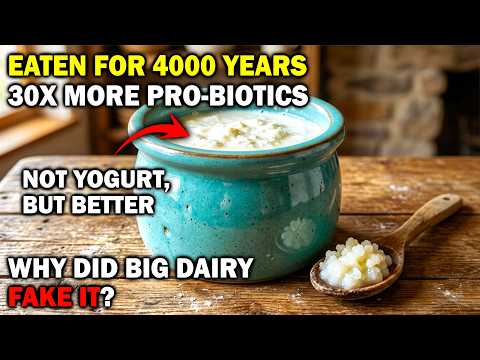
A 4000-Year Old Food. Just 2 Ingredients. A $100B Industry Prays You Never Find Out.
The Forgotten Power of Kefir
Discovery of Ancient Kefir
- Archaeologists uncovered a 4,000-year-old Bronze Age mummy in China's Tim Basin, adorned with a necklace made of fermented cheese.
- Genetic sequencing identified this cheese as the oldest confirmed DNA evidence of a biological technology crucial for sustaining human empires before widespread lactose tolerance.
The Nutritional Benefits of Kefir
- The discovered substance is described as an effervescent, slightly tart living ecosystem known as kefir, which significantly alters gut biome architecture and produces rare vitamins while combating pathogens.
- Despite its historical significance, kefir has become scarce in modern American grocery stores, often relegated to specialty aisles or completely absent.
Origins and Cultural Significance
- Kefir's origins trace back to nomadic tribes in the northern Caucasus mountains who practiced backslopping—adding fresh milk to old residue—which led to the spontaneous evolution of unique bacterial and yeast colonies.
- These tribes believed their grains were sacred gifts from Muhammad and guarded them fiercely against outsiders due to fears that sharing would diminish their health benefits.
Historical Interactions with Science
- In the late 19th century, rumors about kefir's health benefits reached Russian medical elites; however, they struggled to obtain the grains for study. A covert mission was launched involving Arena Sakarova attempting to charm a local prince into surrendering these grains.
- After being kidnapped by the prince but later rescued, Arena negotiated for 10 lbs of live kefir grains as reparations—this transaction had significant implications for public health advancements in Russia.
Impact on Modern Health Practices
- By the mid-20th century, those original kefir grains were propagated widely and became staples in Soviet healthcare systems aimed at addressing digestive disorders and malnutrition.
- In contrast, Western Europe missed out on this powerful biological engine while focusing on different fermented dairy products like yogurt that were easier to standardize for industrial production. Yogurt relies on lab-grown bacteria rather than living grains like kefir does.
Kefir: The Superfood of Probiotics
Nutritional Benefits of Kefir
- Kefir contains 30 to over 60 different strains of bacteria and beneficial yeasts, which are confirmed to colonize the gut wall, aiding in microbiome restoration.
- Unlike yogurt, kefir includes beneficial yeasts such as Saccharomyces kefir and Tua kefir that actively combat pathogenic yeasts like Candida albicans.
- Wild fermentation in kefir eliminates nearly all lactose, making it suitable for those with dairy intolerance. It also provides high levels of bioavailable calcium (130 mg) and magnesium (12 mg).
- Kefir is a rare dietary source of vitamin K2, which helps direct calcium away from arterial walls into the skeletal system, preventing plaque buildup.
- The unique polysaccharide called kefirin found in kefir has been shown to lower blood pressure, reduce cholesterol levels, and exhibit antimicrobial properties.
Challenges in Commercial Production
- Authentic kefir cannot be produced from static powders; it requires living grains that grow and multiply, creating challenges for industrial production.
- Unlike beer or sauerkraut that undergo heavy processing for shelf stability, real kefir continues to ferment even under refrigeration due to its active yeast content.
- The fermentation process produces carbon dioxide which can cause packaging issues; traditional plastic bottles may bloat or explode when transporting live products.
- Many commercial versions available today are not made with real grains but rather mimic the taste using powdered cultures lacking the complex benefits of authentic kefir.
- To experience true health benefits from this ancient drink, consumers must seek out live milk grains from reputable suppliers instead of relying on supermarket options.
Making Your Own Kefir
- To make homemade kefir: add one tablespoon of live grains to two cups of fresh milk (avoid ultra-pasteurized milk), cover with breathable cloth for oxygen access.
- Allow the mixture to ferment at room temperature for about 24 hours until thickened and pleasantly tart; avoid metal containers except stainless steel during straining.
- Strain the mixture through a stainless steel mesh strainer; keep solid grains for future batches while enjoying the fizzy liquid as your finished product.
- If desired flavor adjustments are needed, perform a second fermentation by adding fruit or lemon peel to enhance carbonation and nutritional content further.
- This homemade process emphasizes that powerful nutrients cannot be mass-produced or patented; it serves as a reminder of ancestral food practices over commercial alternatives.
Reclaiming Gut Health Through Ancestral Practices
The Importance of Microbial Ecosystems
- The reliance on sterile lab-grown powders diminishes the diverse microbial ecosystems that our ancestors depended on for survival in extreme environments.
- Emphasizes that one does not need expensive laboratory equipment to restore gut health; simple, accessible methods can be effective.
Practical Steps to Rebuild Your Gut Biome
- Suggests using a glass jar, fresh milk, and a "living piece of history" as tools to cultivate beneficial microbes at home.
- Encourages viewers to take action towards food sovereignty by integrating wild elements back into their cooking practices.
Call to Action
- Concludes with an invitation for viewers to engage with the content by liking the video if they are interested in reclaiming their food sovereignty.