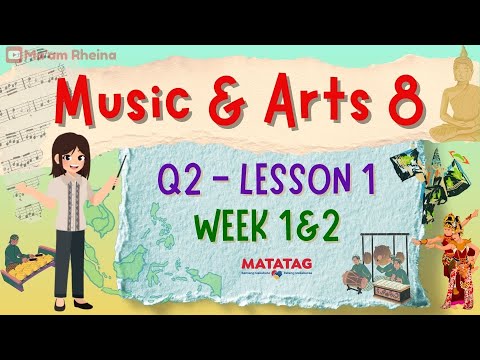
Music and Arts 8 Quarter 2 Week1-2 (Matatag) Revised K-12 | Key Features of Asian Folk Arts
Introduction to Asian Folk Arts
Overview of the Lesson
- The lesson introduces Grade 8 learners to a new season of music and arts, focusing on significant folk performing and visual arts in Asia.
- The learning competency emphasizes identifying distinct characteristics of these art forms and understanding their cultural significance.
- By the end of the lesson, students should be able to identify key elements, differentiate various forms, and recognize cultural importance in rituals and daily life.
Key Features of Asian Folk Arts
- Four main features are highlighted: traditional techniques, symbolism and meaning, performance and ritual, and material culture.
- Examples include Japanese Kabuki Theater, Chinese shadow puppetry, Taon dance drama, and Mongolian Kou art.
Preliminary Assessment
Warm-Up Activity
- Students engage in a preliminary assessment to gauge prior knowledge about Asian folk arts through a series of questions.
- This warm-up is designed to prepare students for deeper learning rather than serve as a formal evaluation.
Interactive Learning Game
Four Picks One Word Challenge
- A game called "Four Picks One Word" is introduced where students must identify which Asian folk art is represented by four pictures.
- Students also need to unscramble letters related to the correct answer as part of the challenge.
Unlocking Vocabulary
Important Terms Defined
- Key vocabulary includes:
- Key Features: Characteristics that make something unique or useful.
- Traditional Techniques: Methods passed down through generations that reflect cultural history.
- Symbolism: Use of objects or actions representing deeper meanings beyond surface appearances.
- Ritual: Ceremonial actions performed with specific symbolic meanings for cultural purposes.
- Material Culture: Physical artifacts created by a culture that provide insights into its traditions and beliefs.
Exploring Traditional Techniques
Focus on Unique Practices
- Traditional techniques are essential methods in folk arts handed down through generations that define each art form's uniqueness.
- Japanese Kabuki Theater
- Combines music, dance, and acting; characterized by expressive movements and colorful makeup. Male actors often portray female roles using special techniques.
- Stage tricks enhance audience engagement with hidden doors and rotating platforms.
- Chinese Shadow Puppetry
- Involves puppets made from thin leather projected against light; performers manipulate them skillfully while narrating ancient tales accompanied by traditional instruments.
- Thai Dance Drama (Con)
Understanding Asian Folk Arts and Their Symbolism
The Role of Gestures and Music in Performance
- Gestures known as mudras are utilized to convey meaning and emotions during performances.
- Musical elements, including drums, symbols, and xylophones, establish the rhythm and mood of the performance.
- Narration and singing enhance storytelling, making it both entertaining and meaningful.
Mongolian Throat Singing: Techniques and Cultural Significance
- Mongolian throat singing (kou) is inspired by natural sounds; singers produce multiple tones simultaneously to create harmonies reminiscent of wind or flowing water.
- Breath control is crucial for sustaining long sounds; singers manipulate their mouth, tongue, and throat shapes to shift pitch and tone.
- Various styles exist within kou, such as kumi, sigot, and carira; this art form is deeply embedded in Mongolian culture.
Symbolism in Asian Folk Arts
Japanese Kabuki Theater
- In Kabuki theater, costumes and makeup carry significant meanings; colors and designs symbolize emotions or cultural traditions.
- Props like paper fans can represent various concepts such as the rising sun or cutting with a knife.
Chinese Shadow Puppetry
- Originating over 2,000 years ago during the Han Dynasty, shadow puppetry conveys cultural history through storytelling.
- It serves not only entertainment but also teaches values while preserving social beliefs through artistic expression.
Thai Cone Dance Drama
- The cone dance drama incorporates symbolism from Thai mythology; characters like Rama embody virtues such as order and justice.
- Con performances emphasize teamwork, values, cultural pride while keeping Thailand's history alive through storytelling.
The Spiritual Essence of Mongolian Throat Singing
- Kou represents more than music; it symbolizes Mongolian identity by echoing nature's sounds—wind and water—connecting listeners to their environment.
- Performances express deep emotions like joy or longing while reflecting traditions that bind people together across generations.
Ritualistic Aspects of Performance in Asian Folk Arts
Japanese Kabuki Theater Rituals
- Kabuki begins with an opening ritual called shimai where blessings are sought for success before performances commence.
Chinese Shadow Play Ritual Integration
- Performances start with rituals honoring ancestral spirits using offerings or prayers; audience participation enhances communal experience.
Thai Cone Dance Drama Engagement
- Ceremonial prayers precede performances seeking blessings; audience engagement fosters a lively celebration throughout the event.
Exploring Asian Folk Arts
Unique Vocal Techniques in Asian Folk Arts
- The kou throat singing technique is described as deeply ritualistic, producing multiple pitches simultaneously and mimicking natural sounds like wind or water.
- Kou is performed within a cultural and spiritual context, serving to communicate with nature, honor ancestors, and connect with the spirit world.
- This art form can be performed solo or accompanied by traditional instruments such as the marine core and horsehead fiddle, blending artistic expression with ceremonial significance.
Material Culture in Asian Folk Arts
- Material culture encompasses physical objects used in performances, including costumes, instruments, and props that carry meaning and tradition.
- Japanese Kabuki theater utilizes elaborate silk costumes, wigs, makeup, props, and live music from instruments like the Shamison and Tao drums to enhance its cultural representation.
- Chinese shadow puppetry features detailed leather or paper puppets shown against colorful backdrops with traditional music to bring folk stories to life.
- Taikon dance drama is known for ornate costumes representing mythical characters paired with culturally rich music and stage designs.
- Mongolian ku throat singing emphasizes traditional attire and unique instruments like the horse head fiddle to create an authentic soundscape.
Engaging Activities on Asian Folk Arts
Activity 5: Diagram Completion
- Learners are tasked with choosing one of the featured Asian folk arts (Kabuki theater, Chinese shadow play, tyon dance drama, or Mongolian kou) to complete a beginning-middle-end organizer summarizing their learning.
Activity 6: Identifying Folk Art
- Participants will identify various images related to different Asian folk arts by matching them with their respective categories (A-D).
Activity 7: Concept Mapping
- In this task, learners will fill out a concept map highlighting important characteristics of Asian folk performing and visual arts including techniques passed down through generations.
Activity 8: Application of Learning
- Students reflect on traditional techniques used in preserving culture while considering symbolism behind costumes and gestures. They will explore how these elements shape the richness of Asian folk arts.
Activity 9: Creative Reflection
- Learners are encouraged to create a poster showcasing what they have learned about Asian folk performing arts. The poster should capture unique features such as costumes and movements while telling a story about cultural connections.
Summative Assessment Overview