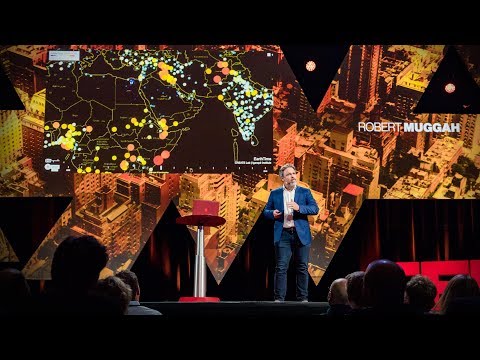
The biggest risks facing cities -- and some solutions | Robert Muggah
New Section
In this section, the speaker discusses the importance of cities and their impact on our lives. They highlight the benefits and challenges associated with urban living.
The Significance of Cities
- The speaker predicts that if we prioritize the development of cities, we have a chance to thrive in the 21st century.
- Cities are considered an extraordinary experiment in social engineering and offer advantages such as better health, education, wealth, and longevity compared to rural areas.
- Millions of people are migrating to cities every week because they are where the future unfolds first.
- Cities possess qualities like openness, creativity, dynamism, democracy, cosmopolitanism, and attractiveness that counteract reactionary nationalism.
Challenges Faced by Cities
- Despite occupying only three percent of the world's surface area, cities consume over 75 percent of energy and emit 80 percent of greenhouse gases.
- Violence claims numerous lives in cities annually. Car accidents and pollution also contribute to significant mortality rates.
- A quarter of cities suffer from chronic water shortages despite being located in countries with substantial water reserves.
- Lack of knowledge about thousands of cities in Africa, Latin America, and Asia hinders understanding their unique challenges due to a focus on nation-states.
Shifting Dynamics between Nation-States and Cities
- While there are 193 nation-states globally, there is an increasing number of influential cities that rival them in power and influence.
- Cities like New York have significant economic strength but lack proportional political influence, which needs to change for effective transformation.
New Section
In this section, the speaker introduces the concept of mega-risks faced by cities and emphasizes the need for solutions. They present a data visualization tool to illustrate city fragility and resilience.
Mega-Risks Faced by Cities
- The speaker discusses major risks that cities encounter and briefly mentions potential solutions.
- Fragility arises when the social contract breaks down, leading to multiple risks such as income inequality, poverty, youth unemployment, violence, and exposure to natural disasters.
- While some cities have reduced their fragility over time, it is deepening in vulnerable regions like North Africa, the Middle East, South Asia, and Central Asia.
- When cities become too fragile and fail, it results in large-scale migration of refugees from poor cities to even poorer ones.
Refugee Crises
- There are currently more than 22 million refugees worldwide.
- Contrary to popular belief, most refugees do not flee from poor countries to wealthy ones but rather move from poor cities to nearby impoverished cities.
- Internal displacement is another significant issue with over 36 million people living in refugee-like conditions within their own countries.
The transcript provided does not contain any timestamps beyond 5 minutes.
Syria's Drought and the Need for Action
This section discusses the severe drought that Syria experienced between 2007 and 2010, emphasizing the need for action.
The Impact of Drought in Syria
- Syria suffered one of the worst droughts in its history between 2007 and 2010.
The Devolution Revolution
This section highlights the importance of a devolution revolution to address urban challenges effectively.
Rethinking the Contract with Nation-States
- Cities need a devolution revolution to renegotiate their contract with nation-states.
- Effective zoning, raising taxes, and building affordable housing are essential steps.
Green Solutions for Cities
This section emphasizes the importance of cities going green and investing in sustainable solutions.
Leading Global Decarbonization Efforts
- Cities are already leading global decarbonization efforts by investing in congestion pricing schemes, emission reduction targets, biodiversity, parks, bikeways, walkways, etc.
- Many cities have invested heavily in renewable energy sources like solar and wind power.
- Medellín is an example of a city that invested in a municipal hydroelectric plant to meet local needs and sell excess energy back to the national grid.
Integrated Solutions for Multiple Problems
This section emphasizes the importance of integrated solutions that solve multiple problems faced by cities.
Investing in Integrated Public Transport
- Successful cities invest in integrated public transport systems like rapid bus transit, light rail, bikeways, walkways, boatways. These not only reduce emissions and congestion but also improve public health, reduce dispersion, and increase safety.
- Seoul is an example of a city that achieved significant success in public transport with 75% of residents using the extraordinary public transport system.
Building Densely and Sustainably
This section highlights the importance of building densely and sustainably to avoid urban sprawl.
Resilient and Inclusive City Planning
- Cities need to build resiliently and inclusively to avoid urban sprawl and slums.
- Dallas-Fort Worth is an example of a city that experienced extensive urban sprawl due to low usage of public transport. In contrast, Singapore successfully built vertically and incorporated affordable housing.
Stealing Ideas for Smart Cities
This section emphasizes the importance of cities learning from each other by borrowing ideas for smart solutions.
Learning from Other Cities
- Smart cities are constantly stealing ideas from each other to stay ahead in technology adoption. Examples include New York, Singapore, Seoul, Medellín.
Working in Global Coalitions
This section emphasizes the significance of global coalitions among cities for collective action.
Power of City Coalitions
- There are numerous inner-city coalitions worldwide, such as the Global Parliament of Mayors and C40 network, working towards clean energy delivery and developing smart city protocols.
- Collaboration among cities amplifies their voice on both national and global stages, enabling them to exert their own sovereignty when nation-states fail to act effectively.
Cities as Visionaries
This section recognizes cities as 21st-century visionaries and advocates for their inclusion in decision-making processes.
Cities as Problem-Solvers
- Mayors and civic leaders bring energy, enthusiasm, and effectiveness to their work as pragmatists, problem-solvers, and para-diplomats.
- In a time of international uncertainty with paralyzed multilateral institutions and retreating nation-states, cities and their leaders deserve a seat at the table.
The transcript is already in English.
Turn any video into a summary like this
YouTube links, meetings, lectures. With transcripts, search, and chat.