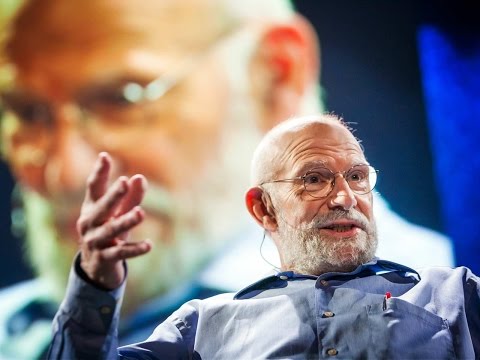
What hallucination reveals about our minds | Oliver Sacks
Understanding Hallucinations and Charles Bonnet Syndrome
The Nature of Seeing
- The act of seeing involves both the eyes and the brain, with imagination playing a crucial role in how we perceive landscapes.
- Hallucinations differ from imagination; they appear to come from an external source and mimic real perception.
Case Study: Rosalie's Experience
- A nursing home contacted the speaker about Rosalie, a 90-year-old woman experiencing visual hallucinations.
- Upon examination, it was revealed that Rosalie had been blind for five years due to macular degeneration but recently began seeing vivid images.
Descriptions of Hallucinations
- Rosalie described her hallucinations as people in Eastern dress, animals, and colorful scenes that felt like a silent movie rather than dreams.
- She noted that these experiences were repetitive and unrelated to her thoughts or feelings, causing her confusion and fear.
Diagnosis: Charles Bonnet Syndrome
- After careful evaluation, the speaker diagnosed Rosalie with Charles Bonnet syndrome, which is associated with visual impairment.
- This condition was first described by Charles Bonnet in the 18th century when his grandfather experienced similar hallucinations after cataract surgery.
Historical Context of Charles Bonnet Syndrome
- Charles Bonnet's grandfather saw various hallucinations including objects in midair and figures he could not always identify.
Understanding Visual Hallucinations and the Brain
The Phenomenon of Palinopsia
- The term "palinopsia" describes a condition where individuals experience repeated visual perceptions, often as a result of losing vision.
- As visual input decreases, parts of the brain become hyperactive, leading to spontaneous firing and complex visual hallucinations.
Disturbing Hallucinations in Patients
- One patient reported seeing a man in a striped shirt who multiplied into six figures, illustrating the complexity of her hallucinations.
- Another patient experienced mobile hallucinations involving a teenage boy on her car's hood, who would take off vertically when they stopped.
Unique Hallucination Experiences
- A different patient with an occipital cortex tumor saw transparent cartoons covering half her visual field, notably Kermit the Frog.
- While she found the cartoons amusing, she was disturbed by persistent images of deformed faces with exaggerated features.
Misunderstandings Around Hallucinations
- Approximately 10% of visually impaired individuals experience these types of hallucinations; however, only about 1% acknowledge them due to fear of being perceived as insane.
- Unlike psychotic hallucinations that engage and interact with individuals, Charles Bonnet syndrome involves passive experiences where one observes without interaction.
Types and Mechanisms of Hallucinations
- Temporal lobe epilepsy can cause vivid sensory experiences tied to specific memories or places, contrasting with Charles Bonnet syndrome's more abstract visuals.
- Charles Bonnet hallucinations range from simple geometric shapes to elaborate figures and faces; deformed faces are particularly common.
Brain Imaging Insights
- Recent fMRI studies show distinct brain areas activated during different types of hallucinations: primary visual cortex for simple shapes versus higher areas for complex images.
- The fusiform gyrus is crucial for face recognition; abnormal activity here may lead to facial hallucinations rather than loss of recognition ability.
Specificity in Brain Functionality
- Different regions within the fusiform gyrus correspond to various facial features; activation patterns can explain why certain distorted faces appear in some patients' visions.
- Research has identified specialized cells in the inferotemporal cortex responsible for recognizing specific objects or concepts (e.g., "car" cells), indicating high specificity in visual processing.
Understanding Visual Hallucinations in the Blind
The Nature of Visual Hallucinations
- Millions of images and fragments are neurally encoded in specific cells, typically integrated into perception or imagination. This process is disrupted in visually impaired individuals, leading to chaotic visual experiences.
- Unlike dreams, these hallucinations often lack recognizable figures or associations, making them difficult to interpret for those experiencing them.
Commonality and Awareness
- Many blind individuals may experience these hallucinations but remain silent due to fear or stigma. Raising awareness among patients, doctors, and the public is crucial.
- These phenomena provide valuable insights into brain function; Charles Bonnet's historical inquiry into how the mind generates imagery from brain activity remains relevant today.
Personal Experience with Hallucinations
- Oliver Sacks shares his personal experience with visual syndromes, revealing that he has some degree of visual impairment himself and sees geometric hallucinations.
- He notes that these experiences do not disturb him as he understands their nature, similar to how he manages his tinnitus.
Insights on Art and Perception
Turn any video into a summary like this
YouTube links, meetings, lectures. With transcripts, search, and chat.