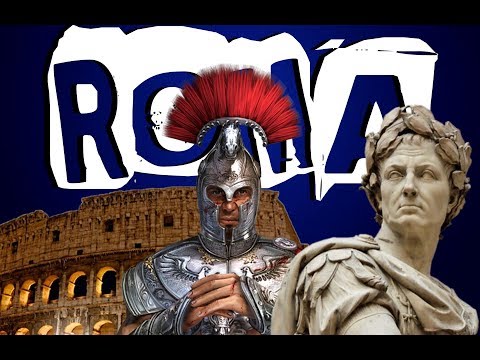
HISTÓRIA GERAL #7 ROMA ANTIGA (MONARQUIA, REPÚBLICA E IMPÉRIO).
Introduction and Overview
In this video, the speaker introduces the topic of ancient history, specifically focusing on the Roman Empire. The goal is to provide a foundation for understanding the development and decline of Rome, which is crucial for studying the Middle Ages.
Formation of Rome
- Rome went through three major phases: monarchy, republic, and empire.
- The focus will be primarily on the republic phase.
- Rome was founded in 753 BC by Romulus and Remus, according to Roman mythology.
- The initial formation of Rome involved various European tribes, including Latin and Etruscan peoples.
Social Groups in Ancient Rome
- Romans were divided into different social groups:
- Patricians: wealthy landowners
- Plebeians: poorer population without property
- Clients: foreigners who provided services to Romans
- Slavery played a significant role in Roman society as the basis for labor.
Monarchy and Social Structure
This section explores the period of monarchy in Rome when it was still a small village. It discusses the seven kings who ruled during this time and highlights the importance of understanding social formations that persisted throughout all periods.
Monarchy Period
- During the monarchy period, Rome was still a small village with its first king being Romulus.
- There were seven kings in total, including both Latin and Etruscan rulers.
- The social structure consisted of patricians (wealthy landowners), plebeians (poorer population), clients (foreigners serving Romans), and slaves.
Social Groups in Ancient Rome Continued
This section further explores social groups in ancient Rome, emphasizing their roles within society. It also explains the importance of clients and their relationship with patricians.
Social Groups in Rome
- Romans were divided into different social groups:
- Patricians: wealthy landowners
- Plebeians: poorer population without property
- Clients: foreigners who provided services to Romans
- Clients played a crucial role in providing various services, including craftsmanship and trade, due to Rome's reliance on commerce.
Conclusion
The speaker concludes by summarizing the organization of Roman society during the monarchy period. They highlight the significance of slavery as a fundamental aspect of Roman life and its impact on various sectors.
Summary
- During the monarchy period, Rome was still a small village with seven kings ruling.
- The social structure consisted of patricians (wealthy landowners), plebeians (poorer population), clients (foreigners serving Romans), and slaves.
- Slavery played a significant role in Roman society, providing labor across different sectors.
This summary covers only a portion of the video transcript.
The Role of the Roman Emperor
This section discusses the role of the Roman emperor and how it evolved throughout history.
The Phases of the Roman Empire
- The history of Rome can be divided into three major phases: the monarchy, the republic, and the empire.
- The Edict of Milan in 380 AD marked a significant turning point for Christianity in Rome.
- The Roman Empire went through different phases, including the monarchy, republic, and empire under Emperor Theodosius.
- The focus shifted from persecuting Christians to prohibiting polytheism within the empire.
Conversion to Christianity
- Emperor Theodosius played a crucial role in officially converting Rome to Christianity through laws like the Edict of Thessalonica.
- This conversion had a significant impact on Rome's civilization, transforming it into a Christian monoteistic empire.
Formation of the Roman Empire
This section explores how Rome transitioned from a small village to becoming an empire.
Early Formation
- Rome initially started as a small village called "Roma" founded by Romulus and Remus near River Tiber.
- The Romans were influenced by various barbarian tribes, including the Latins and Etruscans.
Invasions and Expansion
- Rome faced invasions from different barbarian tribes, such as the Franks, Visigoths, Ostrogoths, Saxons, and Suebi.
- These invasions led to the expansion of Rome and the formation of a monarchy under Romulus.
Decline of Pax Romana
This section discusses the decline of Pax Romana and the weakening of Rome.
Weakening Empire
- The concept of Pax Romana (Roman Peace) started to weaken as barbarian invasions increased.
- The influx of barbarian tribes weakened Rome's political and economic system.
Conclusion
- The early stages of Rome's formation involved tribal influences and conflicts between Romulus and Remus.
- As Rome expanded, it faced invasions from various barbarian tribes that contributed to its transformation into an empire. However, this also marked the beginning of its decline.
The Impact of Barbarian Invasions on Rome
This section discusses the impact of barbarian invasions on the Roman Empire and how it led to the decline and fall of Rome.
Barbarians in Rome
- The Roman Empire experienced waves of barbarian invasions.
- Germanic tribes started joining the Roman armies, leading to a mix of cultures in Rome.
- The Romans believed in the mythological creation of Rome and its connection to these barbarian tribes.
Fall of the Roman Empire
- A second wave of barbarian invasions caused significant destruction to Rome.
- Walls collapsed, buildings were destroyed, and the Roman civilization suffered greatly.
- Rome faced consequences from its own expansionist policies and invasions.
Lessons Learned from Rome's History
This section reflects on the lessons learned from Rome's history and how they can be applied today.
Understanding Rome's Legacy
- Despite facing numerous challenges, Rome survived for a long time but eventually fell due to various factors.
- The transcript emphasizes that there is still much more to learn about ancient history.
Importance of Learning History
- The Parabólica channel is growing, offering more history lessons and exercises.
- Studying history guarantees success in exams and provides valuable insights into our present world.
Conclusion
This section concludes the video by expressing hope that viewers have enjoyed the lesson and encourages them to continue learning history.
Final Thoughts
- The transcript hopes that viewers have enjoyed and understood the lesson.
- It encourages viewers to continue their historical journey with Parabólica for success in exams.