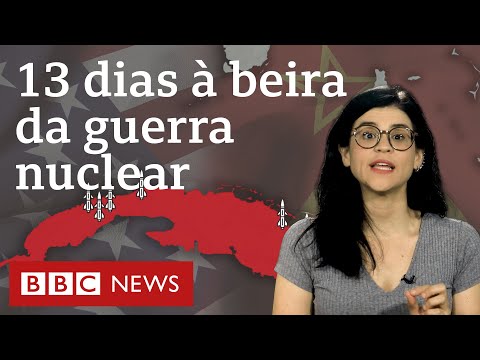
Como Cuba quase levou EUA e União Soviética à guerra
Cuban Missile Crisis: A Tense Night
Context of the Cuban Missile Crisis
- The night of October 22, 1962, was marked by extreme tension as President John Kennedy addressed the nation regarding nuclear missiles in Cuba.
- This period during the Cold War brought the United States and the Soviet Union to the brink of atomic war.
Historical Background
- Camilla Veras Mota from BBC News Brasil explains the significance of this crisis, highlighting its roots in post-World War II geopolitics.
- Following WWII, the U.S. and USSR emerged as opposing forces: capitalism versus communism, leading to an arms race and nuclear weapons development.
Rising Tensions
- By 1962, U.S. missiles were positioned in Turkey near Soviet territory, escalating tensions and prompting a focus on Cuba's proximity to America (160 km away).
- Fidel Castro's socialist revolution in Cuba had severed diplomatic ties with the U.S., leading to economic sanctions and attempts to undermine his government through armed groups.
Secret Installations
- In response to threats against Cuba, Nikita Khrushchev secretly aided Castro by installing nuclear missiles on the island; this remained undisclosed until October 14, 1962.
- American reconnaissance flights revealed missile preparations in Cuba, prompting President Kennedy to convene a strategic advisory group known as Excomm for a response strategy.
Strategic Decisions
- Three options were considered: negotiate with Fidel and Khrushchev, impose a naval blockade against Soviet shipments, or launch an attack; Kennedy opted for a blockade while seeking negotiations.
- In his address about imposing a "rigid quarantine," Kennedy carefully chose language to avoid being perceived as declaring war while warning that any attack on Western nations would be met with retaliation.
Escalation of Conflict
- On October 24th, Kennedy enforced a naval blockade aimed at preventing incoming Soviet ships carrying military supplies; Khrushchev viewed this as aggression and threatened defiance from Soviet vessels.
- As tensions escalated further with heightened military readiness (DEFCON level 2), both sides prepared for potential conflict while public awareness grew about impending disaster scenarios.
Diplomatic Maneuvers
- On October 26th, an ABC correspondent reported that a Soviet agent proposed removing missiles from Cuba if the U.S. promised not to invade; meanwhile, Khrushchev sent an emotional letter emphasizing avoiding nuclear catastrophe.
- However, new demands arose from Khrushchev linking missile withdrawal in Cuba with U.S. missile removal from Turkey amidst rising tensions following an incident where a U.S reconnaissance plane was shot down over Cuba resulting in pilot casualties.
This structured summary captures key moments and insights related to the Cuban Missile Crisis based on provided timestamps while maintaining clarity and coherence throughout each section.
Cuban Missile Crisis: Key Negotiations and Outcomes
Llewellyn Thompson's Strategic Recommendations
- Llewellyn Thompson, a former ambassador to the Soviet Union, advised President Kennedy on negotiations with Khrushchev. He suggested that Kennedy promise not to invade Cuba in exchange for the withdrawal of Soviet missiles.
- Thompson also recommended secretly removing American missiles from Turkey as part of the deal, emphasizing that this should not be made public or included in formal negotiations.
Resolution of the Crisis
- The following morning, Khrushchev publicly announced the dismantling and withdrawal of Soviet missiles from Cuba over the coming weeks, marking an end to the crisis.
- In April 1963, American missiles were removed from Turkey. Both Kennedy and Khrushchev portrayed this agreement as a diplomatic victory to their respective citizens.
Cuban Perspective and Aftermath
- Fidel Castro expressed resentment over the removal of Soviet missiles without consulting him or considering Cuba's interests. He viewed U.S. assurances against aggression as insufficient.
- Castro later acknowledged that this incident negatively impacted Cuba's relations with the Soviets for years to come.