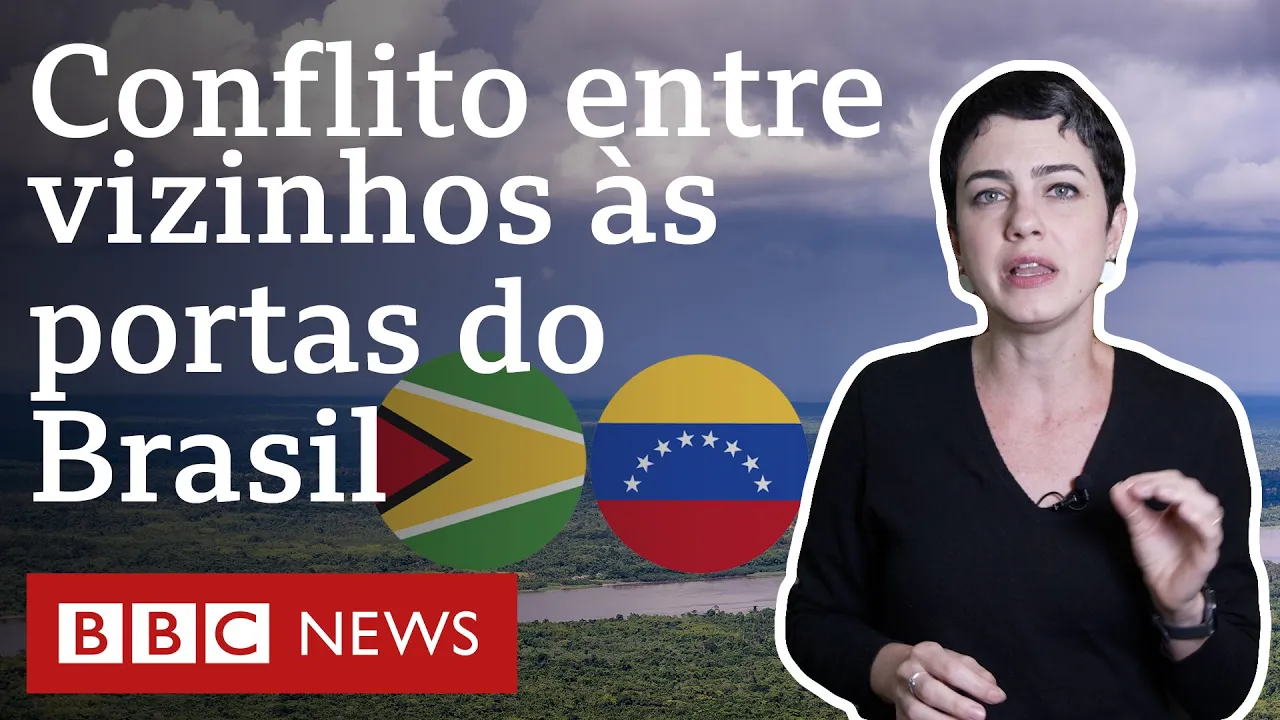
Essequibo: por que a Venezuela disputa área com a Guiana e que papel o Brasil tem na crise
Desafios na América do Sul
The transcript discusses the rising tensions between Venezuela and Guyana over the disputed territory of Essequibo, highlighting the potential for conflict in South America.
Tensions Over Essequibo
- Guyana, a former British colony, gained independence over 50 years ago and is now experiencing economic growth due to recent oil discoveries in Essequibo.
- The population of Guyana consists mainly of descendants of Indians and Afro-Guyanese, with a history shaped by slavery abolition and labor recruitment from India.
- The dispute over Essequibo dates back to colonial times when the region was transferred from Spanish colonization to Venezuela after independence. Subsequent territorial claims led to international arbitration.
- Recent oil discoveries by ExxonMobil in Essequibo have significantly boosted Guyana's oil reserves, positioning it as a key player in global oil production.
Economic Impact and Political Maneuvering
- The economic potential of Essequibo has driven rapid growth in Guyana's GDP, with projections indicating substantial per capita income increases.
- Tensions escalated following oil discoveries in 2015, culminating in a Venezuelan referendum supporting annexation of Essequibo. However, Guyana remains steadfast in its territorial claim.
Brazil's Role and Regional Response
Brazil's involvement in mediating the Venezuela-Guyana conflict is discussed alongside regional responses to the escalating tensions.
Brazil's Diplomatic Efforts
- President Maduro's political motivations behind the referendum are analyzed as an attempt to consolidate support amid domestic challenges.
- Comparisons are drawn between Maduro's actions and historical conflicts like Argentina's occupation of the Falkland Islands, emphasizing Brazil's cautious approach to prevent further escalation.
Regional Response
New Section
In this section, Lula emphasizes the importance of peace in South America and discusses the need to avoid conflict for the development and well-being of the Brazilian people.
Lula's Message on Peace and Development
- Lula expresses a strong stance against war in South America, highlighting that peace is essential for progress and prosperity. He states, "Não precisamos de guerra, não precisamos de conflito" (We do not need war, we do not need conflict).
- Emphasizes the significance of building peace as a means to foster national development, generate wealth, and enhance the quality of life for Brazilians.
- Sends his special advisor for international affairs, Ambassador Celso Amorim, to Caracas for a meeting with Maduro to discuss diplomatic matters.
New Section
This part delves into concerns within Brazilian diplomacy regarding potential conflicts in the region despite reassurances from President Maduro.
Diplomatic Concerns
- A source reveals that President Maduro attempted to reassure Ambassador Amorim about his government's intentions concerning the region.
- Despite reassurances, Brazilian diplomacy remains apprehensive about the possibility of peaceful resolutions being abandoned.
- The potential consequences of an armed confrontation are discussed within diplomatic circles.
New Section
The focus here shifts towards analyzing how a military conflict could impact Brazil economically and through increased migration flows from Venezuela.
Economic and Migration Implications
- Augusto Teixeira from King's College London warns that a military conflict could exacerbate the existing Venezuelan migration crisis affecting Brazil.
- Discusses how Brazil is already dealing with indirect repercussions of Venezuela's internal crisis through initiatives like Operation Acolhida.
- Highlights that an escalation in hostilities could lead to heightened security risks along Brazil's northern border due to increased refugee flows.
New Section
Ronaldo Carmona provides insights into why a full-scale war between Venezuela and neighboring countries is unlikely based on military considerations and economic factors.
Unlikelihood of War
- Carmona believes that operational difficulties and involvement of other powers deter Maduro from initiating military action.
- Points out challenges such as dense forest terrain along the Venezuela-Esequibo region hindering troop movements.