WIMAX - Worldwide Interoperability for Microwave Access
Introduction to WiMAX
This section provides an introduction to WiMAX technology and its benefits.
What is WiMAX?
- WiMAX stands for Worldwide Interoperability for Microwave Access.
- It is a family of wireless communication standards based on the IEEE 802.16 standard.
- Provides multiple physical layer and MAC access control options.
Components of a WiMAX System
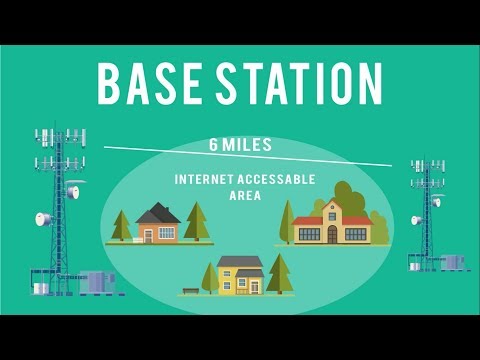
- A WiMAX system consists of two major parts: a base station and a receiver.
- The base station can provide coverage up to a radius of 6 miles, while the receiver can be a separate antenna or standalone box in devices such as laptops or computers.
Benefits of Using WiMAX Technology
- Supports high bandwidth solutions for large spectrum deployments using existing infrastructure.
- Provides wide array of range and quality-of-service capabilities for applications ranging from fixed to portable devices.
- Offers security functions such as user authentication, flexible team management protocol, protection of control messages, and support for fast handover.
Working Group Responsible for Developing WiMAX Network Requirements
This section discusses the working group responsible for developing network requirements architecture and practicals for WiMAX using IEEE 802.16 as the air interface.
Role of the Working Group
- The WiMAX Forum's network working group is responsible for developing network requirements architecture and practicals for WiMAX using IEEE 802.16 as the air interface.
Components of a Base Station
This section describes the components that make up a base station in a WiMAX system.
Components
- A base station consists of indoor electronics and an omni-directional tower similar in concept to cell phone towers.
- Each base station provides wireless coverage over an area called a cell.
Capacity Offered by WiMax Technology
This section discusses the capacity offered by WiMAX technology for wireless channels.
Capacity
- WiMAX is expected to offer initially up to about 40 megabits per second capacity for wireless channel for both fixed and portable applications.
- Depending on the particular technical configuration chosen, it can support hundreds of businesses with T1 speed connectivity and thousands of residents with DSL speed connectivity.
- It is also intended to provide broadband connectivity to mobile devices with a capacity of up to 15 megabits per second in a 3-kilometer service area.
Mobility Related Usage Scenarios
This section discusses mobility-related usage scenarios supported by WiMAX technology.
Mobility Scenarios
- WiMAX can be integrated into a wide array of third-generation or 3G mobile and wireless networks.
- Provides portable nomadic access to a portable device such as a PC card with an expectation of best effort ten over three simple mobility.
- Supports full mobility up to 120 km/h mobility and seamless handoff less than 15 milliseconds latency and under 1% packet loss.
Advantages of Using WiMax Technology Over WiFi
This section compares the advantages of using WiMAX technology over WiFi.
Advantages
- Scientifically purposed local network access for several tens of meters with the speed of up to 54 megabits per second.
- A single WiMAX antenna is expected to have a range up to 70 kilometers with the speed of up to 70 megabits per second or more.
- Designed to efficiently support from one hundred CPEs (Consumer Premises Equipment) with unlimited subscribers behind each CPD.
Turn any video into a summary like this
YouTube links, meetings, lectures. With transcripts, search, and chat.