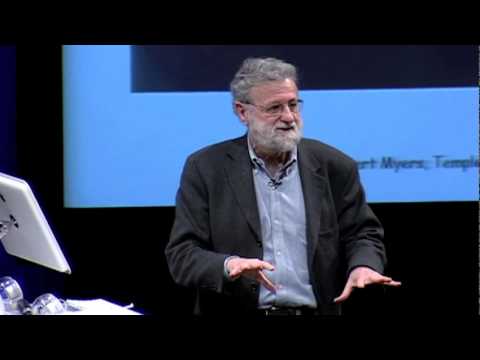
The three ways that good design makes you happy | Don Norman
The New Me: Exploring Beauty and Emotion in Design
Understanding Beauty and Functionality
- The speaker introduces a new perspective on beauty, emphasizing that their focus is now on aesthetics alongside usability. They reflect on past criticisms regarding the lack of beauty in their designs.
- A Philippe Starck juicer serves as an example of fun design; it’s displayed rather than used due to its gold-plated nature, highlighting the intersection of art and functionality.
- The Global cutting knife is praised for its beautiful shape, balance, and sharpness, illustrating how emotional connections can enhance user experience with functional items.
Playfulness in Design
- An experiment at MIT Media Lab demonstrates playful interaction through a ping-pong table that visually reacts to gameplay, showing that enjoyment can be prioritized over traditional game mechanics.
- Google’s subtle design choices are discussed; they creatively present search results to engage users subconsciously, enhancing the overall experience without overtly drawing attention.
Emotional Engagement with Products
- The speaker shares a review of the MINI Cooper which highlights its enjoyable driving experience despite flaws. This reflects the idea that fun can outweigh practical shortcomings in product appeal.
- A metaphor involving walking on a plank illustrates how fear impacts performance; when elevated, anxiety prevents action, suggesting emotional states significantly influence behavior.
The Role of Emotions in Problem Solving
- Fear is described as paralyzing and affecting cognitive processes. It leads to depth-first processing where focus is narrowed but creativity may suffer.
- Alice Isen's experiment shows that positive emotions (like receiving candy before problem-solving tasks) enhance creative thinking by promoting breadth-first processing—allowing for more innovative solutions.
Balancing Creativity and Productivity
Understanding the Levels of Design Processing
The Importance of Emotion in Design
- Happiness enhances brain function, leading to increased creativity and problem-solving abilities. A positive emotional state allows individuals to approach challenges with confidence.
- Human preferences are influenced by visceral reactions; we tend to favor bright colors and symmetrical shapes while disliking bitter tastes and loud noises. These innate responses shape our design choices.
- Visceral experiences drive consumer behavior; for example, people often purchase aesthetically pleasing products like water bottles not just for their utility but for their design appeal.
Behavioral Level of Processing
- The behavioral level involves subconscious actions where most daily activities occur without conscious thought. This includes automatic behaviors that are well-practiced.
- Effective behavioral design focuses on usability and control, enhancing user experience through balanced and well-designed products, such as high-performance knives or cars that provide a sense of mastery over the environment.
- Sensory experiences in product design can significantly enhance enjoyment; examples include innovative shower designs that offer unique sensory interactions while conserving water.
Reflective Level of Processing
- The reflective level represents self-awareness and judgment about experiences. It is characterized by an internal dialogue assessing actions as good or bad.
- Products like the Hummer attract attention due to their image rather than functionality, highlighting how reflective design influences consumer identity and social perception.
- Emotional conflicts can arise between visceral fears (e.g., fear of falling from a ride) and reflective reassurances (e.g., feeling safe), demonstrating how different levels of processing interact in decision-making.
Storytelling Through Design
Turn any video into a summary like this
YouTube links, meetings, lectures. With transcripts, search, and chat.