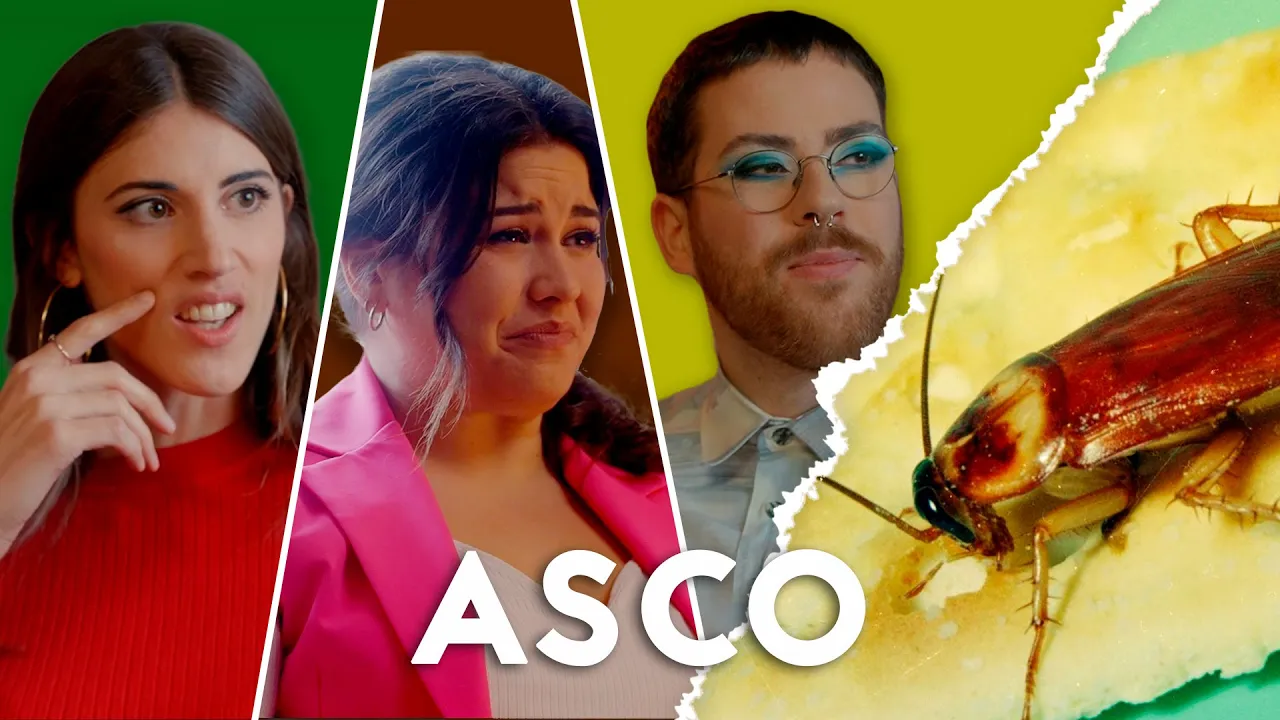
¿Es necesario EL ASCO en nuestras vidas? | El año de las emociones
New Section
The introduction sets the stage for a discussion on disgust as an emotion and its impact on daily life.
Introduction to Disgust
- Disgust is portrayed through various scenarios involving unpleasant experiences like encountering a nauseating smell or finding a moth in food.
- Humans employ methods to distance themselves from disgust, such as using deodorant and utensils.
- The focus is on exploring the emotion of disgust, often overlooked or poorly received.
Exploring Personal Disgust Triggers
The conversation delves into personal triggers of disgust shared by the speakers.
Personal Disgust Triggers
- Both speakers express strong aversion towards cockroaches as a common source of disgust.
- Anecdotes are shared about encounters with cockroaches, highlighting the intensity of the emotion.
- Sandra mentions her aversion to snot, emphasizing how individual triggers vary in causing disgust.
Understanding Disgust as an Emotion
The discussion deepens into dissecting disgust as an emotion and its physiological effects.
Nature of Disgust
- Disgust is described as a visceral reaction that can lead to nausea and vomiting, triggered not only by visual stimuli but also thoughts.
- Two components related to disgust behavior are explained: ideation and transference, influencing reactions even when rationality suggests otherwise.
Cleaning and Hygiene Practices
The discussion revolves around cleanliness, focusing on the hygiene of toilet seats in hospitals, the dirtiest object in a house (kitchen cloth), and the importance of washing kitchen cloths due to bacterial contamination.
Importance of Cleaning Toilet Seats
- Hospitals have exceptionally clean toilets, especially in Accident and Emergency departments.
- Caution advised regarding the cleanliness of toilets in bus stations.
Dirtiest Object in a House
- Kitchen cloths are identified as the dirtiest object due to repeated use on various surfaces.
- Dampness contributes to bacterial growth on kitchen cloths.
Bacterial Contamination
- Damp environments harbor bacteria that multiply rapidly.
- Studies reveal high levels of salmonella found on kitchen cloths, emphasizing the need for regular washing.
Development of Disgust and Immune System
The conversation delves into how disgust is learned behavior influenced by parental guidance, cultural norms, and its role in immune system development through exposure to microorganisms.
Development of Disgust in Children
- Disgust towards dirtiness is instilled by parents through repetitive instructions.
- Initial lack of disgust in children attributed to their developmental stage.
Immune System Development
- Contact with microorganisms aids immune system development.
- Children exposed to animals have lower asthma risks due to increased microbial exposure.
Cultural Influences on Disgust
Cultural factors significantly impact what individuals find disgusting or acceptable, illustrated through examples like food preferences such as blue cheese consumption and varying reactions towards different foods across cultures.
Cultural Variations in Food Preferences
- Consumption of blue cheese considered normal despite its mold content.
- Comparison between Scandinavian acceptance of rotten food for nutritional benefits versus other cultures' perceptions.
Travel Experiences
- Personal anecdotes shared about encountering culturally diverse foods while traveling.
New Section
This section discusses the concept of disgust and how it is influenced by various factors such as fear, perception, and evolutionary biology.
Disgust Perception
- Saliva from others disgusts us due to the "fear factor," but when our partner kisses us, it is not repulsive.
- Disgust can be contagious; we find things like falls or jump scares funny when they happen to others but not when experienced personally.
New Section
This part delves into how our perception of disgust is influenced by context and information processing in the brain.
Contextual Influence on Disgust
- Disgust is influenced by contextual information; for example, a strong smell from feet may be disgusting, but a similar smell from cheese might not evoke the same reaction.
- Our preconceived ideas about something can impact our emotional response; for instance, being told that food is human meat while eating it can change our perception of its taste.
New Section
The discussion shifts towards the evolutionary perspective on disgust and its role in ensuring survival.
Evolutionary Significance of Disgust
- Disgust has evolutionary value as it helps prevent consumption of contaminated or harmful substances like rotten food.
- The meticulous hygiene practices during the Covid pandemic also reflect an evolutionary sense of avoiding potential threats.
New Section
Darwin's theory on disgust and its implications are explored in this segment.
Darwin's Theory on Disgust
- Darwin proposed that feelings of repulsion helped humans avoid consuming harmful substances, contributing to their survival and passing on genes.
- Studying disgust at a scientific level reveals insights into how emotions are processed in the brain, particularly in the amygdala and limbic system.
New Section
A unique experiment involving saliva consumption prompts discussions on personal boundaries and perceptions of disgust.
Saliva Experiment Discussion
- Participants consider whether they would drink their own saliva if asked, reflecting on personal boundaries and societal norms around disgust.
Disgust and Moral Values
In this section, the speakers discuss the concept of disgust as a protective mechanism against immoral actions and how it leads to binary thinking in moral judgments.
Disgust as a Protective Mechanism
- Disgust serves as a barrier against engaging in actions considered immoral.
- Binary thinking is prevalent when faced with morally disgusting situations, leading to clear distinctions between opposing groups.
- People tend to align themselves with specific values, reinforcing their stance through binary opposition to those holding contrary views.
Influence of Communication on Perception
This part delves into how communication, particularly through media like radio, can influence public perception and create enemies for political gain.
Power of Creating Enemies
- Historical examples show how communication mediums like radio were used to sway public opinion towards certain ideologies.
- The narrative of creating external enemies shifts focus from systemic issues to individuals, fostering division and bias.
- Creating an "us vs. them" mentality through external enemies fosters group cohesion but perpetuates societal polarization.
Evolution of Toilet Technology
The discussion shifts towards the historical evolution of toilet technology and its impact on daily life.
Evolution of Toilets
- Despite common associations with dirtiness in history, toilets have significantly improved hygiene and comfort.
- Historical advancements in toilet technology, such as traps and water closets, revolutionized sanitation practices.
The Evolution of Toilets and Alfonso XIII
The discussion delves into the evolution of toilets, particularly focusing on Thomas Crapper's role in popularizing them. Additionally, it touches upon Alfonso XIII's peculiar illness and his influence on erotic cinema.
Thomas Crapper's Marketing Strategies
- Thomas Crapper promoted toilets akin to Steve Jobs with iPhones, making them popular.
- Established showrooms in Chelsea for people to try out toilets and baths, a novel concept at the time.
Normalization of Bathrooms by Thomas Crapper
- "Psycho" in the 1960s was one of the first films to feature a toilet on screen, highlighting societal taboos.
Influence on Royal Family and Society
- Installed bathrooms in prestigious locations like Buckingham Palace, influencing public perception positively.
- Alfonso XIII's birth coincided with significant events; he played a pivotal role in pioneering erotic cinema.
Alfonso XIII: Illness and Controversies
This segment explores Alfonso XIII's life, focusing on his illness, relationships, and contributions to cinema.
Alfonso XIII's Illness and Relationships
- Suffered from Tuberculosis rhinitis causing bad breath; faced rejection due to halitosis.
- Mocked for his illness; Paris Hotel named a cocktail after him reflecting societal treatment.
Contributions to Cinema
- Pioneered quality erotic cinema with plots and castings; maintained an exclusive approach despite societal norms.
Closing Remarks
The conclusion reflects on disgust as a survival mechanism influenced by societal norms while hinting at future episodes.
Reflection on Disgust and Survival Instinct
- Disgust plays a crucial role in survival but can be subjective based on societal standards.
Future Episode Teaser