La aplicación de la socioformación y los proyectos formativos
Introduction to Socio-formation and Educational Projects
Overview of the Session
- The session focuses on socio-formation and educational projects, analyzing key concepts, characteristics, advantages, and disadvantages.
- The speaker introduces herself as a graduate from the Universidad Tecnológica del Sureste de Guanajuato and currently works as a teacher at the Universidad Virtual del Estado de Guanajuato.
Definition of Socio-formation
- Socio-formation is defined by Toman as part of the knowledge society where communities share knowledge through information networks to solve problems.
- The pandemic has highlighted this definition as educators have had to share strategies and knowledge to improve teaching practices.
Understanding Educational Projects
Definition and Purpose
- Educational projects are diverse strategies based on learning competencies aimed at problem-solving while evaluating students with assessment tools.
Characteristics of Educational Projects
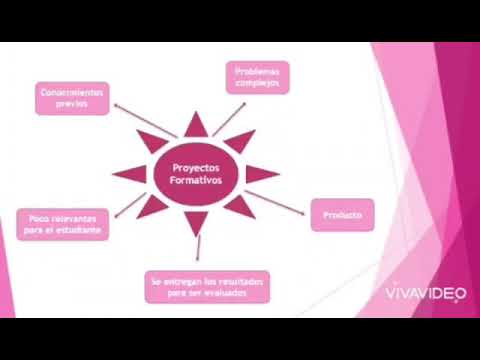
- Key characteristics include:
- Focus on product outcomes.
- Engagement with complex problems.
- Utilization of prior knowledge relevant to students' lives.
- Results are presented for evaluation rather than general summaries.
Phases and Evaluation Types in Educational Projects
Phases of Educational Projects
- There are four phases according to Tobón:
- Directioning
- Planning
- Action
- Communication
Types of Evaluation
- Three types of evaluations in educational projects:
- Self-evaluation: Students assess their own work using evaluation instruments.
- Co-evaluation: Peers evaluate each other's work mutually with the same assessment tool.
- Teacher evaluation: Conducted by instructors using standardized assessment tools for all students.
Conclusion on Competency-Based Evaluation
Final Thoughts
- Although competency-based evaluations and educational projects have been around for some time, they continue evolving in response to educational needs.