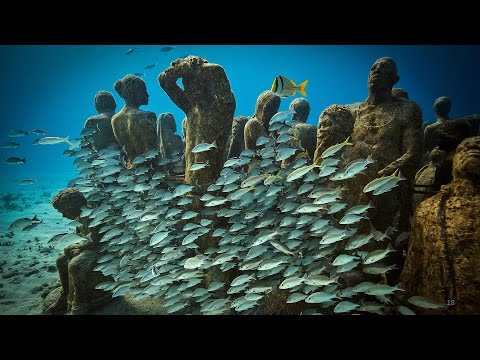
An underwater art museum, teeming with life | Jason deCaires Taylor
Ten Years Underwater - Exploring the Ocean Through Sculpture
In this talk, the speaker shares their journey of creating underwater sculptures and how it has transformed into an underwater sculpture park and museum. They discuss the materials and designs used to encourage marine life and highlight the importance of ocean conservation.
The Beginning of an Artistic Journey
- Ten years ago, the speaker had their first exhibition, showcasing their sculpture called "The Lost Correspondent."
- Teaming up with a marine biologist and a local dive center, they submerged the sculpture off the coast of Grenada.
- The sculpture transformed into multiple pieces, leading to the creation of the world's first underwater sculpture park.
Expanding to Mexico and Beyond
- In 2009, the speaker moved to Mexico and started casting local fishermen for their sculptures.
- This grew into a small community dedicated to defending the sea.
- Eventually, an underwater museum with over 500 living sculptures was established.
Designing for Marine Life
- Each project focuses on using materials and designs that encourage marine life.
- The sculptures are positioned down current from natural reefs to provide settling areas for coral polyps after spawning.
- Configured formations aggregate fish on a large scale, while internal habitats in some sculptures support crustaceans like lobsters and sea urchins.
Challenges and Rewards
- Exhibiting artwork in the ocean presents challenges such as lowering heavy sculptures to the sea floor.
- Despite difficulties, witnessing the transformation of sculptures in their new environment always amazes the artist.
The Ocean as an Exhibition Space
- The ocean offers a unique exhibition space with changing lighting effects, mysterious sand coverings, and inquisitive visitors.
- The artist appreciates the timeless quality and the interaction of visitors with the sculptures.
Art Belongs to the Sea
- Once submerged, the sculptures no longer belong to the artist but become part of the sea.
- New reefs form around the sculptures, creating a new world that continuously amazes.
Nature's Imagination
- Nothing man-made can match nature's imagination underwater.
- Various marine organisms like sponges, coral, fireworms, tunicates, sea urchins, and angelfish contribute to the transformation of sculptures.
Art as a Catalyst for Environmental Awareness
- The positive response to these underwater works indicates a primal connection that transcends borders.
- The artist recognizes their responsibility in raising awareness about ocean conservation through their art.
Oceans in Trouble
- Standing in the middle of the ocean, the artist emphasizes that our reefs are dying and oceans are facing challenges.
Inspiring Environmental Consciousness
- The most popular image of their work highlights people's growing understanding of environmental destruction and the need to consider our oceans.
Positive Impact on Marine Ecosystems
- Building underwater sculpture sites has resulted in new habitats and living reefs.
- Visitors now divide their time between museums and natural reefs, providing rest for stressed areas.
Influencing Government Actions
- The sculpture park in Grenada led to government designation of a marine protected area. Entrance fees now fund park rangers for managing tourism and fishing quotas.
Why Protecting Our Oceans is Important
In this section, the speaker discusses the importance of protecting our oceans and why they should be regarded as sacred.
The Value of Sacred Places
- Our oceans are not protected enough, and we need to change that mindset.
- We often regard incredible places like the Himalayas or famous artworks as sacred and do our best to protect them.
- However, we need to assign value to our oceans in order to protect them from desecration by those who don't understand their importance.
Treasuring Our Oceans like Museums
- Museums are places of preservation, conservation, and education.
- Naming a site in Cancun as a museum signifies the importance of preserving and cherishing our oceans.
- Just as we would react strongly if someone damaged a precious artwork or landmark, we should feel the same way about harming our oceans.
Seeing Beyond the Surface
- The vastness of the ocean makes it difficult for us to see its fragility and understand its majesty.
- If we fail to truly see and appreciate the ocean, there is a risk of taking it for granted.
Creating Precious Spaces
- Through their work in Cancun, there is now a small corner that is considered precious for being itself.
- The goal is not only to stop at specific locations but also extend efforts to other areas such as Grenada and the Bahamas.
Using Art for Change
- The speaker installed sculptures with a climate change message in front of London's Houses of Parliament.
- Collaboration with inventors, creators, philanthropists, educators, and biologists can lead to better futures for our oceans.
- Going beyond traditional art forms, innovative experiences can help people connect with and appreciate the ocean's wildlife.
A Delicate and Precious Place
- By bringing art into the ocean environment, the aim is to highlight its delicacy and preciousness.
- The seas should be seen as delicate and worthy of protection.
Imagining Better Futures for Our Oceans
In this section, the speaker encourages thinking big and deep to imagine better futures for our oceans.
A New Perspective
- Imagine a 14-year-old who has never seen the ocean being taken to an underwater Noah's Ark through a dry-glass viewing tunnel.
- Experiencing the wildlife of the ocean colonizing the land would be mind-blowing.
Thinking Big and Deep
- The speaker urges us to think beyond our current limitations.
- Through imagination and willpower, we can create positive change for our oceans.
Collaborative Efforts
- Collaboration with various individuals and groups can lead to innovative solutions for protecting our oceans.
- The goal is not just limited to art but extends to creating new environments that thrive.
Protecting Delicate Places
- By encouraging a shift in perspective, we can recognize the fragility of our oceans and take steps to protect them.
Turn any video into a summary like this
YouTube links, meetings, lectures. With transcripts, search, and chat.