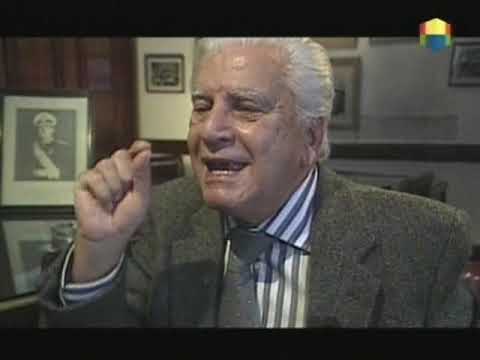
DOCUMENTAL- sangre, sudor y lágrimas historia de la economía argentina
Introducción al Documental sobre la Economía Argentina
Contexto y Propósito
- El documental se presenta desde el Banco Central, un lugar poco habitual para la televisión argentina, con el objetivo de explorar 50 años de historia económica nacional.
- Se destaca que el Banco Central ha sido clave en el desarrollo de políticas económicas que han tenido consecuencias negativas para la población.
Crítica a los Ministros de Economía
- Se menciona que todos los ministros de economía, como Martínez de Hoz y Lavagna, han perjudicado al país en algún momento.
- Palabras como "desabastecimiento", "pobreza" y "ajuste" son recurrentes en las políticas económicas a lo largo del tiempo.
Sangre, Sudor y Lágrimas: Historia Económica Argentina
Tipos de Gobiernos y sus Efectos
- El documental se titula "Sangre, Sudor y Lágrimas" e investiga gobiernos con diferentes enfoques económicos: nacionalistas vs. liberales.
- Se analizan diversos tipos de gobiernos: democráticos, cívico-militares o militares directos, destacando su impacto en la economía.
Continuidad en la Crisis Económica
- A pesar del tipo de gobierno, la realidad económica cotidiana ha permanecido similar durante los últimos 60 años.
- Los funcionarios responsables se repiten a lo largo del tiempo, llevando a crisis recurrentes como hiperinflaciones y corralitos.
La Era Peronista
Primer Gobierno de Juan Domingo Perón
- El 4 de julio de 1946 marca el inicio del primer mandato presidencial de Perón con un enfoque en una distribución equitativa de la riqueza.
- Este periodo es notable por una transferencia significativa de ingresos hacia los trabajadores.
Impacto Social del Peronismo
- La movilización social bajo el peronismo benefició a sectores desfavorecidos mediante medidas como dobles aguinaldos.
- Antes del peronismo, solo un 40% iba a salarios; con Perón esta relación se invierte favoreciendo más a los trabajadores.
Desafíos Posteriores al Peronismo
Problemas Económicos Emergentes
- Desde 1950, comienzan problemas económicos debido al crecimiento global post-Segunda Guerra Mundial.
- A pesar de ser reelecto en 1952, el segundo mandato enfrenta turbulencias económicas significativas.
Ciclos Recurrentes
- Se establece un patrón cíclico entre crisis y auge económico durante este periodo.
Golpes Militares y Cambios Políticos
Transición hacia Gobiernos Militares
- Tras caídas democráticas, nuevos líderes buscan desarticular organizaciones obreras peronistas antes llamar elecciones nuevamente.
Leyes Controversiales
- Frondizi implementa leyes para atraer inversiones extranjeras mientras enfrenta críticas por errores pasados que llevaron a una situación crítica.
Krieger-Basena Plan and Economic Turmoil in Argentina
The Impact of the Krieger-Basena Plan
- The Krieger-Basena plan is significant due to its detrimental effects on the country, initiating a process of denationalization of the productive apparatus.
- During Honganía's dictatorship, the plan created substantial tension among various economic agents and workers, exacerbating existing conflicts.
Economic Conditions Leading to Social Unrest
- A severe devaluation led to skyrocketing prices and inflation, coupled with political repression, culminating in social unrest known as "el cordobazo."
- The cordobazo weakened Honganía's regime, resulting in his replacement by General Roberto Livingston; however, Alejandro Agustín Lanús emerged as a key figure.
Political Changes Post-Cordobazo
Rise of Peronism
- Following increasing turmoil, the ban on Peronism was lifted; Héctor Cámpora became president on May 25, 1973.
- José Bergelbard was appointed Minister of Economy by Perón and had strong ties within the Jewish business community.
Legislative Developments
- Key legislation included nationalization efforts for banks and laws aimed at agricultural land use and labor protection.
Economic Challenges Under Cámpora
Inflationary Pressures
- Despite initial electoral success for Perón (over 61% votes), socio-economic conditions limited effective state intervention.
- Price controls failed amidst rampant demand without proper economic management; basic goods like toilet paper became scarce.
The Rodrigazo: A Turning Point
Leadership Transition After Perón's Death
- Isabel Perón succeeded her husband but lacked competence; under José López Rega’s influence, Celestino Rodrigo became Minister of Economy.
Economic Crisis Escalation
- Rodrigo's policies led to an unprecedented inflation rate exceeding 100%, causing widespread economic distress.
Consequences of Economic Policies
Public Reaction to Inflation
- There were mixed opinions regarding Rodrigo’s diagnosis of economic issues; some attributed problems to external factors like imported inflation.
Market Dynamics Shift
- Exporters avoided official dollar markets while importers sought subsidies through official channels leading to a balance-of-payments crisis.
The Military Coup and Its Aftermath
Establishment of Dictatorship
- On March 24, 1976, Jorge Rafael Videla assumed power initiating a period known as the National Reorganization Process.
Economic Liberalization Under Martínez de Hoz
- José Alfredo Martínez de Hoz implemented drastic changes favoring market liberalization over previous state interventions.
Industrial Decline
- Many industries faced bankruptcy due to increased competition from imports leading to significant unemployment among skilled workers.
Financial Strategies
- Martínez de Hoz promoted foreign investment by easing regulations which allowed capital inflow but destabilized local industries.
Economic Policies During Argentina's Military Dictatorship
Overview of Economic Conditions
- The economic measures taken during the dictatorship were not aimed at aiding the populace, despite a backdrop of 600% inflation and a negative trade balance of $900 million.
- The economic plan by Martínez de Hoz was implemented within one of Argentina's bloodiest military dictatorships, focusing on worker discipline.
Key Features of Martínez de Hoz's Plan
- The combination of terror and wage suppression characterized the logic behind Martínez de Hoz’s economic strategy.
- His plan included not only economic liberalization but also strict control over the working class, exemplified by Circular 1050 which allowed banks to increase mortgage rates arbitrarily.
Impact on Society
- The infamous Circular 1050 led to significant financial crises for many families as mortgage debts soared due to interest rate adjustments that outpaced wage growth.
- A shift from a culture of saving to speculation occurred, with an influx of imported goods overwhelming local markets while many citizens faced increasing poverty.
Financial Speculation and Its Consequences
- A segment of the middle class engaged in high-interest banking practices, believing they could benefit from foreign travel and purchases.
- This period saw reliance on loans that could not be repaid, leading industries and agriculture into a cycle dependent on financial speculation rather than production.
Aftermath and Political Transition
- Speculation became more profitable than actual production; this trend continued even after Martínez de Hoz left office.
- Following the Malvinas War, military leaders began retreating as Argentina faced bankruptcy amidst soaring external debt levels.
Continuity in Economic Policy Across Regimes
Similarities Between Military and Democratic Regimes
- There were minimal differences between military regimes and democratic experiences regarding economic policies; both resulted in detrimental outcomes for society.
- Successive economics ministers implemented austerity plans that ultimately harmed the population regardless of their political affiliation or regime type.
Introduction to Subsequent Economic Ministers
- Future ministers like Machinea, Cavallo, and Zurruil would continue applying harmful economic strategies under different guises.
Transition Back to Democracy: Alfonsín's Challenges
Return to Democracy
- Raúl Alfonsín’s election marked a return to democracy on December 10, 1983. His first minister was Bernardo Grinspoon who lacked liberal credentials.
Economic Dilemmas Faced by Alfonsín
- Alfonsín inherited a deteriorated state with public accounts issues alongside an external debt skyrocketing from $4 billion in 1976 to nearly $38 billion by his term start.
Inflation Crisis Under Grinspoon
- Inflation surged under Grinspoon’s tenure reaching an annual rate of 400%, highlighting failures in proposed distributive expansion strategies.
Shift Towards 'Economy of War'
- Pressured by business interests, Alfonsín called for national unity against economic limitations through what he termed an "economy of war."
Implementation of New Monetary Policies
- Juan Vital Surruil succeeded Grinspoon implementing the Austral Plan aimed at curbing inflation through currency change while maintaining high export taxes.
The Birth of the Austral and Economic Shifts
Introduction to the Austral
- The introduction of the Austral was a response to a 35% drop in international prices, leading to the elimination of all export taxes.
- The Austral aimed to create a strong currency free from inflation's burden, achieving initial stabilization with a fixed exchange rate for eight months.
Inflation and Economic Challenges
- Despite early success, monthly indexation led to accelerating inflation after moving away from fixed rates.
- A lack of dollars during this period was attributed to unfavorable international contexts rather than domestic policy failures.
Military Influence and Hyperinflation
Political Instability
- Historical military pressures and banking influences weakened leadership during hyperinflation crises that devastated the economy.
Hyperinflation Experience
- Hyperinflation was characterized by rapidly changing dollar values, creating an environment where prices were unpredictable.
The Dollar Crisis
Economic Collapse
- As reserves dwindled, reliance on higher exchange rates led to further devaluation and inflation acceleration.
Political Weaknesses in Government
Election Outcomes
- Following electoral losses in 1987, government authority diminished significantly by 1989 when Menem won power.
Transitioning Power
Advising Resignation
- Key advisors suggested President Alfonsín resign to allow Menem’s newly elected administration to implement stabilization plans effectively.
Menem's Campaign Promises
Revolutionary Rhetoric
- Menem campaigned on promises of productive revolution and debt non-payment but later diverged from these commitments once in office.
Market Reactions
Initial Public Fear
- His campaign rhetoric generated market panic; however, his actual policies contradicted his electoral promises.
Policy Implementation
Shift Towards Liberalism
- Menem adopted liberal economic measures contrary to his previous stance against privatization, aligning with former adversaries like Bunge y Born.
Government Stance on Currency Value
Market Forces at Play
- The government claimed that dollar pricing reflected market forces without intervention despite public concerns over rising costs.
Call for Unity
Economic Stability Message
- Emphasizing collaboration among citizens for economic recovery, stressing the scarcity and value of australes as crucial for stability.
(t=2258s] Ministerial Actions
Addressing Financial Panic
- Minister Herman sought agreements essential for justicialist principles amidst growing financial instability.
Convertibility Plan Introduction
Major Economic Reform
- Domingo Cavallo introduced a convertibility plan that drastically altered Argentina's economic landscape by pegging pesos directly to dollars.
Effects of Convertibility
Short-term Successes
- While effective at halting inflation initially, convertibility created unrealistic expectations about currency stability within Argentina.
Privatization Consequences
Long-term Implications
- Privatizations under Menem were necessary for maintaining dollar parity but resulted in significant loss of state assets across various sectors.
State Asset Sales
Comprehensive Privatization Strategy
- Extensive privatizations included telecommunications and transportation sectors aimed at ensuring dollar circulation became standard practice in Argentina.
Reelection Through Controversy
Political Survival Tactics
- Menem’s strategy allowed him re-election amid ongoing controversies surrounding asset sales and economic management practices.
Legacy of Privatization
Critique on State Disposition
- Many politicians who previously supported privatizations now criticize them while ignoring their past endorsements during Menem’s tenure.
International Crisis Impact
National Economy Exposure
- Global crises combined with rampant corruption revealed vulnerabilities within Argentina's economy leading up to severe unemployment rates.
Socioeconomic Conditions
Rising Poverty Levels
- By late '90, unemployment reached approximately15%, with significant portions living below poverty lines indicating dire socioeconomic conditions ahead of elections.
s New Leadership Aspirations
Promises from De la Rúa
-s Fernando de la Rúa pledged transformative leadership focused on happiness and prosperity amidst prevailing discontent among citizens regarding existing governance structures.
s Perception of Convertibility
Public Sentiment
-s There was widespread belief that abandoning convertibility would lead directly into chaos or failure due largely because it had become ingrained as an economic norm within society.
# 2551
Banking Pressures
- [] (T 2551S): Banks began exerting pressure on depositors fearing withdrawals as public confidence waned following earlier financial mismanagement issues affecting consumer trust levels overall.
Economic Crisis in Argentina: A Detailed Analysis
The Initial Economic Strain
- The inability of people to pay debts led to a significant economic crisis, distorting the sales regime and elongating collection periods.
- José Luis Machinea's tax policies and agreements with the IMF were ineffective, with less than 25% of promised funds materializing. This was followed by Ricardo López Murphy's rejected economic plan.
Mismanagement and Public Perception
- There was a widespread denial of the ongoing crisis; society believed there were shortcuts to avoid confronting economic issues. Public spending had increased by 150%, while GDP only grew by 50%.
- The financing of public expenditure relied heavily on unsustainable debt accumulation, leading to an inevitable correction by reality if not addressed.
The Role of Leadership in Crisis
- Domingo Cavallo's return as an economic leader was seen as a desperate measure during the escalating crisis of 2001, which culminated from years of economic deception.
- The convertibility policy could not survive without external capital; thus, increasing debt became a norm that ultimately suffocated the economy.
Consequences of Financial Policies
- By late 2001, Argentina faced an inability to repay its debts or secure new loans, resulting in national bankruptcy and capital flight. Attempts were made to regulate bank withdrawals amid this turmoil.
- A temporary cash withdrawal limit (the "corralito") sparked massive protests against government actions that restricted access to personal savings. This marked a pivotal moment in public dissent against the one-to-one currency policy.
Aftermath and Political Repercussions
- The events of December 2001 saw violent repression against protesters, leading to numerous casualties and political instability that forced President De La Rúa’s resignation. Eduardo Dualde took over amidst chaos but faced challenges due to previous promises regarding currency exchange for depositors' savings.
- As inflation surged post-devaluation, many borrowers found themselves unable to meet their obligations due to rising costs and stagnant incomes, exacerbating financial distress across society.
Reflection on Economic Policies
- The pesification strategy implemented by Dualde aimed at calming social unrest but failed long-term as it did not address underlying systemic issues within the economy or restore trust among citizens regarding their savings being held hostage by state measures.
Conclusion: Lessons from History
- Over decades, Argentina has cycled through various economic models with little improvement for ordinary citizens; each ministerial change brought similar outcomes—painful adjustments without real solutions for those struggling financially.
Final Thoughts
- Questions remain about why individuals who have historically caused harm continue holding influential positions in government despite their track records—an issue reflecting broader systemic failures within political accountability mechanisms in Argentina's governance structure.
This analysis encapsulates key moments from Argentina's tumultuous economic history while highlighting critical insights into leadership decisions and societal responses during crises.