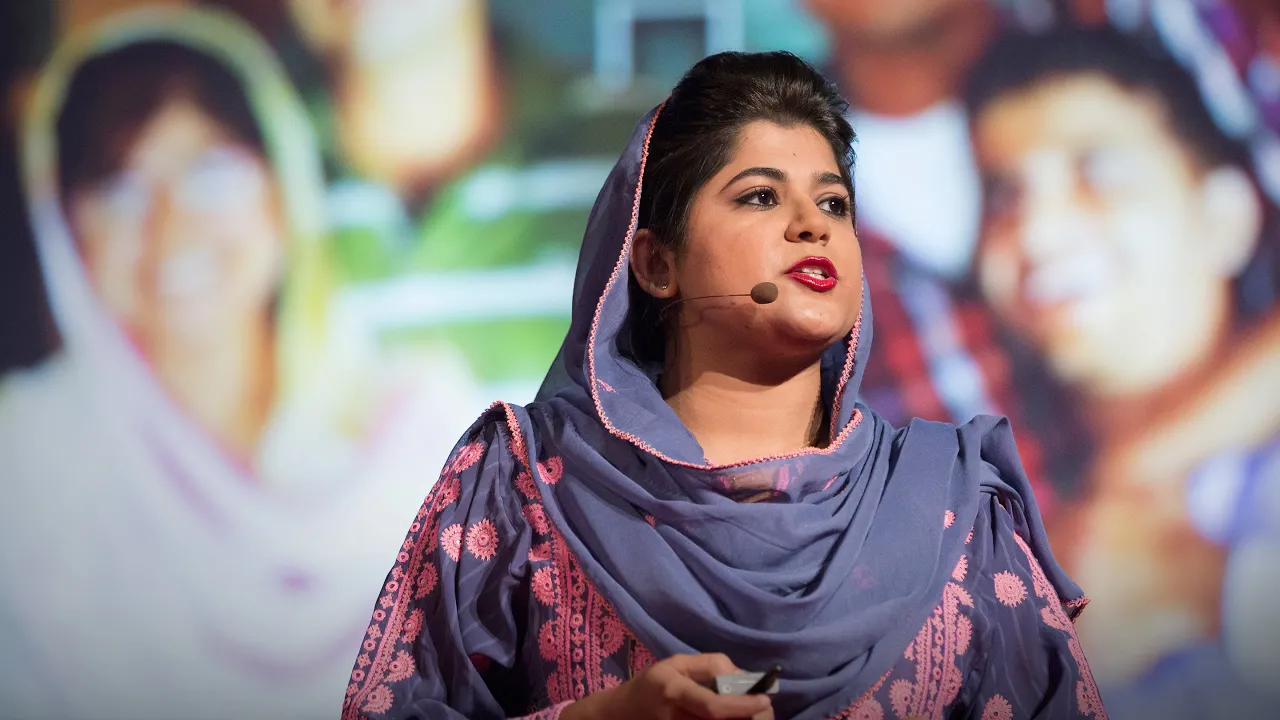
Khalida Brohi: How I work to protect women from honor killings
New Section
The speaker reflects on her life, attempting to pinpoint the beginning of her journey. She shares various significant moments but identifies the true start of her journey in front of a mud house in upper Sindh, Pakistan.
Reflecting on Life's Beginnings
- The speaker contemplates key moments in her life, including stories from her family and community.
- Despite impactful events like honor killings and cultural traditions, she realizes that the true beginning of her journey was when her parents decided to prioritize education by leaving their village.
New Section
The speaker delves into her upbringing within an indigenous tribe in Balochistan, highlighting the challenges of balancing traditional customs with modern education.
Balancing Tradition and Education
- Growing up in the Brahui tribe meant immersing herself in rich cultural practices while navigating the complexities of modern schooling.
- Witnessing societal norms around gender roles and honor killings shaped her perspective and fueled her determination to create change.
New Section
The speaker discusses how she initiated efforts against honor killings, leveraging technology and social media to raise awareness and advocate for change.
Activism Against Honor Killings
- Moved by the prevalence of honor killings, she began writing poetry and utilizing online platforms like Facebook to launch the WAKE UP Campaign.
- Her campaign gained momentum globally, transitioning from online activism to physical rallies aimed at challenging societal norms despite facing opposition from her community.
New Section
The speaker recounts facing backlash and threats due to her activism against honor killings, leading to personal safety concerns and a temporary halt in their actions.
Confronting Opposition
- As opposition grew against their advocacy work, the speaker faced threats and intimidation within her community.
- Safety concerns forced a retreat back to Karachi, prompting reflection on perceived failure despite initial successes with the campaign.
Devastation and Reflection
The speaker reflects on a failed campaign, realizing the faults that led to its failure and the subsequent steps taken to rectify the situation.
Understanding Campaign Failure
- The speaker felt devastated and initially blamed themselves for the campaign's failure.
- Identified two main reasons for the failure: going against people's core values and not involving the women who were supposed to benefit from the campaign.
- Realized that official policies did not always impact tribal and rural communities as expected, highlighting a significant gap between policy intentions and ground realities.
Apology and Cultural Promotion
Details of how an apology was made to the communities, followed by a strategy involving promoting local cultures to make amends.
Apology and Strategy Implementation
- The team apologized to the communities for their past actions.
- Implemented a strategy focusing on promoting three main cultural aspects: language, music, and embroidery.
- Established centers in villages to promote embroidery, educate women about their rights, and empower them economically through enterprise development.
Empowerment Through Education
Describes the positive impact of education on women in villages through embroidery promotion.
Empowering Women Through Education
- Initiated educational programs at centers where women learned about their rights, Islam's stance on gender equality, enterprise development, and life skills.
- Emphasized empowering women to stand up against oppressive customs by educating them about their rights and fostering leadership skills within the community.
Sughar Project Expansion
Expands on how the Sughar project aimed at empowering rural women through education, entrepreneurship opportunities, and leadership development.
Sughar Project Expansion
- Provided six-month training programs covering various skills like traditional embroidery value addition, enterprise development, basic education, life skills, and empowerment training.
Chris Anderson and Khalida Brohi Discussion
In this segment, Chris Anderson engages with Khalida Brohi, acknowledging her remarkable achievements and discussing the scalability of her work in empowering women.
Chris Acknowledges Khalida's Impact
- Chris praises Khalida as a force of nature for achieving so much at a young age.
- He questions the role of Khalida's magnetic personality in the success of empowering a million women and asks about scalability.
Khalida's Role and Vision
- Khalida emphasizes her role in inspiring others and sharing her dream rather than teaching specific methods.
- She mentions plans to expand Sughar to more villages and eventually beyond Pakistan into South Asia.
Khalida's Personal Journey and Challenges
This part delves into Khalida Brohi's personal background, team dynamics, safety concerns, and personal fears related to her work.
Team Dynamics and Background
- Discussion on Khalida's team comprising 18-year-olds, mostly school friends.
- Addressing societal expectations regarding marriage at a young age in Balochistan.
Safety Concerns and Personal Fears
- Khalida shares concerns about safety but highlights a different fear: potential consequences for loved ones if something happens to her.
- Reflecting on escaping arranged marriages, choosing her own path, including getting engaged.
Empowering Women Through Support
The conversation shifts towards ways individuals can support Khalida's initiatives in empowering women through practical involvement or purchasing products.
Supporting Empowerment Efforts
- Discussion on supporting by buying clothes made with embroidery from Balochistan or engaging with the foundation.
Turn any video into a summary like this
YouTube links, meetings, lectures. With transcripts, search, and chat.