How Sure Are Climate Scientists, Really?
Understanding Climate Change and Scientific Uncertainty
The Nature of Scientific Certainty
- Experts express uncertainty in climate change predictions, emphasizing that even small temperature changes can have significant impacts.
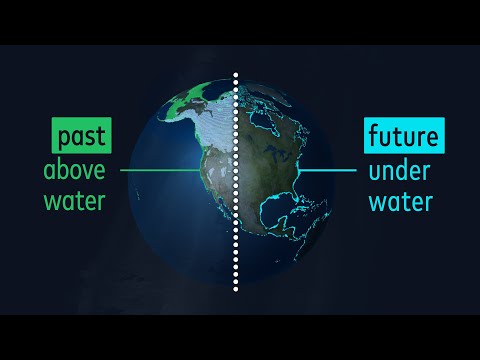
- Historical context shows that during the last ice age, sea levels were much lower, connecting continents and altering geography.
Conflicting Information in Science
- In fields like nutrition, conflicting expert advice has led to public distrust; clarity is often lacking in health studies.
- Many psychological and medical experiments face replication issues due to overstated findings by researchers.
Hard vs. Soft Sciences
- Climate science relies on hard sciences (geology, physics), which are less prone to replication issues compared to soft sciences (psychology).
- Carbon arithmetic illustrates how human activities contribute to CO2 levels; however, uncertainties exist regarding future fossil fuel availability.
Evaluating Scientific Research
- Categorizing research as hard or soft helps assess reliability but does not eliminate uncertainty in scientific findings.
- Journalists must approach scientific reporting with skepticism and a critical eye towards the data presented.
Analyzing Temperature Data
- Ice core samples provide historical temperature estimates; confidence levels are expressed through margins of error.
- Climatologists suggest that margins of error can be misleading; discussions with scientists help clarify true confidence levels.
The Complexity of Climate Models
- Scientists use various models to predict climate behavior based on past data; these models require scrutiny for accuracy.
- Long-term cycles affect Earth's temperature but do not directly correlate with sunlight exposure; complex interactions influence climate change.
Human Impact on Climate Change
- Post-Ice Age developments led to civilization growth, but industrialization significantly increased carbon emissions.
Historical Context of Climate Awareness
- The Enlightenment marked a shift away from authoritative truths toward empirical evidence and scientific inquiry.
Current Challenges in Trusting Science
- Despite advancements, skepticism about human-caused climate change persists due to political influences on public perception.
Future Projections and Uncertainties
- Recent warming trends differ from natural historical changes; current rates are unprecedented given previous climatic cycles.
Addressing Political Maneuvering
- Some argue against immediate action on climate change citing uncertainty; this often reflects political rather than scientific reasoning.
The Role of Public Engagement
- Trusting scientists is essential for societal function, yet individuals should critically engage with scientific claims for better understanding.
Embracing Imagination in Science
- Acknowledging the fallibility of science encourages improvement in methodologies and communication about scientific findings.
Conclusion: Shaping Our Future Through Understanding Uncertainty
Moving Forward with Confidence
- Acknowledging uncertainty allows society to take bold actions towards addressing climate challenges while remaining open-minded about solutions.
Turn any video into a summary like this
YouTube links, meetings, lectures. With transcripts, search, and chat.