Los 9 Misterios de la HISTORIA Que Nadie Puede Explicar
Exploring Historical Mysteries
Introduction to Historical Mysteries
- The episode delves into nine historical mysteries that challenge logic, including lost kings, armies swallowed by deserts, and unreadable scripts.
- It sets the stage for a unique perspective on history, emphasizing events that seem impossible yet occurred.
The Rise of King Sebastián I
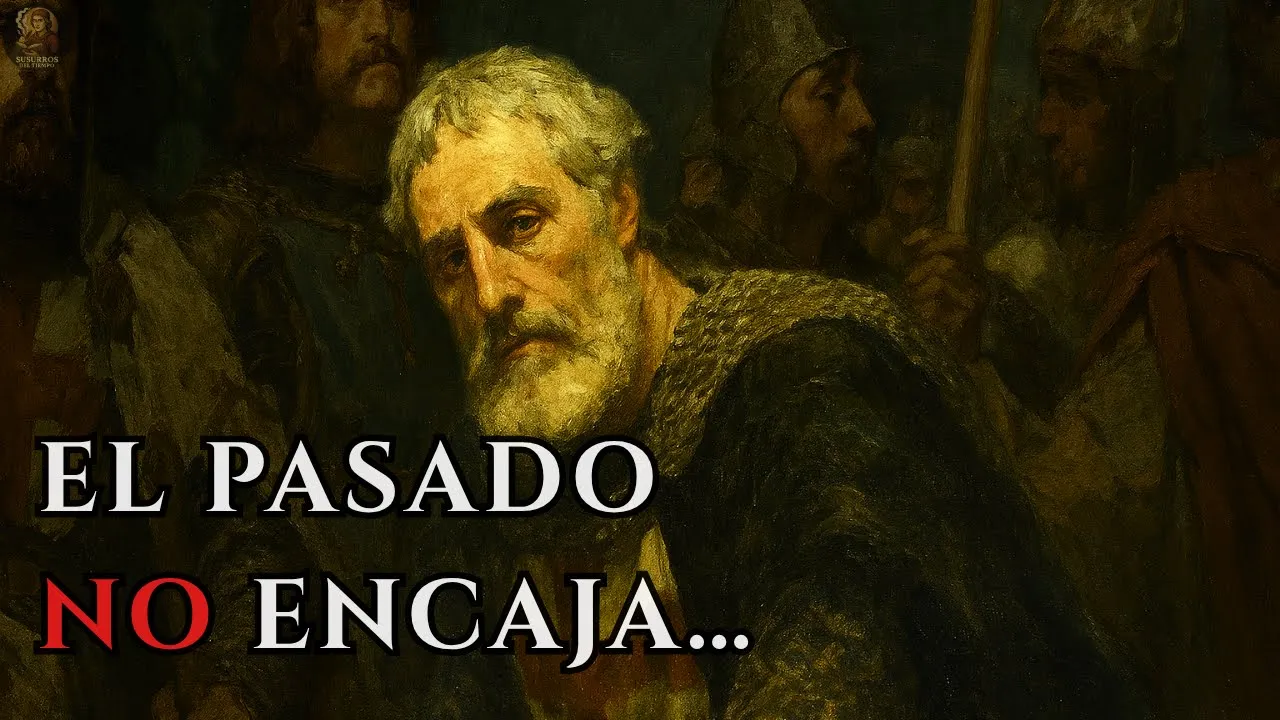
- In the turbulent 10th century, Portugal was led by a child king, Sebastián I, who ascended the throne at just three years old after his grandfather's death.
- Raised by Jesuit tutors with a religious zeal, Sebastián was instilled with a mission beyond governance—he believed he was chosen to restore Christianity's glory and confront Islam.
The Military Campaign in North Africa
- At 24 years old, ignoring veteran advisors' warnings about power limits and warfare realities, Sebastián launched a military campaign in North Africa.
- He aimed not merely for conquest but viewed it as a divine crusade to restore the deposed Sultan Muhamad II against Abd al Malik of the Ottoman Empire.
The Battle of Alcazar Kibir
- In August 1578, Sebastián led an army of 25,000 men into battle but faced overwhelming odds against Abd al Malik’s force of over 60,000 soldiers equipped with modern artillery.
- The initial confidence turned into chaos as the Portuguese forces were quickly overwhelmed; their disorganized retreat resulted in catastrophic losses.
Aftermath and Disappearance of King Sebastián
- Following the disastrous battle where many nobles fell and thousands were captured or killed, King Sebastián vanished amidst the chaos.
The Rise and Fall of the Portuguese Monarchy
The Transition of Power in Portugal
- Following the death of King Sebastian, the throne was provisionally passed to Cardinal Henry, an elderly cleric with no heirs. His reign lasted only two years, leading to a period of tension and eventual crisis for Portugal.
- Upon Cardinal Henry's death in 1580, Philip II of Spain claimed the Portuguese throne not just through lineage but also by military force, invading Portugal and establishing himself as King Philip I.
- This marked the beginning of the Iberian Union, a time when Portugal lost its autonomy and became dominated by Spanish interests, affecting its fleet, colonies, and trade.
The Myth of King Sebastian
- Amidst this turmoil arose a belief that King Sebastian had survived his supposed death. Rumors suggested he was alive and would return to save his people.
- This belief evolved into "Sebastianism," a mystical movement promising his return during Portugal's greatest need. Many viewed him as a national messiah.
- Over decades, several impostors emerged claiming to be Sebastian. One notable figure was a multilingual Spanish baker who maintained his deception for months before being exposed.
The Legacy of Hope
- Despite the exposure of impostors, faith in Sebastian persisted among many Portuguese citizens even as their empire began to crumble under foreign rule.
- Ironically, it was Sebastian's absence rather than his reign that solidified his status as a mythic figure—a symbol of future redemption for Portugal.
Historical Parallels: Cambyses' Lost Army
- The narrative shifts to another historical enigma involving Cambyses II of Persia who led an army into the desert on a mission against the Oracle at Siwa Oasis but never returned.
- Cambyses inherited an expansive empire from Cyrus the Great and sought total domination over Egypt—not just politically but spiritually by confronting its gods.
The Mission Against Siwa Oasis
- Cambyses targeted Siwa Oasis due to its spiritual significance; he aimed to destroy the Oracle temple dedicated to Amun which posed a challenge to his authority.
- Ancient sources suggest various motivations for this attack—either prophetic opposition or intolerance towards any independent spiritual power outside Persian control.
- He dispatched 50,000 soldiers on this sacred mission intending not merely conquest but obliteration of spiritual authority represented by Amun’s temple.
The Disappearance
- No one anticipated that this vast army would vanish without trace while traversing harsh desert conditions toward their objective at Siwa Oasis.
The Mysterious Disappearance of Cambyses' Army
The Journey and Disappearance
- The story recounts the disappearance of Cambyses' army, as narrated by the Greek historian Herodotus, who describes their journey to a known oasis before they ventured into an unmarked desert towards Sigua.
- A colossal sandstorm emerged unexpectedly, described by Herodotus as a living wall of dust and wind, likened to a divine response from the god Amón against Cambises’ challenge.
- The storm was so powerful that it blinded and suffocated the soldiers, leading to their complete annihilation without leaving any trace behind—no weapons or remains were ever found.
Historical Interpretations
- This event has been interpreted variously over centuries: as divine justice against human arrogance or nature's dominance over mankind. However, modern historians find it perplexing due to the lack of physical evidence supporting such a large-scale disappearance.
- Doubts arose regarding whether an entire army could vanish without leaving remnants like rusted helmets or broken carts. This skepticism challenges Herodotus' dramatic storytelling style.
Modern Investigations
- Archaeologists and adventurers have sought answers for decades; in the 1930s, explorers searched ancient trade routes but found only endless dunes.
- Technological advancements in the 1980s allowed for aerial reconnaissance and rudimentary ground radar searches, yet these efforts yielded no significant discoveries about the lost army.
Ongoing Mysteries
- Recent satellite imagery has scanned for anomalies in the desert landscape but returned empty-handed. While some bones and metal objects have been discovered, none are substantial enough to confirm an entire army's presence.
- The absence of conclusive evidence keeps this mystery alive; what remains unfound fuels myths more potent than historical facts.
Theories Surrounding the Disappearance
- Various theories suggest that perhaps the poorly equipped army got lost in the Sahara or died slowly from dehydration under harsh conditions.
- Some speculate they were ambushed by Egyptian rebels with Herodotus’ storm narrative serving as a cover-up for military failure. Others question if Cambyses even sent such a large force on such a perilous mission.
- Despite extensive speculation over centuries, no definitive proof supports any theory regarding their fate; all that is certain is that thousands vanished at a king’s command into an unforgiving desert.
Conclusion: Secrets Buried Beneath Sand
- Ultimately, this tale illustrates how history can be obscured by time and nature; not all secrets are meant to be uncovered.
Rongorongo: The Enigmatic Script of Rapa Nui
Introduction to Rapa Nui
- Rapa Nui, known globally as Easter Island, is one of the most isolated inhabited places on Earth, located over 3000 km from any continental coast.
- The island is famous for its mysterious stone statues called moais, which have stood watch over the island for centuries.
The Mystery of Rongorongo
- Behind the moais lies a deeper mystery: Rongorongo, an ancient script that remains undeciphered and is considered one of humanity's greatest linguistic enigmas.
- This unique writing system emerged independently in isolation without known influences from other cultures or writing systems.
Discovery and Historical Context
- The first recorded mention of Rongorongo occurred in the 19th century when French missionary Eugen Eyraud discovered wooden tablets with strange symbols during his visit in 1864.
- Eyraud noted that these symbols were not mere decorations but appeared to convey structured messages through precise engravings.
Cultural Impact and Decline
- Elders indicated that some ancestors could read these glyphs, suggesting a lost tradition where wise men interpreted them as words.
- By 1864, however, many who understood Rongorongo had vanished due to slavery, disease brought by Europeans, and systematic efforts by Christian missions to eradicate local beliefs.
Loss of Knowledge
- Traditional knowledge was abruptly extinguished; wise elders were killed or silenced. Those remaining ceased teaching out of fear or because there were no students left.
- When linguists began studying Rongorongo seriously decades later, it was too late—no living context remained to aid interpretation.
Current Status and Challenges
- Today only about two dozen authentic pieces exist across various museums worldwide. They remain silent artifacts awaiting understanding.
- Despite extensive research using classical studies and advanced technologies like AI, Rongorongo has yet to be deciphered due to a lack of bilingual texts or living speakers.
Conclusion on Uniqueness
Rongorongo: The Enigma of Easter Island's Script
The Isolation of Rongorongo
- Rongorongo is unique due to its complete isolation from other literate civilizations, making it a rare phenomenon in human history.
- There are no bilingual inscriptions like the Rosetta Stone for Egyptian hieroglyphs, complicating the deciphering process.
- Experts have differing views on whether Rongorongo is a true writing system or merely a sophisticated mnemonic device for oral traditions.
The Nature of the Writing System
- Some scholars argue that Rongorongo represents an actual phonetic or logographic writing system, potentially akin to Egyptian hieroglyphics and other ancient scripts.
- If proven as a genuine writing system, it would indicate that Rapanui people developed written language independently in total isolation.
Implications of Discovering Rongorongo
- Discovering that Rapanui had their own writing system would challenge existing models about cultural evolution and the development of symbolic systems.
- It would also question the notion that writing emerged solely in interconnected civilizations through trade or conquest.
Early Research and Findings
- In 1958, Thomas Bartel identified potential lunar calendar sequences within one of the tablets, linking some symbols to astronomical observations.
- Despite this finding, most hypotheses remain speculative due to limited surviving texts (approximately 15,000 glyphs), hindering grammatical rule establishment.
Challenges in Decipherment
- The lack of external keys and verifiable interpretations makes understanding Rongorongo exceedingly difficult; it remains an enigma trapped in time.
- Recent technological advancements using AI have detected patterns but translating these into meaningful understanding requires insight into the original users' worldview.
Cultural Significance and Legacy
- Rongorongo serves as a poignant reminder of how easily knowledge can be lost when cultural transmission ceases; even one generation without teaching can lead to disappearance.
Moonate People and the Enigma of Socrates
The Legend of the Moonate People
- The Moonate People are described as peculiar beings living in the Appalachian Mountains, known for their pale skin and sensitivity to sunlight. They only emerged at night and resided underground.
- Upon encountering the Moonate, the Cherokee did not coexist peacefully; a conflict arose leading to an attack during a full moon when visibility was low for the Moonate.
- After their defeat, theories about their fate vary: some believe they were exterminated, while others think they fled or retreated deeper underground.
- This legend is not unique; various Indigenous cultures in Eastern America have similar tales of light-sensitive subterranean beings who spoke strange languages and built stone structures before disappearing.
- The story raises questions about its origins—whether it is mythological fiction, distorted memories of ancient migrations, or remnants of early contact with foreign peoples.
The Historical Debate Surrounding Socrates
- Socrates is often regarded as a pivotal figure in Western philosophy but his existence remains contentious due to lack of written records attributed directly to him.
- He is celebrated for promoting critical thinking through dialogue and questioning rather than relying on divine authority or tradition.
- A significant debate exists regarding whether Socrates was a real person or merely a literary construct created by others to express philosophical ideas more effectively.
- Most knowledge about Socrates comes from three main sources: Plato (who portrays him as an ideal philosopher), Xenophon (offering a practical perspective), and Aristophanes (depicting him humorously).
- These contrasting portrayals raise doubts about how one individual could inspire such diverse representations if he indeed had a substantial public presence.
Implications of Socratic Existence
- Some scholars propose that what we know as "Socrates" may be largely shaped by Plato's narrative techniques rather than historical fact, suggesting that many teachings attributed to him might actually originate from Plato himself.
Philosophical Constructs and Historical Figures
The Nature of Socrates: Myth or Reality?
- Socrates is portrayed as a philosophical construct, created by Plato to embody wisdom, truth, and virtue without arrogance or dogma.
- There is speculation about a historical figure resembling Socrates who engaged in public debates but was transformed into a symbol rather than remaining an individual.
- The implications of Socrates' existence challenge the foundations of Western philosophy; if he were fictional, it questions the authenticity of philosophical traditions built upon his teachings.
- This raises broader questions about cultural pillars that may be based on symbolic narratives rather than factual history, suggesting that revered figures might be literary constructs.
- Despite doubts regarding his historicity, Socrates has inspired generations as a universal symbol of questioning authority and challenging established ideas.
The Legacy of Socratic Thought
- According to tradition, Socrates faced trial for corrupting youth and impiety; he accepted his fate with stoicism, raising questions about whether this narrative is historical fact or dramatized fiction.
- The uncertainty surrounding Socrates compels us to reconsider how we view historical figures—are they real individuals or carefully crafted symbols?
- This inquiry extends beyond ancient history to modern mysteries that remain unresolved despite evidence; it highlights the complexity of distinguishing between myth and reality.
The Legend of Manfred von Richthofen
Aerial Warfare and Mythology
- Manfred von Richthofen, known as the "Red Baron," emerged during World War I as a legendary pilot whose life became intertwined with myth despite being grounded in reality.
- His noble lineage and military upbringing contributed to his formidable presence both on land and in the air; he represented an idealized warrior ethos amidst the horrors of modern warfare.
- Von Richthofen's distinctive red Fokker triplane served not just as a weapon but also as a bold statement against conventional tactics—he sought recognition rather than anonymity in battle.
The Enigma Surrounding His Death
- With over 80 confirmed aerial victories, von Richthofen's tactical prowess made him both a leader among allies and an unstoppable threat to enemies; however, his death remains shrouded in mystery.
The Mysterious Death of the Red Baron
The Final Flight of Manfred von Richthofen
- Manfred von Richthofen, known as the Red Baron, made a bold decision to pursue an enemy aircraft across the front lines into hostile territory, showcasing his aggressive flying style.
- As he approached his target, he flew dangerously low, exposing himself to anti-aircraft fire and ground troops while relying on his instinctive flying skills.
- Unexpectedly, the Red Baron's plane began a controlled descent and landed in a field near Bos Susom; he was found dead in his cockpit with a single fatal wound.
The Fatal Shot
- The cause of death was identified as a precise bullet that entered from the right side and exited through the left, damaging vital organs.
- Questions arose about who fired the shot that killed him; speculation included whether it was an enemy pilot or ground fire.
Controversy Surrounding His Death
- Captain Roy Brown was credited by Allied propaganda for shooting down von Richthofen but doubts emerged regarding this claim based on medical and ballistic evidence.
- Investigations revealed that the bullet's trajectory indicated it likely came from ground forces rather than another aircraft.
Theories and Speculations
- Various theories suggested different potential shooters: a rifleman or machine gunner among many soldiers firing at the low-flying plane.
- Identifying one shooter proved nearly impossible due to chaotic combat conditions; however, names like Australian soldier Cedric Popkin emerged as possible candidates.
Legacy and Respect After Death
- Despite his controversial end, von Richthofen received respect from British soldiers who honored him with military funeral rites after discovering his identity.
- His legacy remains shrouded in mystery; even today, no one can definitively state who delivered the fatal shot that ended his life.
Transition to Another Mystery
Tesla: A Visionary Ahead of His Time
The Fascination with Nikola Tesla
- Tesla is described as a visionary and pioneer of modern electricity, whose ideas seemed more suited to the 21st century than his own time.
- He envisioned technologies like wireless transmission, automation, and free energy for all, aiming for a world where knowledge and resources were communal rather than proprietary.
The War of Currents
- In the late 19th century, Tesla found himself in an "electric war" against Thomas Edison, who promoted direct current (DC), while Tesla advocated for alternating current (AC) due to its efficiency and lower energy loss.
- His partnership with George Westinghouse led to AC becoming the standard power system despite Tesla's disinterest in patents or profits; he viewed money merely as a means to an end.
The Devastating Fire
- On March 13, 1895, a catastrophic fire destroyed Tesla's laboratory in Manhattan, erasing decades of experimental work including unique circuits and personal notebooks filled with unshared knowledge.
- Witnesses reported that upon seeing the ruins, Tesla was left speechless and devastated by the loss not just of material possessions but also of groundbreaking ideas that may never be realized.
Speculations on Sabotage
- The cause of the fire remains unclear; it could have been an electrical accident or something more sinister given Tesla's enemies who feared his vision threatened their economic interests.
- Some speculate that powerful figures like JP Morgan might have seen him as a risk worth neutralizing due to his revolutionary ideas about wireless energy transmission.
A Changed Man After Loss
- Following the fire, Tesla attempted to rebuild but became increasingly isolated and enigmatic; his projects grew more ambitious yet harder for others to comprehend. He spoke of concepts like "energy from space" and communication with Mars.
The Enigma of the Bosnian Pyramids
The Lost Legacy of a Genius
- The narrative begins with a reflection on the potential loss of significant knowledge due to a fire in 1895, which destroyed not only machines but possibly part of humanity's future.
- In the Balkans, colossal structures covered in vegetation emerge, challenging established historical narratives about ancient Europe.
Discovery of the Bosnian Pyramids
- In the Bisoco Valley, Bosnia and Herzegovina, hills that seemed ordinary for centuries are revealed to potentially conceal more than just earth and stone.
- Semir Osmanagich, a Bosnian-American entrepreneur fascinated by ancient civilizations, discovers these hills in 2005 and posits they are not natural formations but pyramids.
Osmanagich's Claims
- Osmanagich notes the symmetrical shape and precise orientation of one hill (Bisochica), claiming it is an artificial structure—specifically, a pyramid larger than Giza’s Great Pyramid.
- He identifies additional hills as part of a complex pyramid system including names like "Pyramid of the Moon" and "Pyramid of Love," suggesting advanced astronomical design.
Media Frenzy and Excavations
- His claims spark media interest; excavations reveal megalithic blocks and tunnels dubbed Rabne that extend deep underground.
- Anomalies such as electromagnetic emissions from the Pyramid of the Sun are reported, further fueling public intrigue.
Scientific Skepticism
- Despite growing public enthusiasm, scientists reject Osmanagich's interpretations. They argue that these formations are natural geological processes rather than man-made structures.
- Critics label his project as pseudoscience, warning against potential damage to genuine archaeological sites while dismissing claims about lost civilizations.
Ongoing Controversy
The Controversy of the Bosnian Pyramids
Historical and Archaeological Concerns
- The actions of Osmanagich's team are criticized for risking valuable historical heritage, including medieval fortresses and ancient tombs that have been documented by academic studies. Critics argue that these activities damage an archaeologically significant area in pursuit of unfounded fantasies.
- Despite criticism, Osmanagich continues to fund the project through private donations, ticket sales, and volunteer support from around the world. This has led to ongoing growth in excavations, guided tours, energy measurements, and pyramid healing events.
Blending Science with Spirituality
- Osmanagich claims that the site is the largest active archaeological site globally and asserts that only a small fraction of what lies beneath the hills has been explored. The location has become a nexus where science, spirituality, tourism, and mystery converge, generating both fascination and controversy.
- Critics view this phenomenon as a collective illusion fueled by faith, marketing strategies, and misinformation aimed at an audience willing to believe in improbable narratives. Conversely, supporters see it as evidence that official history is incomplete and that academic institutions fear discoveries that could challenge established beliefs.
Open Questions About Civilization Origins
- For skeptics and curious travelers alike, the Bosnian pyramids present unresolved questions about their nature—if they are not natural formations, then existing knowledge about European civilization origins may be flawed. The precise geometry of these hills raises further inquiries regarding their energy emissions and why interest intensifies over time rather than diminishes.
The Assassination of Olof Palme: A Political Mystery
Context of the Assassination
- Transitioning from ancient mysteries to modern enigmas: another unresolved story involves the brutal assassination of Swedish Prime Minister Olof Palme on February 28th, 1986—a shocking event witnessed publicly without any immediate suspects identified. This incident marked a pivotal moment in Sweden's political landscape amidst its reputation for stability and low crime rates.
Details Surrounding Palme’s Murder
- On a seemingly ordinary winter night in Stockholm while walking home with his wife after watching a movie without security detail or protection—Palme was shot twice by an assailant who approached silently from behind at 11:21 PM; he died before reaching the hospital despite immediate medical attention being summoned.
- The murder shocked Sweden into confronting a new reality where even its democratic leaders were vulnerable to violence; it was unprecedented within modern Swedish history as no high-profile political assassination had occurred prior to this event. The global community watched closely as questions arose about motives behind such an act in a typically peaceful nation.
Investigation Challenges
- Following Palme's death came one of Europe’s most chaotic investigations; initial confusion led to poor preservation of crime scene evidence along with vague descriptions complicating suspect identification efforts—resulting in numerous conflicting leads rather than clarity on what transpired during those critical moments post-assassination.
- As rumors spread alongside media pressure intensified—the police faced overwhelming amounts of information leading them down unproductive investigative paths while public anxiety grew due to lack of resolution surrounding this violent act against democracy itself within Sweden’s borders.
The Unsolved Murder of Olof Palme
Arrest and Initial Trial
- In 1989, three years after the murder of Olof Palme, Christ Peterson was arrested and tried for the crime. He had a history of drug use and violence.
- Lisbeth Palme identified Peterson as the attacker; however, this identification was deemed unreliable due to poor conditions during the identification process.
- The lack of material evidence, such as a weapon or clear motive, led to Peterson's conviction being overturned by the Court of Appeal.
Theories and Speculations
- Over time, various theories emerged regarding Palme's assassination. Some speculated involvement from far-right groups who viewed him as a traitor due to his progressive stance.
- Other theories implicated foreign intelligence agencies like the CIA or KGB because of Palme's criticisms towards U.S. foreign policy and his ambivalent role in the Cold War.
Institutional Failure and Public Sentiment
- As years passed without resolution, public trust eroded; younger generations recognized Palme more for his assassination than his political legacy.
- The Swedish model of openness and trust was irrevocably damaged following that night in Stockholm.
Closure Attempt in 2020
- In 2020, over three decades later, Swedish prosecutors officially closed the case, naming graphic designer Steve Engstrom as the likely perpetrator despite circumstantial evidence.
- Engstrom had been near the crime scene but had never been formally suspected; he died by suicide in 2000.
Lingering Mysteries
- Despite official closure claims, many remained unconvinced due to ongoing circumstantial nature of evidence—no weapon or direct witnesses existed.
- The unresolved case symbolizes broader institutional failures within Sweden and continues to haunt collective memory.
The Nature of Lost Languages
Writing as a Historical Puzzle
- Human writing has left behind traces across civilizations—from stone tablets to wooden boards—yet not all writings have survived comprehension through time.
Enigmatic Scripts
- Some ancient scripts remain visible yet impossible to decipher; they carry an air of mystery that suggests lost knowledge waiting for rediscovery.
Fragility of Knowledge
- This discussion highlights how even well-preserved words can become illegible over time. Human understanding is fragile; what we think we secure may one day be unsolvable puzzles.
Warning Against Complacency
The Enigma of Ancient Scripts
The Mysterious Disk from Crete
- A small clay disk from Crete, dated to 1908, features concentric spirals of symbols stamped with individual seals.
- The disk contains stylized figures representing human heads, animals, tools, feathers, and plants; its purpose remains uncertain.
- Various theories about the disk's origin include religious messages, ceremonial poems, coded prayers, games, lists, or hymns.
Indus Valley Script
- Similar to the Cretan disk is the writing system of the Indus Valley civilization (2600 - 1900 BCE), found on steatite seals and pottery fragments.
- This advanced urban culture had planned cities and sophisticated architecture but left behind an undeciphered script without a Rosetta Stone equivalent.
Linear A: An Unreadable Language
- Linear A is a Minoan script predating classical Greek used in Crete during the Bronze Age; it appears on clay tablets and various artifacts.
- Despite evidence of administrative and religious use, no translations exist for Linear A; each symbol remains silent without a key.
The Voynich Manuscript: An Ongoing Mystery
- The Voynich Manuscript is a perplexing book filled with illustrations and written in an unknown language that defies linguistic structure.
- Its content includes bizarre plants and unrecognizable maps; attempts at translation by experts have failed completely.
Cultural Implications of Lost Languages
- Some theorize that the manuscript could be either a medieval hoax or genuine communication from an isolated genius.
- When languages die out, they take unique worldviews with them; lost scripts symbolize cultural disconnection and forgotten histories.
The Importance of Listening to History
- Ancient writings serve as reminders of humanity's desire to leave a mark while fearing oblivion; they await discovery by future generations.