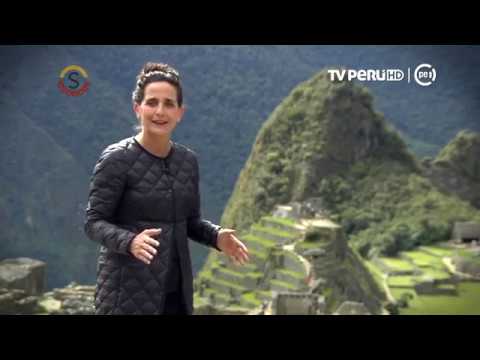
Sucedió en el Perú (TV Perú) - El Tahuantinsuyo - 04/06/2018
[Música] - Introduction to Cusco and Inca Empire
The host expresses excitement about reaching Cusco for the first time, highlighting the significance of the location as the heart of the Inca Empire.
Exploring Tahuantinsuyo
- Host introduces Machu Picchu as a fitting place to discuss Tahuantinsuyo, emphasizing gratitude for sharing Peru's history.
- Discussion on how recent findings suggest a continuity between Wari and Inca cultures.
Origins of the Inca Empire
- Incas arrived in Cusco in the 12th century, with significant expansion during Pachacutec and Tupac Yupanqui's rule in the 15th century.
- Nobility crafted myths like Manco Capac's legend to justify their dominance over other peoples.
Manco Capac and Inca Origins
- Legend of Manco Capac and Mama Ocllo emerging from Lake Titicaca signifies a civilizing origin story.
- Interpretation of Incan myths reveals they migrated to Cusco to establish a civilization rather than being native to the region.
The Role of Mamá Huaco - Powerful Female Figure in Incan History
Delving into Mamá Huaco's significance as a powerful female figure shaping early Incan history.
Mamá Huaco: Warrior and Matriarch
- Mamá Huaco portrayed as a powerful woman with mystical abilities, instrumental in establishing lineage and crowning rulers.
- Debate on Mamá Huaco's role as either wife of Tupac Yupanqui or an independent figure linked to Chincha origins.
Expansion of Tahuantinsuyo - From Lordship to Empire
Tracing the evolution of the Incas from a local lordship to a vast empire spanning modern-day Peru, Bolivia, and Ecuador.
Rise of Tahuantinsuyo
The Inca Empire: Social Organization and Power Structures
This section delves into the social organization and power structures of the Inca Empire, focusing on key elements such as language, societal divisions, noble classes, and gender roles.
Inca Expansion and Language Standardization
- The Inca Empire expanded after defeating the Chancas, a warrior people from Apurímac and Ayacucho. They established Quechua or Runa Simi as the sole language to unify their dominion.
- The empire was divided into four regions - Chinchaysuyo, Kollasuyo, Antisuyo, and Contisuyo - with Cusco as the capital. Dualities like Hanan (upper) and Hurin (lower) were significant in societal structure.
Nobility and Social Hierarchy
- The Inca society valued duality and tripartition for complementarity. Cusco was divided into Hanan Saya and Hurin Saya based on this principle. The ruler was considered sacred, adorned with special attire symbolizing nobility.
- The elite Cusqueña society comprised two noble groups: royal bloodline nobles (Placas Reales) and privileged nobles rewarded by the Inca for valuable services to the state.
Social Structure Evolution
- Initially simple, Incan social hierarchy evolved over time. Sixteen panacas formed the highest echelon of authority in Cusco; newer Incas held more prestige than older ones. Custodians oversaw city maintenance while elite Incas resided in palaces like Yachay Wasi (House of Wisdom).
- Young nobles underwent physical prowess tests during puberty rites called Huarachi. Panacas functioned as political factions forming alliances within the empire's administrative units known as Curacas Casicos divided into upper (Hanan) and lower (Hurin) halves governed by dual leadership principles.
Gender Roles and Economic Contributions in the Inca Society
This section explores gender dynamics, economic roles, marriage customs, labor classifications within the Incan society.
Gender Equality & Economic Contributions
- Women played crucial roles in Incan society; Collas had equal importance to Incas with significant influence at power centers like Cusco organizing agricultural calendars & rituals.
- Women represented various regions at power centers like Cusco where girls organized agricultural & ritual calendars indicating their pivotal role in societal organization.
Labor Classifications & Marriage Customs
- Hatun Runa denoted commoners who were productive forces engaged in agriculture, fishing, construction work; adulthood began with marriage signifying economic responsibilities towards state.
- Mitimaes were sent to other regions for state duties maintaining ties with their original communities unlike Yanaconas who served both state & Sun God; Piñas were war captives occupying lowest social strata.
Women's Role in Textile Workshops: A Closer Look
This segment sheds light on women's involvement in textile workshops within important locations like Casa de las Escogidas.
Textile Workshops & Women Empowerment
- Casa de las Escogidas wasn't a convent but a textile workshop where chosen women worked under good conditions receiving accommodation, food & even jewelry showcasing empowerment through specialized tasks.
Power Dynamics in the Inca Empire
This section discusses the power dynamics within the Inca Empire, focusing on female power structures, local governance, and economic systems.
Female Power Structures
- Women held significant power in local governments and were responsible for local administration along the Qhapaq Ñan.
- Different ecological spaces were utilized by various societies for agricultural activities due to the challenging geography of the Andes.
Reciprocity and Economic Systems
- Reciprocity was a fundamental principle in Incan economy, ensuring mutual aid for family reproduction and community sustainability.
- Establishing kinship ties was crucial for forming alliances, especially during periods of expansion under leaders like Inca Pachacútec.
State Functioning and Exchanges
- The state required surplus food and goods to maintain reciprocity with local leaders, emphasizing the importance of exchanges and alliances.
- The Inca leader solidified alliances through marriage with daughters or sisters of local chiefs, strengthening kinship bonds for political stability.
Economic Organization in the Inca Empire
This section delves into the economic organization of the Inca Empire, highlighting labor systems, communal work practices, and resource distribution.
Labor Systems
- Three main forms of labor organization existed: mit'a (mandatory public service), minka (collective work), and ayni (reciprocal labor).
- Tribute collection from able-bodied individuals supported state functions without resorting to slavery or capitalism.
Communal Work Practices
- The economy operated without currency or commercial trade but relied on reciprocal contributions through mit'a and ayni.
- Collective efforts like minka ensured community well-being by facilitating tasks such as bridge construction and water distribution fairly.
Agricultural Focus
- Social events like house construction or harvest celebrations had festive elements embedded within them, reflecting cultural values around communal work.
New Section
The scarcity of fertile land led to the construction of terraces in ancient civilizations not as a leisure activity but out of necessity due to limited agricultural space.
Importance of Terraces in Ancient Civilizations
- Fertile land was scarce, leading to the construction of terraces for cultivation rather than recreational purposes.
- In Cusco and other administrative centers, grand structures like temples and palaces were built to accommodate a growing state bureaucracy.
- The city of Cusco, designed by Inca Pachacutec, featured trapezoidal plazas for social and religious activities.
- Significant buildings with religious and organizational purposes were located around the plaza, including the circular structure known as "El Alumno."
- Elaborately carved stone structures like Koricancha showcased meticulous craftsmanship in ancient architecture.
New Section
The Koricancha temple served as a central religious hub within the Inca Empire, featuring an intricate system of imaginary lines organizing surrounding sacred sites.
Significance of Koricancha Temple
- Koricancha was the main religious center in the Inca Empire with a system of imaginary lines radiating from it to align sacred sites.
- Key state officials like Inspector Oviedo played crucial roles alongside unique figures such as "El Tuco y Rico," indicating advanced administrative structures.
- Inca rulers adopted not only artistic aspects but also agricultural and construction techniques from predecessors like the Wari Empire.
New Section
The Incas inherited advanced infrastructure such as drainage systems from previous civilizations, showcasing continuity and adaptation over time.
Legacy and Adaptation in Incan Civilization
- Evidence suggests that Incas inherited advanced systems like drainage from predecessors like the Wari Empire.
- Despite challenging geography, the Inca Empire established an extensive network of roads with bridges, tambos (rest stops), and storage facilities for efficient communication and transportation.
New Section
The strategic road network implemented by the Incas facilitated political organization centered around Cusco while connecting diverse regions within their empire.
Strategic Road Network Implementation
- The road network was not an invention but a territorial organization strategy spanning from Tahuantinsuyo to Huari through collaborative efforts across Andean populations.
New Section
Politically centralized around Cusco, the Inca Empire utilized tambos as key logistical hubs accommodating military forces, officials, and messengers for effective governance.
Political Centralization through Tambos
Inca Architecture and Civilization
The discussion delves into the architectural characteristics of the Inca civilization, focusing on their simplicity, solidity, symmetry, and monumental structures. It also touches upon the assimilation of experiences from other cultures and the mysteries surrounding key sites like Machu Picchu.
Inca Architectural Techniques
- The transportation of large stone blocks involved using ramps with a slope not exceeding 10 degrees, likely aided by logs and human labor.
- Inca walls were built with trapezoidal profiles for seismic resistance; wider at the base and narrowing towards the top.
Machu Picchu: Administrative and Religious Center
- Machu Picchu was likely an administrative, political, and religious center known only to Inca rulers due to its strategic location in a high, rugged area.
- It served as a royal retreat, defense post during invasions, featuring terraces, irrigation systems, workshops for self-sufficiency.
Ollantaytambo: Architectural Marvel
- Ollantaytambo showcases remarkable military architecture with massive walls constructed using huge blocks.
- The site served as a religious, agricultural, and military center in the Sacred Valley of the Incas.
Artistic Achievements of the Incas
This segment explores Inca expertise in ceramics, metalwork, textiles while acknowledging their cultural exchange with Chimú artisans. It also highlights significant deities within Inca cosmology.
Artistic Endeavors
- While excelling in pottery, metalwork, and textiles like Chimú artisans' influence on Cusco's artistry is evident.
Deities in Inca Cosmology
- Major deities in Tahuantinsuyo included Sun (Inti), Water (Yacumama), Earth (Pachamama), Moon (Quilla), with Vilac as chief priest of Inti.
Social Structure and Governance in Tahuantinsuyo
This part sheds light on social hierarchy within Incan society focusing on power dynamics between rulers and noble families alongside religious practices involving mummified ancestors.
Power Dynamics
- Noble families held significant land associated with mummified ancestors leading to power struggles against Huáscar's centralization efforts.
Religious Practices
- Mummified ancestors gained immense influence challenging ruling powers prompting Huáscar's bid to consolidate authority under the reigning monarch.
Legacy of Tahuantinsuyo
Reflecting on Tahuantinsuyo's significance as Peru's golden age despite imperfections dispels myths about idealized societies or flawless rulership emphasizing organizational prowess.
Organizational Legacy