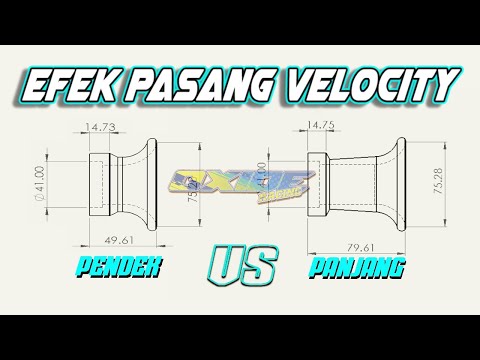
Testing Velocity panjang dan pendek | Eksperimen
Testing Velocity Components for Motor Performance
Introduction to the Experiment
- The video introduces a test comparing two types of velocity components: one long and one short, made from ABS material via 3D printing to save costs compared to aluminum.
- The purpose is to compare performance differences between these two designs on a motorcycle already equipped with an aluminum component.
Preparation for Testing
- A motorcycle is borrowed for testing, and the ECU (Engine Control Unit) will be set up before running comparisons between the two velocity components.
- Measurements indicate that the long component measures approximately 8 cm while the short one is around 5 cm in length. Both have similar internal dimensions despite their length difference.
Initial Tuning Results
- After tuning, maximum power output reaches 11 HP, with an air-fuel ratio (AFR) stabilized at around 13.2, ensuring engine safety during tests.
- The initial run without any velocity component shows stable results with power readings close to 11.6 HP and speeds reaching about 101 KM/h on the dynamometer (dno).
Running Tests with Velocity Components
First Test with Long Velocity Component
- The first test using the long velocity component results in a slight increase in horsepower by approximately 0.5 HP, peaking at around 12 HP after some heating of the engine.
Second Test with Short Velocity Component
- Following tests are conducted using the short velocity component; initial runs show it achieving a peak horsepower of about 12 HP as well, indicating competitive performance against its longer counterpart.
Comparative Analysis of Results
Summary of Findings
- Maximum horsepower recorded without any velocity component was at 11.6 HP; whereas, using the long and short components yielded peaks of 12.1 HP and 12 HP respectively, showing significant improvements over no component usage.
Graphical Representation Insights
- Graphical data indicates that RPM behavior varies significantly between both components; lower RPM ranges favor shorter components while higher RPM ranges benefit from longer ones due to weight distribution effects on roller setups used in motorsports applications.
Conclusion on Component Selection
Recommendations Based on Performance Data
- For riders preferring low-end torque or acceleration characteristics, shorter components may be more suitable when paired with heavier rollers; conversely, lighter rollers might work better with longer components for high-RPM performance needs.
Final Thoughts
- Overall findings suggest that user preferences regarding riding style should dictate which type of velocity component they choose—balancing between acceleration needs and top-speed capabilities based on individual setups and riding habits is crucial for optimal performance outcomes in motorized vehicles like scooters or motorcycles.