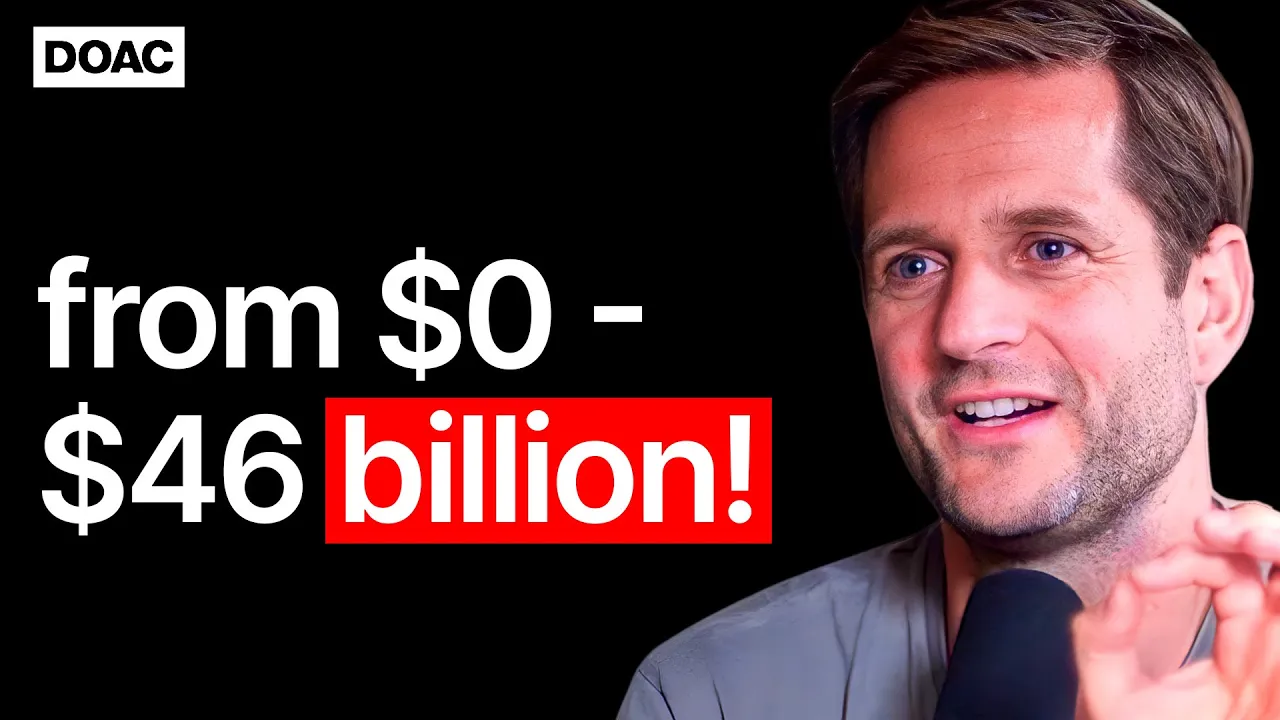
Klarna Founder: From $0 to $46 Billion: Sebastian Siemiatkowski | E98
Introduction and Background
In this section, Sebastian Shamiatkowski, the CEO and founder of a highly valued fintech company in Europe, shares his background and discusses the challenges he faced as an immigrant.
Sebastian's Humble Beginnings
- Sebastian comes from humble beginnings and did not have a stable household or privileged upbringing.
- His parents were immigrants from Poland who moved to Sweden for a better future.
- They struggled to integrate into Swedish society due to language barriers and biases against people with foreign backgrounds.
- Sebastian's parents were unable to fully live up to their potential academically and professionally.
- Growing up among Swedish friends with better economic standards, Sebastian longed for what they had.
Childhood Influences
In this section, Stephen Bartlett explores how childhood experiences shape individuals' adult foundations. Sebastian reflects on his early years as an immigrant kid and the drive it created within him.
The Impact of Immigrant Background
- As an immigrant kid with parents who couldn't fully realize their potential, Sebastian felt a sense of unfairness.
- He believes that growing up in such circumstances creates a drive to fix the perceived injustice.
- Research suggests that many successful companies in Silicon Valley are founded by individuals from immigrant backgrounds.
Challenges Faced by Immigrants
This section delves deeper into the challenges faced by immigrants like Sebastian's parents when trying to integrate into a new country.
Language Barriers and Biases
- Integrating into Swedish society was difficult due to language barriers at that time.
- People with foreign-sounding names faced biases when seeking employment opportunities.
- Sebastian's parents struggled financially, with his mother retiring early and his father taking on various jobs, including driving a cab.
Drive for Change
Sebastian discusses how his parents' sacrifices and his own experiences fueled his determination to create something different.
Feeling the Unfairness
- Sebastian's parents sacrificed their lives and couldn't fully achieve their potential.
- Growing up with friends who had better economic standards intensified his desire for a different life.
- He believes that this combination of intellectual capacity, drive, and a sense of unfairness motivates individuals to make a change.
The transcript provided does not cover the entire video.
Lack of Understanding and Emotional Impact
The speaker discusses the lack of understanding society has towards individuals who have experienced significant shifts in their lives, such as immigrating to a new country. This lack of understanding can impact one's ability to pursue their goals and aspirations.
Challenges Faced by Immigrants
- Immigrants often face difficulties in adapting to a new society, which is underestimated by others.
- The emotional aspect of leaving one's home and the sacrifices made by parents for their children's future are not fully recognized.
- The speaker shares their personal experience as an immigrant and feeling different from others due to cultural and socioeconomic differences.
Personal Experience as an Immigrant
The speaker further elaborates on their personal experience as an immigrant, highlighting the challenges faced due to cultural differences and economic disparities.
Feeling Different as an Immigrant
- The speaker shares that they moved to a predominantly white area in the UK where they were one of the few non-white students.
- Being from a Catholic background in a non-religious society added to the sense of being different.
- Negative stereotypes about Polish people also contributed to feeling like an outsider.
Overcoming Challenges and Pursuing Success
The speaker reflects on their childhood experiences and how it shaped their desire for success. They discuss developing a thesis centered around money and success as a means to overcome challenges.
Developing Strategies for Success
- Both the speaker and interviewer developed similar strategies focused on achieving monetary success as a way out of challenging circumstances.
- Divorce within the family further emphasized the importance of financial stability.
- Despite facing hardships, both individuals were intrigued by business ventures from an early age.
Entrepreneurship and Control
The speaker and interviewer discuss the connection between being an immigrant and entrepreneurship. They explore how entrepreneurship provides a sense of control over one's destiny.
Entrepreneurship as a Path to Success
- Immigrants often exhibit entrepreneurial traits due to their circumstances.
- Both individuals felt that conventional routes might not lead to great success, but entrepreneurship offered a potential path to achieve their goals.
- The ability to control their own actions and outcomes appealed to them in the pursuit of success.
This summary covers key points from the provided transcript.
New Section
In this section, the speaker discusses different categories of experiences in life and the importance of having opportunities for personal growth and development.
Categories of Experiences
- The speaker mentions that there are three categories of experiences in life. Some experiences happen naturally, while others occur because someone helps or supports us. There are also experiences that happen when individuals actively seek out adventure or change in their lives.
- The speaker reflects on how their own children's lives fit into a third category where some experiences happen because they receive help from their mother, while other experiences occur independently. They emphasize the importance of having opportunities for adventure and personal growth.
- The speaker expresses concern about the potential lack of healthiness in relying solely on oneself for everything and highlights the value of being educated about different options and possibilities in life. They mention that immigrants often exhibit a strong desire for change and entrepreneurship.
- The speaker wishes society would recognize the frustration and energy present in neighborhoods with many immigrants, understanding that these individuals want something different and better for themselves. They believe it is crucial to offer opportunities and showcase alternative paths to channel this energy positively rather than resorting to destructive actions like burning cars.
New Section
In this section, the speaker emphasizes the need for society to recognize and provide opportunities for individuals who have a desire for change and improvement.
Showcasing Opportunities
- The speaker expresses their wish for society to acknowledge the presence of great options available to those who aspire for something different in life. They believe it is essential to build empathy towards people's diverse aspirations, whether it be becoming successful athletes like Zlatan Ibrahimovic, music artists, or entrepreneurs.
- The speaker highlights the importance of understanding that people come in different shapes and sizes, emphasizing the need for empathy and recognizing individual differences. They transition to discussing the education system and their personal experience with it.
New Section
In this section, the speaker reflects on their experience with the education system and discusses the importance of providing appropriate support and challenges to students.
Personal Experience with Education
- The speaker recalls attending a school where there was a mix of Swedish students and those from immigrant backgrounds. They believe that at that time, the school system was less segregated compared to the present situation in Sweden. They mention having both excellent and not-so-great teachers during their schooling years.
- The speaker shares that they found school relatively easy, quickly learning to read and becoming bored due to a lack of stimulation. They express hope that modern schooling has improved by recognizing that all pupils are different and require varying levels of support and challenge.
- The speaker mentions an incident from second grade when they had already finished reading a book while other students were still struggling with it. Their boredom led them to disrupt the lesson, causing problems for the teachers. They emphasize the importance of understanding individual needs for continuous challenge in education.
New Section
In this section, the speaker discusses how their experiences with education have influenced their approach as headmaster of a large institution.
Importance of Challenge
- The speaker reflects on how their personal experiences with education have shaped their perspective as headmaster of a large school with thousands of employees. They emphasize the significance of ensuring that individuals attending their institution are appropriately challenged.
- The speaker acknowledges Sweden's cultural value of inclusivity but also recognizes that not everyone has the same aspirations. They mention that their company, Klono, aims for something different and acknowledges that it may not be suitable for everyone. They believe in providing opportunities for individuals who aspire to achieve more significant goals rather than expecting everyone to conform to the same level of ambition.
The Challenge of Finding the Right Fit
In this section, the speaker discusses how not everyone is suited for certain environments or challenges. They draw a parallel between climbing Mount Everest and working for a successful growth company, emphasizing the importance of being willing to put in the necessary effort and commitment.
Not Everyone is Suited for Certain Environments
- Climbing Mount Everest serves as an example of a challenging endeavor that not everyone is willing to undertake.
- Similarly, working for a successful growth company requires individuals to be prepared to do what it takes to achieve success.
- Many people may express interest in such opportunities but may not be ready to commit fully.
Balancing Challenge and Motivation
- The speaker acknowledges the need for challenge in order to foster personal growth and development.
- However, finding the right balance is crucial to avoid burnout or lack of motivation.
- Like a great personal trainer or teacher, leaders should strive to push individuals just enough without overwhelming them.
- A personal example is given about a swim teacher who finds the perfect balance with their students.
Mechanisms for Finding Balance in Companies
- With thousands of employees, it becomes challenging for companies like theirs (with 4,000 people) to ensure each individual finds their optimal challenge level.
- Implementing mechanisms that allow individuals to develop while avoiding excessive pressure is essential.
- Striking this balance requires careful consideration and understanding of each person's capabilities and needs.
Defining Company Culture and Expectations
In this section, the speaker reflects on how companies should communicate their culture and expectations clearly. They express concern about the trend towards allowing employees complete freedom without clear guidelines or expectations.
Rejecting One-size-fits-all Approach
- The speaker rejects the idea that "everyone can work from home forever" as a virtue signaling trend during the pandemic.
- They believe that company culture should be determined by the mission and that clear communication about expectations is crucial.
Importance of Clear Communication
- Companies should have transparent communication at all stages, clearly defining their culture and how they operate.
- Allowing employees to decide everything for themselves weakens leadership and hampers the company's ability to achieve its mission.
- Employees need to know what is expected of them in order to contribute effectively.
Balancing Flexibility and Structure
- While flexibility is important, there should still be guidelines and structure in place to ensure alignment with the company's goals.
- The speaker shares an example of how their company adopted certain agile work tactics after realizing their productivity benefits.
- However, enforcing these practices without considering individual team dynamics can lead to ineffective implementation.
Finding Balance in Enforcing Practices
In this section, the speaker discusses the challenge of finding balance when implementing practices within a company. They emphasize the importance of considering effectiveness rather than simply enforcing rules.
Effectiveness over Enforcement
- The speaker highlights the importance of focusing on effectiveness rather than blindly enforcing practices.
- For example, daily stand-ups can be productive if done in an engaged manner but may become mere checkboxes if enforced without consideration.
Individual Team Dynamics
- Each team has its own dynamics and ways of working effectively.
- It is essential to consider these dynamics when implementing practices like daily stand-ups or retrospectives.
- Engaging the whole team and fostering meaningful discussions are key factors for success.
Striving for Continuous Improvement
- Companies should continuously evaluate their practices and adapt them based on effectiveness and feedback from teams.
- A flexible approach allows for ongoing improvement while maintaining alignment with overall goals.
Timestamps provided are approximate.
The Importance of Personal Interest in Learning
In this section, the speaker discusses the significance of personal interest and passion in the learning process. They highlight their own experience and emphasize the need for individuals to be motivated and willing to explore better ways of working.
Personal Experience as a Driver for Learning
- Personal interest and passion play a crucial role in driving the learning process.
- The speaker shares their own experience of seeking out better ways of working and being interested in finding out more.
- Learning is more effective when driven by personal motivation rather than being enforced by external factors.
Learning within an Organization
- Drawing inspiration from karate masters, the speaker explains that learning within an organization requires individual interest and willingness to learn.
- Masters do not simply provide instructions but provoke individuals to learn on their own.
- An example from Toyota's approach is given, where senior managers are encouraged to observe and reflect on manufacturing processes.
Learning by Doing
- Traditional classroom-style learning is often inefficient compared to hands-on experiences.
- Experiencing new situations, such as during the COVID-19 pandemic, can lead to profound learning and behavioral changes.
- Balancing rules and guidelines with opportunities for self-discovery is essential within organizations.
The Role of Interest in Success
In this section, the speaker reflects on how personal interest has played a significant role in their success across various aspects of life. They discuss how curiosity drives engagement and highlights the importance of fundamental curiosity in achieving success.
Success Driven by Interest
- The speaker emphasizes that their most successful endeavors were those they had a genuine interest in.
- Lack of curiosity led to disengagement, as seen through their experience with certain school subjects.
- Business and psychology were areas where they had intrinsic curiosity and attended more lessons.
Considerations for Remote Work in Scaling Companies
The speaker discusses the challenges that arise when scaling companies transition to remote work. They highlight the need to address these challenges and adapt to new ways of working.
Challenges of Remote Work in Scaling Companies
- As companies grow, transitioning to remote work presents unique challenges.
- Maintaining effective communication and collaboration becomes more complex with a larger workforce.
- Finding solutions that accommodate both individual autonomy and organizational guidelines is crucial.
Balancing Rules and Individual Development
- While certain rules are fundamental and necessary within an organization, there should also be room for individual growth.
- Encouraging employees to develop insights on their own helps them embrace new ways of working.
- Striking a balance between enforcing rules and fostering personal development is essential.
Continuous Learning Journey
- The speaker acknowledges that there is still much to learn about creating a culture that supports continuous learning within organizations.
- Emphasizes the importance of ongoing exploration, challenge, and embracing new ways of working.
The transcript provided does not contain any timestamps beyond 25 minutes.
Rules and Individual Perspectives
The speaker discusses the challenges of setting rules in a diverse organization and emphasizes the importance of allowing individuals to make decisions based on their unique circumstances.
Challenges in Setting Rules
- It is difficult to establish universal rules that apply to all teams and individuals in an organization with multiple offices and countries.
- Different factors such as health conditions or religious concerns can influence how individuals perceive and approach certain rules.
Empowering Individuals
- Allowing individuals to make decisions for themselves can be attractive for those who are directly involved in the work.
- Managers may find it more challenging as they prefer top management to set policies, but this can hinder personal accountability and critical thinking.
Avoiding Strict Rules
- Writing overly strict rules can lead to a culture where people hide behind them without questioning their applicability.
- Exceptions should exist within large organizations, as they indicate independent thinking and judgment rather than blind adherence to rules.
Importance of Challenging Rules
The speaker highlights the need for an environment where rules have good intentions but are open to challenge when they do not apply in specific situations.
Healthy Sign of Thinking for Oneself
- Rules should have good intentions but must also be subject to challenge if they do not fit specific circumstances or individuals.
- Exceptions serve as healthy signs that people are critically thinking and making judgments rather than blindly following rules.
Huel's Impact on Lifestyle
The speaker discusses the transformative impact of Huel, a meal replacement product, on his own life and encourages others to try it.
The Huel Bug
- Huel has had a transformative impact on the speaker's life and he refers to himself as a "Hooligan" due to his enthusiasm for the product.
- The convenience and nutritional benefits of Huel make it an attractive option for individuals with busy lifestyles.
Non-Technical Co-founder Journey
The speaker shares his journey as a non-technical co-founder and reflects on his early entrepreneurial aspirations.
Business Ideas from an Early Age
- From a young age, the speaker had numerous business ideas, including suggesting improvements to local radio stations at the age of 13.
- Despite not being technical, he always had an inclination towards entrepreneurship and making a difference.
This summary covers selected sections of the transcript and may not include all details mentioned in the video.
Shift in Entrepreneurship Interest
The speaker discusses the significant shift in students' interest in starting their own companies. In the past, only seven percent of students wanted to start their own company, but now it has increased to 70 percent.
Changing Attitudes Towards Entrepreneurship
- In the past, only seven percent of students were interested in starting their own company.
- Currently, 70 percent of students express a desire to start their own company.
- This indicates a significant shift in attitudes towards entrepreneurship over time.
Unique Travel Experience and Inspiration
The speaker shares a unique travel experience that inspired them to pursue something different. They embarked on a journey around the world without flying and documented it on YouTube.
Unconventional Travel Experience
- The speaker and their co-founder embarked on a trip around the world without flying.
- They documented their journey on YouTube, as they had an idea for a TV show.
- This unconventional travel experience provided inspiration for pursuing something different.
Traveling Without Flying
The speaker explains how they managed to travel from Singapore to Australia without flying by taking a cargo ship. They also mention other modes of transportation used during their trip.
Traveling Without Flying
- To reach Australia from Singapore, the speaker and their co-founder took a cargo ship.
- They also traveled by cargo ship from Sydney to New Zealand and then up to Mexico.
- Additionally, they took the QE2 between New York and Southampton.
- Despite traveling on a low budget, averaging $10 per day, they had memorable experiences such as sleeping on Piccadilly Circus in London.
Unexpected Sabbatical and Job Search Struggles
The speaker discusses how they missed starting their semester and ended up on an unexpected sabbatical. They faced difficulties finding a job in their home city and eventually worked at an account receivables factoring firm.
Unexpected Sabbatical and Job Search Struggles
- Due to missing the start of their semester, the speaker found themselves on an unexpected sabbatical.
- They struggled to find a job in their home city of Uppsala and were on welfare for a period.
- Eventually, they found employment at an account receivables factoring firm, which was not what they had expected.
Discovering Entrepreneurial Opportunities
The speaker shares how they discovered entrepreneurial opportunities while working at the account receivables factoring firm. They realized that small e-commerce companies were interested in cost-saving solutions like Google AdWords.
Discovering Entrepreneurial Opportunities
- While working at the account receivables factoring firm, the speaker noticed that small e-commerce companies were interested in cost-saving solutions.
- They realized that these companies could benefit from using Google AdWords when it was still relatively cheap.
- This insight led them to think about payment services and understand the problems faced by entrepreneurs.
Incubator Support and Founding Team Formation
The speaker describes how they approached an incubator with their idea for a payments offering buy now pay later services. With encouragement from the incubator CEO, they formed a founding team with two other individuals.
Incubator Support and Founding Team Formation
- The speaker approached an incubator with their idea for a payments offering buy now pay later services.
- Encouraged by the incubator CEO's positive response, they decided to pursue this idea further.
- They formed a founding team with an old friend and someone they had traveled the world with.
Overcoming Doubts and Starting a Company
The speaker discusses the doubts and concerns they had about starting a company. They ultimately decided to view it as a temporary decision rather than a lifelong commitment.
Overcoming Doubts and Starting a Company
- The speaker initially had doubts about starting a company, fearing it would mean giving up on their career.
- However, they realized that viewing it as a temporary decision could alleviate some of their concerns.
- With the support of their founding team members, they made the decision to start the company.
The transcript provided does not contain any timestamps beyond 2094 seconds.
The Early Days and Finding Engineers
In the early days of the company, the founders focused solely on their work and lived in the office for six months. They realized they needed a system to code and considered raising money to hire engineers. Through an incubator event, they connected with Yane Valerud, who had a successful exit in the dot-com era. She offered to connect them with her engineering team.
- The founders dedicated themselves to their work for the first six months.
- They realized they needed a system and considered raising money to hire engineers.
- At an incubator event, Yane Valerud approached them and offered to connect them with her engineering team.
- Yane Valerud had experienced success in the past and had a talented engineering team.
Misunderstandings with Engineers
After connecting with Yane Valerud's engineering team, a misunderstanding arose regarding their involvement in the company. The founders expected full-time commitment from the engineers, but their understanding was different. It highlights the importance of aligning expectations when starting a company.
- The founders misunderstood the level of commitment from the engineers.
- It is crucial for co-founders to discuss expectations regarding time commitment.
- Clear alignment is necessary to avoid miscommunication and potential conflicts.
Launching with Engineers' Contribution
Despite the conflict with the engineers, they were able to launch their product after four months of coding. The engineers contributed significantly to developing fundamental aspects of what their company offers as a service.
- The engineers coded the system, and after four months, they launched with their first customer.
- The engineers left after the launch, which caused a conflict due to different understandings of their involvement.
- The founders had given away a significant percentage of the company to the engineers in exchange for their technology contribution.
Lessons Learned from the Conflict
The conflict with the engineers taught the founders valuable lessons about aligning expectations and understanding contracts. They emphasize the importance of discussing commitments and potential conflicts when starting a company.
- The conflict arose due to different assumptions about their agreement.
- It is crucial to discuss commitments and potential conflicts among co-founders.
- Resentment can quickly arise if expectations are not aligned.
- The engineers sold their shares early, missing out on greater upside potential for their contributions.
This summary covers key points from the transcript in a clear and concise manner.
Challenges of Managing Engineers with Different Skill Sets
The speaker discusses the challenges of managing engineers who have different skill sets and knowledge levels.
Dealing with Lack of Knowledge in Architecture and Engineering
- It can be challenging to manage engineers when you have no knowledge or understanding of their field.
- The speaker shares their experience of not knowing anything about architecture and struggling to manage someone in that field.
Overcoming Lack of Technical Knowledge
- To solve the problem, the speaker started researching websites on Google to gain a basic understanding.
- They used existing websites as references for hiring decisions, focusing on animations and design elements.
Hiring Advisors and Engineers with Varying Skills
- The company hired advisors from the engineering team who stayed on as shareholders.
- They also brought in a CTO who was an excellent programmer but lacked business orientation.
- Some engineers were better than others, leading to a mix of skills within the team.
Frustration with Inexperienced Advisors
- The advisors and board members had corporate backgrounds but lacked experience building billion-dollar companies.
- Their advice on technical matters was often incorrect, causing frustration for the speaker.
- It took time for them to realize that they should not blindly follow advice from inexperienced individuals.
Engaging Engineers in Product Development
- The speaker wanted engineers to be interested in both coding and the product being built.
- There was a struggle between providing clear specifications and involving engineers in the creative process.
- Building a shared understanding between business and engineering teams was challenging.
Realizing the Need for Change
- After securing investment from Sequoia, the speaker realized that their current CTO did not have the right mindset for growth.
- A representative from the original engineering team had expressed concerns about their slow progress.
- Eventually, they made the decision to change CTO despite previous support from the representative.
Importance of Choosing Advisors Wisely
- The experience taught the speaker to be cautious about who they listen to and seek advice from.
- Entrepreneurs and startup founders should carefully consider the credibility and expertise of their advisors.
Learning from Experienced Investors
The speaker discusses the importance of learning from experienced investors and seeking guidance from those who have witnessed successful tech companies grow.
Importance of Sequoia Investment
- In 2009, Sequoia invested in the company, bringing Michael Morris onto the board.
- The goal was to gain insights from someone who had seen large tech companies succeed.
Evaluating CTO's Fit for Growth
- The speaker concluded that their current CTO did not have the right mindset for building a true tech company.
- While acknowledging their CTO's technical skills, they realized that a more technology-driven approach was needed.
Frustration with Advisor's Changing Opinion
- A representative on the board, who had previously supported the CTO, suddenly agreed with the decision to change.
- This sudden change in opinion caused frustration for the speaker.
Lessons Learned in Trusting Advisors
- Reflecting on this experience, the speaker emphasizes the importance of thoroughly evaluating advisors' credibility and expertise.
- Entrepreneurs should be cautious about blindly following advice without considering its source.
Practical Advice for Understanding Technical Roles
The speaker shares practical advice on how to bridge the gap in understanding technical roles, particularly for non-technical individuals.
Importance of Observing and Learning from Others
- Sitting down with a CTO and observing how they fix bugs and write test cases can greatly enhance understanding.
- Spending time with someone who is knowledgeable in an area you are unfamiliar with can help bridge the gap in understanding.
- By observing others, you can gain insights into their job and improve communication.
Seeking External Perspectives
- Bringing in an objective outsider to assess how a CTO or team is working can provide valuable insights.
- Comparing approaches and philosophies of other industry professionals can help identify areas for improvement.
- Knowing what "good" looks like in different roles makes it easier to evaluate performance.
Identifying Exceptional CTOS through External Comparisons
The speaker discusses the importance of comparing the performance and mindset of different CTOS to identify exceptional leaders.
Learning from Other CTOS
- Booking meetings with other CTOS from various companies allows for discussions on common challenges.
- Comparing answers and approaches between different CTOS reveals differences in problem-solving strategies.
- Exceptional CTOS possess an optimistic attitude, making them a joy to work with.
Evaluating Fit for Building a Successful Company
- Not all competent CTOS may be suitable for building a multi-million dollar company.
- Having the right mentality, exceptional skills, speed, and optimism are crucial qualities for success.
- Recognizing when someone may not be the right fit is essential for long-term growth.
Dealing with Painful Challenges as an Entrepreneur
The speaker reflects on the pain associated with entrepreneurship and shares insights into overcoming challenges.
Frustration and Pain in Entrepreneurship
- The speaker compares the frustration of athletes failing to achieve their goals with the pain experienced as an entrepreneur.
- The pain often stems from knowing the potential and opportunities but struggling to reach them.
Unexpected Challenges and Persistence
- Overcoming challenges requires persistence and a belief in one's abilities.
- Building a successful company involves facing unexpected obstacles and pushing through despite setbacks.
The Importance of Sharing the Realities of Entrepreneurship
The speaker explains their motivation for starting a podcast to share the less glamorous aspects of entrepreneurship.
Addressing Glamorization of Entrepreneurship
- Entrepreneurship has been glamorized, leading to misconceptions about its challenges.
- The podcast aims to provide a platform for discussing the harder parts of business and sharing diverse experiences.
Acknowledging Painful Aspects
- Despite building a successful company worth billions, there were still painful moments along the way.
- Sharing stories about overcoming pain and challenges can provide valuable insights for aspiring entrepreneurs.
Dealing with Stress and Challenging Situations
In this section, the speaker discusses their approach to stress and how they handle challenging situations.
Coping with Stress
- The speaker admits that they don't feel very stressed, even in challenging situations.
- They find themselves more stressed when things are going well because they anticipate something going wrong.
- During crisis situations, such as a data breach incident, the speaker feels a sense of adrenaline and enjoys the concrete problem-solving process.
- The best leaders seem to remain calm and methodical during chaotic moments, focusing on finding solutions rather than getting overwhelmed by emotions.
Building Strong Relationships through Challenges
- While the consequences of mistakes or challenges can be painful, these situations often lead to stronger relationships within companies.
- Going through chaotic or challenging experiences together creates bonds and showcases individuals' talents stepping up.
- Similar to remembering a vacation with thunderstorms rather than sunny days, these moments of chaos leave a lasting impact.
Striving for Continuous Improvement
- The speaker mentions feeling stressed when everything seems to be going well because they question if they are doing enough or if there is something wrong.
- They believe that staying motivated and challenged is important for personal growth and success.
- Having competition can push individuals and companies to improve and reach new heights.
Embracing Chaos as Stability
In this section, the speaker reflects on their perspective regarding stability and chaos in life.
Pursuit of Chaos
- The speaker shares their belief that their life is actually about staying in chaos rather than seeking stability.
- When people achieve stability or complete goals, they may experience a loss of purpose or descend into chaos themselves.
- Chaos serves as motivation for the speaker, keeping them engaged and striving for continuous improvement.
Embracing Competition and Growth
In this section, the speaker discusses the importance of competition and growth in business.
Proper Competition
- The speaker shares a story about facing fierce competition from a company called Afterpay.
- Initially frustrated by their competitors' success, the speaker's friend reminds them that proper competition will make them better.
- Having strong competition can drive individuals and companies to improve and achieve greater success.
The transcript provided does not contain enough content for additional sections.
Funny First Meeting and Media Scrutiny
In this section, the speaker recalls their first meeting with someone and how they became good family friends. They also discuss a period of media scrutiny that their company faced in Swedenborg.
First Meeting and Friendship
- The speaker remembers the first time they met the person in question, who insulted them multiple times but in a loving way.
- Despite the initial insults, they developed a strong friendship and became good family friends.
Media Scrutiny
- The speaker mentions that their company faced media scrutiny in Swedenborg around 2012-2013.
- Initially, the media portrayed their company as successful, but later started questioning their credit practices.
- This scrutiny was triggered by an operational mistake made by the company, resulting in customer complaints.
- The speaker actively engaged with readers through comments on articles to address concerns and provide responses.
- The media coverage became biased and inaccurate, partly due to pressure from established banks threatened by the company's existence.
- The toughest moment for the speaker was when articles shifted from criticizing mistakes to questioning their intentions and portraying them as intending harm to customers.
Coping with Negative Perception and Supportive Partner
In this section, the speaker discusses how they coped with negative perception during challenging times. They also talk about their supportive partner and how they navigate work-life balance.
Coping with Negative Perception
- The speaker shares that it was challenging to be judged based on false perceptions of bad intentions.
- They took negative media coverage personally and found it difficult to cope with.
Supportive Partner
- The speaker's romantic partner (wife) understands their passion for their work at Clanna (the company mentioned earlier).
- Their partner is also involved in running a startup and can relate to the challenges they face.
- They have open discussions about their respective challenges and support each other.
- Despite having three children, the speaker tries to be present with their family when not working.
Sustainability Journey and Strict Calendar
In this section, the speaker talks about their sustainability journey and how it impacts their life. They also mention having a strict calendar to balance work and personal life.
Sustainability Journey
- The speaker considers themselves on a sustainability journey, similar to their health journey.
- They traded in their Range Rover Sport for an electric bicycle as part of this journey.
- They aim to have an electric car (specifically Tesla Cybertruck) in the future.
Balancing Work and Personal Life
- The speaker emphasizes the importance of being present with family when not working.
- They have a strict calendar that includes designated dinner nights with their partner and specific work nights.
The transcript provided does not include further content beyond this point.
The Benefits of a Time-Saving Device
In this section, the speaker discusses the advantages of using a device that saves time and money. They emphasize how it can be particularly beneficial for individuals with limited time. The speaker encourages viewers to visit myenergy.com to explore such products.
Benefits of a Time-Saving Device
- Using a device that saves time and money is highly advantageous.
- It is especially beneficial for individuals who have limited free time.
- Such devices offer quick fixes and can make a conscious switch easier.
- Visit myenergy.com to discover various time-saving products.
Success, Wealth, and Relationship with Money
In this section, the speaker reflects on their humble beginnings as an immigrant and the unexpected success of their product, Kalana. They discuss the role wealth plays in their life and their relationship with money.
Reflection on Success and Wealth
- The success of Kalana has brought unexpected wealth beyond what was imagined.
- The speaker acknowledges that they come from humble beginnings with an immigrant family.
- They reflect on the role wealth now plays in their life.
- Discussing one's relationship with money is an interesting topic.
Does Money Bring Happiness?
In this section, the speaker explores whether money brings happiness. They acknowledge that while some argue against it, they believe that having financial security does impact one's life positively.
Money's Impact on Happiness
- Some people claim that money does not bring happiness because one's personality remains unchanged regardless of income level or wealth.
- However, the speaker disagrees with this perspective as they believe financial security has positive effects on various aspects of life.
- Personal experiences have shown them that financial stability eliminates worries about basic needs and allows for indulgences previously unattainable.
- The speaker no longer has to worry about finances, which has significantly changed their life.
Personal Luxuries and Financial Freedom
In this section, the speaker discusses how financial freedom has allowed them to enjoy certain luxuries without worrying about the cost. They emphasize that while they have acquired some possessions, their focus is not on materialistic pursuits.
Enjoying Personal Luxuries
- Financial freedom enables the speaker to afford personal luxuries.
- They take pride in owning a self-playing Steinway piano and other items of value.
- The speaker's ability to purchase desired items without financial concerns has made a significant difference in their life.
- However, they clarify that material possessions are not their primary focus.
Family Dynamics and Alcoholism
In this section, the speaker opens up about their family dynamics and the impact of alcoholism. They discuss how their father's struggles with alcohol affected their relationship and reflect on the cycle of addiction.
Family Dynamics and Alcoholism
- The speaker shares that their grandfather's alcohol-related death had an impact on family dynamics.
- Their father initially had conservative drinking habits but eventually developed an alcohol problem during the speaker's teenage years.
- As a result, family interactions became strained due to irrational behavior caused by alcohol consumption.
- The speaker acknowledges that they did not initially recognize any personal issues with alcohol during this time.
Negative Spiral of Addiction
In this section, the speaker reflects on how addiction can lead individuals into negative spirals. They discuss how some people take responsibility for improving their lives while others blame external factors, leading to further deterioration.
Negative Spiral of Addiction
- The speaker observes that addiction can lead individuals into negative spirals.
- Some people take responsibility for their lives and strive for improvement, leading to positive changes.
- Others blame external factors and refuse to take responsibility, resulting in a worsening situation.
- Alcohol tends to amplify these negative patterns and hinder personal growth.
The transcript provided does not contain any further sections or timestamps.
Father's Struggles and Difficulties
The speaker discusses the challenges they faced with their father, who would ask for money and then behave in a negative manner when intoxicated. They sought counseling to learn how to set boundaries but ultimately couldn't help their father, leading to a tragic event.
Dealing with Father's Behavior
- The speaker's father would call them asking for money, and they would willingly help.
- However, after receiving assistance, the father would become drunk or send nasty texts.
- Seeking counseling helped the speaker realize the need to set limits and communicate expectations.
- Despite trying to establish boundaries, it didn't work in their situation.
Tragic Event
- The speaker was unsure whether to help their father when he was about to lose his apartment.
- One evening, while contemplating whether to assist or not, the father called but wasn't answered.
- The next morning, the speaker learned that their father had passed away.
- This event had a profound impact on the speaker's life.
Lack of Gratitude and Negative Spiral
The speaker reflects on how their father faced difficulties due to lack of gratitude from others towards his efforts. They draw parallels between their own experiences and emphasize the importance of positive spirals.
Lack of Appreciation
- The speaker's father worked on improving systems at his workplace but received no gratitude.
- Colleagues resisted changes as it meant less work for them or potential job losses.
- Despite similar efforts by the speaker in their own life, they were able to maintain a positive spiral while their father fell into a negative one.
Difficulty in Relating
- Due to his struggles and addiction, the father found it challenging to relate positively with the speaker.
- While there may have been moments of pride and happiness for the father, he also felt frustrated by his own circumstances compared to the speaker's success.
Understanding Alcoholism and Forgiveness
The speaker discusses their perspective on alcoholism as a disease and how they have forgiven their father despite the difficulties they faced. They differentiate between memories of their true father and the sick man he became.
Alcoholism as a Disease
- The speaker believes that alcoholism is a disease, and their father was sick.
- While it was possible for him to cure himself, it required finding a positive spiral.
- Despite his sickness, the speaker acknowledges that their memories of their true father are different from those of his later years.
Forgiving the Father
- The speaker has forgiven their father because they understand that he was sick.
- They emphasize that people often don't fully comprehend alcoholism as a disease.
- Memories of their true father include enjoyable experiences like walks in the forest and shared interests in science fiction literature.
Principles for Raising Children
The speaker reflects on raising their own children and discusses the principles they hope to impart. They acknowledge that their children will have a different upbringing but still want them to understand the value of personal actions.
Different Upbringing
- The speaker acknowledges that their children will not have the same upbringing as they did.
- They recognize that circumstances will be different for their kids.
Value of Personal Actions
- The speaker wants to instill in their children the understanding that personal achievements are a result of one's own actions.
- They aim to teach them about taking responsibility for shaping one's life rather than relying on external factors.
Spoiling and Resistance in Parenting
The speaker reflects on their upbringing and how they were spoiled by their mother, who had a hard time saying no. They discuss the concept of spoiling someone without financial means and express the desire to provide resistance and challenges for their own children.
Reflecting on Upbringing
- The speaker acknowledges that they were spoiled by their mother, who found it difficult to say no.
- Despite limited financial means, the speaker's mother would tend to give them what they wanted if there was money left.
- The speaker ponders whether spoiling can occur even without significant financial resources.
Desire for Resistance in Parenting
- The speaker shares an anecdote about a conversation with other parents at their child's birthday party.
- While some parents complain about aspects of their children's school, the speaker expresses a different perspective.
- They contemplate whether exposing their children to a challenging environment or "the worst school in Sweden" could provide valuable resistance and help them develop problem-solving skills.
- The speaker emphasizes the importance of not shielding children from all forms of resistance in parenting.
Overcoming Challenges in Australia
The speaker recounts a personal experience where they faced financial difficulties while traveling in Australia. They highlight how this challenging situation taught them self-reliance and resilience.
Unexpected Obstacles
- During a trip from Singapore to Brisbane, the speaker missed their scheduled cargo ship due to arriving late.
- As a result, they found themselves stranded in Australia for a month with no budget or place to stay.
Creating a Life with Limited Resources
- Despite the challenging circumstances, the speaker decided to make the most of it and started looking for affordable accommodation and employment opportunities.
- They ended up working as furniture movers for a company called City Move.
- This experience taught the speaker that they could fend for themselves and survive, instilling a sense of self-reliance and resilience.
Passing on Wealth to Children
The speaker discusses their stance on passing wealth to their children. They express their intention not to give them anything and emphasize the importance of independence and self-sufficiency.
Withholding Inheritance
- The speaker states that they have publicly declared their decision not to give anything to their children.
- Despite being well-known in Sweden, this decision has caused some surprise and even criticism from others.
- The speaker's wife suggests buying an apartment for the children, but the speaker remains uncertain about this possibility.
Emphasizing Independence
- The speaker consistently communicates to their children that once they turn 18, they are responsible for themselves.
- They want their children to understand the value of earning things on their own rather than relying solely on inherited wealth.
- The speaker acknowledges that this perspective may be seen as provocative in a society where wealthy individuals are expected to pass down wealth.
These summaries provide an overview of the main points discussed in each section. For a more detailed understanding, please refer to the corresponding timestamps provided.
New Section
In this section, the speaker discusses the challenges and pressures associated with inherited wealth and emphasizes the importance of self-confidence and belief in one's abilities for personal happiness.
Challenges of Inherited Wealth
- Many individuals from wealthy families who have inherited wealth are unhappy due to the pressure and expectations that come with it.
- Money can bring happiness, but there are difficult aspects associated with it.
Importance of Self-Confidence
- Building one's own self-confidence and belief in their abilities is crucial for having a positive impact on life and finding happiness.
- Self-confidence and belief in oneself are key paths to happiness.
New Section
In this section, the speaker expresses admiration for the interviewee's business success despite lacking technical expertise. The importance of drive, determination, and self-belief in entrepreneurship is highlighted.
Inspiration from Business Success
- The interviewee's success in building a great tech company without technical expertise serves as a massive inspiration.
- Entrepreneurs often believe they cannot succeed in certain industries due to lacking fundamental expertise, but this interview challenges that notion.
Drive, Determination, and Self-Belief
- The interviewee's achievements demonstrate that with drive, determination, and underlying self-belief, entrepreneurs can overcome perceived limitations.
- Entrepreneurial success is possible if one has the motivation and confidence to pursue their goals.
New Section
In this section, the interviewer expresses gratitude for the interviewee's honesty and inspiration. The interviewee's pleasant demeanor and authenticity are acknowledged.
Gratitude for Honesty and Inspiration
- The interviewer thanks the interviewee for their time, honesty, and humility.
- The interviewee's journey is described as phenomenal, and they are recognized as an unbelievably pleasant human being.
Authenticity and Continued Support
- The interviewer expresses excitement to continue watching the interviewee's journey and offers continued support.
- The interviewee's authenticity is appreciated, making their insights valuable to others.
Timestamps have been associated with relevant sections of the transcript to facilitate studying the content in a structured manner.
Turn any video into a summary like this
YouTube links, meetings, lectures — with transcripts, search, and chat.